Figuring out the differences between archery bow string strands can be tricky, especially when you’re just starting. The topic of 12 Strand vs 14 Strand Bow String: Key Differences often comes up. Many new archers find themselves confused by the variations. Don’t worry, though! We’re here to make things simple. This guide will break down the key differences step by step, so you can pick the right bow string for your needs. We’ll start with the basics.
What are Bow Strings and Why Do Strand Numbers Matter?
Bow strings are essential for archery; they’re the link between you and the arrow. They store the energy you put in when you draw back the bow. When released, this stored energy launches the arrow toward the target. The number of strands in a bow string refers to the individual fibers twisted together to make the string. This strand count directly affects the string’s strength, flexibility, and overall performance. The type of string you choose is very important to your shooting.
The Basics of Bow String Construction
Bow strings aren’t just one long piece of material; they are made up of multiple smaller fibers. These fibers are bundled together and twisted to create a single string. The number of these fibers determines the strand count. Materials like Dyneema or Spectra are commonly used due to their strength and low stretch. The construction process includes twisting the fibers to achieve the right strength and durability. This also impacts the string’s ability to resist wear and tear from the bow and arrows. Choosing the right construction is super important for how well the bow shoots.
- Fiber Types: Modern bow strings use advanced materials. Dyneema and Spectra fibers are known for their high strength-to-weight ratio and minimal stretch. These help deliver consistent arrow speeds.
- Twisting Process: The way the fibers are twisted together is key. A tighter twist usually means a more durable string.
- Serving: The serving is the outer wrapping on the bow string, which protects the string from wear and tear.
- String Diameter: Different strand counts result in different string diameters. This affects how the string fits in the bow’s string grooves and your arrow nocks.
Why Different Strands?
Different strand counts are made for different bows and shooting styles. A higher strand count might be preferred in bows that need more strength, or by archers who prioritize durability and want less stretch in their bowstring. A lower strand count might be used in bows designed for speed. String choice also depends on the draw weight of your bow and what kind of archery you are doing. The right strand count is what helps deliver the arrow to the target accurately. It helps the bow perform at its best.
- Draw Weight: Heavier draw weights need stronger strings.
- Arrow Speed: A lighter string might mean faster arrow speeds.
- Shooting Style: Target archery may need different strings than bowhunting.
- Bow Type: Recurve bows often use different strings compared to compound bows.
12 Strand vs 14 Strand Bow String: A Detailed Comparison
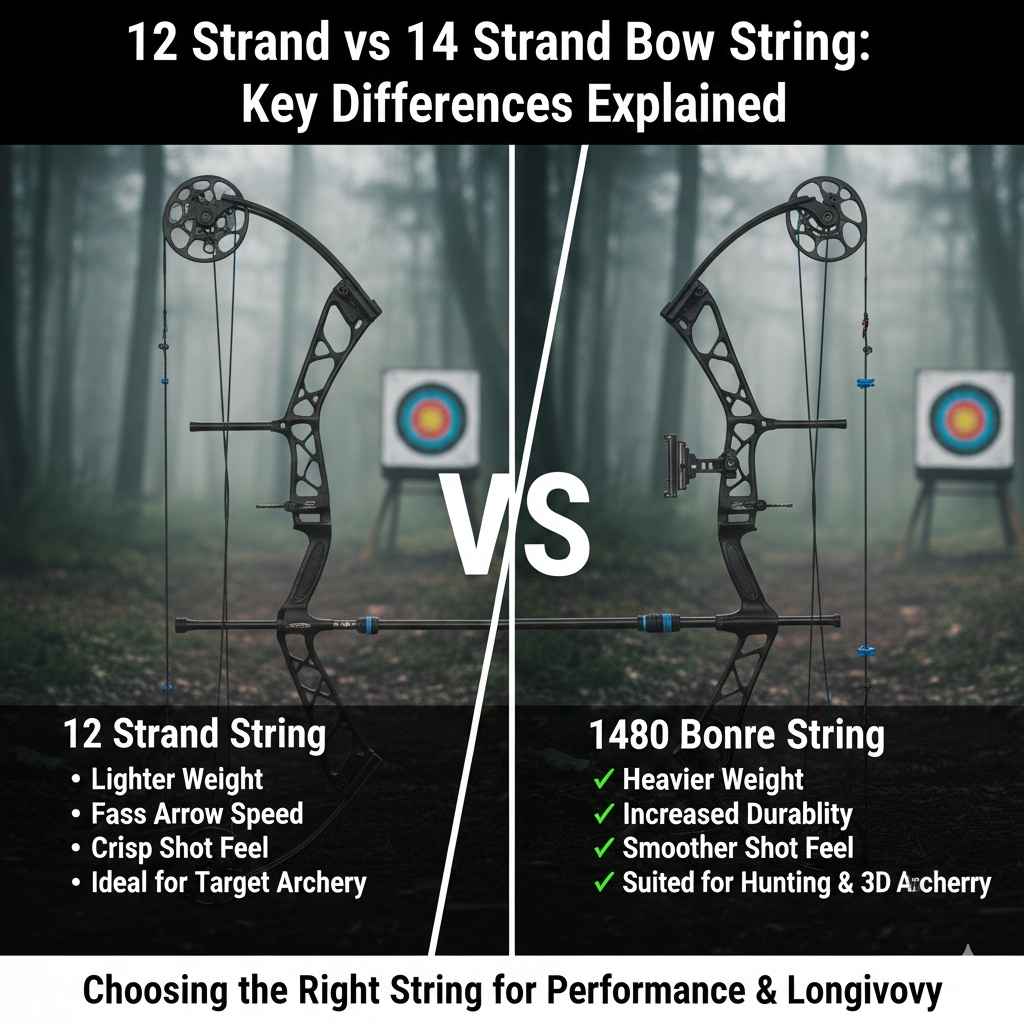
Now, let’s look at the main subject of 12 Strand vs 14 Strand Bow String: Key Differences. This is where we break down the specifics. Choosing between these options involves considering your bow type, draw weight, and what you want from your shots. The differences relate to strength, speed, durability, and feel. Let’s find out how they compare so you can make a good decision when buying your next bow string.
Strength and Durability
Strength and durability are important factors when choosing a bow string. A 14-strand bow string is generally stronger than a 12-strand string. The added strands provide more resistance to breaking, especially with higher draw weights. This extra strength also means the string will last longer. The ability to handle the repeated stress of drawing and releasing the bow is crucial. The stronger the string, the less likely it is to snap unexpectedly. Archery depends on having a bow string that does not fail.
- 14-Strand Advantage: More material equals more strength, better for higher draw weight bows.
- 12-Strand Use: Suitable for lower draw weights or archers who prioritize speed.
- Material Quality: Both types use high-quality materials.
- Longevity: 14-strand strings tend to last longer due to added strength.
Speed and Performance
String speed and performance can be influenced by the strand count. Typically, a 12-strand string can provide slightly higher arrow speeds than a 14-strand string. This is because it has a smaller diameter, and can offer less weight overall. This isn’t always the case, but it’s a difference that some archers will find significant. Speed is a key factor in archery, because it affects how flat your arrow travels to the target. It’s about how much energy is transferred from your bow to the arrow. The right balance between string speed and stability is very important.
- 12-Strand Benefit: Potentially faster arrow speeds due to less string mass.
- 14-Strand Impact: Might have a slight reduction in arrow speed.
- Overall: The difference in speed might not always be noticeable.
- Other Factors: Bow type, arrow weight, and the archer’s skill are also very important.
Practical Applications: Real-World Examples
Let’s look at some real-life scenarios to see how string choice can affect your shooting. These situations show how strand count influences results. They also highlight how archers choose strings based on their bows and goals. These examples give you a clearer idea of what works best in different situations. Archery depends on making the right choices to get the best outcomes.
- Bowhunting: A bowhunter using a 70-pound draw weight might pick a 14-strand string for extra safety and durability. They can deal with rough handling in the field.
- Target Archery: An archer using a lighter target bow, with a draw weight of 50 pounds, could choose a 12-strand string to possibly gain a slight edge in arrow speed and have a more consistent shot.
Table Comparison
Here’s a comparison table to help visualize the key differences. This table includes information about strength, speed, and other relevant factors. These comparisons can help archers see what fits their needs.
| Feature | 12-Strand String | 14-Strand String |
|---|---|---|
| Strength | Slightly less strong | Generally stronger |
| Arrow Speed | Potentially faster | Slightly slower |
| Durability | Less durable | More durable |
| Diameter | Smaller | Larger |
| Ideal for | Lower draw weights, speed emphasis | Higher draw weights, durability focus |
How to Select the Right Bow String
Picking the right bow string means understanding your specific needs as an archer. Think about your bow, your style, and what you want from your shots. Choosing the right string helps with accuracy and makes archery a more enjoyable experience. Consider these details before making a decision.
Draw Weight and Bow Type
The draw weight of your bow is a critical factor in determining the right string. Heavier draw weights put more stress on the string, which means a 14-strand string may be more appropriate. Your bow type also matters. Recurve bows and compound bows have different string configurations. Make sure the string is the right length for your bow. Using the right string with your bow protects both you and your equipment. Check your bow’s specifications, and then match the string to what it needs.
- Draw Weight Check: Heavier draw weights need stronger strings.
- Bow Specs: Always check your bow’s specifications.
- Compound vs. Recurve: Different needs for different bow types.
- String Length: Correct length is essential for proper function.
Performance Goals and Shooting Style
Your archery goals will play a big role in string selection. If your main goal is arrow speed, a 12-strand string could be a good choice. If durability is your main concern, a 14-strand string would probably be better. Think about how you use your bow. Different styles of archery also affect the best string choices. You might prefer different strings for target shooting versus hunting. Decide what matters most to you: speed, durability, or a balance of both? Choose the string that best fits what you are trying to do.
- Speed Focused: 12-strand strings can give you a slight speed advantage.
- Durability Focused: 14-strand strings are built to last.
- Target vs. Hunting: String choice depends on how you use your bow.
- Personal Preference: Some archers prefer the feel of different strings.
The Importance of Proper Fitting and Installation
Even the best bow string won’t perform well if it’s not installed correctly. You need to ensure the string fits your bow properly. Measure the brace height. Double check the string length. Incorrect installation can damage your bow. It can also cause the string to fail, which is a safety risk. You should seek help from an expert, if needed. You can improve your shooting by setting up the bow string correctly.
- Brace Height: Ensure the string is at the correct brace height.
- String Length Check: Always use the correct string length.
- Professional Help: Get assistance if you’re not sure how to do it.
- Regular Inspection: Inspect your string for wear and tear.
Frequently Asked Questions
Question: Is a 14-strand string always better?
Answer: No, a 14-strand string isn’t always better. It depends on your bow’s draw weight and your shooting goals. 12-strand strings can be ideal in several cases.
Question: Can I use a 12-strand string on a heavy draw weight bow?
Answer: It’s generally not recommended. Heavy draw weight bows put a lot of stress on the string, so a 14-strand string is a safer choice.
Question: How often should I replace my bow string?
Answer: Replace your bow string if it shows wear and tear. This includes fraying, stretching, or damage. Check your string regularly and replace it as needed.
Question: Does string material matter?
Answer: Yes, string material significantly influences performance and durability. High-quality materials like Dyneema are generally preferred.
Question: Where can I get help choosing the right bow string?
Answer: Your local archery shop is a great resource. Experts can offer advice and help you with installation and bow setup.
Final Thoughts
Picking the right bow string, whether a 12 or 14 strand, is all about knowing your equipment and your goals. We have explored the main differences in detail. Now you can choose a string for your bow. Consider the draw weight of your bow and your goals. A 14-strand string offers more strength and might be great for heavier draw weights or archers looking for maximum durability. However, a 12-strand string could be a good option if you want a little extra speed. Remember to prioritize your safety and to follow the manufacturer’s recommendations. With the right string and a bit of practice, you’ll be hitting the bullseye in no time.