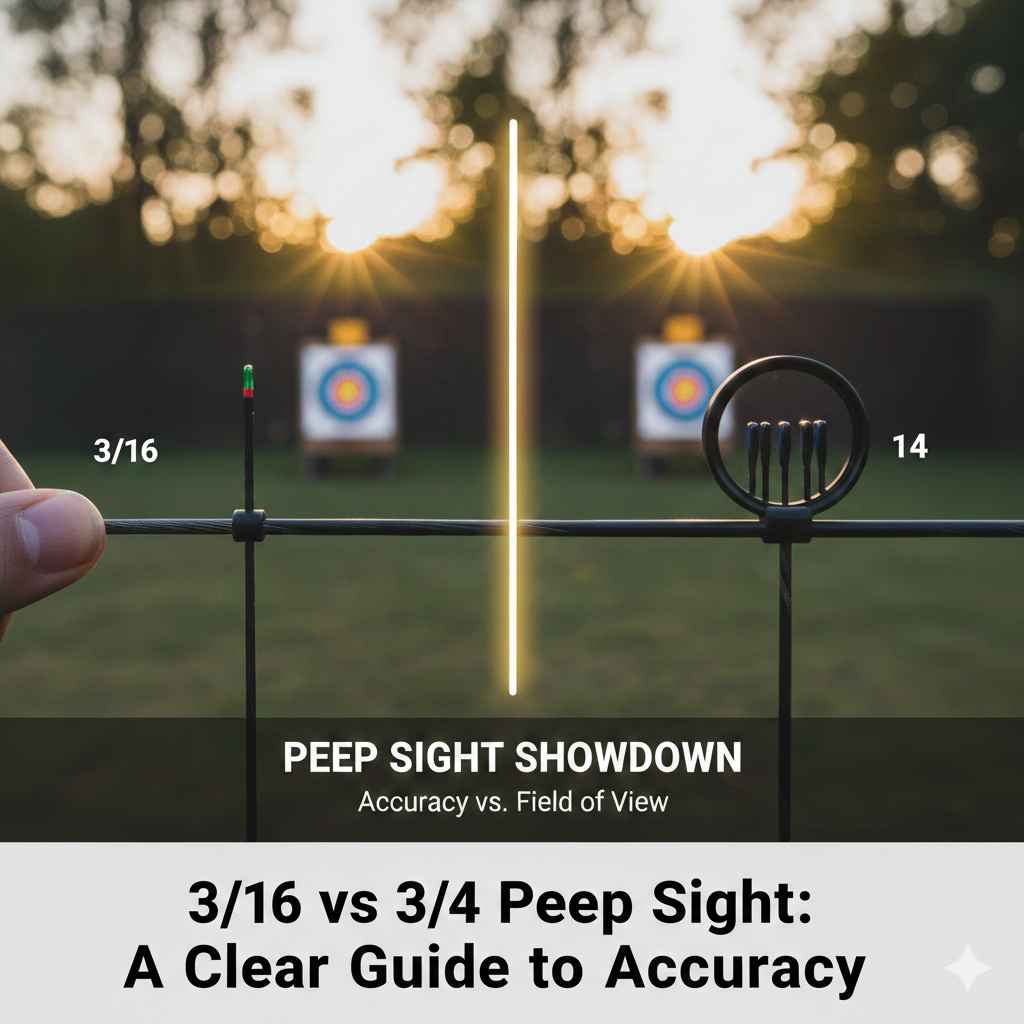
Choosing the right peep sight size can feel tricky, especially when you’re just starting. The question of whether to use a 3/16-inch or a 1/4-inch peep sight is very common for new archers. Don’t worry, it’s not as hard as it seems! This guide, focusing on 3/16 vs 1/4 Peep Sight: Clear Accuracy Guide, will explain everything in a simple way. We’ll explore the differences and help you find the best fit for you, step by step. Next, we’ll move on to examine the important aspects of choosing the right peep sight.
What is a Peep Sight and Why Does Size Matter?
A peep sight is a small, round component that attaches to your bowstring. It’s a key part of aiming because it aligns with your other sights. Think of it like looking through a small window. When you look through the peep, you also see your front sight pin and the target. The size of the peep sight opening directly affects your accuracy. A larger peep sight lets in more light and can be easier to see, but it might not be as precise. A smaller peep sight can be more precise, but it could be more difficult to see the target.
Peep Sight Components and Placement
The peep sight itself is made up of a few key parts. There is the housing, which is the main body that attaches to the bowstring. Inside the housing, there’s the aperture, which is the small, round hole you look through. The aperture is what we’re talking about when we say “3/16-inch” or “1/4-inch.” The peep sight is placed on the bowstring at a specific spot. This is usually determined by where your eye naturally aligns when you draw back your bow and aim. This placement is key to ensure you get a clear view through the peep sight.
- Housing: The part of the peep sight that is attached to the bowstring. This could be made of metal or other durable materials.
- Aperture: The actual hole you look through, determining the sight’s size. Apertures come in different sizes to match different needs and aiming styles.
- Alignment Marks: Some peep sights have small alignment marks to help you center the peep sight in the bowstring during installation.
- Material: Most peep sights are made of aluminum or similar lightweight and strong materials to withstand the forces of shooting.
The correct placement of the peep sight is super important for accurate aiming. If the peep is not positioned properly, your view of the sight and the target will be off. This will cause you to miss your target. The height on the bowstring depends on your eye position when aiming. You’ll usually draw back your bow, look at your target, and have a friend (or a coach) help determine the best spot for the peep sight. Make sure to have a clear view through the peep, with the front sight pin and the target aligned.
Comparing 3/16-inch and 1/4-inch Peep Sights
The two most common peep sight sizes are the 3/16-inch and 1/4-inch apertures. These small differences in size can have a big effect on how you see your target and how accurately you can aim. Each size has its own advantages and disadvantages. Choosing the right one comes down to your individual needs, your eye, the type of bow, and the type of shooting you do.
Let’s compare the sizes in more detail:
| Feature | 3/16-inch | 1/4-inch |
|---|---|---|
| Field of View | Smaller | Larger |
| Accuracy | Potentially Higher | Potentially Lower |
| Light Gathering | Less | More |
| Ease of Use | May be harder to align | Easier to align |
How to Select the Right Peep Sight Size
The right peep sight size depends on a few things about you and how you shoot. There isn’t a single “best” size, because what works well for one archer might not be right for another. Consider the following key factors when deciding between a 3/16-inch and 1/4-inch peep sight for optimal accuracy.
Your Eye and Vision
One of the most important things to think about is your eyesight. If your vision is very good, you might prefer a smaller peep sight like the 3/16-inch. It can give you better precision. If you struggle with seeing things clearly, especially in low light, a larger peep sight, such as a 1/4-inch, might be a better choice. The larger opening lets in more light, which makes it easier to see your front sight pin and the target.
- Visual Acuity: How clearly you can see details. If you have great vision, the 3/16-inch can be a good choice.
- Low Light Conditions: If you often shoot in shadows or dim light, the 1/4-inch peep can provide a better view.
- Eye Dominance: Knowing your dominant eye helps in aiming. The peep sight size can affect how easily your dominant eye aligns with the sight.
- Age: As people age, their vision can change. You might need to adjust your peep sight size to account for any changes in your sight.
Let’s say a seasoned archer with perfect vision chooses a 3/16-inch peep sight. They can see the front sight pin and target very clearly. This archer can benefit from the high precision that the smaller peep sight can offer. Now, imagine a beginner who has a hard time seeing the target clearly. The 1/4-inch peep sight could be the better choice because it lets in more light, making the front sight pin and target easier to see.
The Type of Shooting
What kind of archery do you enjoy? Target shooting, hunting, and 3D archery all have different needs. Target shooters may favor smaller peep sights for maximum accuracy at long distances. Hunters, however, might prefer a larger peep for quick target acquisition in varying light conditions. The type of archery you do can affect which peep sight size is better.
- Target Archery: Precision is key. A 3/16-inch peep sight may work well to get the most accurate aim.
- Hunting: Quick aiming in low-light conditions is important. A 1/4-inch peep sight can offer better light gathering.
- 3D Archery: This combines aspects of target shooting and hunting. Choosing the right size peep sight here requires a balance of accuracy and quick target acquisition.
- Bow Type: Different bows can work better with different peep sights. Compound bows are commonly used, with various sight systems.
For example, a hunter needs to quickly aim at a moving target, often in low-light environments. A 1/4-inch peep sight may be beneficial for fast target acquisition. A target archer at a competition may focus on accuracy. For this case, a 3/16-inch peep sight might be the better choice. It can help the archer to achieve the best possible scores.
Testing and Adjustments
The only way to know which peep sight size is best for you is to test both of them. You can test each peep sight size at different distances. Pay close attention to how quickly you can acquire your target and how accurate your shots are. Note any issues with aligning the peep sight with your other sights. After trying both sizes, choose the one that gives you the best results.
- Try Both Sizes: Get both a 3/16-inch and a 1/4-inch peep sight and try each one out.
- Shoot at Different Distances: Test at various distances to see how the peep sight performs in different situations.
- Pay Attention to Alignment: Make sure the peep sight lines up with your front sight pin and target quickly and easily.
- Consider Lighting: See how each peep sight performs in both bright and low-light conditions.
- Record Your Results: Keep track of your scores and how comfortable you feel with each size.
Here’s an example: You are at the range with your bow. You start with the 3/16-inch peep sight and shoot a few rounds. Then, you switch to the 1/4-inch peep sight and shoot again. This lets you compare your accuracy and speed with both sizes. The scores and experience will guide you in making the decision. Remember, it may take some adjustment to find the right peep sight size, but with some testing, you can find the perfect fit. Also, make sure that the peep sight is correctly installed, and the bow is properly tuned. A poorly-fitted bow can lead to many accuracy problems.
Advanced Considerations for Peep Sight Selection
Once you understand the basic differences between 3/16-inch and 1/4-inch peep sights, you can explore some more advanced aspects that might influence your choice. Understanding these factors can help you refine your equipment and improve your scores.
String Angle and Peep Sight Placement
The angle of your bowstring is important for where the peep sight sits. This angle affects how well you can see through the peep sight and align it with your other sights. The string angle can vary from bow to bow, based on the brace height and the axle-to-axle length of the bow. The peep sight must be positioned at the right height and angle on the string to give you a clear view.
- Brace Height: The distance from the bow’s grip to the string. A shorter brace height can lead to a steeper string angle, and a longer brace height can lead to a shallower string angle.
- Axle-to-Axle Length: The distance between the axles of the bow’s cams or wheels. Longer bows often have shallower string angles than shorter bows.
- Peep Sight Height: The peep sight height on the string should be set to match your anchor point. This ensures that you have a consistent view through the peep sight.
- Peep Sight Angle: The peep sight should be installed so that when you draw your bow, you get a clear view of your front sight and the target.
For example, if you are using a bow with a short brace height, the string angle may be steeper. A smaller peep sight might be easier to align in this situation, because you can center your view more directly. If you have a longer bow, the angle might be more gradual. A larger peep sight could be easier to get a view through.
Material and Quality
The material and quality of the peep sight can also affect your aiming accuracy. High-quality peep sights are made from strong, long-lasting materials. They are usually designed to give you a clear, crisp view through the aperture. Good quality peep sights tend to hold their shape and don’t get damaged easily. They also often feature precise aperture sizes.
- Material: Aluminum is a common material used to make peep sights. It’s strong and light. Other materials such as titanium are available, offering increased durability.
- Durability: Strong materials ensure that the peep sight can endure the rigors of shooting, resisting damage or distortion.
- Aperture Precision: The aperture, or hole, must be precise to maintain a consistent view. Precision helps with accuracy.
- Brand Reputation: Some brands are known for producing high-quality archery equipment. Researching different brands can help you find a reliable peep sight.
Consider two different peep sights: One made of low-quality plastic and another made of aircraft-grade aluminum. The plastic peep sight might warp or break after repeated use. The aluminum peep sight is much more durable, maintaining its shape and alignment, ensuring consistent accuracy over time. Higher quality materials often cost a bit more, but they can give you a lot more use and a better experience.
Using a Lens in Your Peep Sight
Some archers use lenses inside their peep sights. These lenses help magnify the target and the sight pin. This magnification can make it easier to see and hit targets at a distance. If you are struggling to see your target clearly, a lens in your peep sight can be extremely helpful. However, keep in mind that lenses add extra complexity, and they must be selected with precision.
- Magnification Power: Lenses come in several magnifications. Choose a magnification that helps you see your target better without making it too difficult to aim.
- Lens Clarity: A clear lens is important to provide an undistorted view of your target and sight pin.
- Diopter Adjustment: A diopter adjustment feature lets you fine-tune the lens to match your eyesight.
- Lens Protection: Protecting the lens from weather and impact is important.
For example, a hunter or target archer may struggle to see the target clearly. Adding a lens to the peep sight can sharpen the view. This can greatly enhance accuracy at long ranges. The right lens power and quality are key to maximizing the benefits of this feature. Make sure to consider the shooting circumstances and your individual visual requirements. For instance, a very strong lens might give great detail to the target, but it can also make it harder to see the surroundings.
Frequently Asked Questions
Question: Can I switch peep sight sizes easily?
Answer: Yes, you can switch peep sight sizes without any major issues. It might take a little time to adjust and re-sight your bow. You may need to have your bow re-tuned.
Question: Does the color of the peep sight matter?
Answer: The color is mainly for aesthetics, and generally does not affect functionality. Choose a color you like. Some archers prefer dark colors for the reduced glare.
Question: How often should I replace my peep sight?
Answer: A peep sight can last a long time if it’s made from quality materials. Check it often for any damage or wear. Replace it if it gets distorted or the aperture changes.
Question: Can I use different peep sight sizes for different types of archery?
Answer: You certainly can! Many archers adjust their peep sight size based on the type of archery they are doing. Switching between a larger aperture for hunting and a smaller one for target shooting is a common practice.
Question: Where can I get my peep sight installed?
Answer: You can get your peep sight installed by an archery shop or a bow technician. They have the tools and experience to properly place the peep sight on your bowstring.
Final Thoughts
Deciding between a 3/16-inch and a 1/4-inch peep sight comes down to understanding your own needs. Consider your vision, the type of shooting you do, and the conditions in which you shoot. Testing both sizes on your own bow is the best way to find the perfect fit. Remember that archery is a personal experience. There is no one-size-fits-all answer! Explore your options, take your time, and enjoy the process of finding what works best for you.
Now that you have learned more about the key features of the 3/16 vs 1/4 Peep Sight: Clear Accuracy Guide, you’re ready to improve your shooting. With a little practice and the right equipment, you’ll be hitting your targets with more precision in no time! Keep practicing, and enjoy the sport!