Choosing the right bow string can be tough, especially if you’re just starting. The idea of comparing strings like 8125-G vs 452X Bow String: Side-by-Side Review might feel overwhelming because there’s a lot of technical stuff involved. Don’t worry, though! We’ll break down the differences in a simple, easy-to-follow way. We’ll explore the main differences, so you can make a smart choice for your archery setup. Let’s get started!
What Makes a Bow String Tick?
Before jumping into specifics, let’s look at the basic job of a bow string. Its main goal is to store energy when you pull the bow back and then release that energy quickly to send your arrow flying. The string’s performance is affected by the materials it’s made from, how it’s made (the weave), and even how it stretches or doesn’t stretch. These things decide how fast your arrows go, how accurately you can shoot, and how long the string will last before needing replacement. Understanding these parts is essential to appreciate the 8125-G vs 452X Bow String: Side-by-Side Review differences.
Bow String Materials Explained
The materials a bow string is made from play a big part in its performance. Different materials offer different strengths, stretch characteristics, and durability. Two of the most common materials used in modern bow strings are Dyneema (also known as SK75 or SK99) and Vectran. Each material has its own pros and cons, which is why it is essential to consider the materials first before making a selection between the 8125-G or 452X. We’ll explore these and other materials that are common in modern bow strings.
- Dyneema (SK75/SK99): Dyneema is a high-performance fiber, known for its super strength and low stretch. This helps in achieving consistent arrow speeds and accuracy. The “G” in 8125-G usually references this material. SK75 and SK99 refer to different grades of Dyneema, with SK99 offering improved performance.
- Vectran: Vectran offers excellent resistance to wear and tear. Strings made with Vectran are very stable, meaning they don’t stretch much over time. This can lead to a more consistent feel when shooting.
- Other Materials: Sometimes, bow strings combine different materials to get the best of both worlds. For instance, a string might have a Dyneema core for strength and low stretch, with Vectran or other fibers to improve wear resistance and add stability.
These materials, and how they are used, directly affect the string’s performance. The choice of material impacts arrow speed, accuracy, and longevity, making it vital to know what you’re using. Choosing between 8125-G and 452X will come down to which materials and designs best fit your archery style and goals.
8125-G Bow String: Details and Features
The 8125-G bow string is a popular choice among archers for good reason. It’s made primarily from Dyneema fibers, usually the SK75 or SK99 grade. The “G” is a typical designation used by manufacturers to indicate the specific type of Dyneema fiber used in the string. It’s known for its low stretch, which helps produce consistent arrow speeds. This consistency is essential for accurate shooting, as it minimizes variations in arrow flight due to string stretch. When doing an 8125-G vs 452X Bow String: Side-by-Side Review, understanding its features is important.
Characteristics of 8125-G
8125-G is valued for its specific characteristics, which influence its performance on the bow. It’s often favored by archers wanting consistent performance and accuracy.
- Low Stretch: One of the main benefits is its minimal stretch. This means that after a few shots, the string settles, and the draw length and anchor point remain consistent.
- Durable: Dyneema is a strong material that can withstand the forces involved in archery, offering a decent lifespan for a bow string. The typical lifespan depends on factors like the number of shots taken and how well the string is maintained.
- Consistent Performance: The low stretch characteristic helps in achieving high levels of consistency. With less stretch, archers can expect their arrows to fly more predictably.
The 8125-G string is a good choice for archers who prioritize accuracy and consistency. It’s particularly suitable for target archery, where every shot counts. For those trying to decide between different strings, these are important factors to consider during an 8125-G vs 452X Bow String: Side-by-Side Review.
Exploring the 452X Bow String
The 452X bow string is a high-performance option favored by many archers. It blends the best qualities of different materials. Typically, it’s a mix of Dyneema SK75 fibers and Vectran fibers. This combination aims to provide low stretch, consistent arrow speed, and improved wear resistance. This string is often chosen for its balance of performance and durability. Comparing 8125-G vs 452X Bow String: Side-by-Side Review requires understanding the unique traits of 452X.
Features of the 452X String
452X’s characteristics affect how well it performs. The blend of materials gives it particular benefits.
- Low Stretch and Stability: The Vectran component boosts stability. This helps minimize stretching under heavy use. This feature can benefit archers needing precise and repeatable shot placement.
- Enhanced Durability: Vectran is known for wear resistance, and it boosts the string’s lifespan, which can save money in the long run. The specific lifespan will vary based on usage and care.
- Smooth Performance: Many archers find that 452X provides a smooth draw and release, enhancing the overall shooting experience. This smoothness can boost consistency and improve arrow flight.
The 452X string is great for archers looking for both accuracy and longevity. Its material mix offers a good balance, making it a well-rounded option for various archery styles. When considering the 8125-G vs 452X Bow String: Side-by-Side Review, the benefits of both Dyneema and Vectran make this an attractive choice.
8125-G vs 452X: A Head-to-Head Comparison
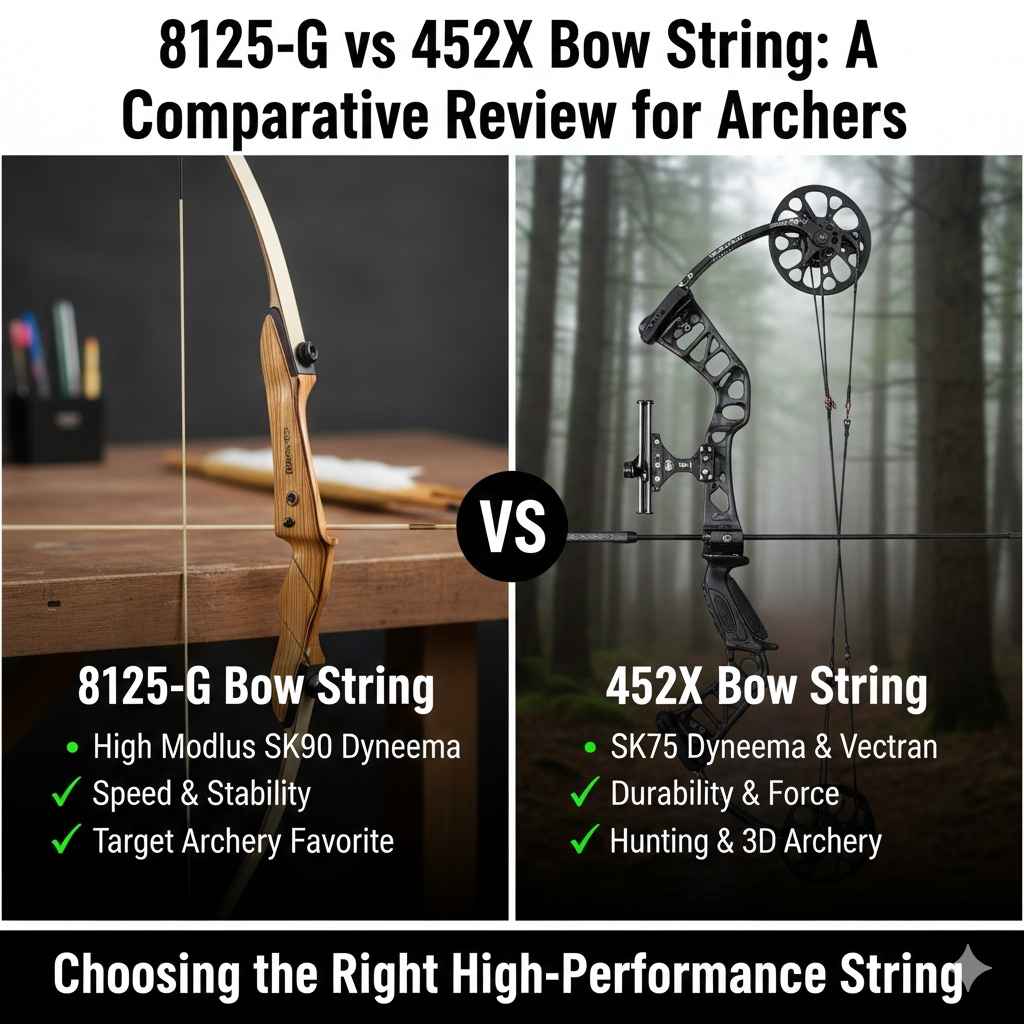
When comparing 8125-G vs 452X Bow String: Side-by-Side Review, it is important to understand the distinctions between the two. The main difference is the blend of materials. 8125-G is made mostly with Dyneema fibers, emphasizing low stretch and consistency. The 452X bow string mixes Dyneema with Vectran. This combination aims to combine the best features of both materials. We’ll explore the critical aspects: stretch, durability, arrow speed, and feel.
Stretch and Stability
Stretch and stability are key in how a bow string performs. The ability of the string to maintain its length under stress has a significant impact on accuracy and consistency. A string that stretches too much will affect the draw length and therefore the accuracy of the shots. Let’s delve deeper into these aspects.
- 8125-G: Offers very low stretch due to its Dyneema makeup. This helps with repeatable shot placement. This low stretch means the string settles in quickly, giving a predictable performance.
- 452X: Has low stretch, thanks to the Vectran fibers. This gives increased stability and reduces the effects of temperature and humidity changes.
Both strings aim for minimal stretch, but 452X usually offers even better stability, making it a good choice for situations where maintaining precise shot placement is essential. This can be important for target archers who need consistent accuracy. The lower stretch results in less variation in arrow speeds, contributing to better scoring in matches.
Durability and Longevity
Durability is another crucial aspect when selecting a bow string. A string’s lifespan determines how often you need to
- 8125-G: Known for being fairly durable due to Dyneema. It can handle many shots, but it may not last as long as 452X in tough situations. Lifespan is also influenced by shooting frequency and environmental conditions.
- 452X: Usually has increased durability due to the inclusion of Vectran. This means it can better handle friction and wear, making it a good choice if you shoot a lot. The combination of Dyneema and Vectran provides a robust string that can last longer.
Durability is important because it reduces the need for frequent replacements. When you make your 8125-G vs 452X Bow String: Side-by-Side Review, think about how often you shoot. If you shoot a lot, the longer life of 452X can save time and costs. For casual archers, the 8125-G may provide adequate performance.
Arrow Speed and Performance
Arrow speed is a key aspect of how well a bow string performs. The string’s ability to efficiently transfer energy to the arrow decides how fast it flies. The material, design, and tension of the string all impact arrow speed. A faster arrow travels a flatter trajectory, boosting accuracy over longer distances. Knowing the speed you get from each string during a 8125-G vs 452X Bow String: Side-by-Side Review can assist in making a choice.
- 8125-G: Is known to provide good arrow speeds due to the efficient energy transfer from Dyneema. The low stretch characteristics contribute to consistent speeds.
- 452X: Also produces good arrow speeds, often comparable to 8125-G. The blend of Dyneema and Vectran provides a balance between speed and durability.
Both string types offer similar speeds, so the difference may be minor. Some archers find that 452X has a slight edge in speed because of its energy transfer characteristics. When doing an 8125-G vs 452X Bow String: Side-by-Side Review, individual experiences may vary based on bow setup and shooting style.
Feel and Shooting Experience
The feel of a bow string has a big impact on the overall shooting experience. It covers how smooth the draw is, how well the string sits on your fingers, and how it performs during the shot. A comfortable and responsive string can improve accuracy and enjoyment. During an 8125-G vs 452X Bow String: Side-by-Side Review, it is helpful to explore the subjective aspects.
- 8125-G: Offers a crisp, direct feel during the draw and release. Archers often find it very responsive, giving a clear shot.
- 452X: Is often described as having a smoother feel. Some archers prefer the balanced feel during the draw, making it a comfortable string for many shots.
The choice between the feel of 8125-G and 452X is usually a personal one. Some archers appreciate the direct feel of 8125-G, while others prefer the smooth feel of 452X. A lot depends on an individual’s shooting style and preferences. The best approach is to try out different strings to determine which feels the best.
Comparing Features: A Quick Reference
To help you decide, here’s a chart summarizing the main differences between 8125-G and 452X strings. This comparison will give a quick overview during your 8125-G vs 452X Bow String: Side-by-Side Review.
| Feature | 8125-G | 452X |
|---|---|---|
| Main Material | Dyneema (SK75/SK99) | Dyneema (SK75) & Vectran |
| Stretch | Very Low | Low |
| Durability | Good | Very Good |
| Arrow Speed | Good | Good |
| Feel | Crisp, Direct | Smooth, Balanced |
| Best For | Accuracy and Consistency | Durability and All-Around Performance |
This table offers a clear side-by-side view to assist you in understanding the distinctions. When you compare 8125-G vs 452X Bow String: Side-by-Side Review, this reference should offer a solid start.
Real-Life Examples and Scenarios
To better understand how these strings work, let’s explore some real-life scenarios. These cases highlight how archers choose strings based on their shooting style and goals. These examples offer practical insights in your 8125-G vs 452X Bow String: Side-by-Side Review.
- Scenario 1: Competitive Target Archer: A target archer who competes regularly needs consistency and accuracy. Their focus is on achieving the highest scores possible, which is why a very low-stretch string is essential. For this archer, 8125-G is a good choice because it offers excellent consistency shot after shot.
- Scenario 2: Hunter Who Shoots Frequently: A hunter who practices regularly, but also needs a durable string that can withstand different weather conditions. They value a blend of performance and reliability. In this instance, 452X is a great fit, since it blends Dyneema and Vectran.
The archer benefits from 8125-G’s low stretch, which reduces variation in arrow flight, boosting accuracy in competitive events.
The blend of Dyneema and Vectran makes 452X durable and performs well in various conditions, making it an excellent option for the hunter.
These scenarios highlight how the choice depends on your shooting style, the environment, and how often you shoot. Consider these scenarios in your 8125-G vs 452X Bow String: Side-by-Side Review, helping you make a decision.
Frequently Asked Questions
Question: Which string is better for beginners, 8125-G or 452X?
Answer: Both strings are suitable for beginners, but 452X might be slightly better because of its extra durability and smooth feel, which can boost the learning process.
Question: Does the type of bow influence the choice of string?
Answer: Yes, different bows need strings of various lengths and with certain characteristics. Your bow’s type and manufacturer recommendations should always be consulted.
Question: How often should I change my bow string?
Answer: The time to change your string varies, but you should inspect it regularly. Look for signs of wear and tear, and replace the string at least every two years or if you see issues.
Question: Can I mix different materials to make my own string?
Answer: It’s generally not recommended to make your own strings unless you have specific knowledge and experience. Using premade strings ensures both safety and performance.
Question: What’s the main benefit of using a low-stretch string?
Answer: Low-stretch strings offer improved accuracy. The limited stretch helps maintain a consistent draw length, improving arrow flight and overall performance.
Final Thoughts
Deciding between 8125-G vs 452X Bow String: Side-by-Side Review involves looking at different needs and priorities. Both strings are designed for high performance, yet their blends of materials provide distinct advantages. 8125-G is perfect if you are looking for great accuracy and consistent performance because of its low stretch and is made mostly of Dyneema. On the other hand, if you want a longer-lasting string with a smoother feel, 452X offers a blend of Dyneema and Vectran. This blend offers durability with solid performance.
Think about your shooting style, how often you practice, and what you want in your archery experience. Check the manufacturer’s recommendations and pick the string that matches your archery goals. With the right choice, you can boost your accuracy and enjoyment of archery. Now, try both, and see which string helps you hit the mark!