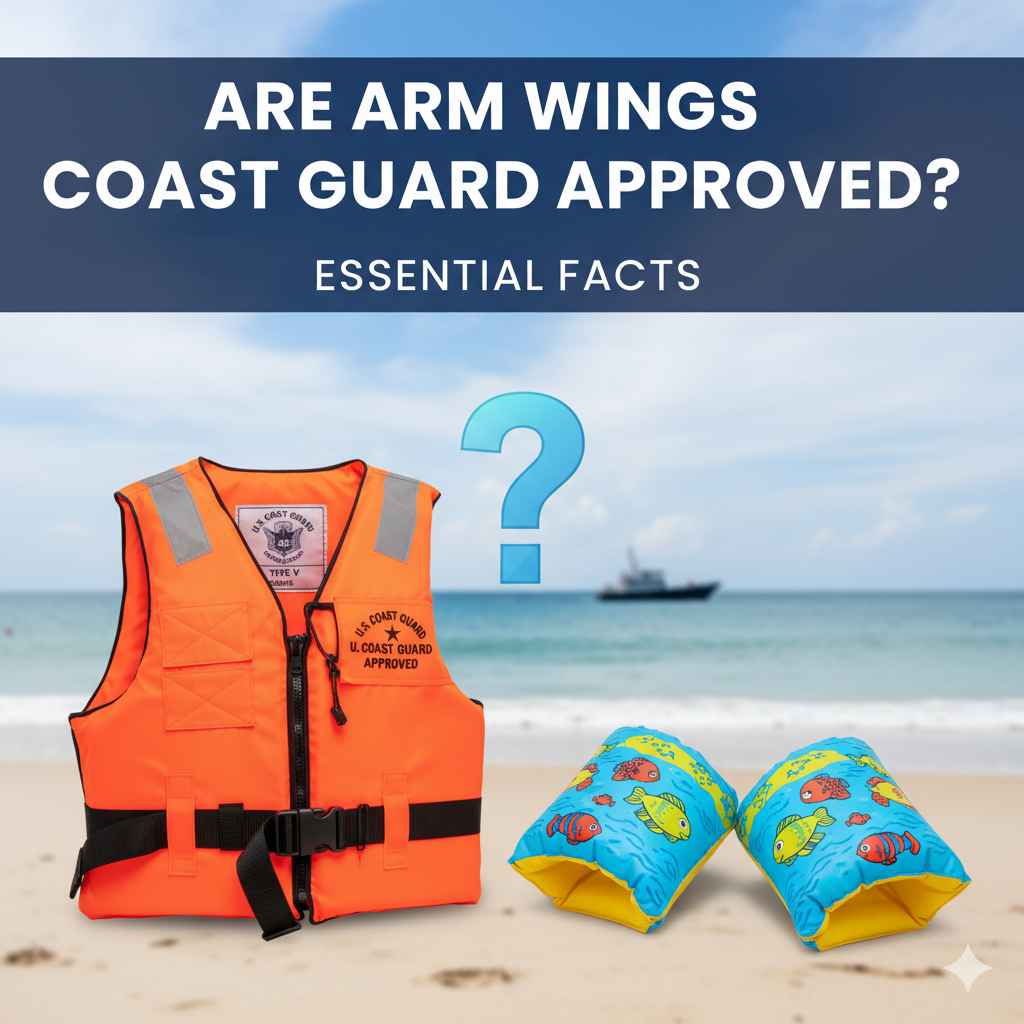
No, “Arm Wings” (often referring to inflatable flotation devices worn on the arms) are generally NOT US Coast Guard (USCG) approved as primary life-saving devices. For legal and safety compliance on U.S. waterways, you must use USCG-approved Personal Flotation Devices (PFDs) like Type I, II, III, IV, or V devices.
As you gear up for a day out on the water, safety is always step one. For beginners, figuring out what flotation gear is actually required by law can feel confusing. You might have seen those fun, brightly colored inflatable “arm wings” or swim aids used by children, and wondered if they count as official safety equipment. It’s a very common question!
The short answer is usually no, they are not legally approved. Using the wrong gear can lead to fines or, much worse, serious safety risks. Don’t worry; we are going to break down exactly what the US Coast Guard (USCG) requires versus what is just a fun swim aid. We’ll keep it simple so you can focus on enjoying the water safely. Let’s explore the difference between recreational swim aids and certified flotation gear.
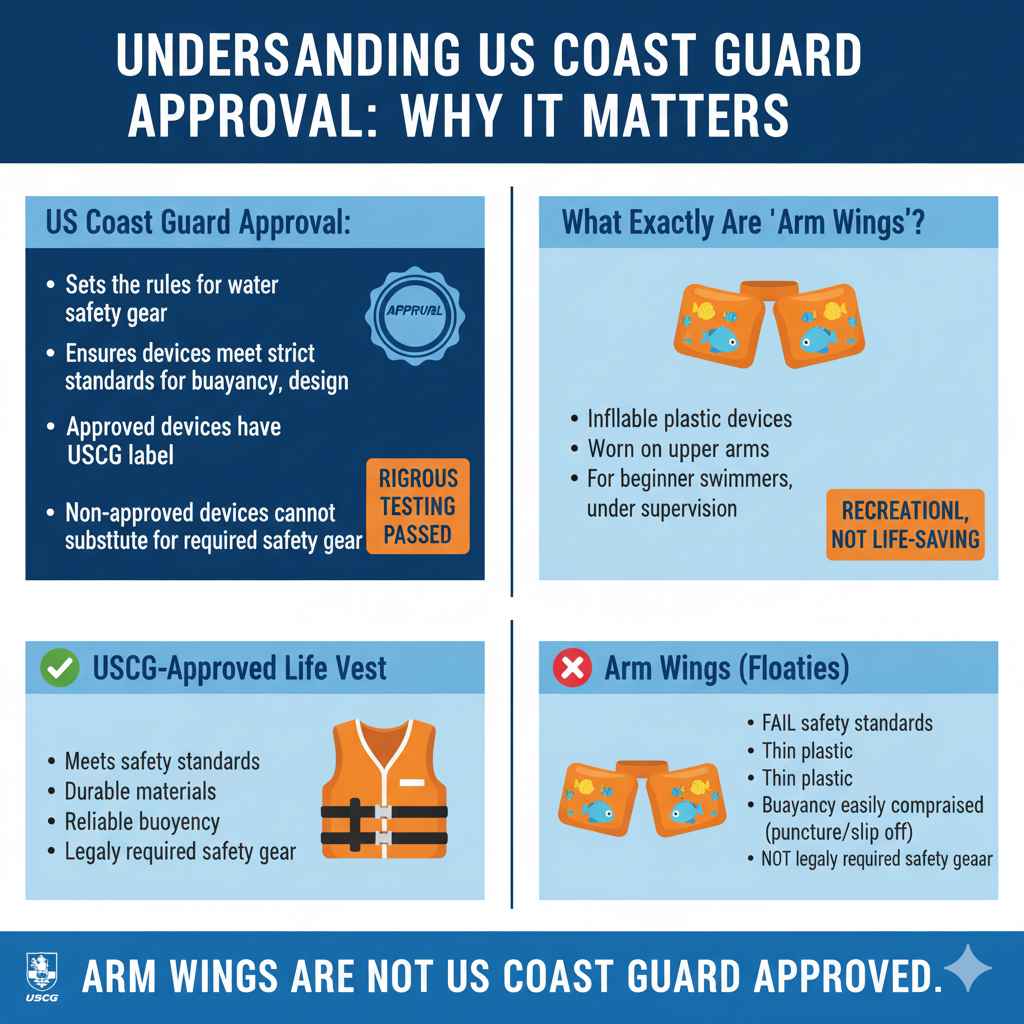
Understanding US Coast Guard Approval: Why It Matters
When we talk about safety gear on the water in the United States, the United States Coast Guard sets the rules. The USCG is responsible for ensuring that any device intended to save a life meets strict standards for buoyancy, durability, and design.
A device is “approved” if it has passed rigorous testing by the USCG, often marked with an approval label. If a device lacks this label, it cannot legally substitute for required safety gear.
What Exactly Are “Arm Wings”?
The term “arm wings,” “water wings,” or “floaties” usually refers to inflatable plastic devices worn around the upper arms. They are designed to help beginner swimmers build confidence and stay afloat for short periods under direct supervision.
- Purpose: Primarily recreational and intended for use by weak swimmers who are actively supervised.
- Material: Typically thin plastic or vinyl, often inflated by mouth.
- Buoyancy: Their buoyancy can be easily compromised (they can deflate or slip off).
Because of their design—which makes them easy to remove or prone to puncture—they fail the rigorous standards required for life-saving equipment.
The Crucial Difference: Swim Aids vs. PFDs
This is the most important distinction for any boater to understand. The USCG regulates safety equipment under the category of Personal Flotation Devices (PFDs).
Personal Flotation Devices (PFDs)
A PFD is a device designed to keep a person’s head above water in an emergency, even if they are unconscious. They must remain buoyant and in place in rough conditions. USCG-approved PFDs come in five main types, each designed for a specific use.
For a device to be USCG approved, it must carry a specific label stating its type, size, and the approval number. You can find more official documentation regarding PFD regulations on the USCG Boating Safety Resource website.
Why Arm Wings Fail PFD Testing
Arm wings do not meet PFD standards for several key reasons:
- Reliability: If an inflatable arm wing loses air (from a slow leak or puncture), it offers zero flotation.
- Retention: They can easily slip off a child’s arms, especially if the user is panicking or unconscious.
- Testing: They are never submitted to the USCG for the stability and durability tests required for PFD certification.
USCG Approved PFD Types: What You Must Carry
If you are operating a recreational vessel (like a motorboat, sailboat, or even a canoe or kayak) on federally regulated waters, you must carry the legally required number and type of PFDs for everyone on board. Here is a simplified look at the types you will encounter most often:
Table 1: Common USCG PFD Types for Recreational Boating
| Type | Best For | Key Feature |
|---|---|---|
| Type I (Offshore Life Jacket) | Open water, rough conditions. | Most reliable; turns most wearers face-up in rough seas. |
| Type II (Near-Shore Life Jacket) | Calm water; close to shore. | Can turn wearer face-up, but less effective than Type I. |
| Type III (Flotation Aid) | Wake sports, recreational boating where quick rescue is likely. | Comfortable for activity; wearer must hold head up or be conscious. |
| Type V (Special Use Device) | Specific activities like kayaking or sailboarding. | Must be worn or used as specified on the label to count as required equipment. |
As you can see, there is no category for a simple inflatable arm wing. They are accessories, not safety mandates.
Legal Requirements: When PFDs Are Mandatory
The rules governing when you must wear a PFD are surprisingly straightforward, but they apply to everyone on board.
Who Must Wear a USCG Approved PFD?
Every person aboard a recreational vessel must have a readily accessible, USCG-approved PFD. However, certain individuals are required to wear one at all times (100% Wear Rate):
- All children under 13 years old must wear an approved life jacket (PFD) whenever they are on a vessel under 20 feet, or on a manually propelled vessel (like a kayak or canoe).
- Anyone being towed behind a vessel (e.g., on an inner tube or waterskis).
- Anyone engaged in personal watercraft (PWC) use, like a Jet Ski.
- Anyone operating or riding on a sailboat less than 26 feet in length.
Crucial Point: Even if the law says you only need the PFD stowed on board (accessible but not worn), using arm wings instead of a proper PFD for a child who cannot swim is extremely risky and violates the spirit, if not the letter, of safety laws.
Choosing the Right Flotation for Beginners (The Safe Way)
If your goal is to introduce a beginner or a child to the water safely, don’t rely on arm wings. Instead, opt for gear that is USCG approved, even if it’s designed for smaller individuals.
Step-by-Step Guide to Selecting Beginner Flotation Gear
Follow these steps to ensure you buy equipment that offers real safety:
- Check the Label: Look directly at the PFD. If it doesn’t clearly state “U.S. Coast Guard Approved” along with a Type rating, put it back.
- Determine Type III: For general recreational swimming and activities where the wearer is active, a Type III vest is often the most comfortable and appropriate choice for good swimmers.
- Size Appropriately: PFDs are sized by the wearer’s weight, not just age. A vest that is too large can slip over the head in the water. For children, ensure the vest is sized for their current weight.
- Ensure a Good Fit (The Lift Test): Have the wearer put on the vest and secure all buckles. Have an adult stand behind them and pull up sharply on the shoulder straps. If the vest rides up over the wearer’s chin or ears, it is too loose and will not protect them.
- Choose Bright Colors: Safety gear should be highly visible. Look for neon orange, bright yellow, or lime green, which contrast well with water.
Pros and Cons: Arm Wings vs. Certified Vests
Let’s compare these two options directly so you can see why the investment in a proper PFD is always worth it.
Table 2: Comparing Arm Wings and USCG-Approved Vests
| Feature | Inflatable Arm Wings (Swim Aids) | USCG-Approved PFD (e.g., Type III Vest) |
|---|---|---|
| Legal Requirement | No – Not a substitute for required gear. | Yes – Must meet quantity and type requirements. |
| Reliability | Low (can deflate instantly). | High (designed for continuous flotation). |
| Comfort/Use | Easy to put on; good for supervised practice. | Slightly bulkier but very secure; required for protection. |
| Safety Factor | Only for use under constant, direct adult supervision. | Designed to keep unconscious wearers afloat. |
Tips for Encouraging Water Safety Confidence
If you are using arm wings primarily because a child is afraid of the water, remember that your goal should be transitioning them to confidence in a properly fitting PFD.
Making the PFD Fun
The best way to ensure a child keeps their life jacket on is to let them pick it out. Treat the selection of a PFD like choosing a cool piece of equipment, not a punishment.
- Let Them Choose the Design: Many USCG-approved vests come with fun designs (pirates, unicorns, sports logos). Let the beginner pick one they love.
- Practice on Dry Land: Before going near the water, have them wear the vest around the house for 15 minutes. This helps them get used to the feel.
- Start Shallow: When entering the water, start in water shallow enough that they can stand up, even if the vest is on. This removes the immediate fear of sinking.
- Supervision is Non-Negotiable: Even with a PFD on, never take your eyes off a beginner or weak swimmer. Arm wings require supervision; PFDs require supervision. One is just better insurance than the other!
The Role of Inflatable Devices That Are Approved
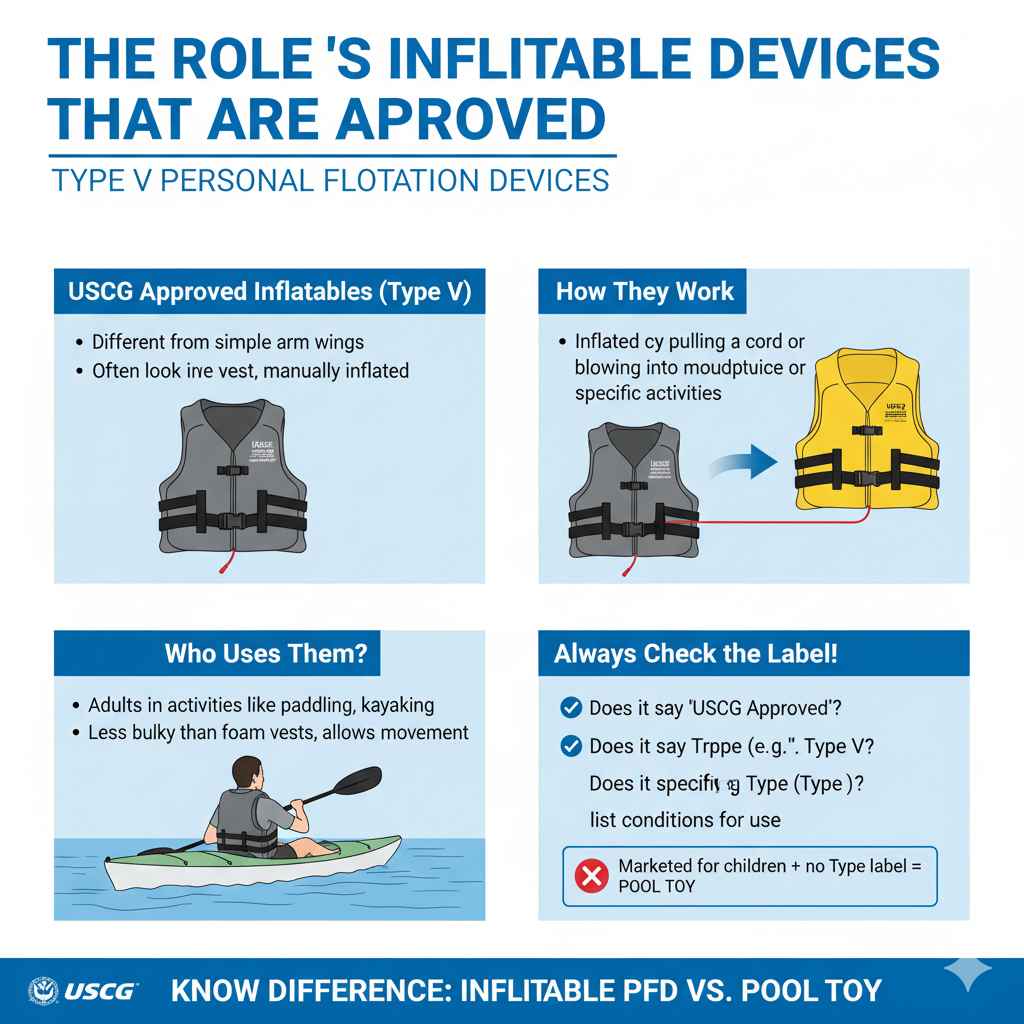
It’s important to note that there are some inflatable devices that are USCG approved. These are usually categorized as Type V devices.
These are very different from simple arm wings. Often, they look like a vest that can be manually inflated (usually by pulling a cord or blowing into a small mouthpiece) after the user has entered the water or when an emergency occurs. They are often worn by adults engaged in specific activities like paddling or kayaking where bulky foam vests might impede movement.
When looking at an inflatable safety device, always confirm the label:
- Does it say “USCG Approved”?
- Does it specify the Type (e.g., Type V)?
- Does it list the conditions under which it must be worn or deployed to count as required equipment? (Some Type V devices are only approved if worn, while others are only approved as backup devices.)
If the device is marketed primarily for children’s swimming lessons and doesn’t explicitly state it’s a Type I, II, III, or V PFD, treat it as a pool toy, not safety gear for open water.
Frequently Asked Questions (FAQs) for Beginner Boaters
Q1: If I am just wading near the shore, do I still need approved life jackets?
A: While laws often apply to vessels underway, if a child under 13 is using any flotation device in the water, using a USCG-approved vest is the safest standard. If you are in a boat (even one anchored), the PFD requirement for children under 13 still applies.
Q2: Can a child wear two arm wings and a Type III vest at the same time?
A: It is strongly discouraged. Wearing too much flotation can actually be dangerous, as it can push the child into a position where their head tips back uncomfortably, or cause the bulky PFD to ride up.
Q3: What happens if the Coast Guard checks my boat and I only have arm wings for my child?
A: You will likely receive a warning or a citation for not having the proper number and type of PFDs required for everyone on board, especially if the child is under 13 years old.
Q4: Are inflatable rings (like donut tubes) Coast Guard approved?
A: No. Standard inflatable rings used for recreation are not USCG approved PFDs. They are toys and should only be used under close supervision in pools or calm, shallow swimming areas.
Q5: Do I need a PFD if I am on a paddleboard (SUP)?
A: Yes. For SUPs, most states and the USCG require you to have a USCG-approved PFD on board for every person. Many stand-up paddlers choose to wear a Type III or a specialized Type V PFD designed for paddling for maximum comfort and compliance.
Q6: How often should I check my USCG-approved PFDs?
A: Inspect them before every use. Look for rips, tears, mildew, faded material, or broken buckles. If you cannot clearly read the USCG approval label, it is time to replace the PFD.
Conclusion: Safety First, Fun Always
When it comes to water safety gear, always default to what the United States Coast Guard officially approves. To wrap up this essential topic: “Arm wings” are fun flotation aids for supervised play, but they are absolutely not Coast Guard approved substitutes for life jackets.
For confident and compliant boating, make sure every person on your vessel has a correctly sized, readily accessible, and USCG-approved PFD on board, and ensure any child under 13 wears one at all times while you are moving. By choosing the right equipment—the durable, tested, and certified gear—you eliminate guesswork and maximize safety. Now you have the essential facts you need. Go enjoy the water with peace of mind!