B50 vs B55 Dacron Flemish Bow String Explained for Archers
Choosing the right bow string can feel tricky, especially when you’re starting with archery. The difference between B50 vs B55 Dacron Flemish Bow String Explained might seem like a small detail, but it impacts your bow’s performance and how long it lasts. Don’t worry, though! This guide breaks it down in simple terms, so you can pick the perfect string. We’ll explore each type, its pros and cons, and how they stack up. Get ready to learn!

Tead Gear
Flemish B-50 Dacron Replacement RECURVE Bowstring -…
- Premium Quality Flemish Braided Replacement Bowstrings
- LENGTH IS THE ACTUAL STRING LENGTH IN INCHES * NOT AMO LENGTH *
- 3 Bundle Construction - Color : Brown & Yellow Mix - 15 Strand
As an Amazon Associate I earn from qualifying purchases.
What Are Dacron Bow Strings and Why Are They Important?
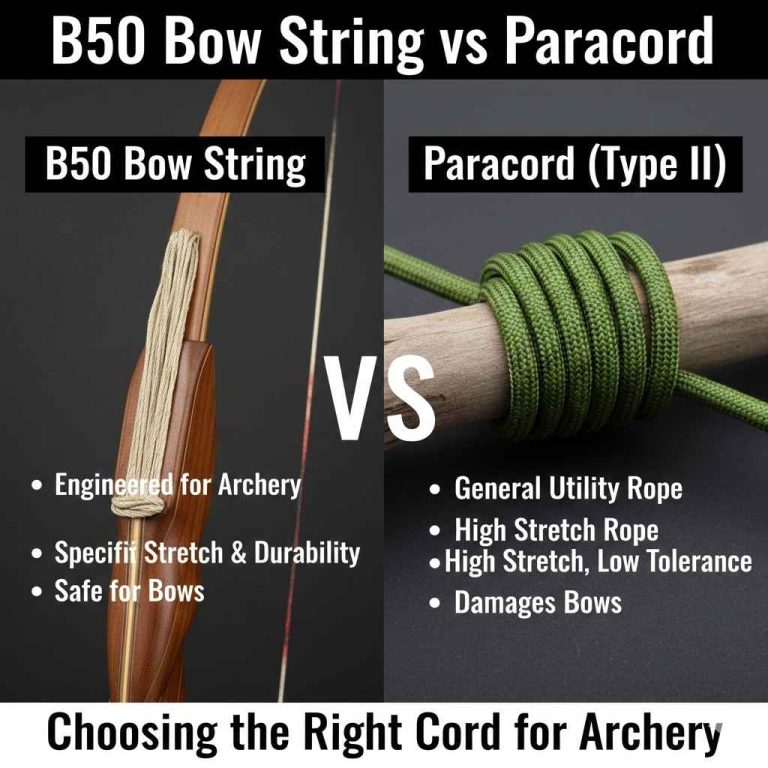
Dacron is a type of polyester fiber that’s often used for bow strings, particularly for older bows or bows that are more delicate. It’s a great choice because it’s strong, reliable, and stretches a bit. This stretch is actually good for some bows, as it helps absorb some of the energy when you release the arrow. This stretching action can lessen the strain on the bow limbs, possibly increasing the bow’s lifespan. Also, Dacron strings are typically more affordable than other string materials like modern high-performance materials.
The type of string you choose affects everything from how accurate your shots are to how well your bow holds up over time. It is important to know the bow’s manufacturer recommendations. A bow’s manufacturer builds a bow with the best materials, then recommends the string type that will perform best. Dacron strings are often a beginner’s choice because they are less sensitive to damage caused by archers that are new to the sport. They also tend to be less aggressive to bow limbs.
Dacron String Characteristics
Dacron strings are known for a few key traits. They are quite forgiving, meaning small mistakes in your shooting technique don’t ruin a shot. Dacron stretches more than faster materials, which can provide a softer feel when you shoot. It is also usually quieter than modern, high-performance string materials. All of these characteristics make Dacron a good choice for beginners and traditional bows.
- Durability: Dacron is quite resistant to wear and tear. It can handle repeated use without quickly breaking down.
- Stretch: This is one of Dacron’s main characteristics. This stretch helps absorb some of the impact of the shot, which can make it easier on your bow.
- Cost: Dacron is typically less expensive than other materials. This makes it a great option if you’re just starting.
Advantages and Disadvantages of Dacron Strings
Like any material, Dacron has its pluses and minuses. The stretch, which is good for some bows, can affect speed and accuracy slightly. The bowstring itself slows down the arrow slightly. Dacron strings are also a bit susceptible to weather. They can absorb moisture and change their performance in humid conditions. However, the advantages often outweigh the disadvantages, especially for beginners.
- Advantages: Dacron is inexpensive, gentle on older bows, and easy to work with.
- Disadvantages: Dacron is not as fast as other bow string materials.

Comparing B50 and B55 Dacron Bow Strings
Both B50 and B55 are types of Dacron, and the main difference is their strength. B55 is a slightly improved version of B50. While both have similar properties, B55 is made of a slightly different fiber and can be stronger. The string material can also influence how your bow shoots and feels. The choice between these two often comes down to personal preference and the type of bow you have. For most archers, the difference is negligible. The type of Dacron used by the bow’s manufacturer is usually recommended.
Let’s dive deeper into the differences between B50 and B55. Both are made of Dacron, but there are some critical distinctions. The main difference lies in the fiber itself. Understanding these differences can assist you in choosing the ideal bow string for your needs. We’ll look at the specific characteristics of each and how they compare.
Fiber Composition and Construction
The basic difference comes down to the fiber itself. B50 Dacron is made from a slightly different type of polyester fiber compared to B55. These differences in the fiber can impact the string’s overall strength and durability. The string is made by twisting these fibers. The number of fibers, the tightness of the twist, and how they’re combined all change the strength and how it feels.
- B50: B50 Dacron uses a classic Dacron fiber, offering reliable performance.
- B55: B55 Dacron is made using an improved type of Dacron fiber, often resulting in slightly better performance characteristics.
Performance and Properties: B50 vs B55
When it comes to shooting, both B50 and B55 Dacron strings perform well. The B55 might give you a slightly faster arrow speed or hold up a little better over time. But these differences aren’t always easy to notice, especially for beginners. Both strings are known for their stretch, helping to protect your bow and give a smooth shooting experience. The best way to know which material to use is to review the bow manufacturer’s recommendations.
| Feature | B50 Dacron | B55 Dacron |
|---|---|---|
| Strength | Good | Slightly Better |
| Stretch | Moderate | Moderate |
| Arrow Speed | Slightly Slower | Slightly Faster |
| Durability | Good | Slightly Improved |
Choosing the Right Dacron String for Your Bow
Picking the right string depends on your bow and personal needs. For older bows or bows with less durable limbs, B50 is often recommended. If you have a newer bow and want a little extra performance, B55 can be a good option. Consider your archery goals and how often you’ll be shooting. If you’re unsure, consulting with an archery expert can help you find the best match. An expert can inspect your bow’s manufacturer recommendations to pair the best string to your bow.
The right string can make your archery experience more enjoyable and effective. Keep in mind factors such as the bow type, the arrow’s draw weight, and your archery goals. Don’t be afraid to experiment, but always prioritize safety and the manufacturer’s recommendations.
Bow Compatibility and Safety Considerations
The first step is checking what your bow’s manufacturer recommends. Some bows are better suited for specific string materials. Using the wrong string can be dangerous and could damage your bow. Make sure the string is the right length for your bow. Also, always check the string for wear and tear before each use. A worn or damaged string can break, which is dangerous.
- Check the Bow’s Recommendations: Always follow the manufacturer’s guidelines for your specific bow.
- String Length: Use the correct string length. If the string is too short or too long, it won’t work correctly.
- Regular Inspections: Look over your string regularly for any signs of wear, such as fraying or damage.
Archery Styles and String Preferences
Your archery style and the type of shooting you do can also affect your string choice. Target archers might like a string that offers better accuracy. For those shooting field archery or hunting, you might want a durable string that can withstand different conditions. Consider the distance you shoot at, the type of arrows you use, and how often you practice. This will help you choose the best Dacron string. Also, take into account your personal feel and preferences.
- Target Archery: Accuracy and consistency are essential.
- Field Archery: Durability and weather resistance are key.
- Hunting: A balance of speed, durability, and quietness are often valued.
Building a Flemish String from B50 or B55
The “Flemish” part refers to the way the string is made. It’s constructed by twisting the string material into loops at each end. This method gives the string a little bit of flexibility and shock absorption. The process needs some skill, but it is a cool way to make a strong string. Several online resources offer tutorials to follow. The process for B50 and B55 is the same, with the only variation in the material used.
Building a Flemish string involves several steps, from cutting and twisting the string material to creating the loops. This process can be fulfilling for archers who enjoy working with their equipment. It allows for a string that is specifically fitted to your bow. Also, the Flemish string design is thought to assist the bow in taking the impact of the arrow’s release.
Materials and Tools Needed
To construct a Flemish string, you’ll need a few essential items. Of course, you’ll need either B50 or B55 Dacron string material. You also need a string jig, which is a device used to ensure the loops are the right size. Other tools, like serving material, can also be helpful. It is also important to have a way to measure the material.
- B50 or B55 Dacron: Choose your preferred string material.
- String Jig: This will help you create consistent loops.
- Serving Material: This protects the string where it contacts the bow.
- Measuring Tools: To cut the string to the correct length.
Step-by-Step String Making Process
The string-making process consists of several steps, from preparing the string material to finishing the loops. It begins by cutting the string material to the right length. The string is then twisted into loops at each end. Finally, the string is served. If you can follow instructions, you’ll be able to create your bow string. Remember to consult instructional videos or guides for better visual assistance.
- Prepare the Material: Cut the Dacron to the appropriate length, considering the bow’s specifications.
- Create the Loops: Twist the string into loops at both ends, using a jig.
- Serve the String: Add serving material to protect the areas that touch the bow.
- Finalize and Test: Ensure the string fits the bow correctly and is the right length.

Frequently Asked Questions
Question: Can I use B55 Dacron on an older bow designed for B50?
Answer: It’s usually fine to use B55 on a bow that recommends B50. B55 is slightly stronger, which can be an advantage. However, always check the bow’s manufacturer’s recommendations for the best results.
Question: How often should I replace my Dacron bow string?
Answer: Replace your Dacron string when it shows signs of wear, such as fraying or damage. Regularly check the string. Replace it at least every year or two, depending on how often you shoot.
Question: Is Dacron the best bow string material?
Answer: Dacron is a good choice for beginners and for some traditional bows. Modern materials can offer better speed and performance, but they may be harsher on older bows.
Question: Can I build my own Flemish bow string?
Answer: Yes, with the right tools and practice. Many resources are available online. String making is a cool way to become more involved with your archery gear.
Question: Does the weather affect Dacron bow strings?
Answer: Yes, Dacron can absorb moisture, which can change its performance in humid or wet conditions. Store your string in a dry place when not in use.
Final Thoughts
Choosing between B50 and B55 Dacron Flemish bow strings doesn’t have to be complicated. Both materials provide a reliable and economical solution for many archers. While B55 may offer a slight advantage in strength and performance, the difference might not be noticeable to everyone. The best way to know which material to use is to read the bow’s manufacturer’s recommendations. Remember, Dacron is a good choice for those who are just starting out or use bows that are older. Also, always inspect your string for any wear. If you’re unsure which string to use, seek advice from an experienced archer or your local archery shop. With the right information, you can get the best performance from your bow and enjoy your archery.
Related pick: Check today's price on Amazon