

When it comes to transporting and storing your bow, deciding between a bow case soft vs hard is an essential consideration to ensure your equipment’s safety and longevity. Whether you’re a novice archer or a seasoned pro, selecting the right bow case is crucial for protecting your investment, maintaining performance, and convenience during travel or storage.
In this must-have guide, we’ll explore the differences between soft and hard bow cases, highlight their pros and cons, and give you tips on how to choose the best protection for your bow under various circumstances.
Understanding the Bow Case Soft vs Hard Debate
Choosing between soft and hard bow cases depends largely on how you use your bow, your budget, and the level of protection you need. Both types have their unique advantages and disadvantages, making it important to understand what each offers.
What is a Soft Bow Case?
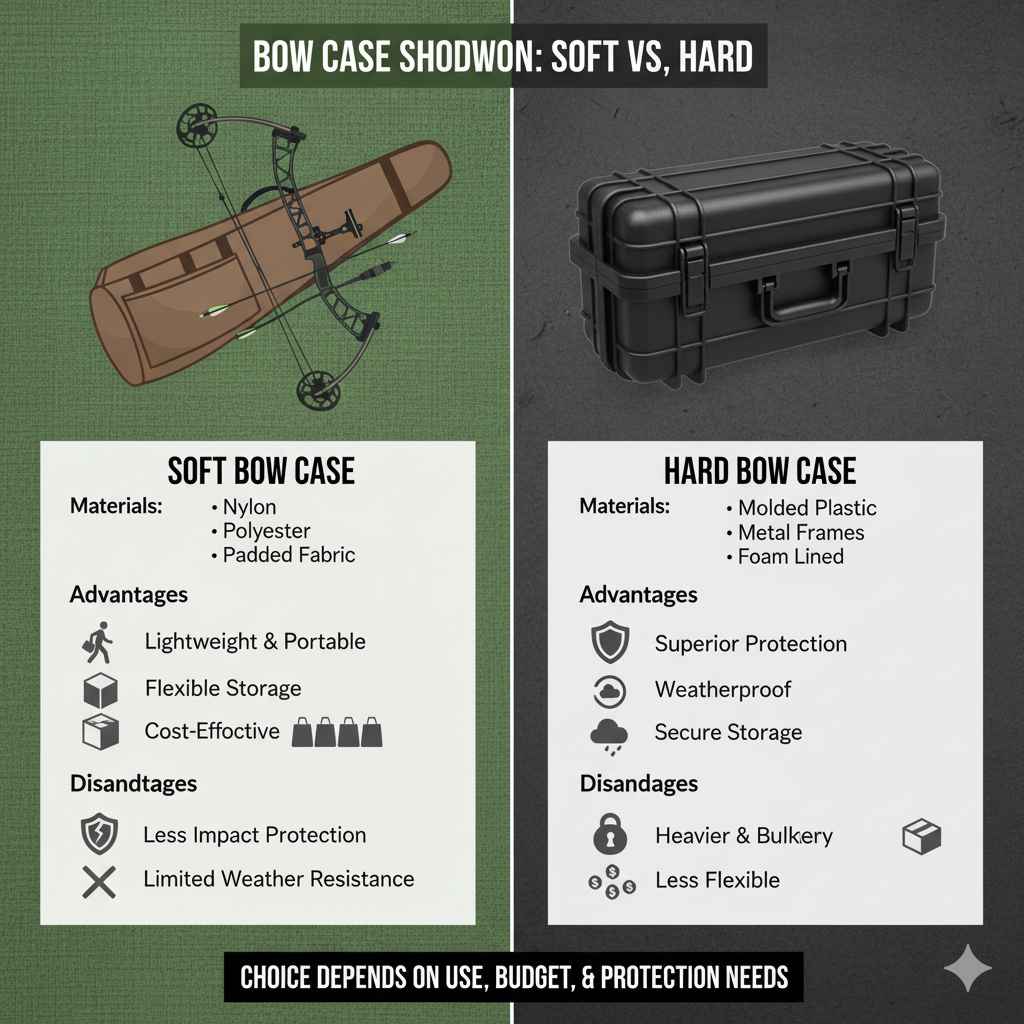
Soft bow cases are typically made from nylon, polyester, or other fabric materials, often padded to provide some cushion. They resemble large bags and generally include shoulder straps or handles for easy carrying.
Advantages of Soft Bow Cases
– Lightweight and Portable: Soft cases are easier to carry and less bulky, making them convenient for quick trips or walks to the range.
– Flexible Storage: They can often be compressed or folded when not in use, taking up less space.
– Cost-Effective: Soft cases tend to be more affordable than their hard counterparts.
– Extra Pockets: Many soft cases come with external compartments for accessories such as arrows, tools, gloves, or extra strings.
Disadvantages of Soft Bow Cases
– Less Impact Protection: Soft cases provide basic protection from scratches and minor bumps but do not safeguard against heavy impacts or crushing.
– Limited Weather Resistance: They may not be fully waterproof or shield the bow from extreme elements such as heavy rain or snow.
What is a Hard Bow Case?
Hard bow cases are constructed with molded plastics, fiberglass, or metal frames, often lined inside with foam to hold the bow securely. These cases are similar to protective equipment cases used for musical instruments or firearms.
Advantages of Hard Bow Cases
– Superior Protection: They shield your bow against drops, heavy impacts, and harsh handling during travel.
– Weatherproof: Most hard cases offer excellent resistance against water, dust, and environmental damage.
– Secure Storage: The rigid design minimizes bow movement, significantly reducing the risk of damage to delicate components like cams and strings.
Disadvantages of Hard Bow Cases
– Heavier and Bulkier: Hard cases tend to be less portable and more cumbersome to carry.
– Higher Cost: Typically, hard cases are priced higher due to their materials and protective features.
– Less Flexible: They don’t compress, so storage takes up more space.
Key Factors to Consider When Choosing Between Bow Case Soft vs Hard
1. Frequency and Type of Travel
If you regularly fly with your bow or travel long distances, a hard case is often the safer bet. Airlines and transportation services handle bags roughly, and the extra protection can prevent costly damage. For short trips or local range visits, a soft case may be sufficient and more convenient.
2. Protection Level Needed
Think about how delicate your bow is and how much protection it requires. Compound bows with complex cams benefit greatly from hard cases, whereas more rugged traditional bows may be safely housed in soft cases with adequate padding.
3. Storage and Space
If storage space is limited at home or in your vehicle, soft cases can be folded or squeezed into tight spaces, which isn’t possible with hard cases.
4. Budget Constraints
Soft cases are a budget-friendly option that still offers decent protection, especially for beginners. Professional archers or those with expensive equipment may want to invest in the sturdier hard case for peace of mind.
5. Additional Features
Check for features like extra pockets, internal compartments, handles, straps, lockable latches (hard cases), and water resistance.
How to Properly Use Your Bow Case for Maximum Protection
Regardless of your choice between soft or hard bow cases, following these tips will help keep your bow in prime condition:
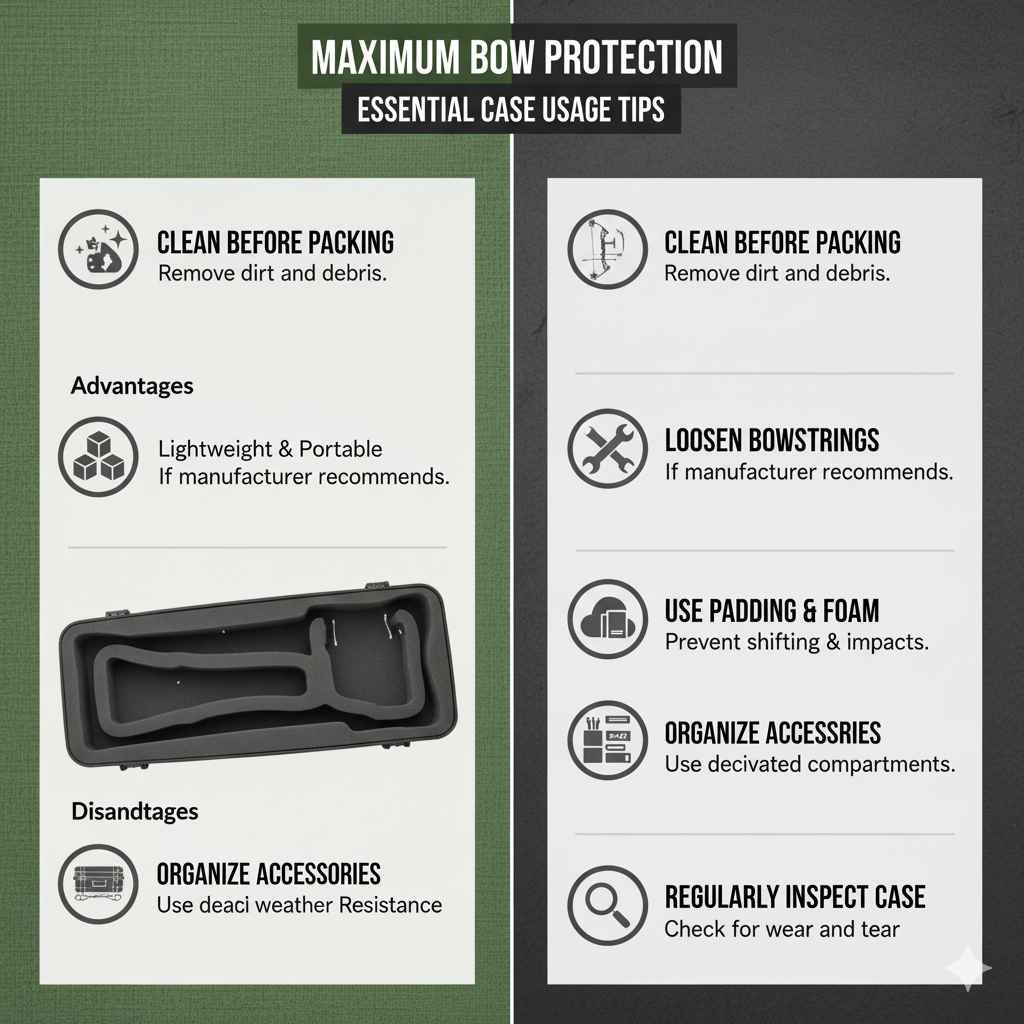
– Clean your bow before packing to prevent debris damage.
– Loosen bowstrings if recommended by the manufacturer.
– Use padding or foam inserts to prevent shifting inside the case.
– Store accessories separately or in dedicated compartments.
– Check your case regularly for wear and tear.
Final Thoughts on Bow Case Soft vs Hard
Choosing between soft and hard bow cases isn’t a one-size-fits-all decision. It ultimately depends on your lifestyle, budget, and how rugged your archery adventures are. Soft cases offer portability and practicality for everyday use and light protection, while hard cases provide peace of mind against serious damage during heavy travel or adverse conditions.
By understanding the pros and cons outlined in this guide, you can make a smart, informed choice that preserves the performance and lifespan of your bow. Whether you lean towards soft or hard protection, investing in a suitable bow case is a step every archer should take to protect their gear and enjoy their sport safely.