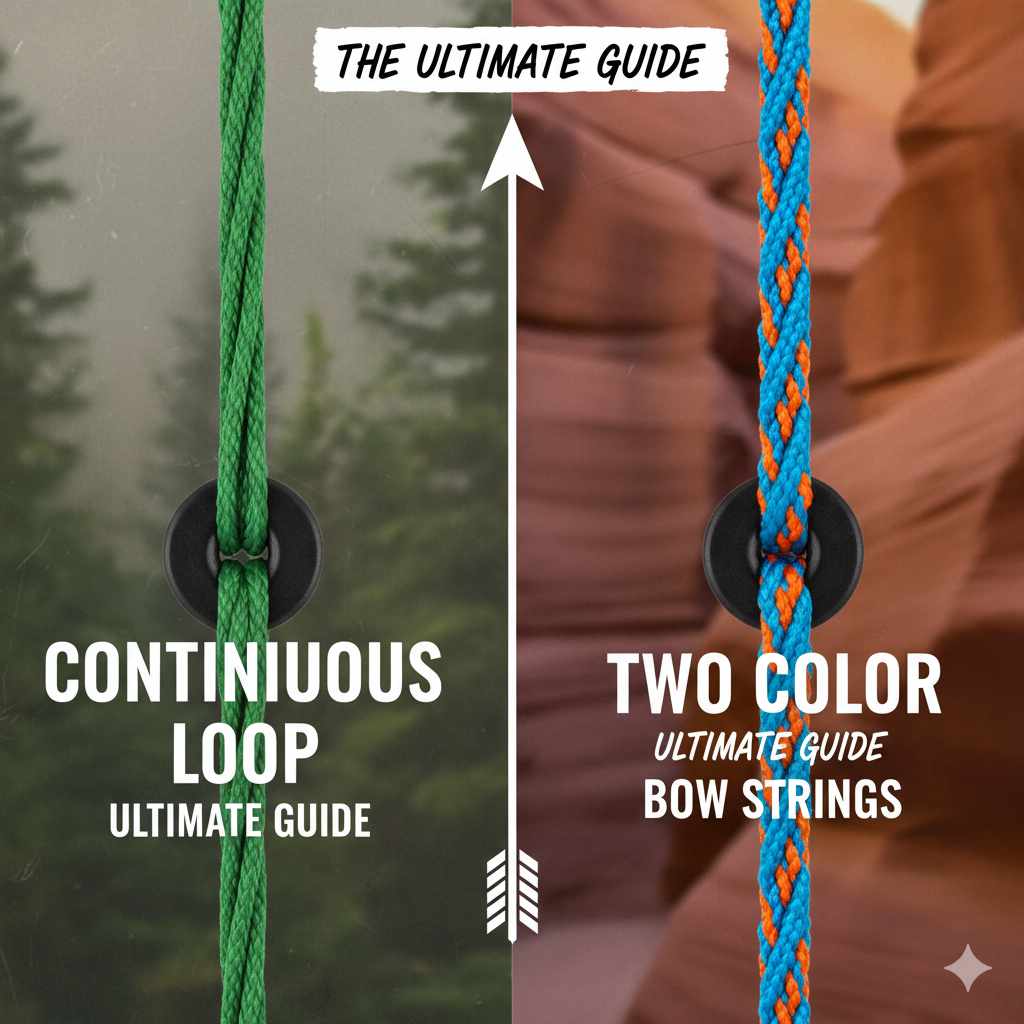
A continuous loop bow string is a single, unbroken strand of material wrapped to form a strong, simple string, prized for its durability. A two-color bow string is made by twisting two separate color bundles together, offering custom aesthetics and a clear visual center without sacrificing performance. Your choice depends on your bow type and style preference.
Hello archers! Salman here. When you first start in archery, you focus on the big things: the bow, the arrows, and hitting the target. But soon, you notice the smaller details, like the bow string. You might see some strings that are one solid color and others that are a beautiful twist of two colors. Does it make a difference? Absolutely! Choosing the right bow string can feel confusing, but it doesn’t have to be. It’s one of the simplest ways to understand your gear better and even add a personal touch to your bow.
Many new archers wonder if one type is stronger, faster, or better than the other. It’s a great question, and the answer depends on your bow, your goals, and your personal style. Don’t worry, I’m here to clear up all the confusion. In this guide, we will walk through everything you need to know about continuous loop and two-color bow strings. We’ll break down what they are, how they work, and help you choose the perfect one for your archery journey. Let’s get started!
What Is a Continuous Loop Bow String?
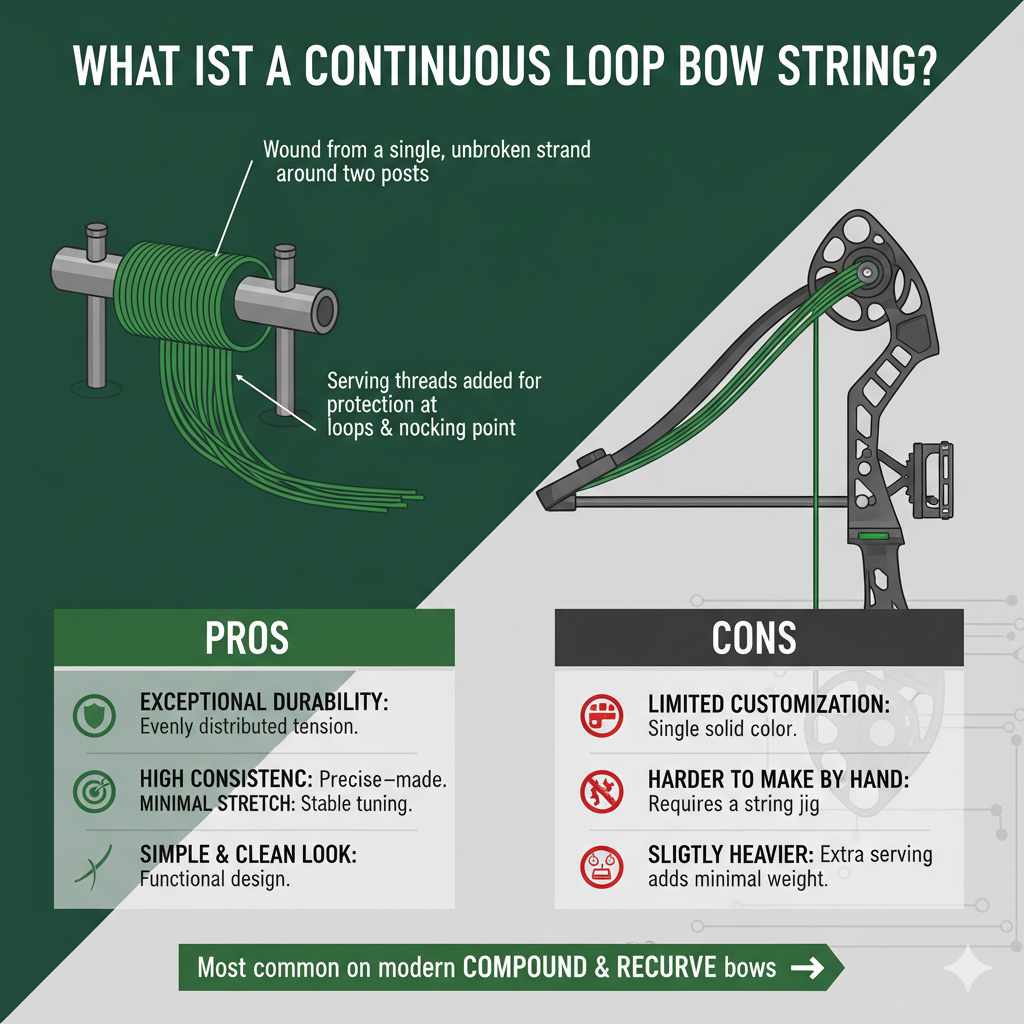
Imagine you have a very long piece of thread. To make a continuous loop string, you would wind that single thread around two posts over and over again until you have a thick bundle. The “loop” is continuous because it’s made from one unbroken strand. Once the bundle is thick enough, the ends are tied off, and special threads called “serving” are wrapped tightly around the end loops and the center where you nock your arrow. This serving protects the string from wear and tear.
This method creates an incredibly strong and consistent bow string. It’s the most common type of string you’ll find on modern compound bows and many recurve bows sold in kits. The construction is precise and reliable, which is why it’s a favorite for bows that need to perform the same way, shot after shot.
Pros of a Continuous Loop String
- Exceptional Durability: Because it’s made from one continuous strand, the tension is distributed very evenly. This makes it extremely strong and less likely to have a single point of failure.
- High Consistency: The manufacturing process is very precise, often done by machine. This means each string is nearly identical, giving you consistent performance every time.
- Minimal Stretch: Once settled, these strings are very stable and have very little stretch. This helps keep your bow’s tuning, like its brace height and nocking point, exactly where you set it.
- Simple and Clean Look: They have a sleek, no-fuss appearance. For archers who prefer function over flash, the simple, single-color look is perfect.
Cons of a Continuous Loop String
- Limited Customization: You are usually limited to a single, solid color. While you can get them in different colors, you can’t get the twisted or patterned look.
- Harder to Make by Hand: Making a high-quality continuous loop string requires a special piece of equipment called a string jig. It’s not something most people can easily make at home.
- Can Be Slightly Heavier: The extra serving on the end loops can add a tiny amount of weight compared to other styles, though this is usually unnoticeable for most archers.
What Is a Two-Color Bow String?
A two-color bow string, often called a Flemish twist string (especially in traditional archery), is made differently. Instead of one long strand, you start with two or more separate bundles of string material, often in different colors. These bundles are twisted in opposite directions and then laid together. The opposing twists cause them to wrap tightly around each other, forming a single, strong string.
The loops at the end are woven back into the string itself, creating a neat and secure loop without the need for serving (though some modern versions add it for extra durability). This technique has been used for centuries and is the hallmark of traditional longbows and recurve bows. It’s a beautiful craft that allows for endless color combinations.
Pros of a Two-Color String
- Endless Customization: The biggest draw is aesthetics. You can combine any colors you want to match your bow, your arrows, or just your personality. This makes your equipment truly your own.
- Clear Center Point: The twist of the two colors creates a natural visual pattern. Many archers find this makes it easier to find the center of the string and ensure consistent hand placement.
- Adjustability: You can add or remove a few twists from the string to make minor adjustments to your bow’s brace height. This gives you a little extra control over your bow’s tuning.
- Traditional Appeal: For those who shoot longbows or traditional recurves, the Flemish twist is the historically accurate and classic choice.
Cons of a Two-Color String
- Potential for Settling: A new, handmade string may stretch or “settle” a bit more initially than a continuous loop string. It might require a few adjustments after the first few dozen shots.
- Slightly More Maintenance: The twisted strands have more surface area, so you need to be diligent about waxing the string to keep it protected from moisture and fraying.
- Variable Quality: Since many are handmade, the quality can vary. A poorly made Flemish twist string can unwind or stretch unevenly. It’s important to buy from a reputable string maker.
Head-to-Head Comparison: Continuous Loop vs. Two-Color
So, how do they stack up against each other directly? Sometimes seeing the details side-by-side makes the choice much clearer. Let’s break it down by the factors that matter most to an archer.
| Feature | Continuous Loop String | Two-Color (Flemish Twist) String |
|---|---|---|
| Construction | A single, continuous strand of material is wound around a jig. Loops are formed and served with thread. | Two or more bundles of strands are twisted together. The loops are woven back into the string itself. |
| Aesthetics | Clean, simple, and functional. Usually a single, solid color. | Highly customizable with endless color combinations. Visually striking and traditional. |
| Performance | Extremely consistent and stable. Very little stretch after the break-in period. | Excellent performance, but may require a short settling-in period. Easily adjustable. |
| Durability | Highly durable due to even tension distribution and protective serving. | Very durable when made well. The braided loops are extremely strong. Requires regular waxing. |
| Best For | Compound bows, Olympic recurve bows, and beginner bows where consistency is key. | Traditional longbows, recurve bows, and archers who want to personalize their gear. |
Which Bow String is Right for You?
The best string for you really comes down to three things: your bow, your priorities, and your personal taste. There is no single “best” string—only the best string for your specific situation.
For the Absolute Beginner
If you are just starting, a continuous loop string is a fantastic choice. It’s reliable, low-maintenance, and consistent. Most beginner bow kits come with one for this very reason. It allows you to focus on learning proper form and technique without worrying about your equipment. You can always upgrade to a fancy custom string later once you have the fundamentals down.
For the Archer Who Loves Customization
If you love making your gear your own, a two-color Flemish twist string is the way to go. You can choose colors that match your bow’s riser, your arrow fletchings, or even your favorite sports team. It’s a fun and easy way to add a splash of personality to your setup. Plus, the process of choosing colors and seeing them twisted together is incredibly satisfying.
For the Traditional Archer
If you shoot a longbow or a barebow recurve, the Flemish twist string is part of the tradition. It complements the natural wood and classic look of these bows perfectly. It’s the historically accurate choice and is deeply connected to the heritage of archery. Most traditional archers wouldn’t have it any other way.
For the Competitive Compound or Recurve Archer
For those who need the utmost precision, like competitive target archers, the continuous loop string is generally the standard. The machine-made consistency ensures that there are no variables in the string that could affect a shot. When fractions of an inch matter, you want equipment that is as stable and predictable as possible.
A Quick Look at Bow String Materials
While the construction method is important, the material your string is made from also plays a huge role. Both continuous loop and two-color strings can be made from the same materials.
Here’s a simple breakdown of common materials:
- Dacron (B-55): This is a polyester material that is very forgiving because it has a good amount of stretch. It’s an excellent choice for older, vintage bows or wooden bows that cannot handle the shock of modern, low-stretch materials.
- Fast Flight: A very popular material that has much less stretch than Dacron. This translates to a faster arrow speed. It’s safe for most modern recurve and longbows with reinforced limb tips.
- Modern Synthetics (Dyneema, SK99, etc.): These are the highest-performing materials with virtually no stretch. They are used in most high-performance compound and Olympic recurve strings. They deliver maximum speed and consistency.
Always check your bow manufacturer’s recommendations before choosing a string material. Using a low-stretch material on a bow not designed for it can cause damage.
Safety and Maintenance: Keeping Your String in Top Shape
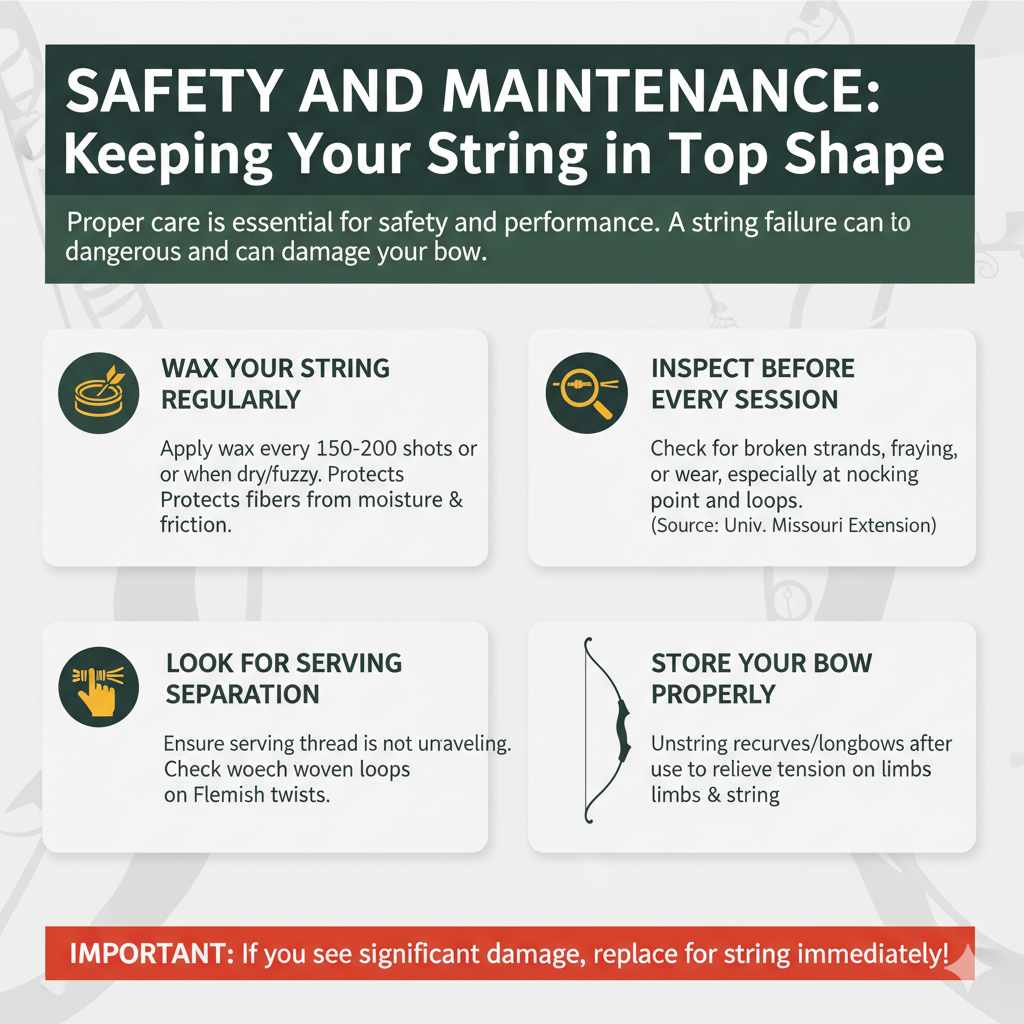
No matter which type of string you choose, proper care is essential for safety and performance. A string failure can be dangerous and can damage your bow. Luckily, maintenance is simple.
- Wax Your String Regularly: Apply a light coat of bow string wax every 150-200 shots, or whenever the string starts to look dry or fuzzy. Rub it in with your fingers or a piece of leather. This protects the fibers from moisture and friction.
- Inspect Before Every Session: Before you shoot, run your fingers along the string. Check for any broken strands, fraying, or excessive wear, especially around the nocking point and the loops. According to the University of Missouri Extension’s guide on archery safety, checking your equipment is a critical step before each use.
- Look for Serving Separation: On a continuous loop string, check that the serving thread is not separating or unraveling. On a Flemish twist, make sure the loops are still tightly woven.
- Store Your Bow Properly: If you shoot a recurve or longbow, it’s best to unstring it when you’re done for the day. This takes the tension off the limbs and the string, prolonging the life of both.
If you see any significant damage, like cut strands or severe fraying, replace the string immediately. It’s a small price to pay for safety.
Frequently Asked Questions (FAQ)
1. Is a two-color bow string stronger than a single-color one?
No. The strength of a bow string comes from its material and its strand count, not the color or construction style. A 16-strand continuous loop string and a 16-strand two-color string made from the same material will have comparable strength.
2. Can I use any type of string on my bow?
It depends on your bow. Most modern compound bows are designed specifically for continuous loop strings and cables. Traditional longbows and recurves work wonderfully with Flemish twist strings. The most important factor is using a string made of a material that is safe for your bow.
3. How often should I wax my bow string?
A good rule of thumb is to wax it whenever it starts to look or feel dry or fuzzy. For an active archer, this might be every few weeks or about every 150-200 shots. Don’t use too much wax—a light coat is all you need.
4. What is “string stretch” and is it bad?
String stretch, or “creep,” is the initial elongation a new string goes through. All new strings will settle a little bit. High-quality strings, regardless of type, will have minimal stretch after a short break-in period. Excessive or continuous stretching is a sign of a low-quality string.
5. Can I make my own bow string?
Yes, many archers enjoy making their own strings, especially Flemish twist strings. However, it requires some specific tools, materials, and practice to get it right. For a beginner, it is highly recommended to buy your first few strings from a reputable professional string maker to ensure they are safe and well-made.
6. Does the color of the string affect my arrow’s speed?
No, the color has zero impact on performance. It is purely for aesthetics. A bright pink string will shoot an arrow just as fast as a plain black one, assuming they are made from the same material and strand count.
7. How do I know what length of string to buy?
For recurves and longbows, the string length is typically 3 to 4 inches shorter than the bow’s AMO length (the length written on the bow). For compound bows, you must use the exact length specified by the manufacturer. If you’re unsure, it’s always best to consult your local archery shop or the bow manufacturer’s website.
Conclusion: The Best String is Your String
At the end of the day, the debate between continuous loop and two-color bow strings isn’t about which one is definitively “better.” Both are excellent, reliable choices that have served archers for years. The real decision comes down to what fits you and your bow.
The continuous loop string is the workhorse: a model of consistency, durability, and no-fuss performance. It’s perfect for the precision-focused archer and a safe, reliable starting point for anyone new to the sport.
The two-color string is the artist: a beautiful, customizable piece of equipment that connects you to the rich history of archery. It offers a touch of personal flair and adjustability that many traditional archers and hobbyists adore.
Don’t get too caught up in thinking one is superior to the other. Choose the string that excites you, feels right for your bow, and makes you want to get out and practice. After all, the most important part of archery is enjoying your time on the range or in the field. Pick your style, take good care of it, and focus on sending those arrows flying.
Happy shooting!