Learning archery can be super fun, but the Different Sounds a Compound Bow Makes During Arrow Release can be confusing for beginners. You might hear strange noises and wonder if something’s wrong with your bow or if you’re doing something incorrectly. Don’t worry, it’s very common! This guide will break down those sounds in simple steps so you can figure out what’s happening. Get ready to explore what causes the sounds and how to solve any issues.
Understanding Compound Bow Acoustics During Arrow Launch
When you fire a compound bow, many things move quickly, creating sound. These noises aren’t random; they happen because of the design and operation of your bow. Each part interacts, generating unique sounds. Some noises are normal, indicating a smooth shot. Others might show problems that need fixing. Learning about these sounds helps you become a better archer and protect your equipment.
Normal Sounds of a Compound Bow
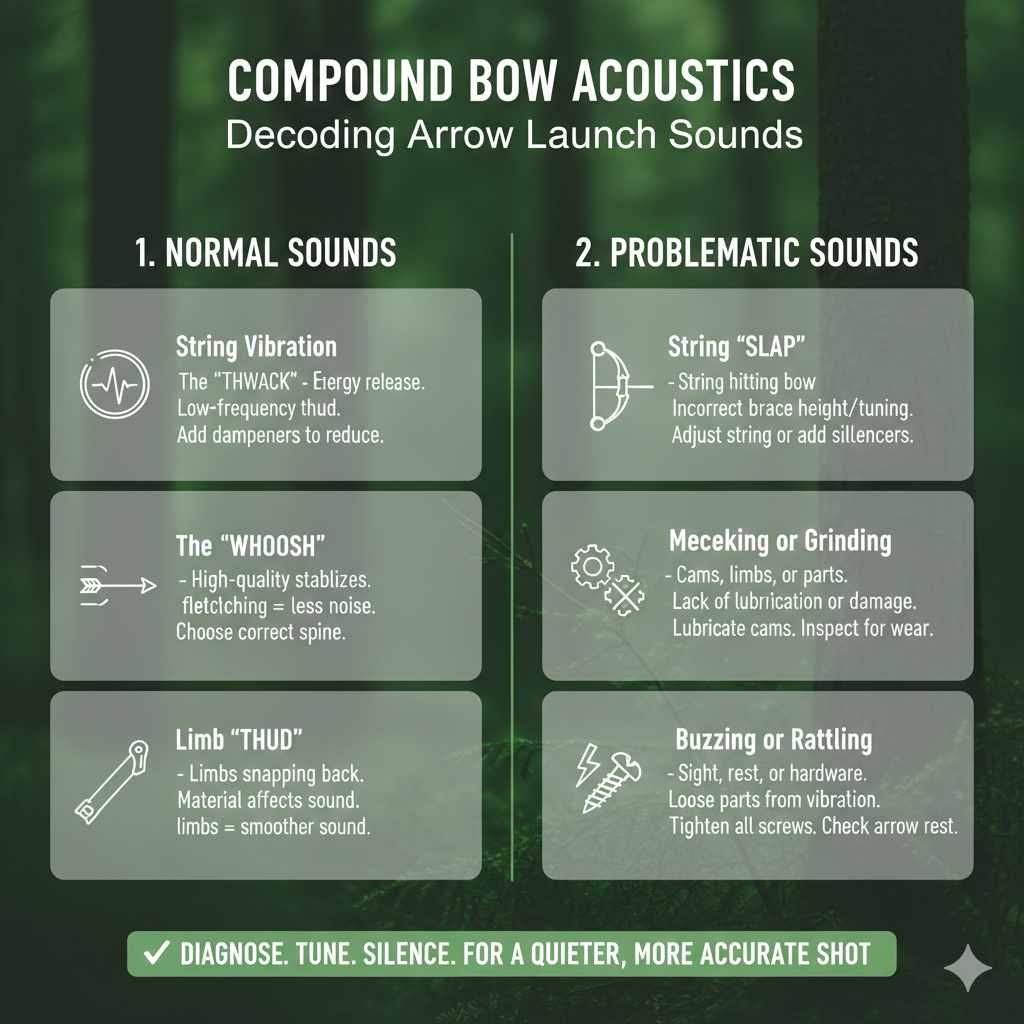
A properly functioning compound bow makes some expected sounds when you release an arrow. These sounds come from the energy transfer. For instance, the string snapping forward makes a noise as it impacts the bow. The arrow itself might whistle slightly as it flies. These sounds typically signal a well-executed shot. They provide feedback about the bow’s operation.
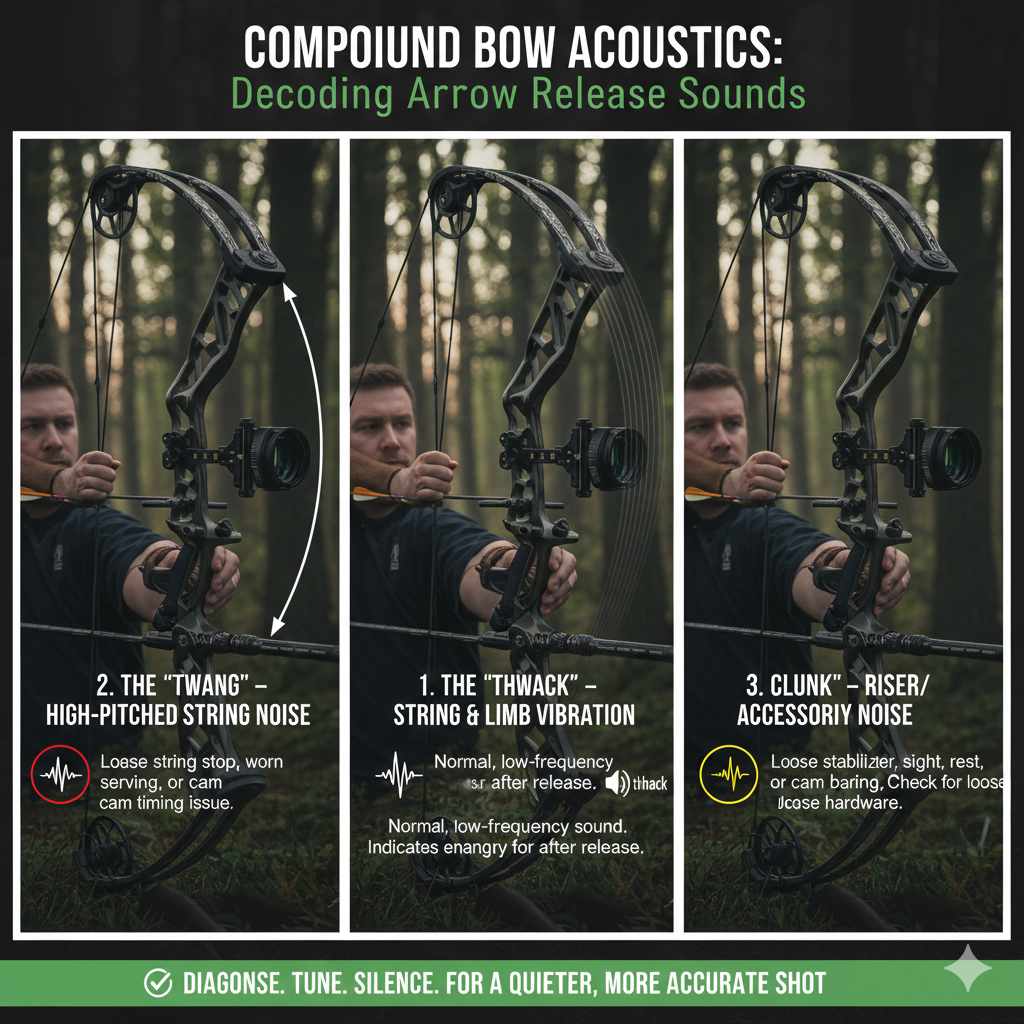
String Vibration. The bowstring vibrates as it moves, making a distinct “thwack” sound. This is caused by the sudden energy transfer when the arrow is released. This energy is pushing the string forward.
The bowstring’s material and tension affect how it vibrates, with different materials making different tones. Archers often tune the string using specific dampeners to reduce this vibration.
Arrow Flight. Arrows make a subtle sound as they cut through the air, often a soft “whoosh” or a whistle. The arrow’s shape, fletching, and weight alter the sound.
The fletchings, the small vanes at the arrow’s back, are made to stabilize the arrow. High-quality fletchings help the arrow spin in a way that minimizes noise. Choosing the right arrow type for your bow and shooting style also influences the sound of flight.
Limb Movement. The bow’s limbs flex and then snap back into position after the shot. This movement produces a subtle “thud” or “snap.” The design and materials of the limbs play a role in this sound.
Modern compound bows use different limb materials, such as fiberglass or carbon fiber. These materials impact the sound of the limbs flexing. Limbs tuned to work correctly create a smoother, less noisy experience.
Problematic Sounds of a Compound Bow
Certain sounds suggest something isn’t right with your bow or shooting form. These noises can affect accuracy and damage your equipment if ignored. Identifying these sounds quickly helps you resolve problems. The sooner you correct these issues, the safer and more enjoyable your archery experience will be. Pay close attention to what your bow is telling you.
String Slap. This occurs when the bowstring hits the bow itself after the shot, usually a loud “thwack” or “slap.” It can mean the string is too long or the bow isn’t correctly tuned.
String slap can reduce arrow speed and damage the bow. It is usually fixed by adjusting the brace height (the distance between the string and the bow’s grip) or adding string silencers. Regular bow maintenance includes inspecting and tuning to prevent these types of issues.
Creaking or Grinding. These sounds might mean problems with your bow’s cams, limbs, or other moving parts. They typically mean that something needs lubrication or is damaged.
Regular maintenance, including lubricating the cams and other parts, keeps your bow working correctly. If you hear these noises, check for any wear or damage. Replace worn parts as needed. Always get a professional inspection if you aren’t sure how to proceed.
Buzzing or Rattling. These sounds indicate loose parts or a problem with the arrow rest or sight. The vibration from the shot causes the loose parts to rattle.
Ensure all screws and bolts are tight. Also, check the arrow rest for wear or damage, and make sure it’s functioning properly. A loose sight can also cause these sounds, so check and tighten any related screws.
Common Factors That Influence the Sounds
Many factors affect the sounds a compound bow produces. These are things like the bow’s design, the archer’s technique, and the equipment used. Getting to know these factors helps you better control your shots and address any potential problems. Adjusting these things will enhance your archery skill.
Bow Design and Construction
The design and how your bow is built greatly impact the sounds it makes. The type of materials used, the cam system, and even the length of the bow all contribute to the sounds. A well-designed bow will have features that absorb vibration and reduce noise. Different bows are made for various uses, such as target shooting or hunting, and the designs vary accordingly.
Cam System. Compound bows use a cam system to increase the bow’s power and make it easier to hold at full draw. Different cam designs, such as single, dual, or binary cams, can influence the sound profile. Some cams are smoother and quieter than others.
Cams are engineered to provide maximum efficiency. A cam design impacts the bow’s draw cycle, speed, and how it feels to shoot. Cam problems can cause odd noises. Make sure the cams are correctly aligned and in good condition.
Limb Material. The limbs of your bow are usually made from fiberglass or carbon fiber. The material impacts the sound generated during the shot. Carbon fiber limbs tend to be lighter and can reduce vibration.
Limb materials directly affect the bow’s performance. The quality of the limbs is a key factor. Higher-quality limbs often have better sound dampening properties. Regular inspection of the limbs for any cracks or damage is essential for safety.
String Material. Bowstrings are made from various materials, such as Dacron, Dyneema, or FastFlight. Each material affects the sound the string makes when it vibrates. The type of string material can also impact the string’s speed and durability.
The string material is a key part of the bow setup. Different materials have different stretch characteristics. Archers may choose a string based on their shooting style and the bow’s specific requirements. Regular string maintenance extends the string’s life and minimizes noise.
Archery Technique and Form
How you hold and release the arrow plays a significant role in the sounds your bow makes. Good form reduces unnecessary noise. Techniques like a clean release and proper follow-through help prevent problems. Consistent practice builds the proper muscle memory for quiet and accurate shots.
Release Technique. The way you release the string affects the noise level. A clean release (where the string slides cleanly off your fingers or release aid) produces less sound. A jerky release can make the bow vibrate more.
A smooth release is essential for accuracy. A bad release can introduce inconsistencies that affect where the arrow goes. Practice using the right release technique, whether finger release or using a release aid. This can involve practice shots and drills to enhance your release.
Follow-Through. After releasing the arrow, keep your form stable. Proper follow-through reduces vibration. Letting the bow move freely after the shot minimizes unwanted sounds.
Follow-through helps maintain consistency in each shot. Maintaining the correct posture and focus after the release helps to improve your archery technique. It prevents the bow from moving around. Good follow-through is a sign of skill.
Grip. Gripping the bow too tightly can cause unwanted vibrations. Holding the bow loosely, with a relaxed grip, helps minimize noise. A good grip gives you control.
A relaxed grip helps the bow absorb energy during the shot. Over-gripping causes more vibration. Practicing your grip helps in comfort and noise reduction. Proper hand placement on the bow can improve shot accuracy.
Equipment and Accessories
The accessories you use with your bow can also influence the sound. Things like string silencers, stabilizers, and arrow rests can help manage vibrations and reduce noise. The right accessories can greatly affect your shooting experience. This includes accuracy, comfort, and noise control.
String Silencers. These are small devices attached to the bowstring. They dampen the string’s vibration, reducing the “twang” sound. Various types of string silencers are available.
String silencers reduce noise and vibration. Archers use different materials for silencers, such as cat whiskers or yarn, to meet their needs. Proper placement and maintenance are essential to keep these silencers working.
Stabilizers. A stabilizer helps balance the bow and absorb vibrations. This will result in less noise when shooting. Stabilizers come in various lengths and weights, allowing archers to customize their setup.
Stabilizers can reduce the bow’s movement, which leads to better accuracy. The right stabilizer helps stabilize the bow during the shot, reducing unnecessary movement. Experiment with different types to find the best fit for your bow.
Arrow Rest. The arrow rest supports the arrow before the shot. A well-adjusted rest minimizes noise and ensures a clean arrow release. Different types of rests are made to fit various shooting styles and bow designs.
A proper arrow rest is very important for consistent shooting. The arrow rest should keep the arrow in a position that ensures consistent arrow flight. Regularly checking the arrow rest for wear and tear is crucial to ensure it functions as it should.
Troubleshooting Common Compound Bow Noises
When you hear a sound you don’t recognize from your compound bow, knowing how to solve the problem is very important. This section will walk you through various common issues and how to fix them. You’ll also learn the steps to perform a basic checkup and when to reach out for professional help. Learning to troubleshoot helps keep your equipment working correctly and improves your shooting experience.
Identifying the Source of the Noise
The first step in fixing a noise is to identify where it comes from. Listen carefully while shooting to tell what causes the sounds. You will be able to narrow down the source of the sounds by doing this. Some sounds happen when you release the arrow, and others happen during the shot cycle. Proper analysis will guide your repair.
Observe the Shot. Watch the bow and arrow when shooting. Pay attention to how each component moves. This will give you clues about the sound’s origin.
By watching the bow, you can see how things interact. Look for any parts that seem to vibrate excessively or make unusual movements. Focus on string movement, limb action, and how the arrow leaves the bow.
Isolate the Problem. If possible, try shooting the bow without certain accessories to see if the sound changes. For example, remove string silencers or stabilizers to see if these components are the cause.
Systematically remove or adjust parts. This helps to determine which element causes the noise. This method simplifies the troubleshooting process. This helps you figure out the precise part that is causing the problem.
Use a Sound Meter. A sound meter can help you pinpoint the sound. Record the decibel levels of the sound. This will tell you how loud it is and also allow you to compare shots.
Sound meters give you a more accurate way to measure and compare sounds. This allows you to measure and evaluate different solutions. The data lets you quantify the impact of repairs and adjustments you make.
Step-by-Step Fixes for Noisy Bows
Once you identify the noise, you can start troubleshooting it. Here’s a set of steps for the most common issues. These solutions are generally easy to implement and will improve your bow’s performance and accuracy. These steps are easy to understand and get you going.
String Slap. If the string is slapping the bow, first, check the brace height. Adjust the brace height by twisting or untwisting the bowstring.
Ensure the string is at the right distance from the grip. A proper brace height prevents the string from hitting the bow. The manufacturer’s guidelines provide the correct brace height measurements.
Loose Components. Tighten any loose screws or bolts on the bow, arrow rest, and sight. Make sure all fasteners are secure. If necessary, use a small amount of thread locker on the screws.
Loose components cause vibration and noise. Regular checking and tightening of your bow’s parts is very important for safety. Using thread locker prevents screws from loosening over time.
Arrow Rest Issues. Ensure your arrow rest is correctly set up and in good condition. Check for any damage or wear. Replace any worn components or replace the whole rest if needed.
The arrow rest has a big influence on arrow flight. Make sure it is positioned correctly for consistent shots. Inspect the rest for any signs of damage. Replacing or repairing it will ensure the arrow launches smoothly.
When to Seek Professional Assistance
Some problems need a professional touch. This is especially true for complex issues. Trying to repair things yourself can sometimes worsen the issue. A skilled archery technician has the tools and skills to solve tough problems. This guarantees the safety and performance of your bow.
Major Component Damage. If you notice cracks in your limbs, cams, or other important parts, you should immediately stop shooting and have the bow checked. The damage may be severe.
Cracks can lead to catastrophic failures. A professional can assess the damage. They can tell you if a component can be repaired or if it needs to be replaced. Safety is the most important part of archery.
Complex Tuning Issues. If you’ve tried the basic troubleshooting steps and the bow still sounds wrong, it may need advanced tuning. Professional tuners have specialized tools and expertise.
Proper tuning involves aligning the cams, adjusting the draw weight, and optimizing the arrow flight. Professional tuners can use equipment. They will fine-tune the bow for maximum performance. This is crucial for optimal accuracy.
Unexplained Noises. If the cause of the noise remains a mystery, consult with an archery expert. They can examine the bow. They may have the tools to figure out the source of the problem.
Unusual noises can indicate subtle problems that are hard to spot. A technician can inspect the bow. They can identify the specific problem. This prevents further damage. This can also enhance the accuracy and life of your equipment.
Different Sounds During Arrow Release: Sample Scenarios
Here are some examples of what you might encounter. They will help you better identify the problem. You can match the sounds to likely problems. Being prepared will make you a better archer.
- Scenario 1: You hear a loud “thwack” after each shot. The sound is coming from the bowstring hitting the bow. Upon inspection, you notice your brace height is slightly off.
To fix this, adjust the brace height by twisting or untwisting the bowstring until it matches the manufacturer’s recommended specifications. This should reduce or eliminate the string slap. If the problem persists, you may want to check with a professional.
- Scenario 2: You’ve just installed a new stabilizer, and now you hear a rattling noise with each shot. You can’t figure out where it’s coming from. After a closer look, you find the stabilizer’s attachment screw is loose.
Tighten the attachment screw securely. You can also apply a small amount of thread locker. Check all other screws and attachments on your bow to ensure everything is secure. Make sure to periodically check the stabilizer and other accessories for any signs of wear and tear.
How Sound Affects Your Archery Performance
The sounds a compound bow makes have a surprisingly big impact on your archery skills. These sounds affect both your physical and mental aspects of shooting. Controlling noise leads to better performance. Here’s how.
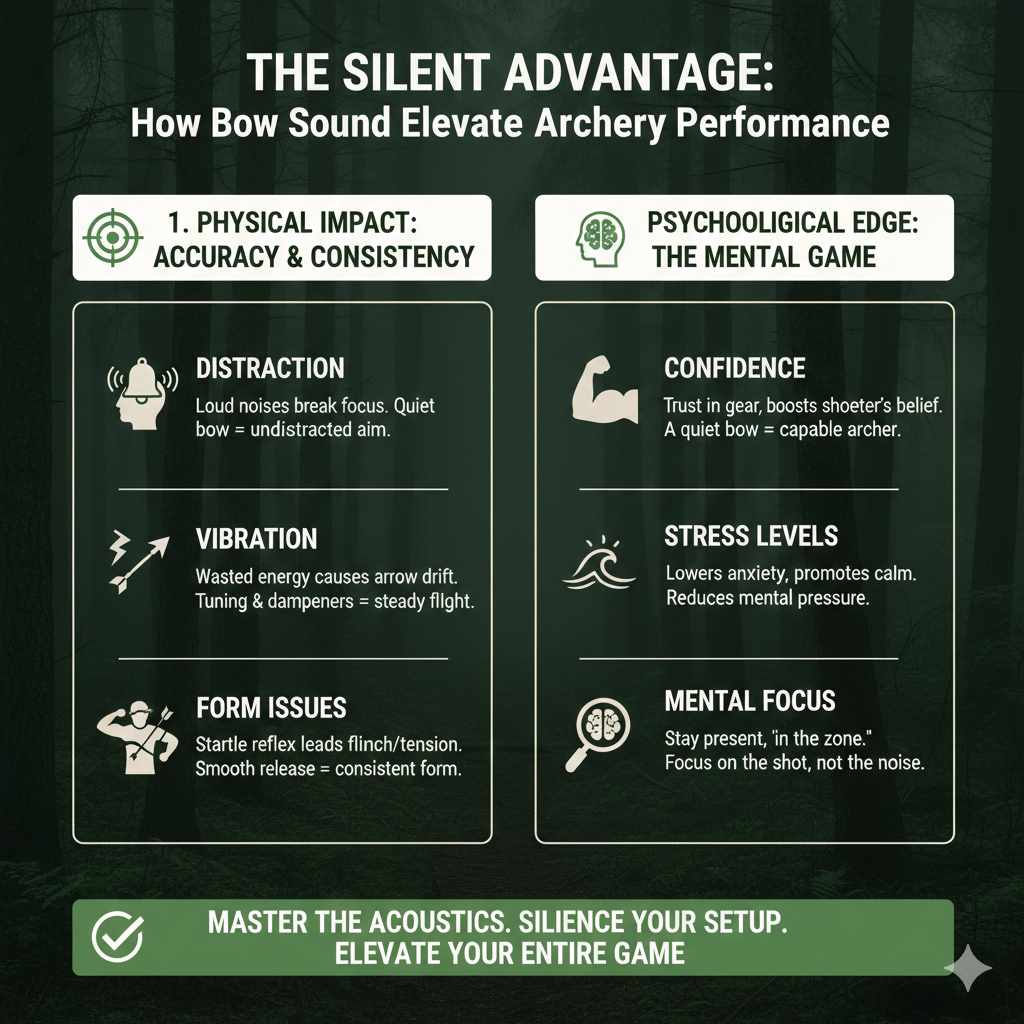
Impact on Accuracy and Consistency
The noise from a compound bow affects your shots. Things such as vibration and unusual sounds can cause inconsistencies. The impact on your shooting skill shows why it is so important to address the noise your bow makes.
Distraction. Loud or unexpected noises can distract you. You might lose your focus on the target. This leads to inaccurate shots.
A quiet bow helps you concentrate. It removes distractions. By reducing the noise, you can focus on the form. Concentrate on your shot sequence.
Vibration. Excessive vibration can affect arrow flight. This can make the arrow drift. This can cause you to miss the target.
Reducing vibration helps maintain a steady shot. Make sure all parts are tight. Make sure to use silencers and stabilizers. Proper tuning and a quiet bow give you better results.
Form Issues. Unwanted sounds can disrupt your form. They can cause you to flinch or tense up. Both of these can affect your aim.
Correct form is key for good shots. Focus on a relaxed grip and a smooth release. Maintain a proper follow-through. A consistent form gives you accurate results.
Psychological Effects of Bow Noise
The sounds from a compound bow also affect your mental state. Managing the sounds gives you an advantage. Here’s what it means for your archery.
Confidence. A well-tuned, quiet bow boosts your confidence. You are likely to have a good shot. A shooter feels more capable.
This confidence improves your overall mental game. It helps you relax and shoot with more confidence. When you know your bow is shooting smoothly, you focus on the task at hand.
Stress Levels. Loud or strange sounds can increase stress. This can make you anxious. The heightened stress can also affect your performance.
A quieter bow and a better sound profile can lower stress levels. You can stay calm and concentrate on shooting. This reduces the mental pressure.
Mental Focus. A quiet bow enables your focus. It also helps you stay present in the moment. You’ll be able to focus on the shot.
It takes your attention away from distractions. This enables you to be in the zone and shoot more accurately. Proper tuning and care can really help your mental game.
Frequently Asked Questions
Question: Why does my bow make a twanging sound?
Answer: A twanging sound usually happens when the bowstring hits the bow itself after the shot. This is often caused by the bowstring not having the right brace height. Adjusting the brace height usually fixes this.
Question: What causes a rattling sound when I shoot?
Answer: Rattling often comes from loose parts like screws or bolts. This sound is caused by vibration during the shot. Make sure everything is tight and secure. Check the arrow rest and sight, too.
Question: Are some bow sounds normal?
Answer: Yes, certain sounds are normal, like the “thwack” of the string and the arrow’s “whoosh”. These indicate proper bow function.
Question: How do string silencers work?
Answer: String silencers attach to the bowstring to absorb vibrations. They reduce the amount of noise and vibration that your bow produces. They help make your shots quieter.
Question: When should I seek help from a bow technician?
Answer: You should get help when you have major component damage, complex tuning issues, or when noises persist despite your best efforts. A professional can accurately diagnose and correct these problems.
Final Thoughts
The sounds a compound bow makes during arrow release provide valuable insights. Understanding the Different Sounds a Compound Bow Makes During Arrow Release is key to improving your archery. You’ve explored normal sounds, signs of potential problems, and ways to fix those issues. By paying attention to these sounds, you can improve your shooting skills, avoid damage to your equipment, and have a more enjoyable experience. Remember, consistent practice and regular maintenance are very important. Listen to your bow, identify any issues quickly, and make adjustments to shoot more accurately. With a little care, you’ll be well on your way to becoming a skilled and successful archer!