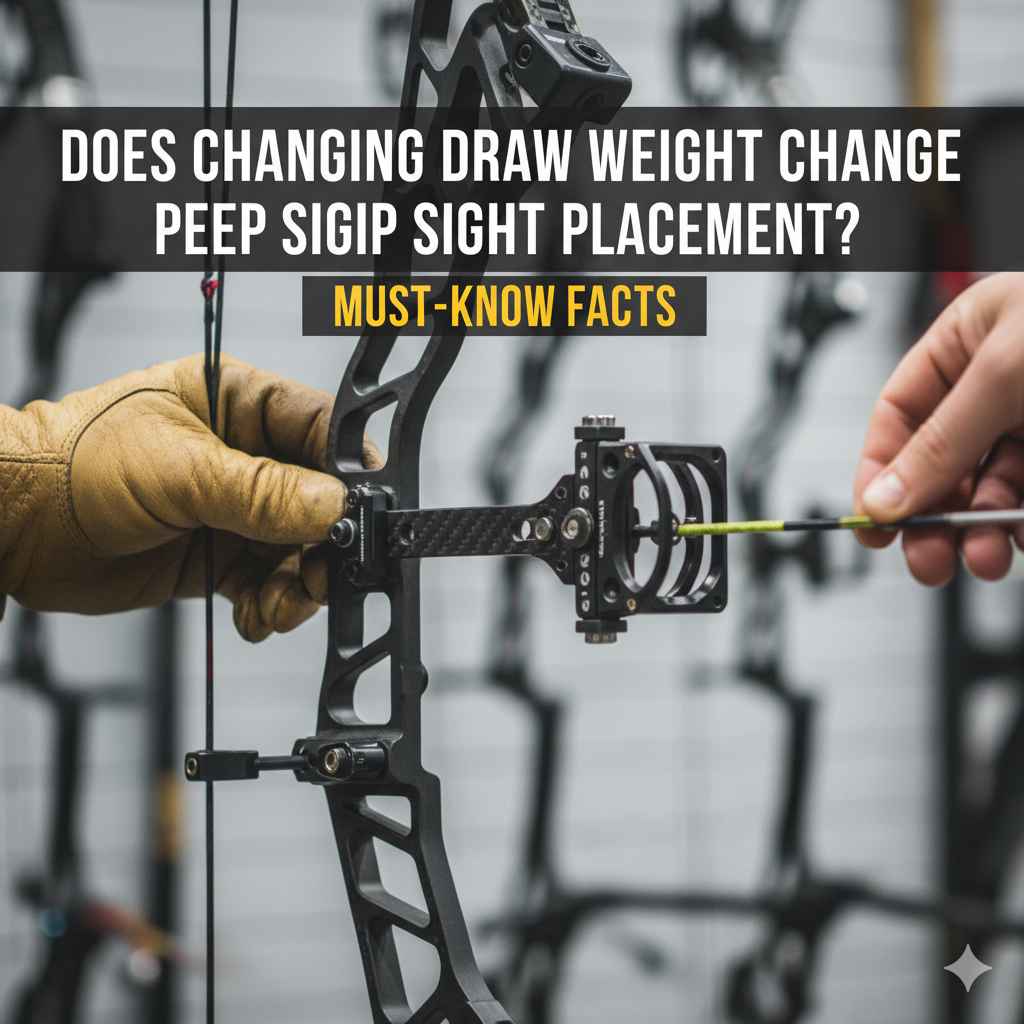
If you’re an archer looking to fine-tune your equipment for better accuracy, you might wonder: does changing draw weight change peep sight placement? This is a common question because adjusting draw weight can alter various aspects of your bow’s performance. Understanding how these changes affect peep sight placement is crucial for maintaining consistent shooting form and improving precision.
In this article, we’ll delve into the relationship between draw weight adjustments and peep sight positioning, clarify misconceptions, and provide practical tips to optimize your setup.
Understanding Draw Weight and Its Impact on Bow Mechanics
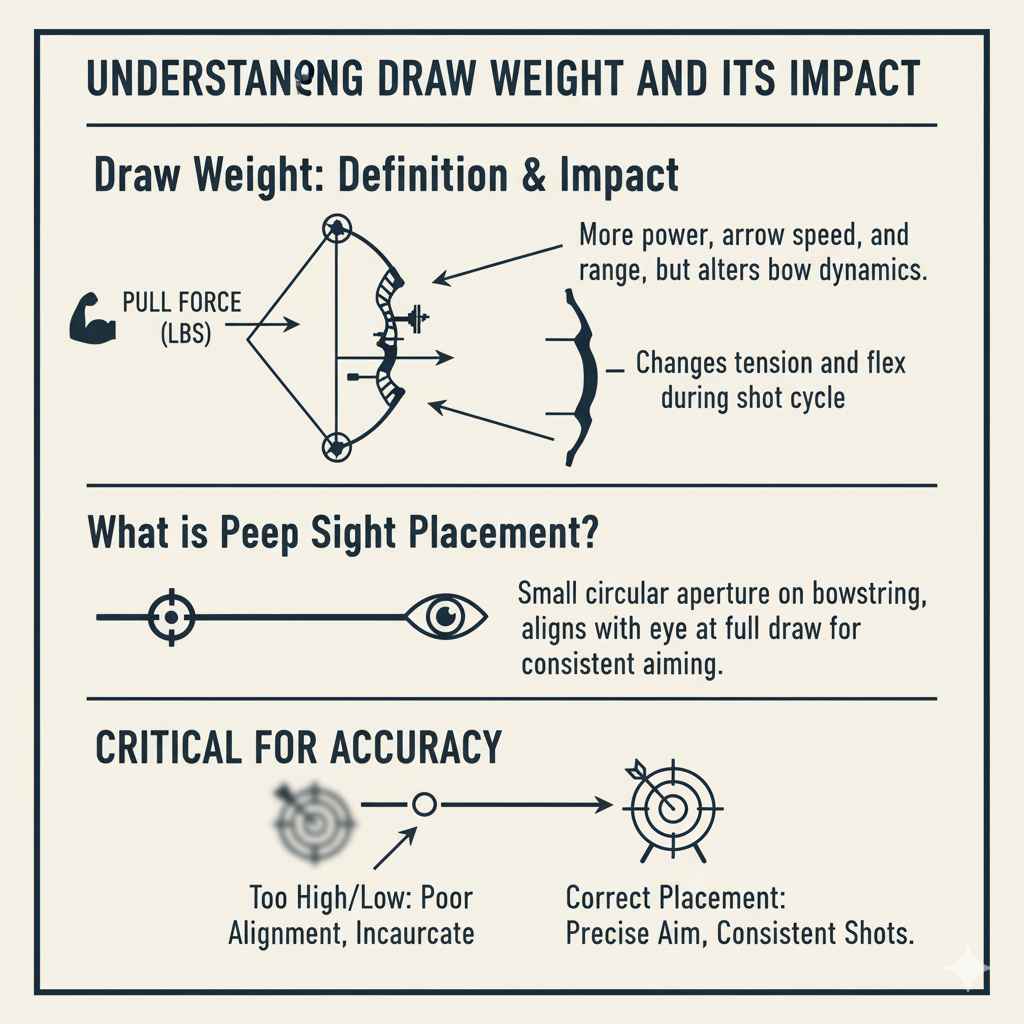
Draw weight refers to the amount of force, usually measured in pounds, required to pull a bowstring back to its full draw length. Increasing draw weight generally means more power and potentially greater arrow speed and range. However, this adjustment can also influence the bow’s dynamics.
When you increase or decrease draw weight—by changing limbs or adjusting limb bolts—you alter the tension and compression forces within the bow. This can subtly affect the way the riser (the grip area of the bow) flexes during the draw and release cycle.
What is Peep Sight Placement?
Before diving deeper, it’s essential to understand what peep sight placement involves. A peep sight is a small circular aperture installed on the bowstring, aligned with your eye when at full draw. Its primary purpose is to help you aim more consistently by providing a precise reference point when looking through your front sight.
Correct placement of the peep sight is critical. If it’s too high or too low on the string, it can interfere with your line of sight or cause alignment issues, resulting in poor accuracy.
Does Changing Draw Weight Change Peep Sight Placement? The Core Truth
The simple answer is: usually, changing draw weight does not directly require changing peep sight placement. However, there are some important nuances to consider.
Why It Usually Stays the Same
Peep sight placement is generally determined by your eye dominance, anchor point, and draw length rather than draw weight. Since these factors dictate the position of your head and hand at full draw, the peep sight’s location on the string needs to correspond with this anchor point to maintain a consistent sight picture.
If you increase or decrease your draw weight without altering your draw length or anchor reference, the relative position of your eye to the string remains unchanged. Therefore, your existing peep sight placement should still be accurate.
When Does Peep Sight Placement Need Adjustment?
There are exceptions where changing draw weight might indirectly affect peep sight placement:
– Draw Length Changes: Sometimes increasing draw weight involves adjusting limbs or upgrading bow parts that could alter the draw length slightly. If your draw length changes, your anchor point often shifts, and this would necessitate moving your peep sight up or down accordingly.
– Bowstring Stretch or Replacement: Higher draw weights may require stronger, thicker bowstrings. New or different strings can alter the overall string length slightly, which might shift the peep sight position on the string relative to your eye. This can prompt adjustments.
– Different Shooting Form Due to Increased Weight: When shooting a heavier draw weight, some archers unconsciously modify their anchor or head position to manage the added effort, subtly changing the eye-to-string relationship. This can require peep sight tweaks to maintain a consistent aiming solution.
How to Check If Your Peep Sight Needs Moving After a Draw Weight Change
To determine if you need to adjust your peep sight after changing draw weight, perform these checks:
1. Draw and Anchor: Draw your bow with your usual form. Look through the peep sight and confirm if your eye aligns perfectly with your front sight pin or scope.
2. Assess Visibility and Comfort: Ensure the peep sight aperture is centered in your field of view with no need to tilt your head up or down.
3. Arrow Flight Consistency: Observe if arrows are grouping consistently at your target. Large deviations or shifts may signal the need for peep sight tuning.
If you notice misalignment or discomfort, it’s time to move the peep sight slightly up or down on the string until you regain a comfortable, repeatable anchor sight picture.
Tips for Adjusting Peep Sight Placement Safely
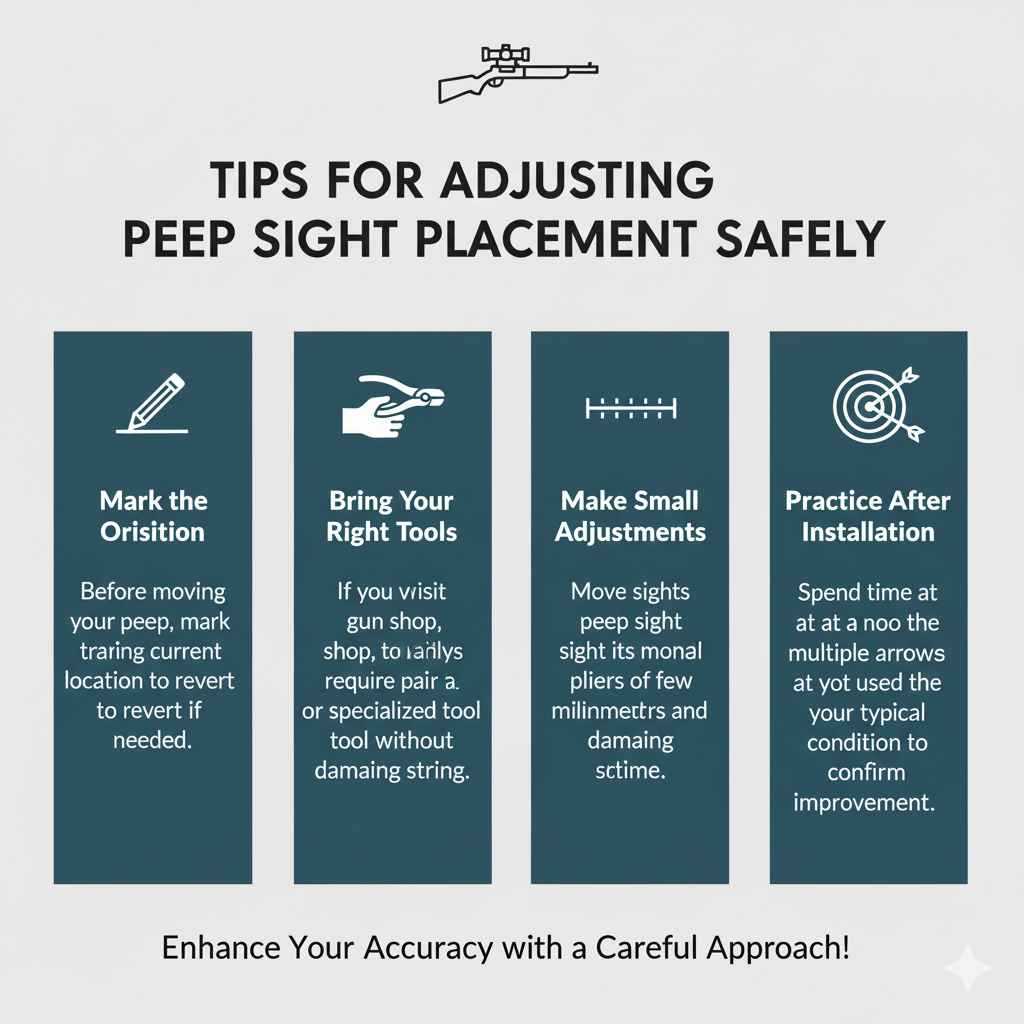
– Mark the original position: Before moving your peep, mark its current location to revert if needed.
– Use the right tools: Peep sights usually require a small pair of pliers or a specialized tool to move without damaging the string.
– Make small incremental adjustments: Move the peep sight no more than a few millimeters at a time.
– Test thoroughly: After every adjustment, shoot multiple arrows in your typical condition to confirm improvement.
Final Thoughts
For most archers, changing draw weight does not directly necessitate changing peep sight placement. Your anchor point and draw length are the critical determinants for peep sight positioning. However, because draw weight changes can influence bowstring length, shooting form, and equipment setup, it’s wise to verify your peep sight location once any adjustments are made.
By understanding these relationships and performing simple alignment checks, you can maintain an optimal peep sight setup that complements your draw weight and maximizes your shooting accuracy. Whether you are tuning for hunting, target archery, or competition, keeping a consistent and reliable sight picture is key to success.