
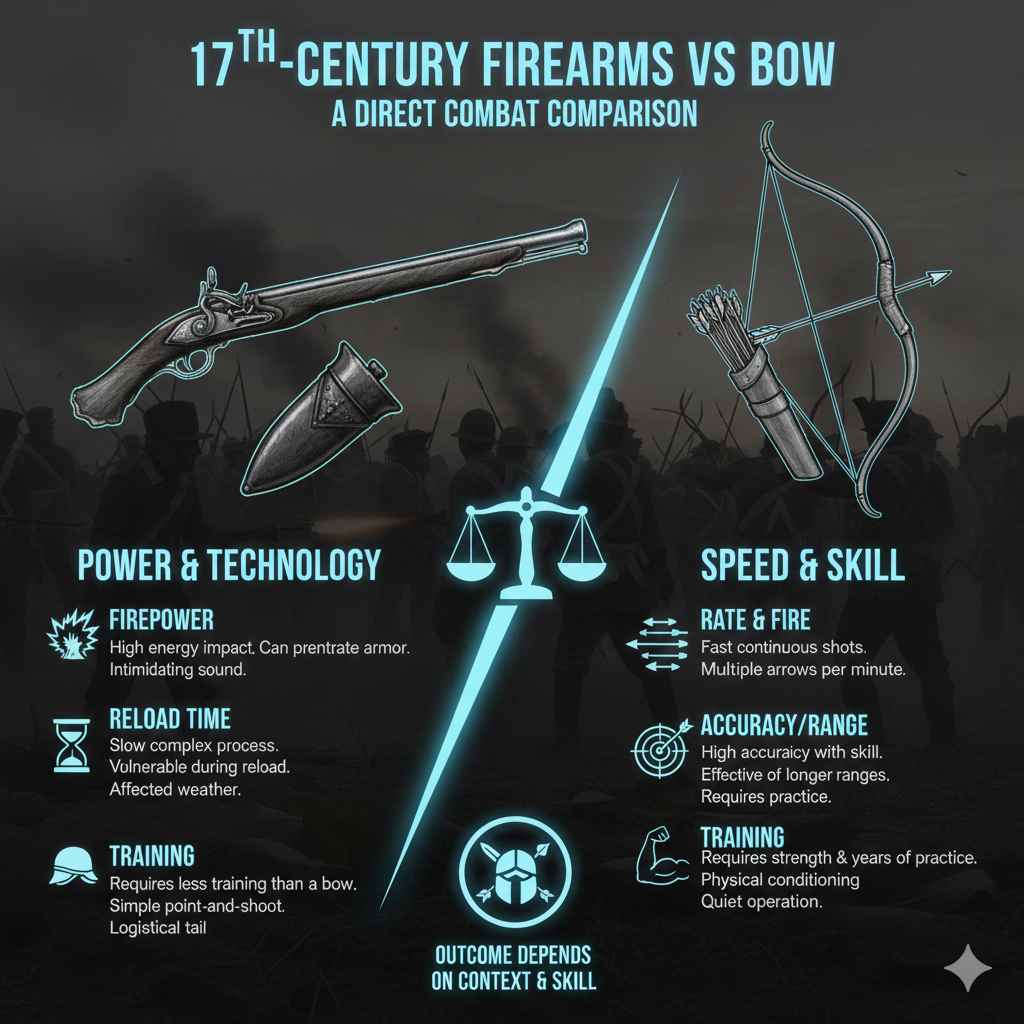
Thinking about the 17th-Century Firearms vs Bow: Honest Comparison can feel a little tricky at first. Many people find it difficult because there’s a lot of information, like different types of weapons and how they were used. But don’t worry! This post breaks everything down in a simple, easy-to-follow way. We’ll explore the main differences, so you can easily see what made these weapons special. Get ready; we’re about to explore the heart of the matter.
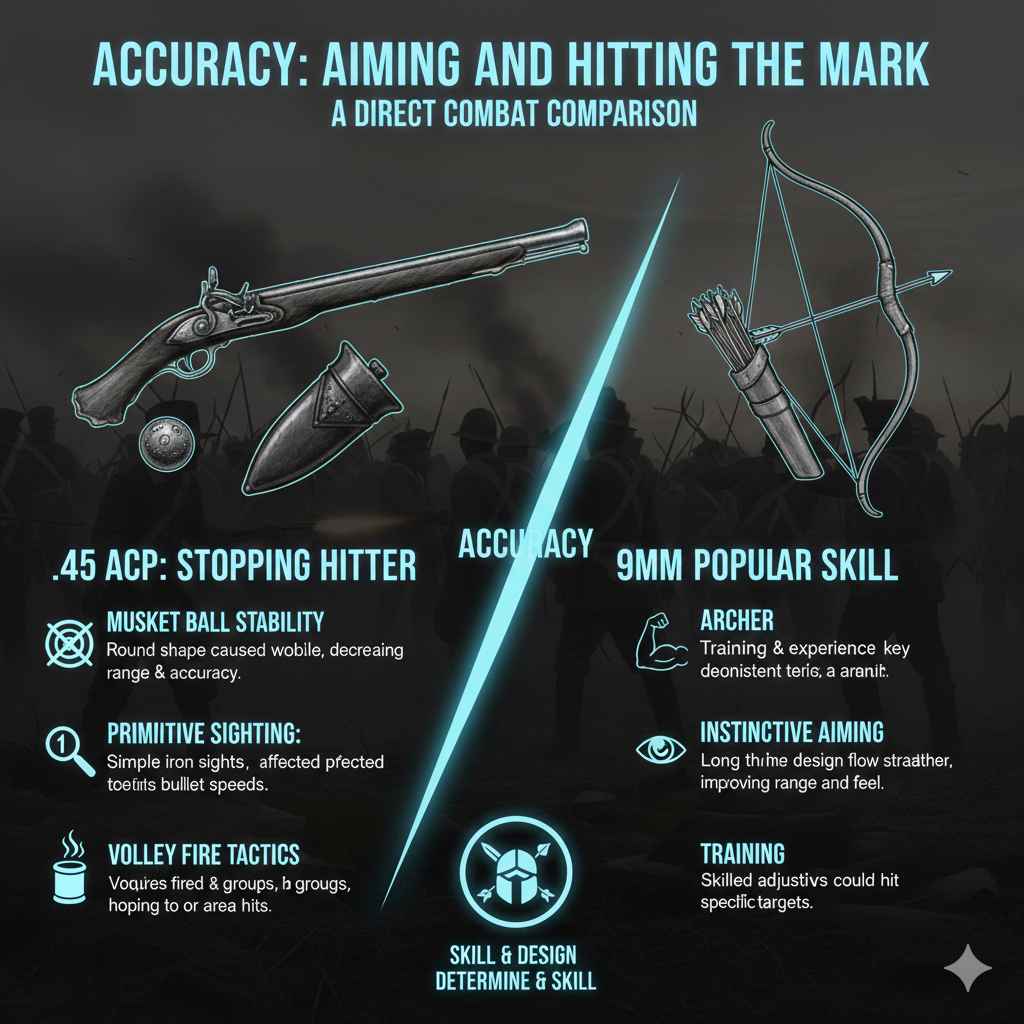
Accuracy: Aiming and Hitting the Mark
One of the most important things to consider when comparing weapons is how accurate they are. Accuracy, in simple terms, is how well a weapon can hit its target. This affects how useful a weapon is on the battlefield. Think about it: a weapon that rarely hits is not very effective.
Both 17th-century firearms and bows presented their own challenges regarding accuracy, though in different ways. The 17th century was a time of significant advancements in firearm technology. Weapon makers worked to make them more effective, but accuracy remained a significant hurdle.
Accuracy for Firearms
Firearms of the 17th century, such as matchlock and flintlock muskets, were notoriously inaccurate, particularly at longer distances. The simple sights, made of iron, provided little help. The projectiles, usually round lead balls, were not very aerodynamic. These balls often did not travel in a straight line, and were affected by the wind. The skill of the shooter also played a significant role. Even with good marksmanship, the weapons were limited. This meant that soldiers often fired in volleys, hoping to hit a target with at least some of the shots. The lack of standardized manufacturing also resulted in inconsistencies between firearms. This variability made it difficult to predict the trajectory of a bullet.
- Musket Ball Stability: The round shape of musket balls caused them to wobble in flight, greatly decreasing their range and accuracy.
- Improvised Sighting: The primitive sights on early firearms, usually just a small notch, were insufficient for precise aiming.
- Powder Variations: The inconsistent quality of gunpowder affected bullet speeds, making accurate predictions difficult.
Accuracy for Bows
Bows, on the other hand, had a few advantages in the accuracy department. Skilled archers could achieve a high degree of precision with practice. Arrows, unlike musket balls, could be somewhat guided. This was the result of a long, thin design, which enabled them to travel in a more predictable trajectory. Bows also allowed for a more natural aiming process. Archers learned to judge distance, wind, and target movement by instinct. Bows relied on the archer’s skill and experience more than firearms. An experienced archer could consistently hit a target at a greater distance than an average musket user.
This skill came from the archer’s practice. With good training, bows could be more accurate at longer distances. A skilled archer might be able to pick off individual soldiers or hit specific points on a target. Archery offered a more direct aiming process, and with practice, this could equal or exceed the accuracy of early firearms.
- Archer Skill: Training and experience were key to bow accuracy, allowing for consistent targeting.
- Arrow Aerodynamics: Arrows flew straighter than round musket balls, improving accuracy at range.
- Instinctive Aiming: Archers often used a combination of sight and feel to adjust for distance and wind.
Range: How Far Could They Shoot?
Range, or how far a weapon can shoot, is another important factor when talking about effectiveness. A weapon that can reach further can strike enemies from a safer distance. Also, range influences how a weapon can be used on the battlefield. Firearms and bows in the 17th century had their own distance capabilities. Let’s explore the range of each weapon to see the differences and implications.
Both weapon types had specific strengths and weaknesses in their effective ranges. Firearms, despite being inaccurate, gradually improved over time. Bows remained remarkably consistent in their capabilities, relying on the archer’s training. These factors determined how they were used. The range had big implications for combat.
Firearm Range
The effective range of 17th-century firearms was limited. Muskets and similar weapons often struggled to hit targets at longer distances. The maximum range could reach a few hundred yards. However, the probability of a hit dropped rapidly beyond a certain point. Common combat took place at closer ranges, sometimes less than 50 yards. The poor design of the round projectiles and the inconsistent gunpowder limited their overall reach. This meant that firearms were most effective in massed volleys. Soldiers would line up and fire together, hoping to inflict casualties. Despite these limitations, there was constant development. By the end of the century, advancements in firearm technology gradually increased the effective range.
- Musket Range: The practical range for accurate shooting was typically around 50-100 yards.
- Maximum Range: Muskets could fire further, up to several hundred yards, but with little chance of hitting a target.
- Rate of Fire: The slow rate of reloading often forced firearm users to fire from a distance.
Bow Range
Bows could achieve a longer range. Skilled archers could hit targets effectively at distances beyond those possible with firearms. A longbow, a popular choice, could have an effective range of over 200 yards. Some skilled archers could shoot much further. This range advantage allowed archers to harass enemy formations before they could get into musket range. The speed of the arrow and the skill of the archer made bows suitable for different combat conditions. The consistency of bows allowed archers to aim accurately, even at varying ranges. Bows were a constant threat to enemy formations. They could launch volleys of arrows that could cause casualties and disrupt attacks.
- Longbows: Effective range of 200 yards or more, especially for skilled archers.
- Arrow Speed: The speed of arrows meant they could cover long distances with reasonable precision.
- Combat Use: Bows allowed for ranged attacks, such as softening the enemy line before a melee.
Power and Penetration: The Stopping Force
The power and ability to penetrate armor are critical. Power, in simple terms, means how much damage a weapon can cause. Penetration is a weapon’s ability to pierce through armor. In the 17th century, the effectiveness of weapons depended on their ability to cause harm. Firearms and bows had different strengths regarding these aspects.
Firearms and bows achieved power and penetration through different means. Firearms relied on explosive force to deliver their damage. Bows relied on the velocity of the arrows they fired. These differences determined how they were used in battle and what kind of targets they could effectively engage. The impact of each weapon impacted armor design.
Firearm Power
Firearms were designed to be very powerful. The explosion of gunpowder inside the barrel gave the musket ball a lot of force. When the ball hit a target, it could cause serious damage. This impact could break bones, tear through flesh, and even knock soldiers down. A direct hit from a firearm could kill a person or put them out of action. The power of firearms depended on many things, like the type of weapon and the quality of gunpowder. It was very important to protect against firearms. This led to changes in the design of armor to make it more effective. Even with improvements, armor could not always stop a musket ball. This ability was a major advantage.
- Kinetic Energy: The explosion of gunpowder gave the musket ball a lot of energy.
- Wound Trauma: Musket balls often caused devastating wounds, leading to infections and casualties.
- Armor Penetration: Firearms could penetrate many types of armor, making armor less useful in battle.
Bow Penetration
Bows relied on the speed and force of the arrow to achieve penetration. A powerful bow could send arrows with great speed, which could then pierce through a target. Arrows were very effective at penetrating the gaps in armor or at hitting the unarmored areas of the body. Skilled archers would aim at areas that were unprotected by armor. A well-aimed arrow could also go through several layers of clothing and leather, causing significant damage. The type of arrow also affected penetration. Broadhead arrows were designed to inflict severe wounds, increasing the chance of fatal injuries. The speed of the arrow and the archer’s aim made bows effective at causing harm. Although bows were not as powerful as firearms, they were still a deadly weapon.
- Arrowheads: Various arrowheads were developed to maximize penetration and cause severe wounds.
- Targeting Vulnerabilities: Archers could aim at gaps in armor or unprotected areas.
- Impact Effects: Arrows caused significant damage through both penetration and the transfer of kinetic energy.
Rate of Fire and Reloading: Speed of Action
The rate of fire tells you how quickly a weapon can be fired. Reloading is a key part of this. A weapon that can be fired quickly is very useful in battle. It can provide a continuous barrage of attacks. Both firearms and bows had different rates of fire. This had a big effect on how they were used and their strengths and weaknesses.
The speed at which a weapon can be reloaded impacts its overall effectiveness. Firearms, in the 17th century, had a slow rate of fire. Bows, on the other hand, could be fired much more quickly. This speed difference shaped battlefield tactics and weapon strategies. The difference highlights the evolution of military technology.
Firearm Rate of Fire
Firearms of the 17th century had a slow rate of fire. Loading a firearm, like a musket, was a long process. It required several steps, from measuring the gunpowder to ramming the ball down the barrel. Even experienced soldiers could only fire a musket a few times a minute. This slow rate of fire made firearms vulnerable in close combat. Soldiers often had to rely on formations and teamwork to cover each other. The slow rate also meant that the advantage of firearms diminished in close-quarters battles. This speed meant that bowmen could often shoot several arrows before a musketeer could reload his weapon.
- Loading Process: Required several steps, including measuring powder, ramming the ball, and priming.
- Shots Per Minute: A skilled soldier could fire a musket 2-3 times per minute.
- Combat Implications: Slow reload made firearms vulnerable during hand-to-hand combat.
Bow Rate of Fire
Bows had a much faster rate of fire compared to firearms. An experienced archer could easily shoot several arrows per minute. Some archers were very skilled and could shoot more quickly. The rate of fire allowed archers to deliver a constant stream of arrows. This constant barrage made bows effective at harassing enemy formations and inflicting casualties. Bows could fire multiple arrows before a musket could be reloaded. The speed of bows allowed archers to respond faster to changing battlefield situations. This speed meant that bows were better suited to a prolonged engagement. The speed was a decisive advantage on the battlefield.
- Arrows Per Minute: Skilled archers could shoot as many as 10-12 arrows per minute.
- Continuous Fire: Allowed for a sustained attack, unlike the intermittent fire of firearms.
- Tactical Advantages: The faster rate of fire gave bows a significant edge in combat.
Cost and Availability: Resource Impact
The cost and availability of weapons played a big role in their use. The amount of money it took to make a weapon and how easy it was to find the materials determined which weapon was chosen. Cost and availability had big effects on military organizations and the number of people who could use these weapons. These factors determined the armies of the 17th century.
Both firearms and bows had their advantages and disadvantages in terms of cost and availability. These factors influenced military strategies and the kinds of soldiers that were available. The balance between cost and function affected the strategies of the time. The choice depended on how resources were used.
Firearm Costs
Firearms, particularly the 17th-century models, were expensive to produce. The materials needed, such as iron, wood, and gunpowder, were costly. The skills needed to make firearms, such as gunsmithing, were also rare. This cost meant that equipping an army with firearms was a significant investment. Only wealthier states and organizations could afford to have large numbers of firearms. The expense also affected training. Because firearms were expensive, it meant that training could be more difficult. The cost of ammunition, especially gunpowder, also affected how firearms were used. This restricted the amount of training and practice that soldiers could get. The high cost of firearms influenced military strategy.
- Raw Materials: Iron, wood, and gunpowder were costly to obtain and process.
- Manufacturing Skills: Gunsmiths were highly skilled, making firearms expensive to produce.
- Military Expense: The cost of firearms put a limit on how many soldiers were equipped.
Bow Costs
Bows were often less expensive. The materials needed, such as wood, arrows, and string, were often more available. They were also easier to produce, though the best bows required some craftsmanship. Because bows were cheaper, they could be more widely available. They were a more accessible option for a larger population. Archers could be trained more quickly and less expensively than musketeers. This meant that bows could be used by a wider range of people. The lower cost of bows made them an attractive option for different types of military organizations. This accessibility made bows a good choice for armies and those who didn’t have as many resources.
- Materials: Wood, arrows, and strings were more easily sourced and less costly.
- Production: The skills required to make bows were more common than those for firearms.
- Affordability: This made it easier to train large numbers of archers.
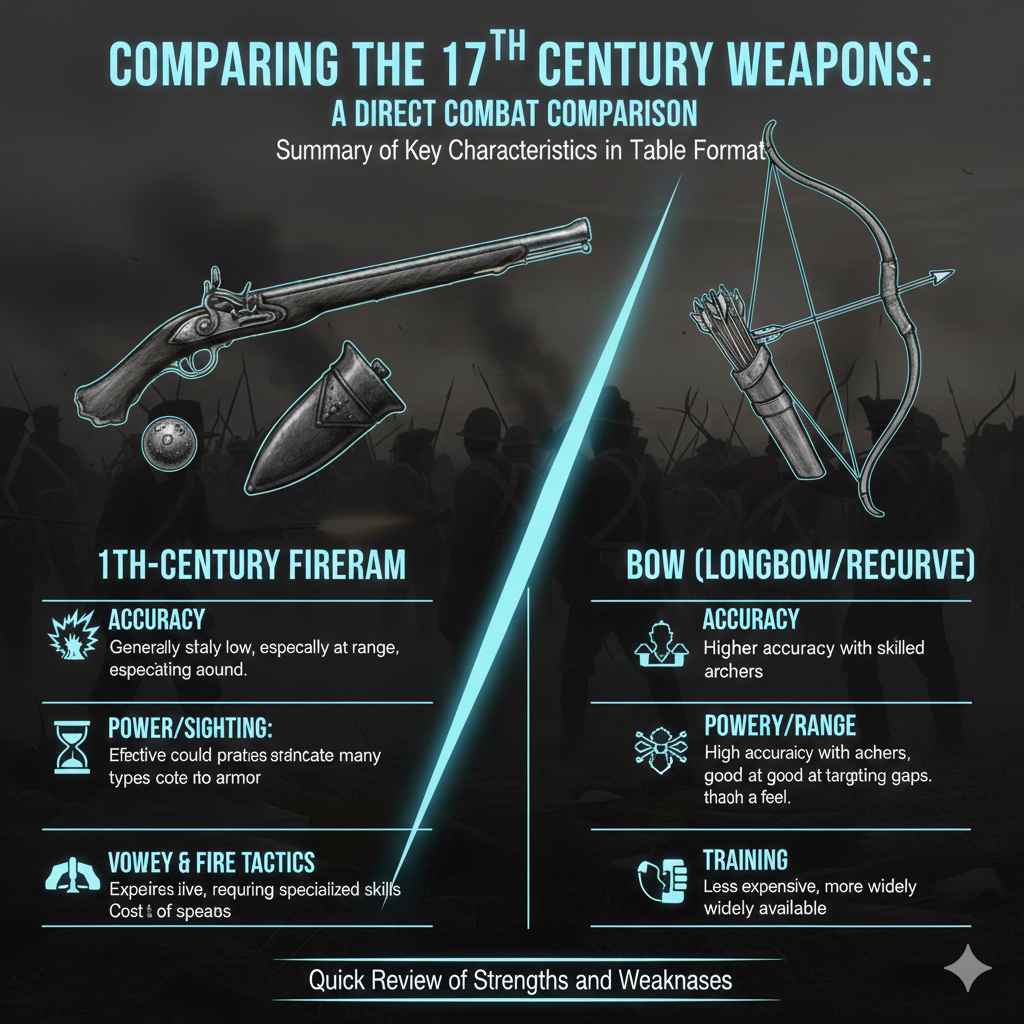
Comparing the 17th Century Weapons: A Quick Glance
To help you understand the differences, here is a helpful comparison in a table format. This will help to clarify the strengths and weaknesses of each weapon. This comparison helps summarize what has been discussed. It provides a quick way to review the main points. Here is a summary of the key characteristics:
| Feature | 17th-Century Firearm | Bow (Longbow/Recurve) |
|---|---|---|
| Accuracy | Generally low, especially at range | Higher accuracy with skilled archers |
| Range | Effective range 50-100 yards | Effective range 200+ yards |
| Power/Penetration | High, could penetrate many types of armor | High with broadheads, good at targeting gaps |
| Rate of Fire | Slow, a few shots per minute | Fast, many shots per minute |
| Cost/Availability | Expensive, requiring specialized skills | Less expensive, more widely available |
Frequently Asked Questions
Question: What were the main advantages of 17th-century firearms over bows?
Answer: Firearms had the advantage of increased stopping power. They could often penetrate armor. Firearms were seen as more intimidating due to their loud noises and visible flashes.
Question: Why did bows remain in use even after the introduction of firearms?
Answer: Bows had a higher rate of fire and good range, and could be fired more quickly. They were also cheaper and more accessible. Bows were a very reliable and practical alternative.
Question: How did armor affect the use of both firearms and bows?
Answer: Armor became less effective against firearms. Bows could effectively target the gaps in armor. Armor design changed to account for these changes.
Question: What role did archers play in 17th-century battles?
Answer: Archers provided a continuous barrage of arrows that softened enemy lines. They harassed troops at longer ranges, preparing for the advance.
Question: What factors influenced the decline of bows in warfare?
Answer: The slow reload of the bows made them less effective against fast-firing weaponry, and the rise of mass-produced, cheaper firearms. Changes in battlefield tactics also influenced the decline.
Final Thoughts
We’ve explored the world of 17th-Century Firearms vs Bow: Honest Comparison, examining their accuracy, range, power, and availability. Firearms, with their devastating power, changed the face of battle, but they were often let down by a slow rate of fire. Bows, on the other hand, offered accuracy and the advantage of quick volleys, playing a crucial role with their speed. Each weapon had its strengths. Firearms had impressive power, while bows delivered a constant rain of projectiles. The cost, availability, and the specific skills each weapon required were very important, which influenced the military tactics.
You’ve now got the key points to understand how these weapons were used. The best way to deepen your knowledge is to keep reading. Study the history and the impact these weapons had. Continue to explore. Keep exploring, and you’ll find even more exciting details about these historical weapons!