

Figuring out the differences between a 2X vs 4X Compound Bow: What’s the Difference? can be tricky for anyone just starting with archery. The different numbers and technologies can seem a bit much at first. Don’t worry! This post will break down the key elements in easy-to-understand terms. We’ll explore the basics step-by-step so you can easily tell the difference. Get ready to learn!
What is a Compound Bow? A Beginner’s Guide
A compound bow is a modern bow that uses a system of pulleys and levers to make it easier to draw and hold the bow. Unlike traditional bows, which require you to maintain the full draw weight throughout the draw cycle, compound bows offer a “let-off.” This let-off means that once the bow is drawn to its full extent, the holding weight is significantly reduced. This allows archers to hold the bow at full draw for longer periods, which can help with aiming accuracy and give more time to prepare for the shot. These bows are known for their power and precision, often used in hunting and target archery.
Key Features of Compound Bows
The Cam System: The heart of a compound bow’s design is its cam system, which includes the pulleys or cams that shape the draw cycle. There are many cam designs, like single-cam, dual-cam, and binary-cam systems. They control the draw weight and let-off. Single-cam systems are known for being simpler to tune, while dual-cam systems often offer greater speed and accuracy. Binary-cam systems typically provide excellent balance and performance. The cam system is what separates a compound bow from traditional bows and makes the bow more efficient.
The efficiency of a cam system affects how much energy is transferred from the archer to the arrow. A more efficient system means the arrow can travel faster, and the bow is easier to draw and hold. Choosing the right cam system depends on the archer’s skill level, shooting style, and the intended use of the bow.
Draw Weight and Draw Length: Draw weight is the force required to pull the bow back, measured in pounds. Draw length is the distance from the bow’s grip to the string at full draw. These are key measurements to consider when picking a bow. The draw weight should match the archer’s strength and comfort. Too much draw weight can lead to fatigue and poor shooting form. Draw length needs to fit the archer’s arm span for accurate aiming.
Both draw weight and draw length work together to determine arrow speed and overall performance. Adjusting draw weight allows the archer to fine-tune the bow’s power. Correct draw length ensures that the archer can fully utilize the bow’s power and maintain a consistent shooting form. Most compound bows have adjustable draw weights and lengths to help match the archer.
Let-Off: Let-off is a percentage of the peak draw weight that is held at full draw. For example, a bow with a 60-pound peak draw weight and 80% let-off only holds 12 pounds at full draw. This lets the archer hold the bow longer and aim more steadily. Higher let-off percentages are helpful for target archery, and some hunting bows have high let-offs, too.
Let-off significantly impacts shooting experience and accuracy. A greater let-off reduces strain and lets you focus on aiming. Different let-off percentages are available to suit various shooting styles. Choosing the right let-off depends on what activities you plan to do, so you can pick a bow that’s comfortable and accurate.

Understanding the Basics of 2X and 4X Compound Bows
The ‘2X’ and ‘4X’ in compound bows aren’t standard terminology. They aren’t related to the bow’s performance or features, in a typical way, but sometimes it references the number of cam systems the bow has. However, when you see “2X” or “4X” referenced it often indicates the type of aiming system used on the bow. The number usually refers to the magnification of the scope or sight. It’s really all about how much the target appears to be enlarged when you look through the sight. The higher the number, the larger the image. The choice depends on the range you’re shooting at and how much detail you need to see. This section explains the impact of these differences.
Sight Magnification and Accuracy
2X Magnification: A 2X sight makes the target appear twice as large as it does with the naked eye. This magnification is a good choice for shooting at close to medium ranges, like up to 30 yards. It provides enough detail for accurate shots without over-magnifying the target. This magnification is common in hunting situations where closer shots are typical.
At shorter ranges, a 2X scope balances magnification with a wide field of view. The wider view helps with quick target acquisition, which is useful when hunting. This setting is less sensitive to small movements, making it easier for new archers to learn. Using 2X magnification, you can adjust quickly and focus on your shot while keeping the surrounding area in view.
4X Magnification: A 4X sight magnifies the target four times, making it appear much closer. This is ideal for longer-range shooting, usually beyond 40 yards. The greater magnification makes it easier to see and hit small targets. This is great for target archery, where every shot counts. 4X scopes are often used in situations where precision at a distance is key.
With a 4X scope, small details become more visible, helping you aim precisely. Because of the high magnification, any movement is magnified as well. To counter this, a steady shooting position is required. While offering a detailed view, the field of view is narrower than a 2X scope. Skilled archers often prefer 4X because it allows them to target at a great distance.
Field of View: Field of view describes the width of the area you see through the scope. A lower magnification, like 2X, has a wider field of view, making it easier to track moving targets or quickly scan the area. Higher magnifications like 4X have a narrower field of view, which can be less ideal for fast-paced situations.
The field of view impacts the ability to find and track your target. A wider field of view is helpful for archers who need to react quickly. A narrower field of view is usually more suited for specific, longer-range shots. Choosing the proper magnification involves balancing the amount of detail you need with how easily you need to find and follow your target.
Comparing 2X and 4X Compound Bows: A Closer Look
The choice between a 2X and 4X compound bow often depends on the type of archery you are doing and your skill level. Both have advantages and disadvantages. This section delves into the differences, helping you decide which is better for your needs. We’ll explore the impact of magnification on target acquisition, accuracy, and overall shooting experience.
Target Acquisition and Ease of Use
Target Acquisition with 2X: A 2X sight provides a wider field of view, making it easier to find and track targets. This helps when shooting at moving targets or in situations where speed is important. This is a common choice for hunting because of its ease of target location.
The broader view of a 2X sight allows archers to quickly spot their target, even in dense environments. Because there is less magnification, small movements are less noticeable. This makes aiming quicker. The 2X magnification is helpful for archers who may need to react quickly.
Target Acquisition with 4X: The 4X sight offers a narrower field of view, but its higher magnification enhances the details of the target. This means that a 4X is useful for seeing distant targets clearly. It’s often used in target archery, where precise aiming is key, and at longer distances.
The increased magnification of a 4X sight makes the target appear much closer, allowing archers to focus on fine details. Though the field of view is smaller, the details provided make hitting smaller targets possible. A steady shooting position is important when using a 4X scope, because the slightest movements are magnified.
User Experience and Skill Level: For beginners, a 2X sight might be easier to use because of its wider field of view and simpler aiming. More experienced archers might like the 4X sight to enhance their accuracy at a distance. Your skill level impacts which sight is more useful.
The choice between 2X and 4X should be based on your experience and what you need the bow for. Beginners might find the 2X sight more forgiving and easier to master. As skills improve, the 4X sight allows you to refine your shots. Regardless of your experience, both magnifications offer unique benefits for target practice.
Accuracy and Precision
Accuracy with 2X: The 2X sight is ideal for shooting at targets at shorter ranges, generally up to 30 yards. With 2X magnification, minor aiming errors aren’t as noticeable. This makes it easier to maintain accuracy. The 2X magnification offers a good balance between precision and a wider view.
This is suitable for a range of shooting scenarios. It provides enough detail for accurate shots without over-magnifying the target. This magnification is especially useful in situations that require quick target acquisition.
Accuracy with 4X: A 4X sight enhances accuracy at longer distances, sometimes exceeding 40 yards. The higher magnification helps archers see small details clearly, allowing precise adjustments for improved accuracy. This is a common choice for target archery, where hitting the center counts.
The higher magnification of a 4X sight allows the archer to focus on fine details. While it may magnify any small movements, the precision it offers can lead to tighter groupings. Practicing regularly with a 4X can drastically enhance your accuracy.
Impact of Distance: The distance to your target greatly affects which magnification is most effective. For short to medium ranges, a 2X sight offers a good balance of detail and field of view. For longer distances, a 4X sight allows for more precise aiming.
The type of shooting you plan to do should influence your choice. For close-range shooting, a 2X sight may be preferred because it’s easier to find your target and maintain accuracy. For longer-range shooting, the 4X sight offers more precision. Distance is a major element in determining which magnification provides optimal performance.
Practical Applications: Hunting and Target Archery
2X Compound Bow for Hunting: In hunting, a 2X sight is a popular choice. It gives archers a wide field of view to locate moving targets. The lower magnification means it’s simpler to aim quickly in real-world scenarios.
The broader field of view in a 2X sight helps hunters to spot game in various environments. The magnification reduces small movement, which is important for making quick shots. This sight is ideal for situations that call for quick target location, making it a favorite for many hunters.
4X Compound Bow for Target Archery: For target archery, the 4X sight is widely favored. It gives greater magnification, allowing archers to easily see and target at a distance. The higher detail offered by the sight enhances accuracy in competitive events.
This precision is important in target archery, where every shot counts. The 4X magnification helps archers make precise adjustments to ensure consistent scoring. This level of detail makes the 4X sight an excellent choice for target archery.
Choosing the Right Sight for Your Activity: Your choice of magnification should align with your shooting activity. If you prioritize quick target acquisition and shorter ranges, a 2X sight may be your best choice. If you prioritize precision at longer ranges, a 4X sight could be more suitable.
Consider the type of archery you want to practice. You must evaluate the range, the target size, and the setting. This ensures that the magnification you pick enhances your experience and helps you achieve the desired accuracy. Both 2X and 4X sights excel, but their success hinges on the context in which they’re used.
| Feature | 2X Compound Bow | 4X Compound Bow |
|---|---|---|
| Magnification | 2 times | 4 times |
| Field of View | Wider | Narrower |
| Best For | Shorter Ranges and Hunting | Longer Ranges and Target Archery |
| Accuracy | Good for shorter distances | Higher accuracy at long distances |
| Target Acquisition | Quicker | More detailed |
Additional Considerations When Choosing
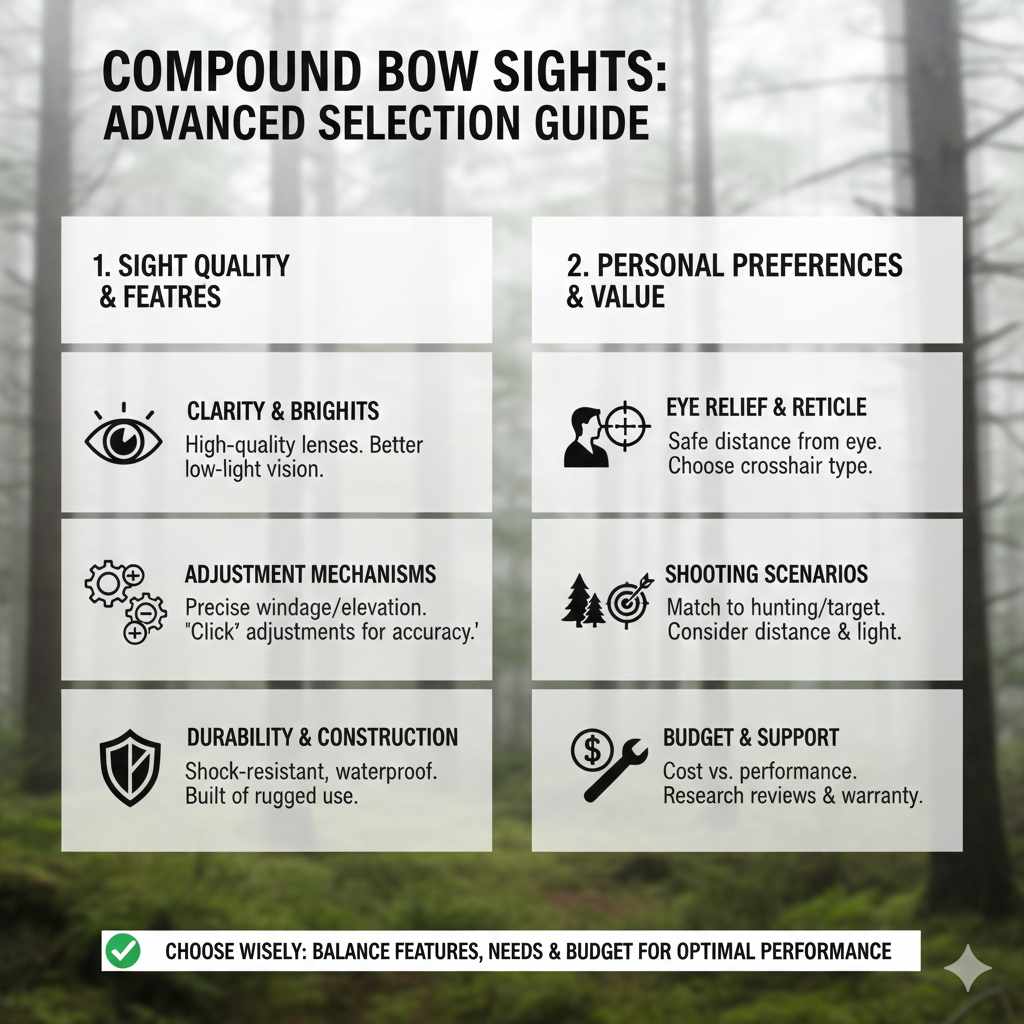
When selecting between a 2X or a 4X compound bow, other factors beyond magnification play a role. These include the quality of the scope, how easy it is to adjust, and the shooter’s needs. The combination of these considerations helps you make a choice that enhances your shooting experience. This section expands on these important elements, offering insights into all the contributing variables.
Sight Quality and Features
Scope Clarity and Brightness: The clarity and brightness of the scope influence how well you can see the target. High-quality scopes use better lenses and coatings, providing a clearer and brighter image, especially in low-light conditions.
Clearer scopes improve your vision. Scopes that gather light well enable better shooting in challenging environments. Investing in a high-quality scope is crucial for those wanting a great archery experience.
Adjustment Mechanisms: The adjustment mechanisms, which are the way you can adjust the crosshairs for windage and elevation, should be precise and easy to use. Precise adjustments can help you dial in the accuracy of your shots, and the ease of use means you can quickly make changes in the field.
Scopes with fine adjustment capabilities allow archers to correct for wind and range. Scopes that are simple to adjust save time and reduce frustration. Look for mechanisms that offer click adjustments for precision.
Durability and Construction: The durability of a scope is important, especially for those who plan to use it outdoors. A tough construction, which includes things like a shock-resistant design and waterproof components, ensures that the scope can handle the wear and tear of archery and weather.
High-quality construction will protect your investment. Choosing a durable scope helps guarantee the scope will be able to handle rugged conditions. These scopes help maintain accuracy over time.
Personal Preferences and Shooting Style
Eye Relief: The eye relief is the distance between your eye and the scope. The ideal eye relief is long enough to avoid getting hit by the scope. If the eye relief is too short, you risk getting injured.
A good eye relief setting ensures you can see the whole image without straining your eye. Some scopes have adjustable eye relief, letting you make adjustments for the best comfort. Knowing the right eye relief enhances the shooter’s experience.
Reticle Type: The reticle is the crosshair pattern you see when looking through the scope. There are many reticle designs, from simple crosshairs to complex patterns. Choose a reticle that complements your shooting style and the ranges you typically shoot at.
The design of the reticle impacts your ability to aim accurately and quickly. Some reticles are better for long-range shooting, while others are more suitable for close-range hunting. Choosing the right reticle helps to improve your shooting.
Your Typical Shooting Scenarios: The type of archery you do and the conditions in which you usually shoot have a great impact on your magnification choice. Consider the distances, lighting, and environmental factors.
Think about how your archery goals and the circumstances affect your sight preference. Hunters will prioritize different features than target archers. The sight you pick should fit the types of scenarios you encounter.
Budget and Value
Cost vs. Performance: High-quality scopes are an investment, but it’s important to balance the cost with the performance. The cost of a good scope should bring the best image quality, durable construction, and ease of use.
Setting a budget is important. Decide what you can spend on a scope, and then evaluate the features that matter most to you. Sometimes, paying a little more brings noticeable improvements in quality and accuracy.
Researching Reviews: Read reviews from other archers to gain insights into how scopes perform in practice. These reviews can offer important information about how a scope functions. Consider feedback from other shooters.
Looking at reviews gives you an idea of the scope’s strengths and weaknesses. You can see how other archers have used a scope and whether it meets their needs. Reviews can guide your choice.
Warranties and Support: Scopes with good warranties and customer support can save you money if something goes wrong. A long warranty can ensure that your scope is protected against defects. Good customer support can help if you need technical assistance.
Knowing that you can get your scope fixed or replaced if there is a problem can give peace of mind. Check the manufacturer’s reputation to assess the kind of support they offer.
Consider this real-world example: A hunter who primarily hunts in dense forests might choose a 2X scope for its wider field of view, making it easier to track game in close quarters. Meanwhile, a target archer who shoots at a range of 70 yards will likely opt for a 4X scope. This choice allows for a higher magnification to see details in distant targets. Your unique requirements should be your priority.
Frequently Asked Questions
Question: Is a 2X scope good for beginners?
Answer: Yes, a 2X scope can be great for beginners. It offers a wider field of view, which helps with quick target acquisition and makes it easier to aim.
Question: Can I use a 4X scope for hunting?
Answer: A 4X scope can be used for hunting, especially in situations where long-range shots are needed. However, the narrower field of view may be less useful for fast-moving targets.
Question: What’s the main difference in the field of view between 2X and 4X?
Answer: The 2X scope has a wider field of view, making it easier to see a larger area. The 4X scope has a narrower field of view, so you see less of the surroundings but the target appears closer.
Question: How does magnification affect accuracy?
Answer: Higher magnification (like 4X) can help with accuracy at longer distances because it magnifies the target details. However, it can also amplify any movement. Lower magnification (like 2X) is useful for closer ranges or when quick aiming is needed.
Question: Should I choose a 2X or a 4X scope?
Answer: The decision depends on your archery style. Pick a 2X scope for hunting or shorter distances. Choose a 4X scope for target archery or longer distances. Consider your skill and your experience, too.
Final Thoughts
Choosing between a 2X vs 4X Compound Bow: What’s the Difference? boils down to your personal archery needs. The 2X scopes excel in providing a wider view, making them a great fit for hunting or situations where fast target acquisition is key. The 4X scopes offer increased magnification, ideal for those who favor precision at greater distances or enjoy target archery. Factors to consider are the shooting conditions, the range, and the level of detail you require. Understanding these aspects allows you to make a choice that enhances your shooting experience and aligns with your archery goals. Practice, and experimentation is important. Find what works best for you!