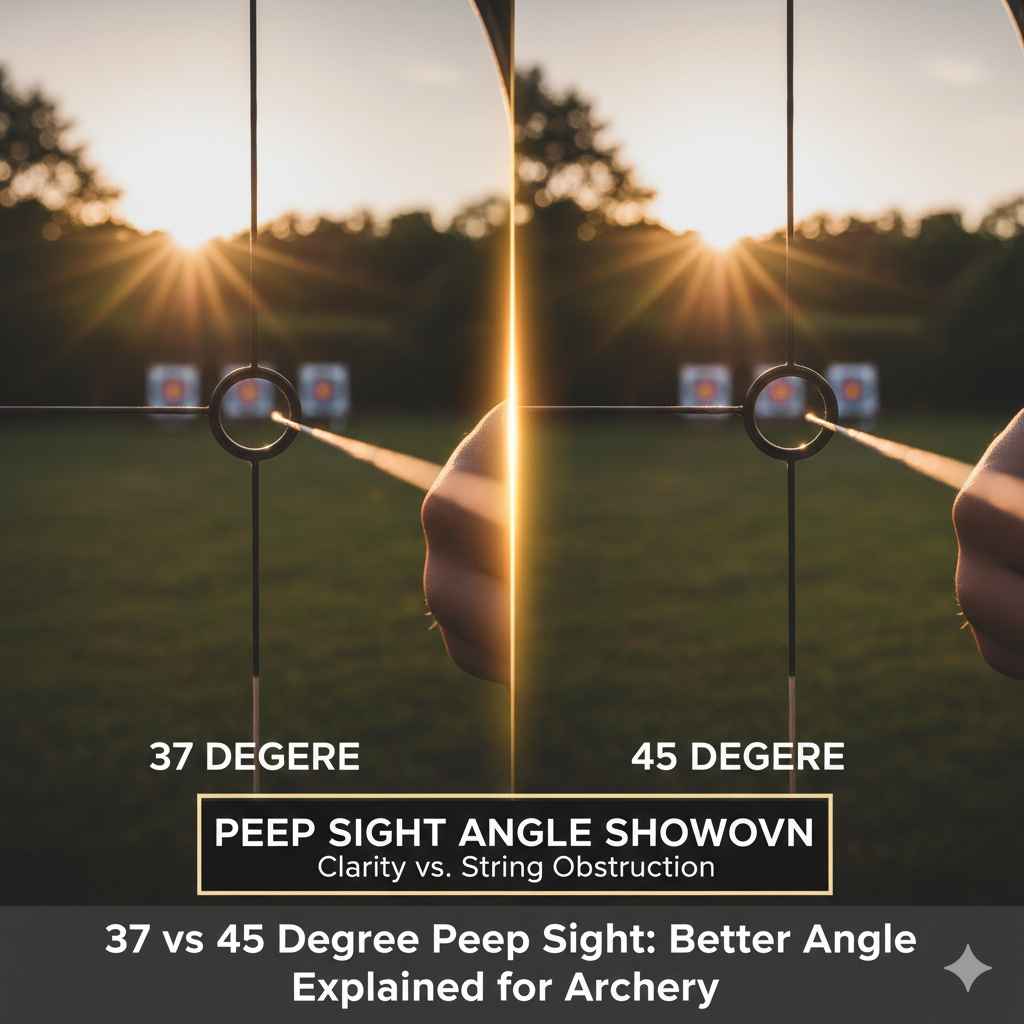
Choosing the right peep sight angle can be tough when you’re starting in archery. The debate around 37 vs 45 Degree Peep Sight: Better Angle Explained is common, especially since it affects how well you can see your target. It’s easy to feel lost with all the angles and terms. Don’t worry! This post breaks down everything simply, helping you pick the best peep angle for your shooting style. We’ll explore the differences step-by-step, making it easy to see the advantages of each.
What Is a Peep Sight and Why Does Angle Matter?
A peep sight is a small, round aiming device that archers use to improve their accuracy. It’s mounted on the bowstring, and when you look through it, you align it with your bow’s sight pins or scope. The alignment gives the archer a clear view of the target. Think of it like looking through a small hole to focus on something far away. The peep sight helps create a consistent anchor point and allows the archer to accurately place their shot.
The angle of the peep sight is really important. It affects how naturally your eye aligns with the sight pins and target. The angle determines how easily and quickly you can see through the peep sight. A good angle means you have a clear, easy view, which leads to better accuracy. The wrong angle can make it hard to see your target or cause you to strain your eye, which hurts your shot.
Peep Sight Components and Function
The core of a peep sight system is the peep itself, a small tube or insert placed within the bowstring. However, it’s not the only piece of the puzzle. Several other elements work in concert to give archers the clearest view possible. These elements contribute to the overall aiming process:
- The Peep Sight Housing: This is the body of the peep sight, where the peep insert fits. They come in various shapes and sizes.
- The Peep Insert: This is the part with the actual hole you look through. Inserts are often interchangeable, letting archers change hole sizes for different lighting conditions or distances.
- String Serving: This is the wrapping on the bowstring where the peep sight sits. Proper serving is critical to hold the peep securely in place and prevent wear and tear.
- The Bow Sight: This is mounted on the bow riser and holds the sight pins or a scope. The peep sight aligns with these pins or scope to create a precise aiming point.
- Anchor Point: This is a consistent position the archer reaches with their hand and face when drawing the bow, ensuring consistent alignment with the peep and sight.
The main job of the peep sight is to align with the bow sight. As you draw back your bow and look through the peep, you should see your sight pins or scope clearly. When the pins are centered within the peep, and the target is also in your view, you’re ready to shoot. This alignment is what gives archers the accuracy they want. A correctly aligned peep ensures that the arrow will travel along the path you intend, right toward the target.
The Importance of a Proper Peep Sight Alignment
Proper peep sight alignment is the foundation of accurate archery. Misalignment can lead to all sorts of issues, including inconsistent shot groupings. Think about it: if your view is off, your shot will be off. Even a slight misalignment can throw off your aim at longer distances. That’s why getting it right is so important.
- Consistent Anchor Point: A properly aligned peep helps you find your anchor point, the spot where your hand and face meet the bow. This consistency is important because it sets the archer’s form.
- Clear Sight When the peep is aligned, you get a clear view of the sight pins and the target. This clarity is what archers need to make precise shots.
- Reduced Strain: A good alignment keeps you from straining your eye. Trying to force a view can lead to fatigue and affect your shooting in a negative way.
- Better Grouping: With proper alignment, your arrows will hit closer together. This is a sign of good shooting technique and the right equipment setup.
Imagine trying to drive a car with the steering wheel turned slightly to one side. The car will wander, making it hard to go where you want. A misaligned peep sight has the same effect, causing arrows to drift off target. Taking the time to get your peep sight just right is an investment in your accuracy. The effort gives you better shots and more enjoyment of archery. If an archer constantly struggles to hit the target, it might be due to peep sight alignment.
37 Degree Versus 45 Degree Peep Sights: What’s the Difference?
The key difference between a 37-degree and a 45-degree peep sight comes down to the angle at which the peep sits in relation to the bowstring. This angle affects how the peep sight aligns with the bow sight and how naturally the archer’s eye finds the target. The degree measurement refers to the angle created by the string and the sight. These two different angles offer slightly different viewing experiences, and one might suit an archer better than the other.
Choosing between these angles isn’t always easy. It depends on factors like your shooting style, eye dominance, and the type of bow you use. Some archers find one angle easier and more natural, while others may prefer the other. It is best to try both and see which one suits your aiming style.
Examining the 37 Degree Peep Sight
The 37-degree peep sight is designed to fit in a way that provides a slightly more vertical angle. This can be beneficial for archers who prefer a more upright head position or those who have a longer draw length. The angle allows the archer to look straight through the peep without tilting their head too much.
- Visual Experience: The 37-degree sight provides a more direct view of the sight pins. The alignment may feel more natural for some archers.
- Head Position: It often suits archers who hold their head in a more upright position.
- Draw Length: Archers with longer draw lengths might find this angle more suitable because it allows the eye to line up with the sight pins without having to tilt their head.
- Considerations: Some archers might find the angle limits their field of view.
- Ideal for: This may be a good choice for archers who prefer a straightforward view and a more relaxed head position.
Many archers describe the 37-degree sight as providing a “straight-through” view. With a clear view of the target and sight pins, the archer can make precise shots. This means the sight may be a good option for archers who compete at longer distances. The alignment allows them to focus on precision.
Examining the 45 Degree Peep Sight
The 45-degree peep sight has a more angled position on the bowstring. This angle can be beneficial for archers who prefer a more relaxed or tilted head position. The slightly greater angle can help to quickly acquire the sight pins and provide a broader field of view.
- Visual Experience: The 45-degree sight can provide a wider field of view, which helps archers see their surroundings.
- Head Position: It often suits archers who tilt their heads slightly when aiming.
- Quick Target Acquisition: The wider view may make it easier to find and align the target.
- Considerations: Some archers might find it requires more adjustment to get the perfect alignment.
- Ideal for: Archers who like a clear view and quicker aiming may find this to be a good fit.
The 45-degree peep sight often appeals to archers who want a quicker sight picture. The angle allows the archer to pick up their sight pins and the target without having to make much head adjustment. This makes it an especially great option for field archery or 3D shooting, where archers need to acquire targets quickly and at varying distances.
How to Choose the Right Peep Sight Angle for You
Picking the best peep sight angle is not a one-size-fits-all thing. It depends on your unique body build and shooting style. Taking the time to experiment and see what works best for you is a crucial step in the process. It’s really about finding the setup that feels most natural and gives you the most accuracy on the range.
You can begin by understanding your shooting style, taking note of how you draw your bow and how your head naturally aligns with your anchor point. Try both angles and see which setup feels more comfortable. Ask other archers to get their experience in the sport, as many will be happy to assist.
Considering Your Shooting Style
Your shooting style is a big part of which peep sight angle is right for you. Everything from your posture to how you draw your bow plays a role. Think about your anchor point, how your head is positioned when you aim, and how quickly you can acquire the target. These factors will guide you toward the best choice.
- Posture: Are you naturally upright or do you tend to tilt your head? Choose an angle that matches your natural position to make aiming easier.
- Anchor Point: This is where your hand and face meet the bow when drawing. The peep angle should help you consistently reach your anchor point for a steady aim.
- Eye Dominance: Knowing which eye is dominant helps. The dominant eye does the aiming, so the peep angle should let that eye see the target clearly.
- Target Acquisition Speed: Some archers prioritize speed. The 45-degree peep might give a better field of view and faster target acquisition.
- Draw Length: Archers with longer draw lengths might prefer a 37-degree angle, while archers with shorter ones might prefer the 45-degree angle.
Understanding these elements of your shooting style will help you narrow down your choices. You can refine your choice over time. Even small changes can have a big impact on your shooting accuracy. Many archers choose different angles depending on the type of archery they are doing. Target archery might favor a slightly different setup than field archery.
Trying Out Different Angles
The best way to decide between a 37-degree and 45-degree peep sight is by testing them. Head to the range with both angles set up on your bow. Then, take the time to shoot with each one. You’ll soon see which feels more natural and which gives you the best results.
- Set Up Both Peeps: Use a bow that allows you to easily change peep sights, or bring two bows. Make sure they are set up with the two different angles. This can be done by a professional at a shop or at home with the right tools.
- Shoot at Various Distances: Start with some practice at shorter distances to get a feel for each peep sight. Then, move to longer distances to see how the angles perform under a wider range of conditions.
- Focus on Alignment: Pay attention to how the sight pins line up with the target through each peep sight. Look for which one allows you to quickly and clearly see your target.
- Note Your Head Position: Pay attention to how you naturally position your head when aiming through each peep sight. The best one will allow you to hold your head in a comfortable and consistent position.
- Keep a Record: Write down your scores and any observations about how each peep sight feels. Note any advantages or drawbacks you experience with each setup.
It’s very common for archers to try several different peep sights before they find the one that works best for them. The point is not just to see which one gives the most accuracy. It is also to choose the one that enhances the joy of shooting.
Common Challenges and Solutions
There are a few common issues that archers face when they’re working with peep sights. Things like improper alignment, difficulty getting a clear sight picture, and finding the right peep size can throw off your shots. But don’t worry, there are easy ways to tackle these problems and get your shooting back on track.
Understanding these common issues and how to fix them will greatly improve your archery performance. These solutions will improve your shooting. Remember, archery is a sport of skill and precision. Patience, practice, and the right equipment adjustments are key to making successful shots.
Solving Peep Sight Alignment Issues
Peep sight alignment is the key to consistent accuracy. When you have alignment issues, your shots won’t be as precise as you want them to be. Fortunately, there are ways to fix alignment problems and ensure your shots hit the mark.
- Adjusting the Peep Sight Height: If you are struggling to see your sight pins, your peep might be too high or low. Adjust the peep sight position up or down until you can see your sight pins clearly.
- Leveling the Bow: When you shoot, your bow must be level. Use a bow level to make sure that the bubble is in the center before you shoot.
- Checking for String Creep: Over time, your bowstring can stretch. Regularly inspect your string for any signs of wear or creep. If needed, replace the string or have it served by a professional.
- Using a Peep Sight that Fits: Be sure that your peep sight fits your bow setup. Sometimes, the wrong peep size or angle can make alignment impossible.
- Practicing Proper Form: Make sure your anchor point, stance, and grip are right. A consistent form is essential for alignment.
Alignment problems can be tricky, but these adjustments can help get you back on target. For example, if you find that your peep sight is consistently tilted to one side, you might need to adjust the position of the peep sight on the bowstring. This helps to make sure you have the perfect view.
Getting a Clear Sight Picture
A blurry sight picture can ruin your shots. A sharp, clear view of the target and the sight pins is critical for accuracy. There are a few causes and easy ways to correct blurry vision.
- Choosing the Right Peep Size: If the peep hole is too small, it can limit your field of view and make the sight picture blurry. If it’s too big, it can make it hard to center the pins. Find the peep size that gives you a clear view.
- Checking Your Eye Dominance: Knowing your dominant eye is essential. Make sure the peep sight is aligned for your dominant eye.
- Adjusting Your Distance from the Peep: The distance between your eye and the peep sight affects how clear the sight picture is. Experiment with your anchor point to find the perfect distance.
- Cleaning the Peep Sight: Over time, dust or debris can collect on the peep sight and make it blurry. Regularly clean your peep sight with a lens cloth to maintain a clear view.
- Using a Clarifier or Verifier: If you wear glasses, or if your eyesight needs a bit of help, use a clarifier or verifier in your peep sight. They can sharpen the image.
It can be very frustrating to deal with a blurry sight picture, but these fixes can dramatically improve your vision. This can improve your overall accuracy.
Frequently Asked Questions
Question: Can I change my peep sight angle myself?
Answer: It’s possible to change the angle yourself with the right tools and knowledge, but it’s often best to have a professional do it, especially if you’re new to archery. They can ensure the peep sight is correctly installed and aligned.
Question: Does my eye dominance affect my choice of peep sight angle?
Answer: Yes, your eye dominance is a factor. The peep angle should help your dominant eye easily see the target and sight pins. Experiment to determine the best alignment for your vision.
Question: How often should I check my peep sight alignment?
Answer: Check your peep sight alignment every time you shoot, but at a minimum before each competition or practice session. Regular checks ensure you’re always shooting accurately.
Question: What if I can’t get a clear sight picture?
Answer: Try different peep sizes, clean your peep, or consider using a clarifier or verifier. If the problem continues, consult with an archery professional, who may suggest some changes.
Question: Is there a perfect peep sight angle for everyone?
Answer: No, the ideal peep sight angle varies based on the individual. It depends on factors like shooting style, eye dominance, and draw length. Experimentation is key to finding the best fit.
Final Thoughts
Picking the best peep sight angle, whether it’s a 37 or 45-degree, is a crucial part of fine-tuning your archery setup. You will now be able to explore the benefits of each angle and know what to consider when making your choice. Remember that the best angle depends on your shooting style, eye dominance, and comfort. Testing both angles and paying attention to your form will guide you to make the right choice.
The archery game relies on precision and consistency. Take the time to get your peep sight right. This simple step will reward you with improved accuracy and a better shooting experience. Don’t hesitate to experiment with different setups and get some professional help. With some patience and practice, you can get the best possible aim for archery.