
Arm floaties are generally NOT Coast Guard Approved life-saving devices. The US Coast Guard only approves specific flotation aids like life jackets (PFDs) designed for safety, whereas most arm floaties are pool toys lacking necessary safety certifications for real emergencies.
Welcome to the water! Whether you are heading to the pool or the beach, safety always comes first. It is natural to wonder about the gear we use, especially when little ones are learning to swim. You might see those bright, inflatable arm bands—often called floaties—and think they offer complete protection. But here is a common point of confusion: are those handy arm floaties actually certified by the U.S. Coast Guard (USCG)? This is a very important question for every parent and guardian. We will clear up the safety confusion right now, focusing on what the experts say. Get ready for simple, clear answers so you can choose the safest water gear every time. Let’s dive into what truly keeps swimmers safe!
Understanding Water Safety Gear: The USCG Difference
When we talk about safety on the water in the United States, one agency sets the standard: the U.S. Coast Guard (USCG). They test and approve safety equipment to make sure it actually works when you need it most. This testing process is rigorous and crucial for anything designed to save a life. Think of it like this: a regular pool toy is made for fun, but USCG-approved gear is built for emergencies.
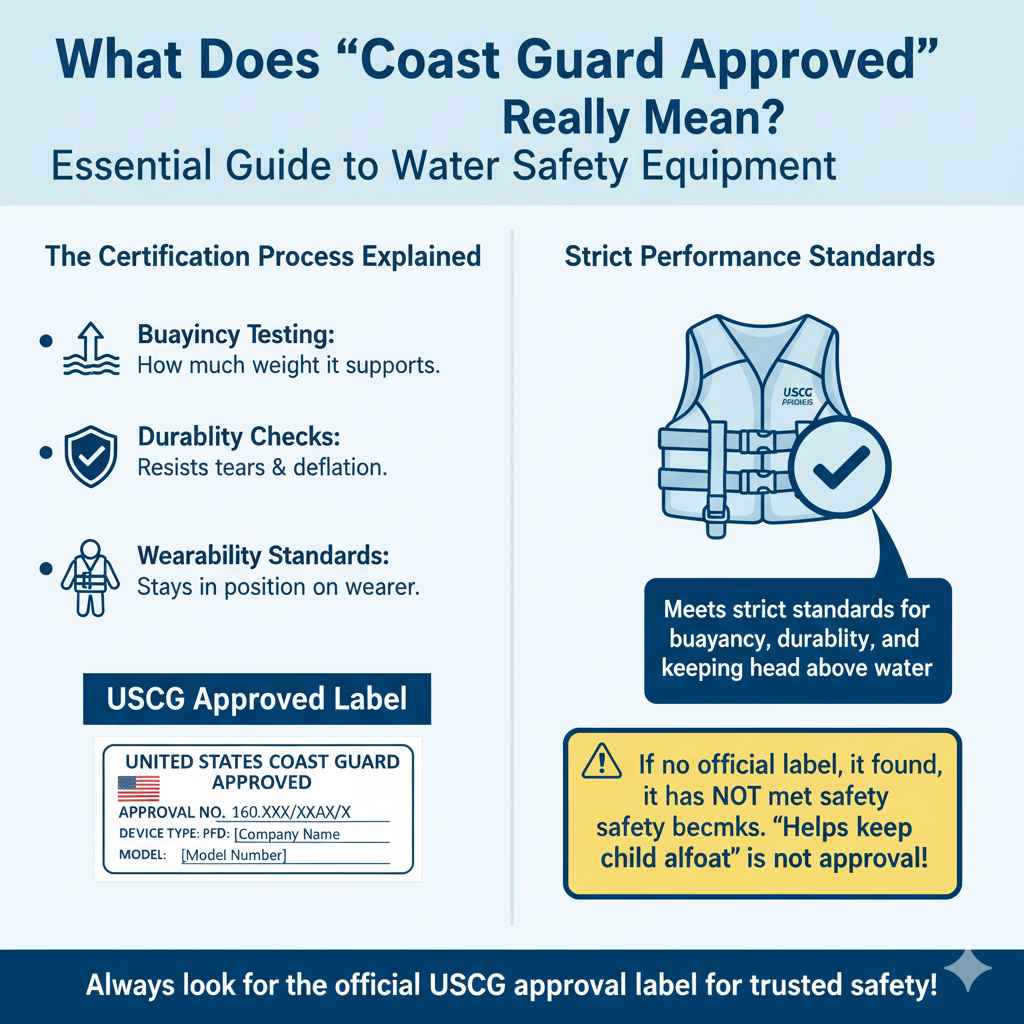
What Does “Coast Guard Approved” Really Mean?
For a piece of water safety equipment to earn the coveted USCG stamp of approval, it must meet very strict performance standards. These standards cover things like buoyancy (how much it floats), durability, and how well it keeps a person’s head above water, even if they are unconscious.
The Certification Process Explained
The approval process ensures that the device performs reliably under real-world conditions. This involves:
- Buoyancy Testing: Testing how much weight the device can support in the water.
- Durability Checks: Ensuring the material won’t easily tear or deflate under stress.
- Wearability Standards: Making sure the device stays correctly positioned on the wearer.
If a product is officially USCG-approved, you will almost always see an approval label or marking directly printed on the device itself. If you cannot find this label, or if the packaging only says it helps keep a child afloat, it’s a strong sign it has not met these official safety benchmarks.
The Straight Answer: Are Arm Floaties Coast Guard Approved?
This is the core question we need to answer clearly. In the vast majority of cases, the answer is a definitive no. Arm floaties, often sold as inflatable “water wings” or simple arm bands, are almost never approved by the U.S. Coast Guard as personal flotation devices (PFDs).
Why Arm Floaties Fall Short of USCG Standards
While arm floaties provide some support in shallow, supervised water, they fail to meet the critical requirements of a USCG-approved PFD. Here is why they are considered toys, not safety equipment:
- Risk of Puncturing: Inflatable devices can easily puncture on rough pool edges, sharp objects, or even fingernails, leading to immediate loss of buoyancy.
- Improper Flotation Angle: Floaties only support the arms. They do not ensure that an unconscious wearer’s head stays above the water line, which is a key requirement for a PFD.
- Lack of Certification Labeling: Because they haven’t undergone the rigorous testing, they lack the official USCG approval label.
The USCG is very clear on this. They categorize these items as swimming aids or flotation toys, not safety devices intended for use in emergencies or open water. You can find official guidance that clarifies this distinction on U.S. government resources, such as those related to recreational boating safety.
What Is a USCG-Approved Device Then? (PFDs)
If arm floaties aren’t approved, what is? The Coast Guard certifies specific types of life jackets, known as Personal Flotation Devices (PFDs). These devices are designed to save lives, whether you are on a boat, near rough water, or helping someone who cannot swim.
Types of USCG-Approved PFDs
PFDs are organized into five main types, each suited for different situations. For general recreational use and learning to swim, you will often look at Types II and III.
| PFD Type | Best Use Scenario | Key Feature |
|---|---|---|
| Type I (Offshore Life Jacket) | Rough, remote waters; commercial vessels. | Highest buoyancy; designed to turn most wearers face-up in the water. |
| Type II (Near-Shore Life Vest) | Calm or moderately rough water where rescue is quick. | Good buoyancy; may turn wearer face-up, but less reliably than Type I. |
| Type III (Flotation Aid Vest) | Water sports, swimming, or where wearer is conscious and can help themselves. | Comfortable for active use; does not guarantee turning wearer face-up. |
| Type IV (Throwable Device) | Used to throw to a person in the water (e.g., ring buoy). | Not worn; used for immediate assistance. |
| Type V (Special Use Device) | Specific activities like kayaking or windsurfing; must be worn as specified. | Used only as directed by the label; often combination devices. |
When shopping for a child’s safety gear, always look for the specific USCG approval label printed on the vest itself. This label confirms it has passed the necessary tests for safety reliability.
The Role of Arm Floaties: Aid vs. Safety Device
It is important not to dismiss arm floaties entirely, but we must understand their proper place. They are tools for building confidence, not substitutes for actual life preservers.
When Arm Floaties Can Be Helpful
For a beginner who is just getting comfortable in the water, under constant, active adult supervision, arm floaties can serve a purpose:
- Building Confidence: They allow a child to feel slightly supported while practicing kicking and arm movements.
- Shallow Water Fun: They are great for supervised play in the wading area or pool steps where an adult is within arm’s reach.
- Transitional Support: They can sometimes bridge the gap between needing full support and swimming independently.
The key word here is supervision. If you rely on arm floaties, your hands must never leave the child. If the floatie deflates or slips off, the child will immediately lose support.
Safety Guidelines: Arm Floaties vs. PFDs
To help you decide what gear to use in different environments, here is a simple breakdown of when to use flotation toys versus mandatory safety devices.
Rule of Thumb for Water Environments
- Deep Water or Open Water (Lakes, Oceans): Only use USCG-approved PFDs (life jackets). Floaties are strictly prohibited as primary safety gear here.
- Pools with Constant Adult Supervision: Floaties can be used as a comfort aid, but the supervising adult must maintain physical contact (touch supervision).
- Boating: All children aboard a boat are legally required by many states, and generally recommended everywhere, to wear a properly fitting, USCG-approved life jacket at all times. Arm floaties do not satisfy this requirement.
Remember, the Coast Guard ensures PFDs work even if the wearer panics or loses consciousness. Arm floaties cannot guarantee this critical function.
How to Properly Fit a USCG-Approved Life Jacket
Since PFDs are the approved standard, knowing how to select and fit one correctly is vital. A life jacket that doesn’t fit properly is just as dangerous as not wearing one at all.
Step-by-Step Fitting Guide for Children
Fitting a life jacket properly involves more than just zipping it up. Follow these steps:
- Check the Weight Range: Ensure the child’s weight falls clearly within the range specified on the PFD’s label (e.g., 30-50 lbs).
- Put it On: Have the child put on the vest. Secure all buckles and zippers.
- The Lift Test (Crucial Step): With the child securely buckled in, gently lift them up by the shoulders of the vest.
- Inspect the Fit: If the vest slides up over their ears, or if their chin sinks too far into the water, the vest is too large or improperly fastened. Adjust the straps or select a smaller size.
- Strap Adjustment: For added security, many children’s PFDs have a crotch or safety strap. This strap should be snug, preventing the vest from riding up over the head in the water.
A snug fit means the vest only moves an inch or two up and down when you perform the lift test. This ensures that in an emergency, the flotation stays where it needs to be.
Alternatives to Arm Floaties That Offer Better Support
If you are looking for something beyond a full life jacket but want more reliable support than simple inflatable bands, there are better, often non-inflatable, options available that still promote learning to swim.
Recommended Swim Supports (Non-PFD)
- Swim Vests with Integrated Flotation: These are often neoprene or fabric vests with foam inserted. While some advanced versions might seek specific certifications for swimming lessons, they are generally better than inflatable rings because they do not deflate suddenly.
- Kickboards: Excellent for practicing leg strokes while keeping the upper body slightly elevated and allowing the instructor or parent to maintain close proximity.
- Noodle Floats (Use with Caution): These foam tubes provide buoyancy but require active balancing. They are best used under direct, hands-on supervision.
When evaluating any swim aid, always check the manufacturer’s guidelines. If it claims to be a safety device, demand to see the USCG approval number.
Legal Implications and Open Water Safety
Understanding the legal and practical reasons for USCG approval is important, especially if you plan to use your water gear near navigable waters or on a boat.
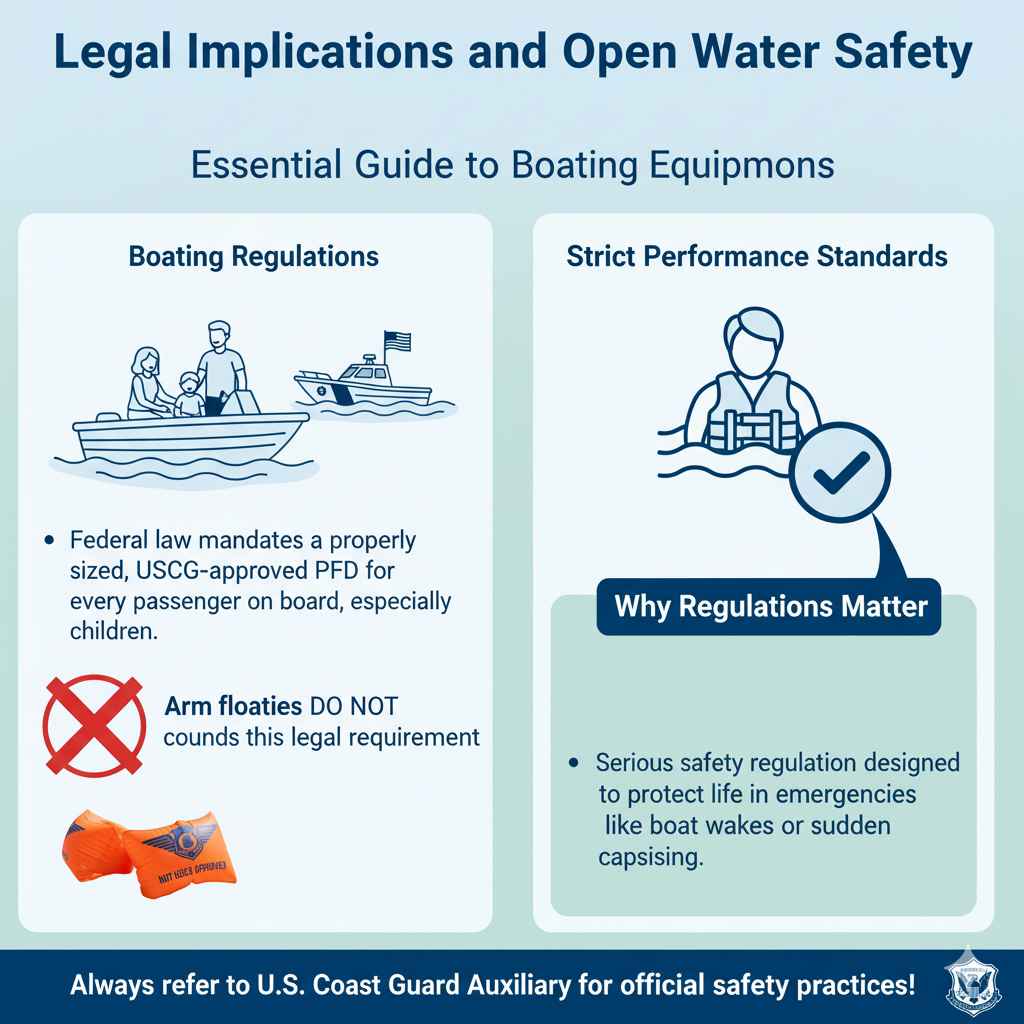
Boating Regulations
In the United States, federal law regarding recreational boating mandates that every passenger, especially children, must have immediate access to a properly sized, USCG-approved PFD. If a law enforcement officer boards your vessel, arm floaties will not count towards satisfying this legal requirement. This is a serious safety regulation designed to protect life when boat wakes or sudden capsizing occur.
For more information on the specific requirements for recreational boating safety, you can always refer to the official resources provided by the U.S. Coast Guard Auxiliary, which often provides educational materials on safe boating practices.
Debunking Common Myths About Water Wings
Because arm floaties are so common and colorful, many people make assumptions about their effectiveness. Let’s clear up a few persistent myths.
Myth vs. Fact Table
| Myth | Fact |
|---|---|
| Arm floaties are “life-saving” devices. | They are pool toys. If they deflate or slip, they offer zero protection. |
| If a child wears floaties, they can swim alone in the pool. | No child should ever swim alone, regardless of the flotation device used. Touch supervision is always necessary. |
| All inflatable water aids are Coast Guard approved. | Only devices explicitly marked with the USCG approval number meet the safety standard. Most floaties are not marked this way. |
Relying on a myth can lead to a dangerous oversight when safety is on the line. Stick to what is proven and tested.
FAQ: Beginner Questions About Arm Floaties and Safety
Here are quick answers to the most common questions beginners have about water safety gear:
Q1: If my child is only using arm floaties in the shallow end, do I still need a life jacket on the boat?
A: Yes, absolutely. The requirements for boating safety are separate from pool play. For any boat, you must have a USCG-approved life jacket readily accessible for every person aboard, and children often must wear them whenever the boat is underway.
Q2: How can I tell for sure if a life jacket is USCG approved?
A: Look closely at the label sewn or printed onto the device. It must clearly state “U.S. Coast Guard Approved” and usually list the specific PFD Type (like Type III) and the wearer’s weight range.
Q3: Can I use the same life jacket for my child in the pool and on the lake?
A: Yes, if the life jacket fits their current weight, it is approved for use in both environments. However, always ensure you follow local rules, as some areas might have specific mandates for PFD wear on certain water bodies.
Q4: Do “floaties” sold in large department stores meet safety standards?
A: Generally, no. If the item is inflatable and marketed purely for play or “swim training assistance” without clear, permanent safety markings, assume it is not USCG approved. They are considered swimming aids, not safety equipment.
Q5: What is the safest first step for a child learning to swim?
A: The safest first step is often enrolling them in certified swim lessons combined with the use of a properly fitted USCG-approved Type III life jacket for water introduction, all while maintaining touch supervision from an adult.
Q6: If an arm floatie has a warning label, does that mean it’s safe?
A: A warning label usually states things like, “Must be used under adult supervision” or “Not a life-saving device.” This label confirms it is not a certified safety device, reinforcing that you should not rely on it in an emergency.
Q7: Are puddle jumpers (vests with foam and arm flotation) Coast Guard approved?
A: Many popular brand “puddle jumpers” are USCG-approved Type III devices because they incorporate substantial foam flotation around the chest and have secure, non-inflatable buckles. Always check the label to confirm the approval status.
Conclusion: Choosing Confidence Through Certified Safety
We have covered a lot of ground today, but the main takeaway is clear: when it comes to safety in the water, we must rely on tested, certified equipment. Arm floaties are fun pool accessories for supervised playtime, but they are never a substitute for a U.S. Coast Guard-approved Personal Flotation Device (PFD).
As a guide who values both enjoyment and security, I encourage you to invest in a properly fitted USCG Type II or Type III life jacket for any water activity that moves beyond the shallowest areas. Remember the lift test when fitting a vest, and always remember that supervision is the most important piece of safety gear you possess. By understanding the difference between a pool toy and certified safety equipment, you are setting the right standard for safe, fun, and confident water adventures for everyone.