Armed Versus UnArmed Guards: Essential Pros & Cons
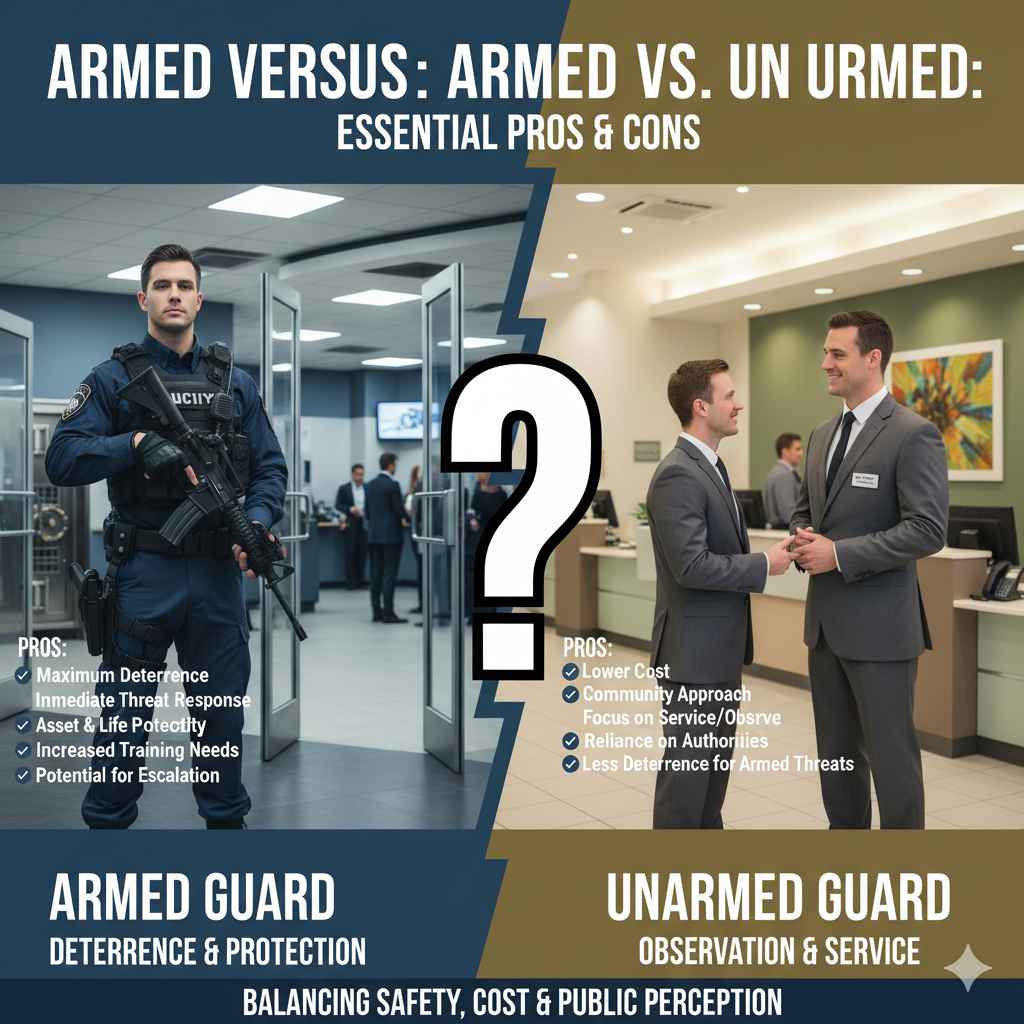
Armed versus Unarmed guards pros and cons revolve around balancing enhanced deterrence and response capabilities (armed) against lower cost, reduced liability risk, and a more community-focused presence (unarmed). The best choice depends entirely on the specific security needs, budget, and environment of your location.
For a related rules or safety question, Armed Vs UnArmed Security: Essential Liability gives readers more context before making assumptions.
For a related rules or safety question, Armed vs Un Armed Security Guards: Essential Choice gives readers more context before making assumptions.
Choosing the right security guard for your property can feel complicated. You might wonder if you need someone just to monitor cameras or someone fully prepared for a serious threat. This is the core question: armed versus unarmed guards. It’s not always about which one is “better,” but which one fits your situation best. Feeling uncertain about the legalities or effectiveness is normal, especially when safety is on the line. Don’t worry; we will break down the advantages and disadvantages of each option clearly. By the end of this guide, you will know exactly what to look for when hiring security personnel.
Understanding the Basics: What Defines Each Guard Type?
Before diving into the pros and cons, let’s establish a simple definition for each type of security professional. Think of this as setting up your stance before you draw your bow—it needs to be solid!
Unarmed Security Guards
An unarmed guard is primarily focused on observation, deterrence, presence, and reporting. They are the eyes and ears on the ground. Their main tools are communication, observation skills, training in conflict de-escalation, and adherence to established safety protocols. They do not carry firearms, though they may carry other non-lethal tools like radios, flashlights, or pepper spray, depending on local regulations and company policy.
Armed Security Guards
Armed guards possess the necessary training, licensing, and authorization to carry a firearm (typically a handgun) while on duty. While their primary goal remains deterrence and prevention, they are equipped to respond to imminent threats of serious harm or death. Their training is much more intensive, covering not just standard security procedures but also legal use of force, tactical awareness, and firearms proficiency.

The Essential Pros and Cons of Unarmed Guards
Unarmed security personnel are excellent for environments where the goal is high visibility and low confrontation. They excel at making things look secure without escalating minor issues.
Pros of Utilizing Unarmed Guards
- Lower Cost: Generally, the hourly rate for unarmed guards is significantly lower because the rigorous (and expensive) certification process for carrying firearms is not required. This makes them ideal for budget-conscious operations or locations needing 24/7 coverage.
- Enhanced Community Relations: Their presence is often perceived as less intimidating by the public, employees, or residents. This can foster better communication and cooperation, which is crucial for community-oriented businesses or residential complexes.
- Reduced Liability and Risk: Since they are not armed, the risk of accidental discharge, misuse of force resulting in litigation, or theft of a weapon is eliminated. This drastically lowers the overall liability exposure for the hiring company.
- Focus on Soft Skills: Unarmed guards must rely heavily on communication, observation, and de-escalation techniques. They are experts at diffusing situations before they become physical confrontations.
- Ease of Placement: They face fewer restrictions regarding where they can be posted. Certain sensitive locations, like schools or government buildings, sometimes prefer or mandate unarmed personnel.
Cons of Utilizing Unarmed Guards
- Limited Response to Violent Threats: If a situation escalates beyond simple theft or trespassing into armed robbery or active violence, an unarmed guard’s ability to protect life is severely limited.
- Lower Deterrence Level: While their presence is a deterrent, professional criminals intent on high-value targets may view an unarmed guard as an easier obstacle to overcome.
- Reliance on Law Enforcement: In a serious crisis, an unarmed guard’s primary role becomes maintaining the scene and protecting evidence until the police arrive. Response time is always a variable risk.
- Potential for Physical Overpowering: A determined perpetrator may physically overpower an unarmed guard during a struggle, as the guard lacks the immediate capability to equalize a physical threat.
The Essential Pros and Cons of Armed Guards
Armed security is often necessary where the assets being protected are high-value, or where the risk of violent criminal activity is statistically higher. They bring a superior level of immediate defensive capability.
Pros of Utilizing Armed Guards
- Superior Deterrence: The visible presence of an armed guard often stops criminal intent before it even starts, especially for high-risk targets like banks, jewelry stores, or executive protection details.
- Immediate Response Capability: In the event of an active shooter or armed intruder, an armed guard can respond instantly to neutralize the threat, potentially saving lives while waiting for police backup. This is their biggest advantage.
- Protection of High-Value Assets: For transporting cash, guarding sensitive technology, or protecting valuable art collections, the capability to defend against an organized threat is non-negotiable.
- Increased Guard Confidence: Guards who are properly trained and authorized to carry a weapon often exhibit higher levels of situational awareness and professional confidence.
Cons of Utilizing Armed Guards
- Significantly Higher Cost: Armed guards command much higher wages due to the intensive licensing requirements, specialized training, insurance costs, and the employer’s responsibility for the firearm itself.
- Increased Legal Liability: Any use of lethal force, even when justified, opens the hiring company and the guard to intense scrutiny, investigations, and potential civil lawsuits. Proper documentation and adherence to the use-of-force continuum are critical.
- Intimidation Factor: In community settings, an armed guard can create an atmosphere of tension rather than safety, potentially frightening customers or residents who are not accustomed to armed personnel.
- Administrative Burden: The employer must verify and maintain proof of current licenses, continuous training certifications, and insurance coverage, adding administrative overhead. You can find general guidelines on security guard licensing from organizations like the International Association of Private Security Directors (IAPSD).
Side-by-Side Comparison: Armed vs. Unarmed
To help you weigh these factors quickly, here is a comparison table summarizing the core differences. Think of this like checking your sight picture before letting an arrow fly.
| Feature | Unarmed Guard | Armed Guard |
|---|---|---|
| Primary Function | Deterrence, Observation, Reporting, De-escalation | Deterrence, Observation, Immediate Armed Response |
| Cost | Lower hourly rate | Significantly higher hourly rate |
| Training Depth | Focus on soft skills and protocol | Extensive firearms training, legal use of force continuum |
| Liability Risk | Lower (focus on negligence) | Higher (focus on lethal force incidents) |
| Best For | Retail, corporate lobbies, residential patrols, event monitoring | Banks, high-value logistics, executive protection, areas with high violent crime rates |
How to Decide: Matching Guard Type to Your Needs
Selecting the right type of guard is an assessment process. It’s not about picking the most powerful option; it’s about picking the appropriate option for the risk level involved. Here are the steps to guide your decision-making process.
Step 1: Conduct a Thorough Risk Assessment
This is the most critical first step. You need to honestly evaluate what you are protecting and the threats you face. Ask yourself these questions:
- What are the assets? Are they physical cash, proprietary data, expensive equipment, or simply the safety of people?
- What is the environment? Is the location in a high-crime area, or is it a quiet, suburban office park? Check local crime statistics for reference.
- What is the required response time? How long can you afford for an emergency to persist before professional help arrives?
- What is the perception goal? Do you want visitors to feel secure and welcome, or do you need to project an image of uncompromising security?
Step 2: Review Budgetary Constraints
If your budget only allows for part-time coverage, stretching that budget to afford fewer hours of armed coverage might be less effective than consistent, full-time unarmed coverage. Unarmed coverage offers superior visibility over longer periods.
Step 3: Understand Local Regulations
Firearm regulations vary drastically by state, county, and even city. Before hiring an armed guard, you must confirm that the security company is licensed to operate in your area and that their guards carry the correct permits for that jurisdiction. For example, rules around concealed versus open carry can impact visibility and legality. Always check with your state’s regulatory board for the latest requirements regarding private security operations.
Step 4: Define Guard Duties Clearly
If the primary duties involve greeting people, checking badges, monitoring entry points, and patrolling common areas, an unarmed guard is perfectly suited. If the job description includes immediate engagement with known armed intruders or response to serious threats while awaiting police, arming the personnel becomes necessary.
When an Unarmed Guard is the Perfect Fit
For many businesses, the unarmed route provides the best balance of visibility, cost-effectiveness, and positive public interaction. They are superb for:
- Retail Stores (Non-High-Value): Deterring shoplifting and providing customer assistance.
- Corporate Lobbies and Office Buildings: Controlling access, signing in visitors, and acting as the first point of contact.
- Construction Sites: Preventing theft of materials after hours through consistent patrols.
- Residential Communities: Providing friendly patrols and ensuring community rules are followed without creating a militarized atmosphere.
When Investing in Armed Guards is Necessary
There are specific scenarios where the increased cost and liability are justified by the extreme risk reduction provided by armed personnel. These usually involve protecting assets that are either highly liquid or extremely vulnerable to violent attack.
Consider armed guards for:
- Financial Institutions: Banks, credit unions, and cash handling facilities where robbery risk is constant.
- Executive Protection (Bodyguards): Protecting specific individuals facing credible threats of harm.
- High-Value Cargo Transport: Protecting shipments of pharmaceuticals, electronics, or precious metals during transit.
- Critical Infrastructure: Power plants, data centers, or utility substations that are potential targets for sabotage or terrorism.
The Role of Training and De-escalation
It is vital to remember that a weapon, whether visible or not, is only one tool. A poorly trained armed guard is far more dangerous than a highly trained unarmed guard. Training is the great equalizer.
Unarmed Guard Training Focus
Effective unarmed security relies heavily on what we call the “soft skills.” Training should emphasize:
- Verbal Judo and Conflict De-escalation Techniques.
- Situational Awareness (recognizing pre-incident indicators).
- Report Writing (clear, objective documentation).
- Emergency Evacuation Procedures.
Armed Guard Training Focus
Armed guards require all the skills above, plus intensive tactical training. They must understand the legal framework governing the use of deadly force in your jurisdiction. A critical element of their training involves mastering the “Use of Force Continuum,” ensuring they use only the minimum force necessary to stop a threat. Poor training here leads directly to the high liability risks discussed earlier.
Hybrid Security Solutions: Getting the Best of Both Worlds
Sometimes the perfect solution lies in mixing the two types. This is often called a hybrid approach and can be highly effective and cost-efficient.
For instance, you might employ:
- Armed guards during high-risk hours: Posting an armed officer during closing time at a large retail center (when cash is being moved) and switching to unarmed guards during daytime operations.
- Layered Defense: Using unarmed guards as the highly visible, accessible front line for customer interaction and access control, while armed personnel remain strategically positioned nearby (e.g., in a security office) ready to respond only if the situation escalates past the unarmed guard’s capability.
This layered approach maximizes visibility and public friendliness while ensuring immediate armed backup is on standby for true emergencies.

FAQ: Beginner Questions About Security Guards
Q1: Can an unarmed guard physically restrain someone?
A: Yes, an unarmed guard generally has the same right to detain someone as any private citizen, often referred to as citizen’s arrest, provided they witness a crime or are protecting property. However, they must use reasonable force and should rely on communication and waiting for law enforcement whenever possible.
Q2: Do armed guards have to show their weapon?
A: This depends heavily on local laws and company policy. In some areas, open carry is required for visibility as a deterrent. In other places, especially in corporate settings, guards must carry concealed to avoid alarming employees or the public, only drawing the weapon if an immediate, lethal threat is present.
Q3: Is hiring armed guards always more expensive than hiring an extra unarmed guard?
A: Yes. The specialized licensing, ongoing qualification training, higher insurance premiums, and increased wage demands for armed personnel almost always result in a higher hourly rate, often by 30% to 50% compared to an unarmed guard performing similar patrol duties.
Q4: What happens if an armed guard uses their weapon incorrectly?
A: If the use of force is deemed unjustified by an investigation, both the guard and the hiring company can face criminal charges, civil lawsuits, and the immediate termination of the security contract. This is the main reason why thorough vetting and continuous training are paramount for armed services.
Q5: If my business has cameras everywhere, do I still need a guard?
A: Cameras are great for evidence collection, but they are passive. A guard (armed or unarmed) is an active deterrent. They can stop the incident in progress, redirect people, communicate hazards, and provide immediate first aid—actions a camera cannot perform.
Q6: Can unarmed guards carry less-lethal items like tasers or batons?
A: This varies widely by state regulation. Some jurisdictions allow licensed unarmed guards to carry items like pepper spray or batons, while others restrict any defensive tool beyond communication devices. Always confirm the guard company’s inventory aligns with local statutory allowances for non-firearm tools.
Conclusion: Making Your Confident Security Choice
Choosing between armed and unarmed security is a decision driven by risk assessment, not just preference. Think of it like selecting the right arrow for your target—a heavy hunting broadhead is overkill for a paper target, but essential for large game.
If your primary concern is presence, monitoring, access control, and keeping operational costs sensible, the well-trained unarmed guard is your best ally. They excel at prevention through visibility and strong people skills.
However, if your location deals with high-value transactions, faces documented threats of serious violence, or protects critical assets where immediate intervention is necessary to save lives, the increased investment in a licensed, thoroughly trained armed guard is a necessary insurance policy against catastrophic loss.
Take the time to complete that initial risk assessment, review your local laws, and discuss hybrid options with reputable security providers. By matching the guard’s capability precisely to your environment’s needs, you ensure safety, protect your assets, and build confidence in your protective measures.