How The Baseball Got Stuck In Molina’S Chest Protector
A baseball can get stuck in a catcher’s chest protector during a game. This happens when the ball hits the protector at a specific angle and speed. It often occurs on foul tips or pitches in the dirt. The equipment is designed to absorb impact. Sometimes, it can trap the ball instead. This is rare but memorable when it happens. It shows how unique baseball can be.
For a closely related bow or archery topic, Alpinestars Chest Protector A1 Versus A4: A gives readers a useful next step.
For a closely related bow or archery topic, Do Chest Protector Shirts Work Baseball? Essential gives readers a useful next step.
For a closely related bow or archery topic, CCM Premier vs EFlex: Essential Showdown gives readers a useful next step.
For a closely related bow or archery topic, Ballistic Jersey Vs Chest Protector: Essential Gear gives readers a useful next step.
For a related aiming question, Does Pulisic Wear Under Jersey Chest Protector? Exclusive Insight Revealed helps readers compare the next accuracy detail.
For a closely related bow or archery topic, How The Ball Stuck To Molina’S Chest Protector gives readers a useful next step.
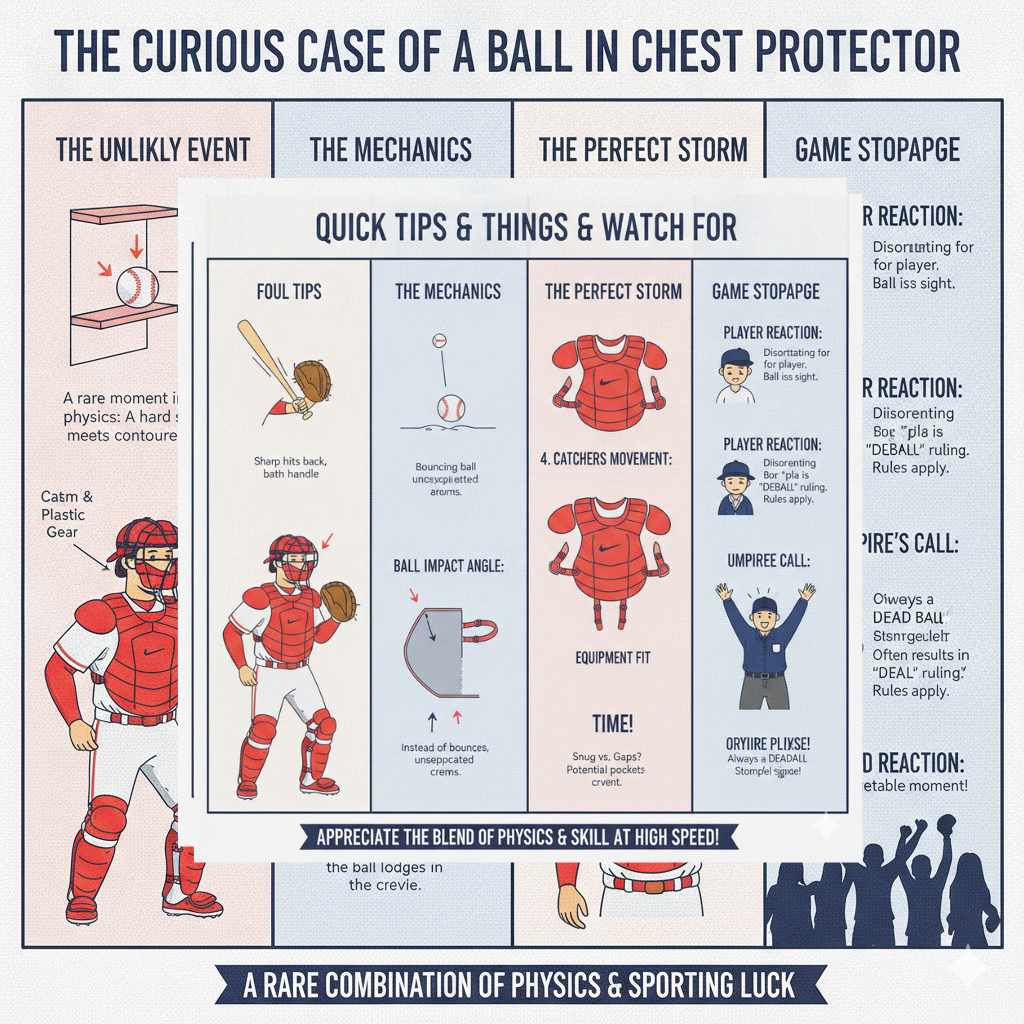
The Curious Case of a Ball in the Chest Protector
So, how does a baseball, a hard sphere, actually get stuck in a piece of catcher’s gear? It sounds like something from a cartoon. But it’s real.
This usually happens to the catcher. The catcher wears a chest protector. It’s a vital piece of equipment.
It protects them from fast pitches and foul balls. These balls can come at them with great force.
The protector is made of foam. It’s covered in tough plastic. It’s designed to cushion hard hits.
It spreads the force over a larger area. This saves the catcher from injury. But, like many things in sports, there are exceptions.
The shape of the protector is key. It has padding and straps. It’s not perfectly flat.
There are angles and curves. These can sometimes create a pocket.
A baseball is round. When it hits this gear, it bounces off. Usually, it bounces away.
But if the ball hits just right, it can lodge itself. Think of a ball hitting a shelf at a funny angle. It might get caught there for a second.
The same idea applies here. The ball hits, but instead of ricocheting, it wedges in.
This isn’t just about the ball. The catcher’s movement matters too. They are often moving.
They might be trying to catch a pitch. Or they might be reacting to a ball in the dirt. This movement can help the ball get lodged.
The protector shifts. The ball sinks deeper into a crevice.
It’s important to remember this doesn’t happen by design. No one wants a ball stuck. It stops the game.
It can also be a bit disorienting for the player. They can’t see the ball. They can’t easily remove it.
It’s a moment that always gets a reaction from the crowd.
This event often leads to interesting calls by the umpire. The rules about a “dead ball” can come into play. We’ll look at that later.
For now, just picture the scenario. A fast ball, a piece of gear, and a bit of physics. It’s a unique combination.
It creates a rare but unforgettable moment in baseball history.
My Own Close Call (Not Quite Stuck, But Close!)
I remember one summer league game I played in a few years back. I was playing outfield, not catcher, but the principle of things getting stuck felt close. It was a hot afternoon.
The sun was beating down. I was playing left field. The batter hit a sharp line drive right at me.
My glove was new. It was still a bit stiff. I ran hard to get to the ball.
I braced myself for the impact. The ball hit the pocket of my glove. But instead of settling in nicely, it smacked right on the edge of the leather.
It was a weird bounce.
For a split second, the ball seemed to hover. It didn’t quite fall into the glove. It didn’t fly out either.
It was just… there. Lodged between my glove and my hand. I could feel its roundness pressing against me.
My heart did a little jump. I thought, “Oh no, it’s going to bounce out!”
I instinctively squeezed my glove. That’s when it finally settled. But that moment of uncertainty, the ball almost defying gravity and the laws of a good catch, really stuck with me.
It made me appreciate how sensitive certain equipment can be. How a slight change in angle or force can lead to a strange outcome.
Later, I saw a replay of a catcher’s chest protector incident. The ball really did seem to vanish into his gear. It looked almost comical.
But seeing my own near-miss made me understand the physics a bit better. It’s all about how the ball interacts with the surface. And how that surface isn’t always perfectly designed to deflect.
That experience taught me that even in sports we think we understand, there are always surprising moments. Moments that make you pause and say, “Wow, how did that happen?” The baseball getting stuck is one of those moments. It’s a small thing, but it adds to the rich tapestry of the game.
When Baseball Gets Weird: Other Rare Occurrences
The Ball Stuck in the Catcher’s Protector: This is what we are talking about! A foul tip or bad bounce lodges the ball in the chest gear. It’s a visual shocker.
The Hidden Ball Trick: A pitcher pretends to throw. The catcher quickly grabs the ball and tags a runner off base. It requires great acting and quick reflexes.
The Infield Fly Rule Mishap: Sometimes, an infield fly is dropped. If runners are on base with less than two outs, it’s an automatic out. But confusion can happen about whether it was truly “in the infield”.
The Bizarre Ground Rule Double: A ball bounces strangely and goes into the stands or under a fence. This often results in a ground rule double. The batter and runners advance two bases.
The “Walk-off” Wild Pitch or Passed Ball: In a tied game, a wild pitch or passed ball can allow the winning run to score. It’s a dramatic, often frustrating, way to end a game.
Why Does This Happen to Catchers?
Catchers are the main performers in this specific play. Their job is tough. They face the pitcher.
They face the batter. And they face the ball. They wear a lot of protective gear.
This includes the chest protector. It covers their torso.
The chest protector has a specific design. It’s not a smooth, flat surface. It has a molded shape.
This shape is meant to spread impact. But it also has seams, edges, and curves. Think of a slightly bent piece of plastic.
It might have a dip or a raised part.
A baseball is moving very fast. It can travel over 90 miles per hour. When a ball hits this protector, the force is huge.
Usually, the ball bounces away. The padding does its job. But if the ball hits a specific spot at a certain angle, it can get trapped.
This often happens on foul tips. A foul tip is when the batter hits the ball. But the ball goes straight back.
It hits the catcher’s bat or the catcher’s mitt. And then it rockets backward. It often goes directly into the catcher’s chest protector.
Another common way is a pitch that hits the dirt. This is called a wild pitch or a passed ball. The ball bounces up.
It might hit the catcher’s knees or shin guards. Then it ricochets upward. It could hit the chest protector at an odd angle.
The material of the protector matters. It’s usually a hard plastic shell. This shell covers layers of foam.
The foam absorbs the shock. But the plastic shell is what the ball first hits. If that shell has a groove or a seam, the ball can get stuck.
The foam might then push around the ball, holding it in place.
The catcher’s own body position can also play a role. They are often leaning forward. They might be trying to block a pitch.
Their chest is exposed to the ball. This position can create angles where the ball might get lodged. It’s a combination of equipment design, ball trajectory, and player movement.
It’s a rare occurrence because equipment is well-made. And catchers are skilled athletes. They know how to move.
They know how to protect themselves. But in the chaos of a game, physics can sometimes create a funny scene. The ball finds a way to pause the action.
A Closer Look at the Equipment
Let’s talk more about that chest protector. It’s not just a simple pad. Modern chest protectors are complex pieces of gear.
They are designed with player safety as the top priority. But their shape can lead to unusual events.
Think about it like this: if you dropped a ball onto a perfectly flat, hard surface, it would just bounce. But if you dropped it onto a slightly uneven surface, it might stop or get stuck in a small dip. Catcher’s gear has these “dips” and “curves” built-in to absorb impact.
The outer shell is usually made of hard plastic. This plastic is designed to be durable. It can withstand high impacts.
This shell is often molded. It has a contoured shape. This contouring is not just for comfort.
It helps to deflect the ball away from the body.
Beneath the plastic shell, there are layers of foam. These foams are designed to absorb energy. They soften the blow.
Different types of foam are used. Some are dense. Others are softer.
The combination helps to reduce the force that reaches the catcher’s body. It’s a shock-absorbing system.
Then there are the straps. These straps hold the protector onto the catcher. They are usually elastic or Velcro.
They allow for some movement. This movement is important for flexibility. But it can also mean the protector isn’t always perfectly rigid against the body.
This slight looseness can create extra space for a ball to get caught.
Consider the angles. A baseball is about 3 inches in diameter. The chest protector has many surfaces.
Some are angled forward. Some are angled to the side. If a ball hits a surface that is angled just right, it can slide into a gap between the padding layers or under an edge.
The ball’s speed is also a factor. A very fast ball hitting at a precise angle can drive itself into a crevice. It’s like pushing something into a tight spot.
Once it’s in, the surrounding padding might push against it. This pressure can hold it fast.
It’s not like the ball is glued in. It’s wedged. The force of the impact, the angle of the hit, and the specific design of the protector all work together.
This creates a situation where the ball gets temporarily trapped. It’s a perfect storm of sports physics.
Quick Facts About Catcher’s Gear
- Purpose: Protect catcher from high-speed pitches and foul balls.
- Main Parts: Hard outer shell, shock-absorbing foam layers, straps.
- Material: Durable plastic for the shell, specialized foams for padding.
- Design: Molded and contoured to deflect balls and spread impact.
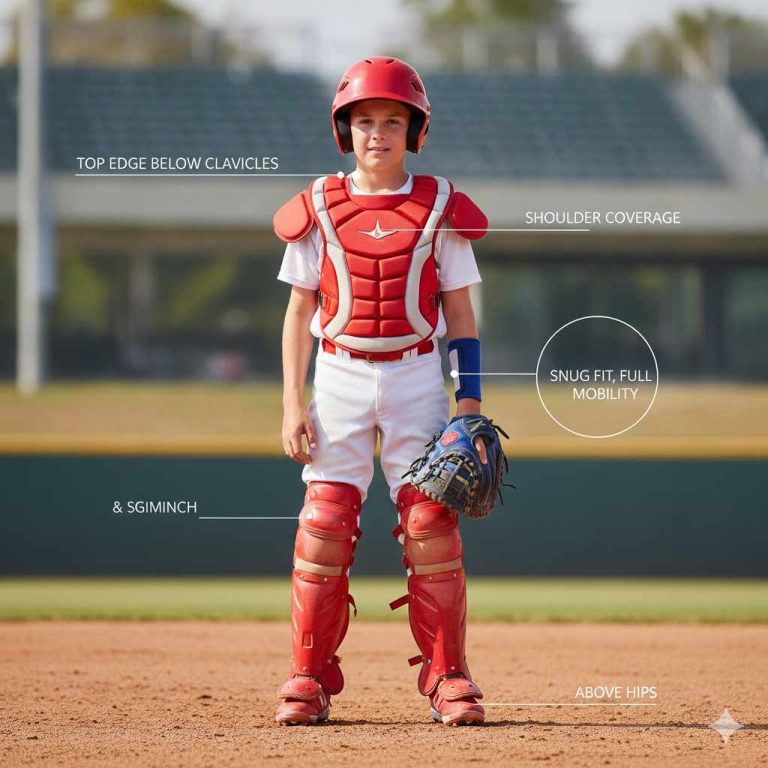
- Fit: Secured with adjustable straps for a snug but flexible fit.
- Rarity: While protective, its shape can, in rare cases, trap a ball.
The Specific Play: Yadi Molina’s Moment
One of the most famous instances of a baseball getting stuck involved Yadier Molina. He’s a legendary catcher. He’s known for his incredible defensive skills.
This happened in a game back in 2013. It was against the Milwaukee Brewers.
Molina was behind the plate. The pitcher threw a pitch. It was a curveball that didn’t break well.
It ended up in the dirt. Molina went to block it. He dropped to his knees.
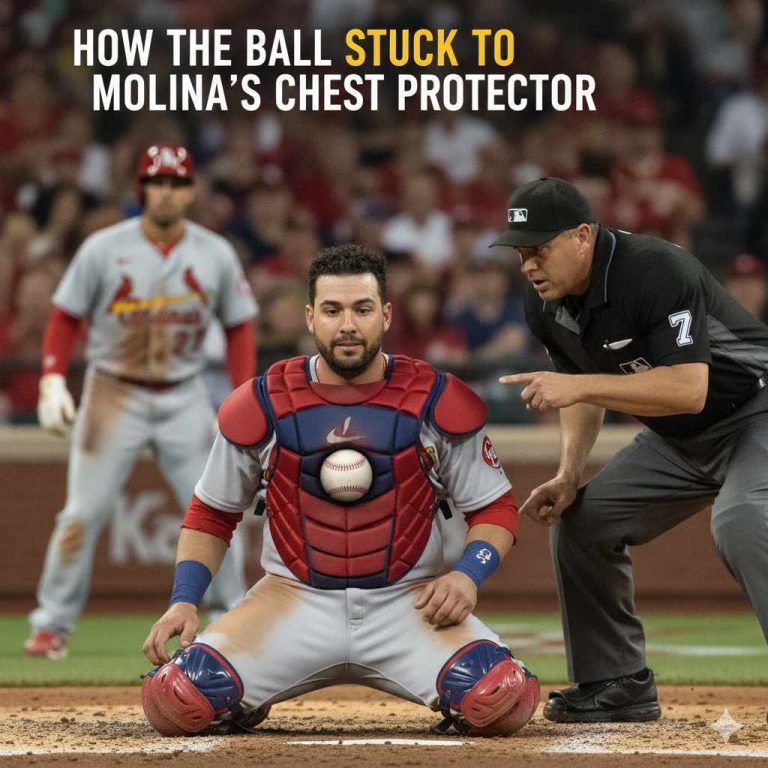
The ball bounced up unexpectedly. It hit his chest protector.
Instead of bouncing off, the ball seemed to disappear. It wedged itself deep into the padding of his chest protector. The umpire immediately called time.
The game stopped. Everyone was looking at Molina.
Molina himself looked a bit surprised. He couldn’t see the ball. He tried to wiggle around.
He tried to get it out. It was firmly stuck. He had to stand up.
Then, with a bit of effort, he managed to pull the baseball out of his gear.
The crowd seemed to find it funny. It was a strange sight. A professional athlete, in the middle of a crucial game, dealing with a baseball stuck in his equipment.
It’s a moment that baseball fans often remember. It highlights the unpredictable nature of the sport.
This wasn’t the first time a catcher had a ball stuck. But Yadi Molina is such a well-known figure. His calm demeanor even in this odd situation made it memorable.
It’s a testament to his experience. He’s seen a lot in his career. This was just another unusual chapter.
The situation had to be handled by the umpire. When a ball is lodged in equipment, it usually means the play is dead. This is to ensure fairness.
The catcher can’t easily play the game with a ball stuck. So, the umpire blows the whistle, so to speak, and stops everything.
This specific event became a highlight reel moment. It’s shared online. It’s talked about by commentators.
It’s a great example of how baseball can surprise you. Even a seasoned pro like Molina can find himself in a truly unique situation on the field. It’s a fun story to tell.
What Happens When the Ball is Stuck? The Rules
When a baseball gets stuck in a player’s equipment, like a catcher’s chest protector, it’s not just a funny moment. It has implications for the game. There are specific baseball rules for this.
These rules ensure fair play.
The most important rule is that the play becomes a dead ball. This means that all runners on base stop advancing. Any action that happens after the ball gets stuck does not count.
The game is effectively paused until the ball is removed.
Why is this fair? Because the player with the ball stuck cannot easily field another ball. They cannot throw.
They cannot tag a runner. They are in a compromised position. Allowing play to continue would give an unfair advantage to the offense.
The umpire will typically notice the ball is stuck. They will then blow their whistle or signal. This signals “time out.” The game stops immediately.
The umpire will approach the player. They will wait for the player to remove the ball.
Once the ball is removed, the umpire will signal for the game to resume. This is usually done by saying “play” or blowing their whistle again. All runners return to the base they occupied when the ball became dead.
This prevents any advantage gained by the ball getting stuck.
In the case of Yadi Molina, the ball bounced away from him after he removed it from his chest protector. Because it was a dead ball situation, the runners stayed put. No one advanced illegally.
It was simply a pause for an unusual event.
This rule applies to other situations too. For example, if a ball gets stuck in the fence. Or if it lodges in the umpire’s mask.
In all these cases, the ball is considered “out of play.” The umpire makes the call based on the situation.
It’s important for players and fans to understand these rules. They are what keep the game fair. Even when something as strange as a baseball lodged in a chest protector happens.
It’s a reminder that baseball has a rulebook for almost everything. Even for the most unexpected scenarios.
What Happens Next? The Umpire’s Role
Identify the Situation: Umpire sees the ball stuck in equipment.
Call Time: Umpire signals “time out” to stop play.
Ensure Ball Removal: Umpire waits for the player to free the ball.
Return Runners: Runners go back to their previous bases.
Resume Play: Umpire signals for the game to continue.
Real-World Context and Player Behavior
In the everyday world of baseball, players expect the unexpected. They train for it. They practice specific skills.
But some things are just rare. A baseball getting stuck in a chest protector is one of those things.
Catchers are trained to handle a lot. They learn to absorb impacts. They learn to block pitches.
They learn to frame pitches. Their gear is designed to help them do this safely. But the gear itself can sometimes be the cause of a strange play.
When a catcher gets a ball stuck, their first reaction is often surprise. Then, they focus on getting it out. They know they can’t continue playing effectively until it’s free.
They might try to reach down and pull it out. Sometimes, they need to stand up or shift their weight.
Other players on the field react too. Outfielders might look in. Infielders might watch.
The pitcher often stands on the mound, waiting. The dugout will be buzzing. It’s a break in the normal flow.
A moment that everyone stops to observe.
The umpires are key here. They are trained to manage the game. They see the ball stuck.
They know the rules. They act quickly to make the correct call. Their quick thinking prevents confusion and ensures the game stays fair.
Fans in the stands usually react with a mix of amusement and curiosity. It’s not a typical play. It’s something to talk about.
It’s a story they can tell later. “Did you see that game when the ball got stuck in his chest protector?”
This kind of event doesn’t typically change a player’s strategy. A catcher won’t start playing differently because of this. They will continue to do their job.
They trust their gear. They trust their training. But it’s a reminder that even the most advanced equipment can have quirks.
It’s also a testament to the athleticism and focus of these players. Even when something bizarre happens, like a baseball lodged in their protective gear, they often handle it with a degree of professionalism. They get the ball out and get ready for the next pitch.
That’s the mark of a true ballplayer.
What This Means for You as a Fan
For fans of baseball, these odd moments are part of the charm. They are what make the game memorable. They are stories you share.
They are moments that get replayed for years.
When you see a baseball stuck in a catcher’s chest protector, it means a few things:
1. The Unpredictability of Sports: Baseball, like any sport, can produce surprising outcomes. Even with rules and skilled players, physics and luck play a role.
This event is a perfect example.
2. The Importance of Equipment: While gear is designed for safety, its shape and materials can lead to unusual interactions with the ball. It shows how equipment can sometimes be part of the game’s story.
3. The Role of the Umpire: You see the umpire in action, enforcing the rules. They keep the game fair, even in strange situations.
Their quick thinking is vital.
4. A Story to Tell: This is a unique event that stands out. It’s more interesting than a routine groundout.
It’s something you can point to as a quirky part of baseball history.
It doesn’t mean the game is broken. It doesn’t mean the equipment is bad. It means baseball is a game played by humans with equipment in the real world.
And sometimes, those elements combine in unexpected ways.
So, the next time you see a baseball get stuck in a catcher’s gear, enjoy the moment. Appreciate the rarity. Understand that it’s a part of the game’s rich, unpredictable narrative.
It’s a little piece of baseball magic, in its own strange way.
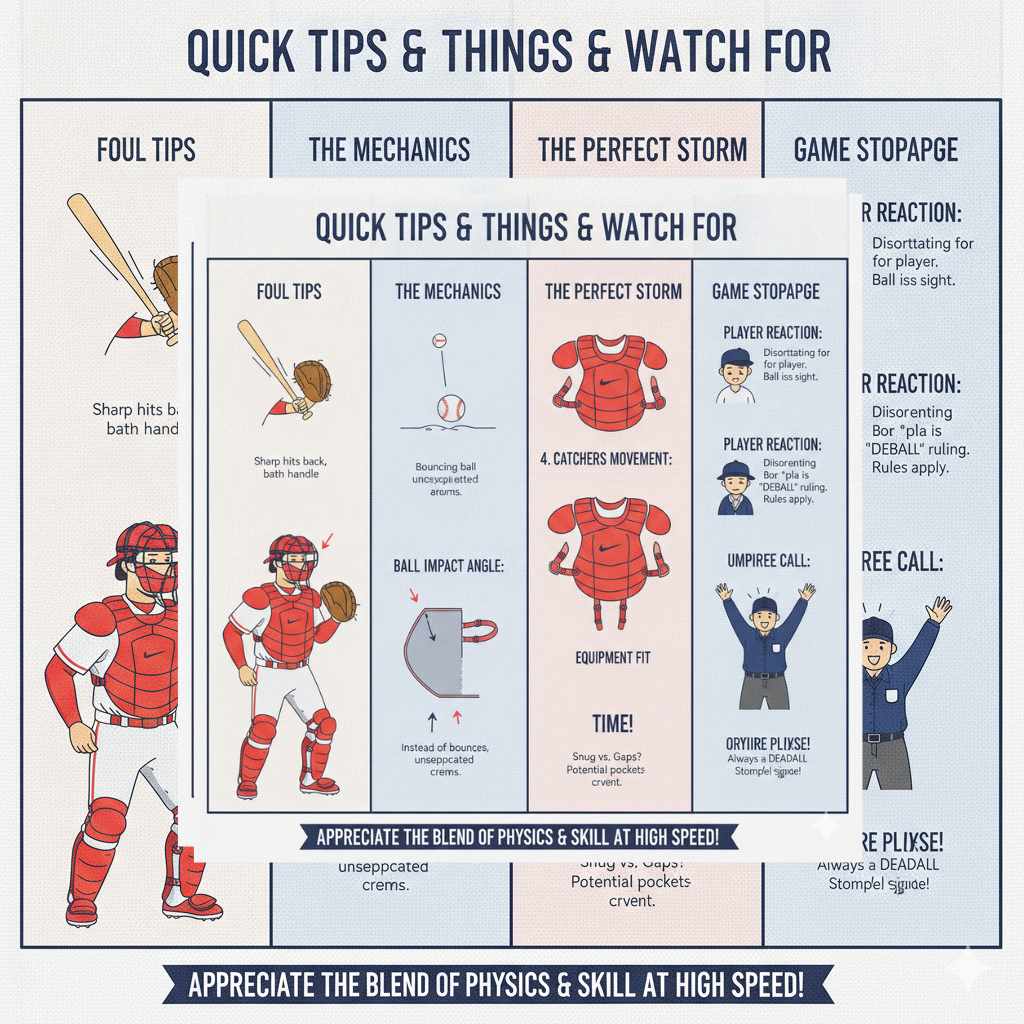
Quick Tips and Things to Watch For
When you’re watching a baseball game, keep an eye out for these things, especially when a catcher is involved:
- Foul Tips: Watch how the catcher reacts to balls that hit the bat and go straight back. A very sharp foul tip can sometimes be hard to handle.
- Balls in the Dirt: See how catchers block pitches that bounce. Sometimes, a bouncing ball can carom in unexpected directions.
- Equipment Fit: Notice how the catcher’s gear sits. Does it look snug? Does it look like there are any large gaps?
- Umpire Signals: Pay attention to the umpire. If they call “time,” it usually means something unusual has happened.
- Player Reactions: See how the catcher reacts. Are they immediately trying to get the ball? Do they look confused?
These small observations can help you understand the game better. They can also help you appreciate the skill and experience of the players. Even the most routine plays have a lot of small factors at work.
A ball getting stuck is rare. But understanding why it might happen gives you a deeper appreciation for the sport. It’s a blend of physics, equipment, and player action.
All happening at high speed!
Frequently Asked Questions
How common is it for a baseball to get stuck in a catcher’s chest protector?
It is quite rare. While catchers wear protective gear designed to absorb impact, the specific angles and forces required for a ball to become lodged are uncommon. You won’t see it in most games.
What happens to the runners on base when a ball gets stuck?
When a ball gets stuck in a player’s equipment, the umpire calls “time.” This makes the ball dead. All runners must return to the base they occupied when time was called. No one can advance.
Can a batter be called out if the ball gets stuck in the catcher’s gear?
No, the batter cannot be called out because of the ball getting stuck. The play is dead, and no action taken after the ball is lodged counts. The batter would remain at bat, unless it was a strike three that was also a passed ball or wild pitch and first base was occupied with less than two outs.
What is a “foul tip” and why does it often lead to this situation?
A foul tip is a batted ball that goes sharply and directly from the bat to the catcher’s hand or glove and is legally caught. If it hits the bat and goes straight back without touching the batter’s hand, it’s a strike. If it then hits the catcher’s chest protector, the force and direct angle can cause it to lodge.
Has this happened to many famous catchers?
Yes, it has happened to several well-known catchers over the years. Yadier Molina’s incident is one of the most famous, but other professional catchers have experienced it. It’s a memorable event regardless of who it happens to.
Could a baseball get stuck in other types of catcher’s gear?
It’s possible, though less likely than with a chest protector. A ball could theoretically get stuck in the padding of shin guards or a helmet if it hit at a very specific angle into a crevice. However, the chest protector’s design makes it the most common piece of equipment for this to occur.
The Takeaway: A Rare but Memorable Baseball Moment
So, there you have it. A baseball getting stuck in a catcher’s chest protector is a rare event. It’s a blend of physics, equipment design, and player action.
It’s not something you see every day, but when it happens, it’s unforgettable. It highlights the unpredictable and often quirky nature of baseball. From Yadi Molina’s famous moment to the rules that govern play, it’s a fascinating little piece of the game’s history.
It reminds us that even in a sport with so many traditions, surprises can always happen on the field.