How A Catcher Chest Protector Should Fit
It’s a big deal when you’re behind the plate. You’re the eyes for the pitcher. You’re the one calling the shots.
And you’re absorbing every wild pitch. That’s why your gear needs to be just right. Especially your chest protector.
A poorly fitting one can be more than just annoying. It can actually put you at risk. Let’s make sure yours is snug and safe.
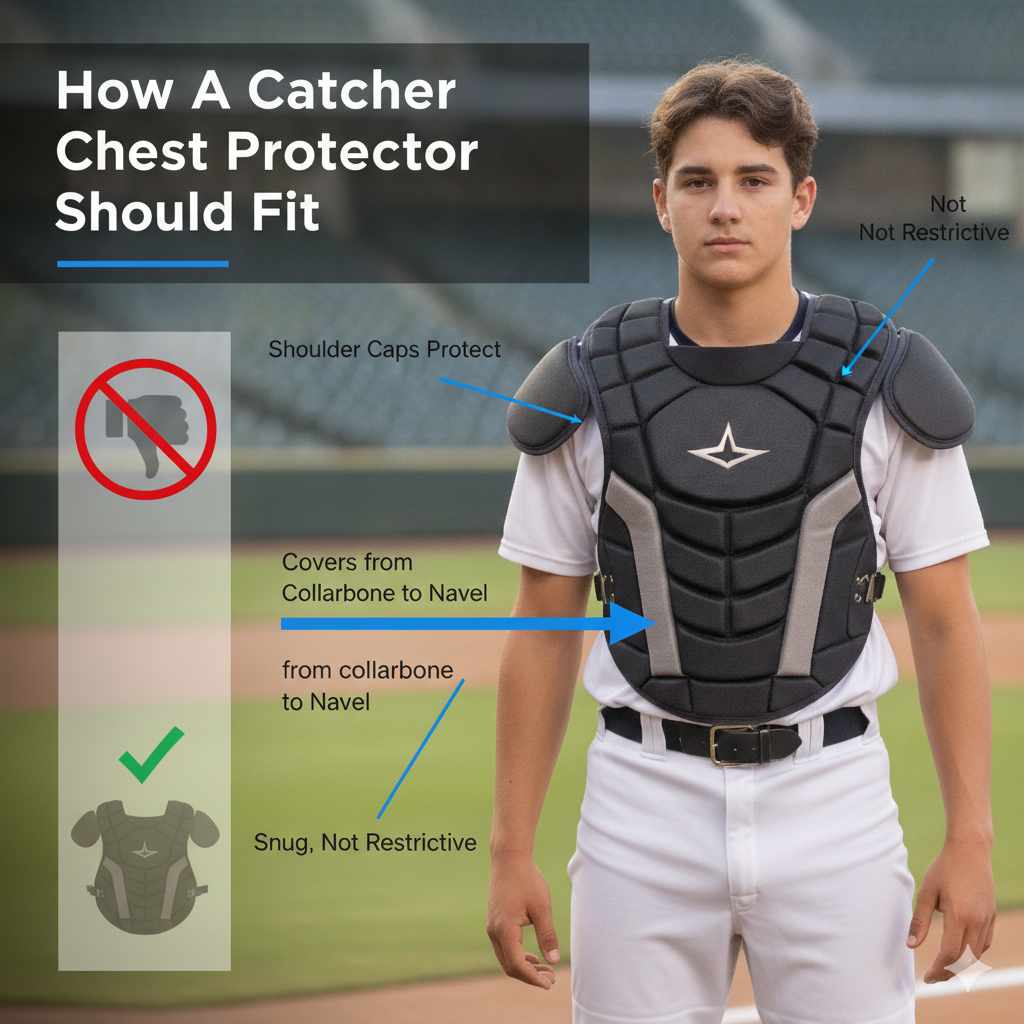
A catcher chest protector should fit snugly but comfortably, allowing full range of motion. It needs to cover the torso from the collarbone to the waist, with no gaps. Proper fit ensures it stays in place during dynamic movements and effectively absorbs impact, protecting you from pitches and foul balls.
What is a Catcher Chest Protector and Why Fit Matters
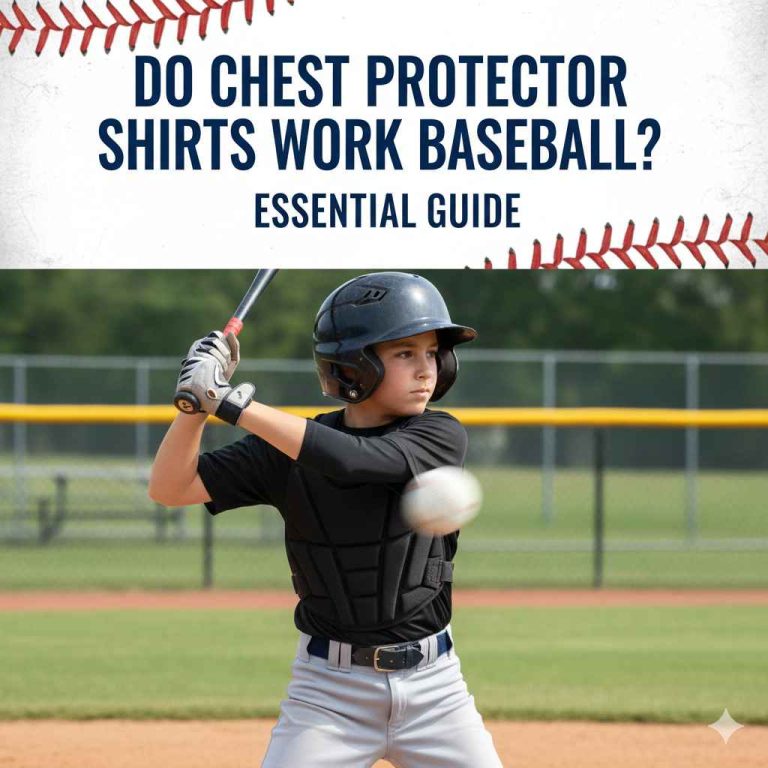
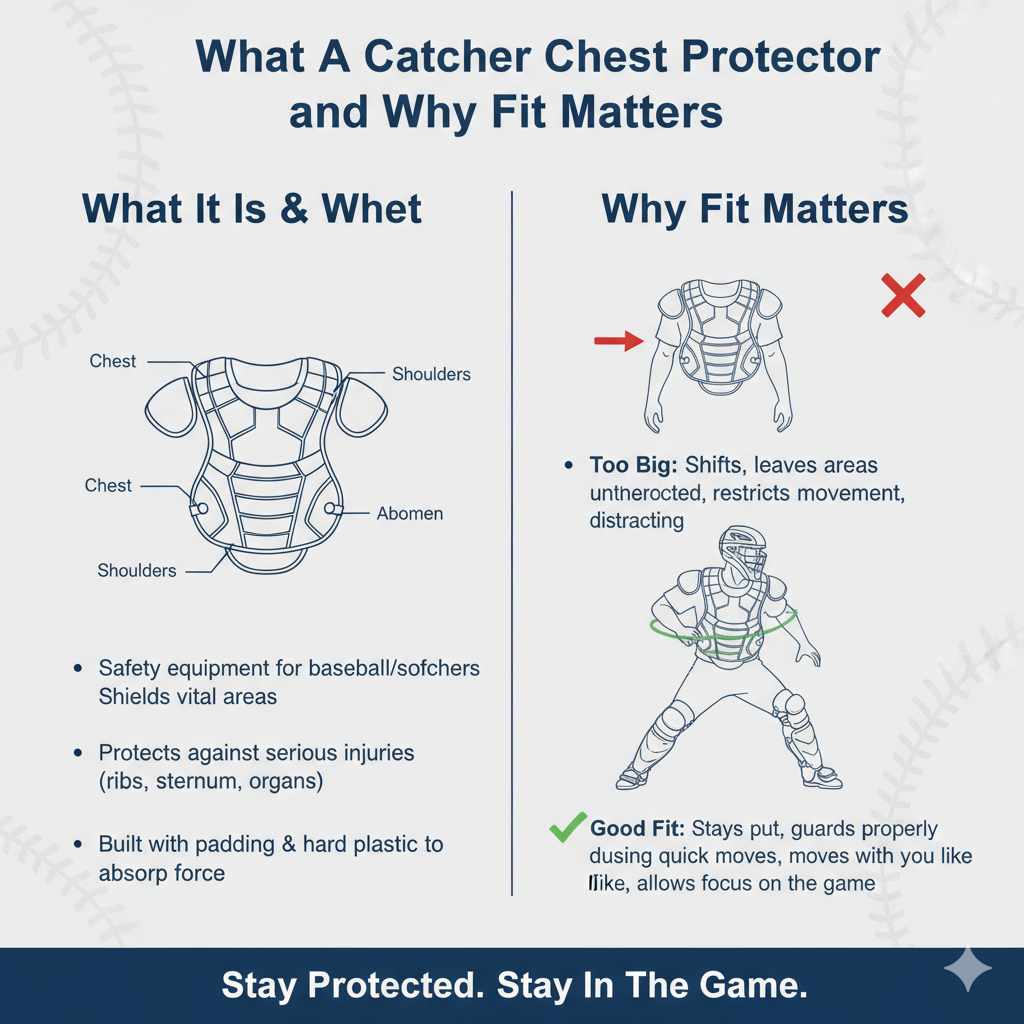
A catcher chest protector is a piece of safety equipment. It’s made to shield a baseball or softball catcher. It covers the chest, shoulders, and sometimes the abdomen.
This gear is key for preventing serious injuries. Think broken ribs or sternum. Think bruised organs.
It’s built with padding and hard plastic. These materials help absorb the force of a ball.
Getting the fit right is not just about comfort. It’s about how well it works. If it’s too big, it will shift.
It won’t protect you where you need it. If it’s too small, it leaves areas open. It might also dig into you.
This makes it hard to move. It can distract you from the game. A good fit means the protector stays put.
It means it guards you properly. This is especially true when you are making quick moves. Like blocking a pitch or throwing a runner out.
In the game, you move a lot. You crouch. You twist.
You reach. Your gear must move with you. It shouldn’t hold you back.
A well-fitting chest protector feels like a second skin. It’s there when you need it. But it doesn’t get in your way.
It allows you to focus on the game. You can call pitches. You can block balls.
You can make plays without thinking about your gear.
My Own Chest Protector Nightmare
I remember my first year playing catcher. I was so excited. I got all new gear.
My dad helped me pick it out. He thought a bigger size would offer more protection. So I ended up with a chest protector that was way too big.
It felt like I was wearing a cardboard box. When I’d crouch, it would fold in weird ways. I’d try to block a pitch, and it would slide up.
Then my collarbone was exposed. I even took a foul tip right there once. It hurt like crazy.
I was lucky it wasn’t worse.
That season was rough. Every game, I was adjusting it. I was trying to pull it down.
I was trying to cinch the straps tighter. But it just wouldn’t stay put. It made me feel self-conscious.
I worried more about my gear than the game. I recall one game, a runner was stealing home. I had to make a tag.
I moved fast. The chest protector shifted. My arm felt restricted.
The runner slid in. I missed the tag. The coach was not happy.
I knew then that my gear was a big part of the problem.
It wasn’t just about looking silly. It was about performance and safety. I learned a hard lesson that year.
Gear isn’t just gear. It’s part of your ability. It’s part of your safety.
A proper fit can make all the difference. That’s why I’m so keen on helping others get it right from the start.
Chest Protector Anatomy: Key Areas to Check
Collarbone Coverage: The top edge should extend high enough to protect your collarbones. No gaps here!
Shoulder Caps: These should sit comfortably on your shoulders. Not too tight, not too loose.
Sternum/Rib Protection: The main body of the protector must cover your breastbone and the upper ribs. This is crucial for absorbing impact.
Abdomen/Waist: It should go down to at least your waistline. Some models offer extra coverage for the stomach area.
Straps: These are vital for keeping it in place. They should be adjustable and secure.
Understanding Catcher Chest Protector Sizing
Sizing for a catcher chest protector is different from regular shirts. It’s not just chest size. It’s about length and coverage.
Most manufacturers use a height-based sizing chart. This is a good starting point. For example, they might say a certain size is for players 5’0” to 5’4”.
Always check the specific brand’s guide. Sizes can vary a bit.
But height is only one part. You also need to consider your body shape. Are you lean?
Are you broader? This might affect how a protector feels even if the height is correct. Some protectors have more adjustable straps.
These can help you get a custom fit. It’s always best to try one on if you can. If you’re buying online, look for detailed measurements.
Don’t just rely on the height recommendation.
The goal is full coverage. This means it should cover you from your chin down to your waist. When you are in your catching stance, it should stay there.
It shouldn’t ride up. It shouldn’t gap at the sides. Think about where the ball is most likely to hit you.
The protector needs to be there. It needs to shield those vital areas.
How to Properly Measure Yourself
To get the best fit, you need to measure yourself correctly. You’ll need a soft measuring tape. Stand up straight.
Do not pull the tape too tight. You want a comfortable measurement.
First, measure your height. This is the most common sizing factor. Record this number.
Then, measure your chest circumference. Wrap the tape around the fullest part of your chest. Make sure it’s snug but not squeezing.
This gives you another data point. Some guides also ask for your waist measurement. Measure around your natural waistline.
A crucial measurement is from your collarbone to your waist. This helps determine the length needed. To do this, start the tape at the top of your collarbone.
Let it hang straight down your chest. Measure to your natural waistline. This is where your pants usually sit.
Compare these measurements to the sizing charts. Many brands will list the recommended height range. They might also list specific dimensions for the protector.
Look at the length from neck to bottom. Look at the width. This helps you find the best match.
Quick Fit Guide: Height is Key
5’0″ – 5’4″ typically corresponds to a Youth or Small size.
5’4″ – 5’8″ often falls into a Junior or Medium size.
5’8″ – 6’0″ usually means a Senior or Large size.
6’0″ and up might require an Extra Large or custom option.
Always check brand specifics!
Trying On a Chest Protector: What to Look For
When you try on a chest protector, don’t just put it on. You need to test it. Wear it with your other gear.
This means your jersey and your sliding shorts. This is how you’ll actually play. Put the chest protector on.
Adjust all the straps. Make them snug but not painful. You want it to feel secure.
It should not move much when you pull on it.
Now, get into your catching stance. Crouch down. Stand up.
Twist your body. Reach side to side. Does the protector stay in place?
Are there any areas that feel exposed? Do you feel any pinching or rubbing? These are all signs that the fit might not be right.
Look for gaps. Where the protector meets your neck. Where it meets your shoulders.
Where it meets your abdomen. There should be no large open spaces. A small amount of flexibility is okay.
But you don’t want direct paths for a ball to hit your body.
Move around a lot. Mimic game situations. Try to simulate a block.
Try to throw an imaginary ball. The protector should feel like it’s part of you. It should not feel like a hindrance.
If you find yourself constantly thinking about it, it’s likely not fitting correctly.
The Importance of Shoulder and Collarbone Coverage
Your shoulders and collarbones are vulnerable. They stick out. They are often the first point of contact for foul tips or wild pitches.
A good chest protector must extend high enough to cover these areas. The shoulder caps should sit on your shoulders. They should not slip off.
The top edge of the protector should reach your collarbone. It needs to cover that bone and the area just below it.
I’ve seen players wear protectors that are too short. They end up with nasty bruises on their collarbone. Or worse, a fracture.
It’s because the protector shifted. Or it was never long enough to begin with. Some protectors have adjustable shoulder pieces.
This is a great feature. It helps you fine-tune the fit. You can make sure those caps are sitting just right.
When you test the fit, raise your arms. Reach out. Rotate.
Does the protector stay put? Does it pinch your neck or under your arms? It should allow for full movement without digging in.
A protector that’s too tight around the shoulders can restrict your throwing motion. That’s a big problem for a catcher.
Contrast Matrix: What’s Normal vs. Concerning
Normal Fit:
- Snug but not constricting.
- Covers collarbone to waist with minimal gaps.
- Stays in place during movement.
- Allows full range of motion.
- Comfortable to wear for extended periods.
Concerning Fit:
- Loose and shifts easily.
- Significant gaps in coverage (neck, shoulders, sides).
- Restricts arm or torso movement.
- Pinches or digs into the skin.
- Rides up or slides down during play.
Adjusting Straps for the Perfect Fit
The straps are what hold everything together. They are critical for a secure fit. Most chest protectors have multiple straps.
These are usually elastic. They connect to the back of the protector. They go around your sides or back.
Some have Velcro closures. Others have buckles.
When you first put it on, don’t just buckle it up. Adjust each strap individually. Start with the shoulder straps, if they are adjustable.
Make sure the shoulder caps are centered on your shoulders. Then adjust the side straps. You want them tight enough so the protector doesn’t move.
But not so tight that they cut off circulation. Or make it hard to breathe.
As you move, the straps might loosen. Check them periodically. Make sure they are still secure.
Some players like to use a bit of athletic tape. They might tape down the edges. Especially around the waist.
This can help prevent any last-minute shifting. But it’s usually a sign of a poor initial fit if you need a lot of tape.
The goal is a fit that feels integrated. It’s not just strapped on. It feels like it’s working with your body.
If a strap is digging in, loosen it a bit. If the protector feels loose, tighten it. It’s a balance.
You want it secure enough to protect you. But comfortable enough so you can play your best.
Common Fit Issues and How to Address Them
One common issue is the protector being too long. It hangs too low. It might bunch up at your waist.
Or it could interfere with your legs when you squat. If this happens, and the straps are already as tight as they go, the protector might just be the wrong size. Some protectors have a removable lower section.
You might be able to adjust this.
Another problem is the protector being too wide. It doesn’t hug your body. It sticks out.
This can make you an easier target. It also means it might shift more. Check the width measurements.
See if there are any side adjustments you can make. Sometimes, the shoulder straps can be adjusted to pull the sides in a bit.
What if it feels too restrictive? You can’t move your arms freely. This often means the shoulder caps are too large or too stiff.
Or the whole unit is just too bulky for your frame. Look for protectors designed for flexibility. Some use segmented padding.
This allows for better movement. Trying on different brands can help. They have different cuts and designs.
A frequent complaint is chafing. This usually happens when the gear is too loose. It rubs against your skin.
Or when the padding isn’t smooth. Wearing a compression shirt or a thin athletic shirt underneath can help. It creates a buffer.
But ultimately, a well-fitting protector shouldn’t chafe.
Fit Problems & Simple Solutions
- Problem: Protector too long.
- Solution: Check if lower section is adjustable. If not, consider a shorter size.
- Problem: Protector too wide.
- Solution: Tighten side straps. Look for protectors with a narrower profile or side adjustments.
- Problem: Restricts arm movement.
- Solution: Try a different brand or model. Look for flexible padding. Adjust shoulder straps carefully.
- Problem: Chafing or rubbing.
- Solution: Ensure snug fit. Wear a base layer. Check for rough seams or padding.
Chest Protector vs. Body Armor: Understanding the Difference
It’s worth noting that a chest protector is not the same as full body armor. Body armor, like what some players wear under their gear, is often more about impact absorption on the torso itself. A catcher chest protector is designed for the specific, direct impacts a catcher faces.
It’s built to stop hard projectiles.
The shape of a chest protector is key. It’s usually wider at the chest and tapers towards the waist. It has molded panels.
These are designed to deflect a ball away from your body. They also spread out the impact force. Full body armor might be more about cushioning against blunt force trauma from collisions.
For a catcher, the chest protector is the primary line of defense against pitches and foul tips. While body armor can add an extra layer of comfort or protection, it doesn’t replace the specialized design of a catcher’s chest protector. The fit of the chest protector directly impacts how well it can do its job.
If it’s not covering the right areas, or if it’s shifting, the specialized design is compromised.
Material and Construction Affecting Fit
The materials used in a chest protector can influence how it fits and feels. Some protectors are made with a dense foam padding. Others use a combination of foam and hard plastic shells.
The shell is usually segmented. This allows it to bend and conform to your body. A more rigid, non-segmented shell might feel less conforming.
The lining inside the protector also matters. A soft, moisture-wicking liner will feel much better against your skin. It can prevent irritation.
It also helps manage sweat. Some liners are removable. This is great for cleaning.
If a liner is rough or stiff, it can cause discomfort, even if the main fit is good.
The construction of the straps is another factor. Are they wide and padded? Or thin and basic?
Wide, padded straps distribute pressure better. This makes them more comfortable. They are also less likely to dig in.
The attachment points of the straps are also important. They should be strong and well-placed. This helps keep the protector secure.
When you’re looking at protectors, feel the materials. Bend the protector. See how it conforms to your shape.
Think about how the padding feels. Does it feel protective but not overly stiff? The way it’s put together impacts how it sits on your body.
Construction Features to Look For
- Segmented Padding/Shell: Allows for better flexibility and conforms to the body.
- Adjustable Straps: Essential for a customized, secure fit. Look for Velcro or sturdy buckle systems.
- Comfortable Liner: Soft, breathable material reduces irritation and manages sweat. Removable liners are a plus for hygiene.
- Reinforced Stitching: Ensures durability and that straps remain attached under stress.
- Weight Distribution: A well-designed protector feels balanced, not front-heavy or awkward.
Testing the Fit in Game Scenarios
The best way to know if your chest protector fits is to test it. Not just by moving around your living room. You need to test it in game-like situations.
This means wearing it during practice drills. Drills that mimic real game actions are perfect.
Try blocking pitches. Even if the pitcher isn’t going full speed, try to get into the habit of blocking. See how the protector stays put.
Does it shift when you drop to the ground? When you pop back up?
Practice throwing. If you’re a catcher, your arm motion is important. Does the protector restrict your follow-through?
Does it feel like it’s pulling or digging into your armpit or shoulder area when you throw?
Do some agility work. Practice sliding into a base. Practice quick pivots.
See if the protector bunches up or gets in the way. If it feels like it’s pulling your jersey or sliding around, it’s not fitted correctly. You want it to be a seamless part of your movements.
Remember that feeling of discomfort I described earlier? That constant awareness of your gear? That’s what you’re trying to avoid.
When the fit is right, you forget it’s even there. You just play the game. That’s the ultimate test.
When is a Chest Protector Fit “Good Enough”?
A “good enough” fit is one that prioritizes safety and performance. It means there are no significant gaps in coverage. It means the protector stays in place during all the movements you make as a catcher.
It allows you the full range of motion needed to play your position effectively. It’s also comfortable enough that you don’t notice it.
It’s important to be realistic. No piece of gear will feel exactly like wearing nothing. There will be some sensation of padding.
But it shouldn’t be painful. It shouldn’t be distracting. If you’re constantly adjusting it, it’s not good enough.
If you feel vulnerable in certain areas, it’s not good enough.
Consider the level of play. For younger players, a slightly less perfect fit might be acceptable if it’s the best available. But for competitive players, a precise fit is crucial.
It can be the difference between getting hurt and staying in the game.
Think about it like this: if you had to question whether it was protecting you properly, it’s probably not “good enough.” Trust your instincts. If it feels wrong, it probably is. It’s always better to err on the side of caution.
Invest the time to get the fit right. Your body will thank you for it.
Quick Fit Checklist
- Does it cover from collarbone to waist?
- Are there significant gaps at the sides or shoulders?
- Does it stay in place when you squat and move?
- Can you move your arms freely for throwing?
- Does it feel comfortable and not restrictive?
When to Consider a New Chest Protector
Even a perfectly fitting chest protector won’t last forever. If you notice wear and tear, it’s time for a replacement. Look for cracks in the plastic.
Frayed straps are a big sign. If the padding has become compressed and offers less shock absorption, it’s also time to upgrade.
Sometimes, it’s not about wear and tear, but about growth. Younger players grow fast. A protector that fit last season might be too small this season.
You’ll notice it becomes too short or too tight. This is a clear sign that a larger size is needed. Ensuring proper fit is a continuous process, especially for developing athletes.
Another reason to consider a new one is if technology has advanced. Newer models might offer better protection or improved comfort. If your current protector is several years old, there might be lighter, more flexible options available now.
It’s like anything else; gear evolves. Staying up-to-date can improve your game and safety.
And of course, if you’ve experienced a direct, hard impact on a specific area, even with a good fit, it’s wise to inspect the gear thoroughly. The protector may have done its job by absorbing the impact, but the impact might have compromised the gear itself. Check for damage after any significant hit.
Can a Chest Protector Be Too Tight?
Yes, a chest protector can absolutely be too tight. This is just as bad as it being too loose, for different reasons. If it’s too tight, it will restrict your movement.
You won’t be able to squat fully. Your throwing motion will be limited. It will feel like it’s constricting your chest, making it hard to breathe deeply.
When it’s too tight, the straps can dig into your skin. This can cause chafing and pain. It can also lead to bruising over time.
The padding might be compressed too much, which could reduce its ability to absorb shock effectively. Instead of spreading the force, it might just transfer more of it directly through the compressed padding.
You want the protector to be snug. This means it’s held firmly in place. It should feel secure.
But it should not feel like it’s squeezing you. There should be a little bit of give. Enough so you can take a full breath.
Enough so you can move your arms and torso without feeling held back. It’s a fine balance between secure and restrictive.
Fit Focus: Snug vs. Restrictive
Snug means:
- Stays in place.
- Feels secure during movement.
- Provides a solid barrier.
Restrictive means:
- Limits motion.
- Causes pain or discomfort.
- Hard to breathe deeply.
- Feels like it’s squeezing you.
What to Do If Your Protector Doesn’t Fit Well
If you’ve tried everything and your chest protector just doesn’t fit right, don’t try to force it. It’s not worth the risk to your safety or your performance. Your first step should be to check the return policy.
If you bought it recently, you might be able to exchange it for a different size or model.
If you can’t return it, consider your options. Can you sell it and put the money towards a new one? Sometimes, you have to cut your losses.
Especially if the fit is significantly off. A poorly fitting piece of safety equipment is worse than no equipment at all, in some ways. It can give you a false sense of security.
Look for protectors that have a good reputation for fit and adjustability. Brands that offer a range of sizes and have detailed sizing charts are often a good bet. Reading reviews from other catchers can also be helpful.
See what they say about the fit and feel of different models.
Ultimately, investing in gear that fits properly is an investment in yourself. It means you can play with confidence. You can focus on the game.
You know you’re protected. If it’s not fitting well, it’s time to look for something else. There are many options out there.
The Link Between Fit and Protection Efficacy
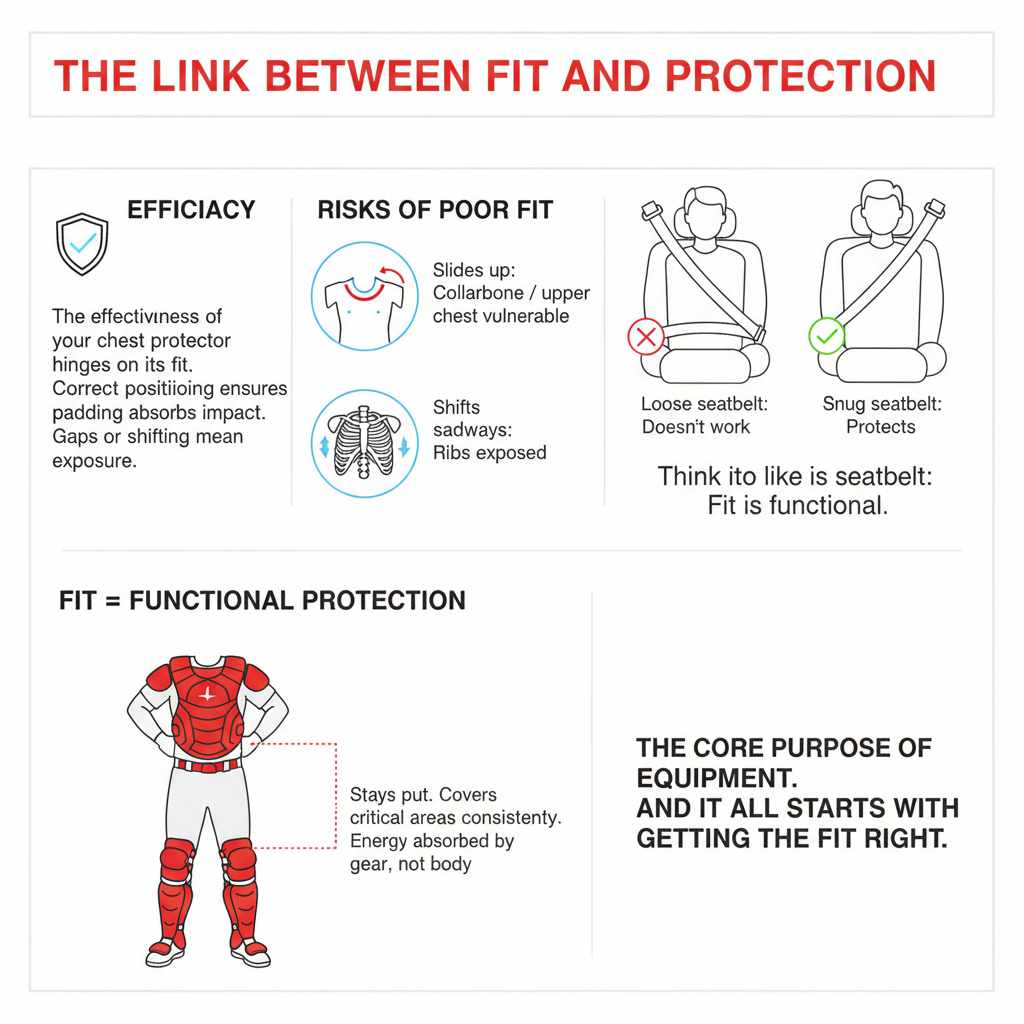
The effectiveness of your chest protector hinges on its fit. A perfectly designed protector, made with the best materials, is useless if it’s not positioned correctly on your body. Fit ensures that the protective padding and shell are exactly where they need to be to absorb impact.
If there are gaps, a fast-moving ball can slip through. If it shifts, the intended protection zone moves with it. This leaves your actual body exposed.
For example, if the protector slides up your chest, your collarbone or upper chest might take a direct hit. If it shifts to one side, your ribs on the other side could be vulnerable.
Think of it like wearing a seatbelt. A seatbelt is designed to protect you in a crash. But it only works if it’s worn correctly.
It needs to be snug across your chest and lap. If it’s loose or out of position, it won’t do its job. A chest protector is no different.
The fit is what makes the protection functional.
When a chest protector fits well, it stays put. It covers the critical areas consistently. This means that every time you take a hit, the energy is absorbed by the gear, not by your body.
This is the core purpose of the equipment. And it all starts with getting the fit right.
Protection Recap: Fit is King
- Coverage: Ensures all vital areas are shielded.
- Stability: Prevents gear from shifting on impact.
- Conformity: Allows the gear to work with your body’s shape.
- Range of Motion: Enables you to play without restriction, ensuring you’re in the best defensive position.
- Comfort: Lets you focus on the game, not your equipment.
Frequently Asked Questions About Catcher Chest Protector Fit
How do I know if my chest protector is too big?
If your chest protector shifts a lot when you move, has large gaps, or feels loose and baggy even with the straps tightened, it’s likely too big. It might also feel like it’s falling down or riding up into your neck. You should not be able to easily pull the sides away from your body.
Can I wear a chest protector that is slightly too small?
Wearing a chest protector that is too small is dangerous. It will leave key areas of your torso exposed. There will be gaps at the sides, top, or bottom.
This means a direct impact could cause serious injury. It might also be very uncomfortable and restrict your movement. It’s best to get the right size.
Are there different fits for different player types (e.g., youth vs. adult)?
Yes, absolutely. Manufacturers offer different sizes for youth, junior, and adult players. Youth sizes are generally smaller and lighter.
Adult sizes are larger and may offer more robust padding. The core principles of fit (coverage, stability, range of motion) apply to all player types.
How should the straps feel when the chest protector is fitted correctly?
The straps should feel secure and hold the protector firmly against your body without digging in or causing pain. They should be snug enough that the protector doesn’t move during play. You should be able to breathe normally and move your arms and torso without feeling restricted or pinched.
Should I wear my jersey over or under my chest protector?
Typically, a catcher wears their jersey over their chest protector. This is standard practice for most baseball and softball players. The jersey helps keep the protector in place and provides a uniform look.
Some players might wear a thin compression shirt under the protector for added comfort or to prevent chafing.
How tight should the chest protector be?
It should be snug, not tight. Think of it like a firm hug for your torso. It needs to be held securely so it doesn’t shift.
But it must not restrict your breathing or movement. You should be able to perform all catching actions without feeling like the protector is fighting you.
Final Thoughts on Achieving the Right Chest Protector Fit
Getting the fit of your catcher chest protector just right is a vital step. It’s about more than just comfort. It’s about ensuring you are properly protected.
It’s about allowing you to perform at your best. Take your time when choosing and adjusting it.
Always refer to sizing charts. Try it on with your other gear. Move around a lot.
Check for gaps. Make sure the straps are snug. If it doesn’t feel right, keep looking.
Your safety and your game depend on it. A well-fitting protector will make you feel more confident. You’ll be ready for whatever comes your way behind the plate.