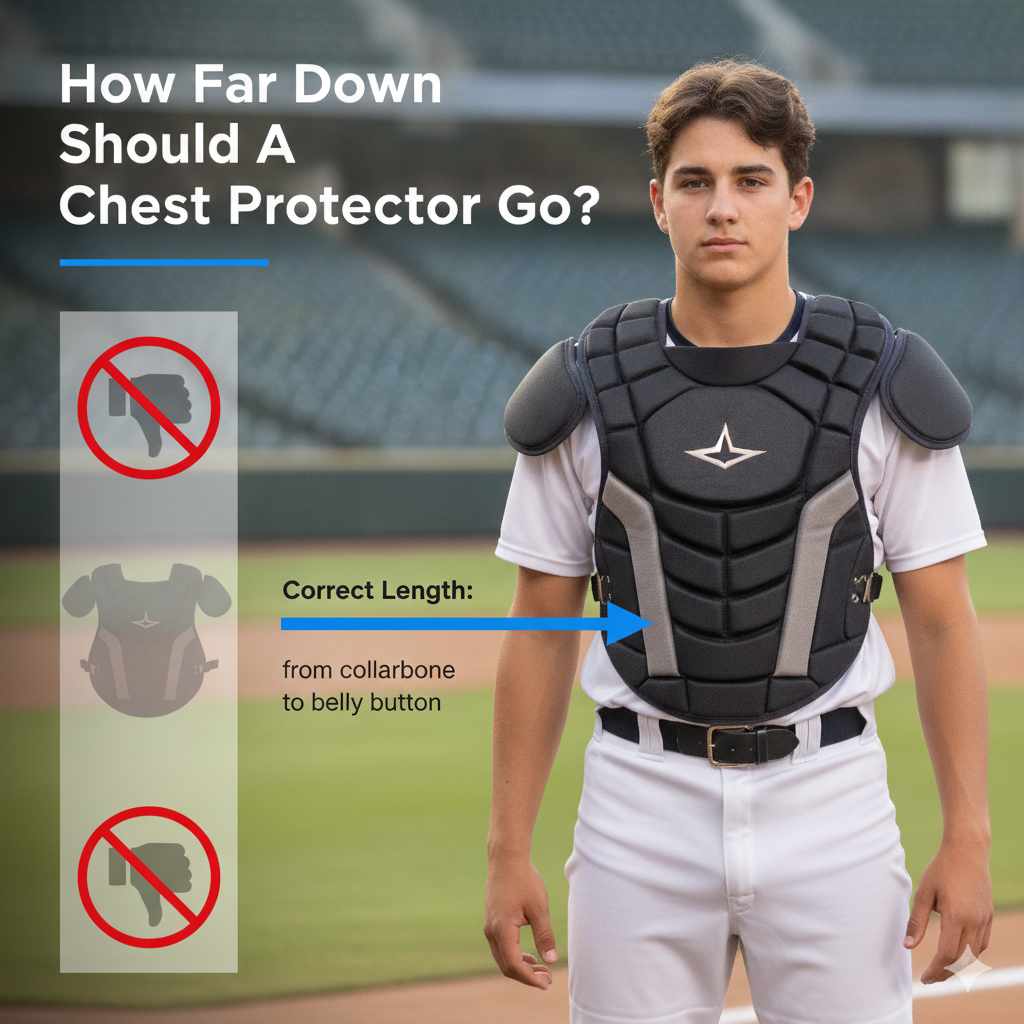
How Far Down A Chest Protector Should Go
For optimal protection, a chest protector should cover the sternum, ribs, and abdomen, extending down to just above the belt line. It must not restrict breathing or movement. A proper fit ensures coverage without being too bulky or loose.
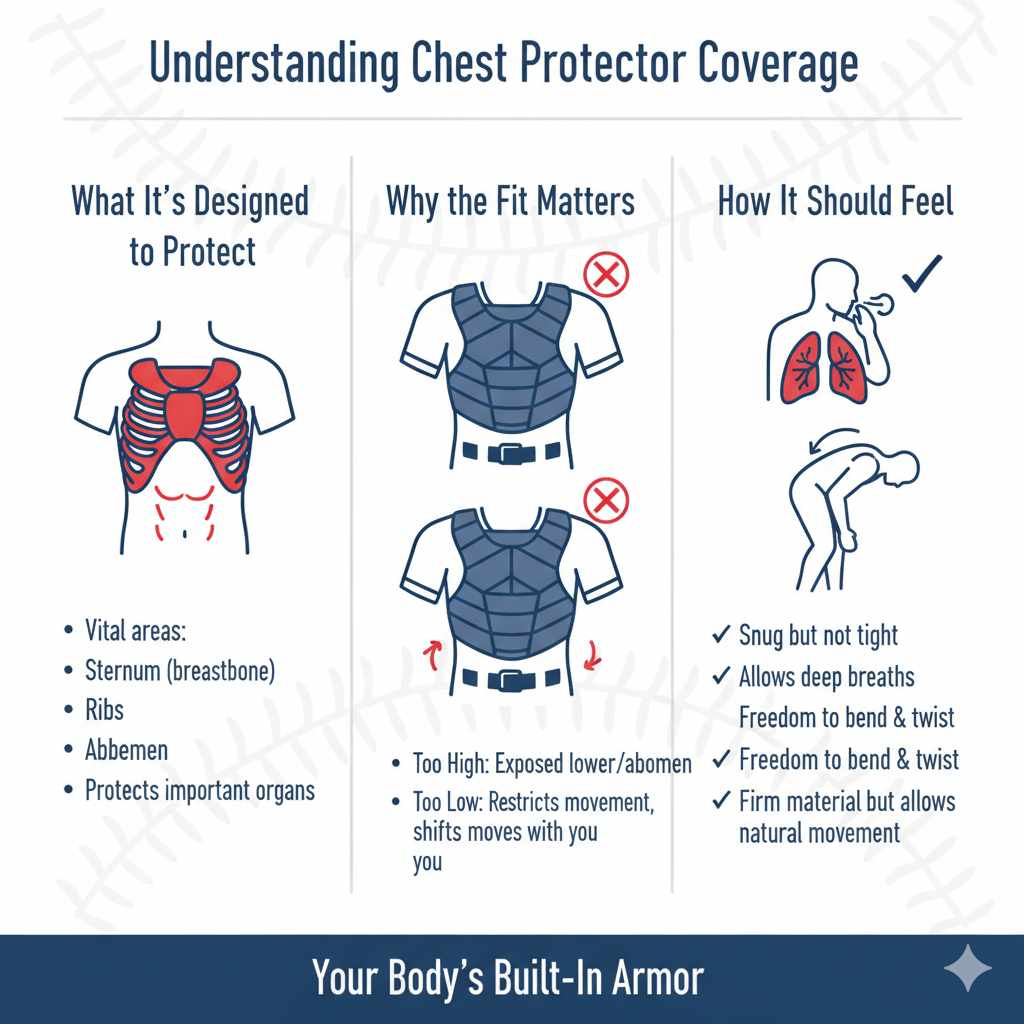
Understanding Chest Protector Coverage
A chest protector is your main shield against impact. Think of it as your body’s built-in armor. Its job is to absorb the force of a ball, stick, or even a collision. Because of this, knowing where it needs to be is super important. It’s not just about wearing it; it’s about wearing it correctly.
What It’s Designed to Protect
Chest protectors are made to guard vital areas. These include your sternum, which is your breastbone. They also protect your ribs. And importantly, they cover your abdomen. This whole area houses many important organs. A direct hit here can be serious. So, the protector needs to sit in a way that these parts are always under its shield.
Why the Fit Matters So Much
The way a chest protector fits can change everything. If it’s too high, it might not cover your lower ribs or abdomen. That leaves you open to injury. If it’s too low, it might get in the way when you move. It could also shift around during play. This shifting means you might lose protection at a bad moment. A good fit keeps it in place. It moves with you, not against you.
How It Should Feel
When you wear a chest protector, it should feel snug but not tight. You should be able to take a deep breath without feeling squeezed. You also need to bend and twist freely. If it feels stiff or digs into you, it’s probably not adjusted right. The material might feel firm. But it should still allow your body to move naturally.
My Own “Uh Oh” Moment with Chest Gear
I remember my first year playing catcher in softball. I got a new chest protector. It looked great and seemed to fit okay in the store. But during a game, after a wild pitch, I instinctively crouched down fast. The protector rode up my chest quite a bit. I felt a slight sting on my lower ribs. It wasn’t a hard hit, but it made me realize. It made me think about how much coverage I was actually getting. I was surprised how much it had shifted.
I’d thought just zipping it up or putting the straps on was enough. But it wasn’t. I felt a little exposed after that. It made me nervous for the rest of the game. I’d catch myself checking it. I was worried about getting hit in that spot again. That experience taught me a big lesson. Gear needs to be fitted and adjusted with movement in mind. Just putting it on isn’t always enough.
Key Areas of Coverage
Let’s get into the specific spots a chest protector needs to cover. This is the core of what makes it work. Each part plays a role in keeping you safe.
The Sternum Zone
Your sternum is right in the middle of your chest. It’s a strong bone, but it can still take a hard impact. The top part of the chest protector should align with your sternum. It should cover it fully. This is usually the highest point of the protector. It prevents direct shots to this main bone.
Rib Cage Protection
Your ribs are more delicate. They protect your lungs and heart. The sides of the chest protector should extend outwards. They need to cover the lower part of your rib cage. This is especially important for catchers or players in sports with fast-moving balls. Think about where your ribs end and your stomach begins. The protector must cover that transition.
Abdominal Shielding
The lower part of the chest protector is crucial. It should go down to your abdomen. Specifically, it should cover your stomach area. This protects your internal organs. The protector should extend to just above your belt line. This is a good natural marker. It prevents injuries to your belly.
Chest Protector Fit Checklist
Sternum: Top of protector aligned with yours.
Ribs: Sides cover lower rib cage.
Abdomen: Extends to just above belt line.
Movement: No restriction when breathing or bending.
Straps: Secure but not too tight.
Factors Influencing Proper Fit
So, what makes a chest protector fit one person differently than another? It’s not just about the size you buy. Several things come into play.
Body Type and Shape
Everyone’s body is different. Some people are broader. Others are taller or have a longer torso. Chest protectors come in various shapes and sizes. A protector that fits one person perfectly might not fit another. It’s like choosing clothes. You need something made for your shape. This means looking at the width and the length.
The Sport You Play
Different sports have different needs. Baseball and softball often involve fast pitches. Lacrosse has fast shots and checks. The type of impact and the speed of the ball matter. Protectors might be shaped differently. Some might offer more side protection. Others might focus on the sternum. Knowing your sport helps you pick the right kind.
Adjustability and Straps
Most chest protectors have straps. These are how you secure them. You need to adjust these straps so the protector stays put. They should be tight enough to prevent shifting. But they shouldn’t be so tight that they cut off air. You want a secure fit that allows for movement. Many straps are adjustable with Velcro or buckles.
Fit Guide: Quick Scan
| Feature | Ideal Placement | Potential Issue if Wrong |
|---|---|---|
| Top Edge | Just below the collarbone | Too high: Exposes upper chest. Too low: Restricts neck movement. |
| Bottom Edge | Just above the belt line | Too high: Exposes abdomen. Too low: Slips down, restricts leg drive. |
| Side Wings | Cover lower ribs | Not enough coverage: Rib injury risk. |
Testing the Fit: Practical Steps
You’ve got the protector. Now, how do you know it’s really right? It’s time to test it out. Don’t just stand there. Move around. Mimic the actions you do in your sport.
The Deep Breath Test
First, put it on. Secure the straps. Now, take the deepest breath you can. Can you do it easily? Does the protector feel like it’s stopping you? It shouldn’t. You need to be able to breathe fully. Your lungs expand when you breathe. The protector must give them space. If it feels tight, loosen the straps a bit.
The Bend and Twist Test
Next, try moving. Bend at the waist. Twist your body from side to side. Do some squats. Mimic throwing a ball or swinging a bat. Does the protector stay in place? Does it shift or ride up? Does it pinch anywhere? If it moves a lot, you need to adjust the straps. You might need a different size or style.
The “In Game” Simulation
Imagine you’re in a game. What do you do? You might drop into a squat quickly. You might lunge for a ball. You might brace for impact. Try doing these motions while wearing the protector. See how it behaves. Does it cover you when you’re in these athletic stances? This is the most honest test.
Common Mistakes and How to Avoid Them
Many people make the same errors when fitting chest protectors. Recognizing these can save you a lot of trouble.
Mistake 1: Assuming One Size Fits All
This is a big one. Just because a protector says “adult size” doesn’t mean it fits your adult body. As we talked about, bodies vary. Always try to try it on. If buying online, check the sizing chart carefully. Measure yourself. Compare those measurements to the product’s dimensions.
Mistake 2: Not Adjusting Straps Properly
People often just loop the straps and think they’re done. But each strap needs individual adjustment. They should pull the protector snugly against your body. But they should also allow for movement. Don’t be afraid to take a few minutes to get them just right.
Mistake 3: Letting It Ride Up
If your chest protector consistently rides up, it’s not fitting well. This could be due to the shape of the protector. It could be how the straps are attached. Or it might be that the protector is too big. A protector that rides up is not offering full protection.
Myth vs. Reality: Chest Protector Fit
Myth: Any chest protector will do if it looks big enough.
Reality: Fit and coverage are critical for protection. Different body types and sports require specific fits.
Myth: Tight straps mean it won’t move.
Reality: Too-tight straps can restrict breathing and movement. The goal is snug security, not suffocation.
Myth: If it feels okay, it’s fine.
Reality: Movement during play can reveal fit issues not apparent when standing still.
Chest Protector Fit in Different Sports
While the basic principles are the same, there are nuances for different sports.
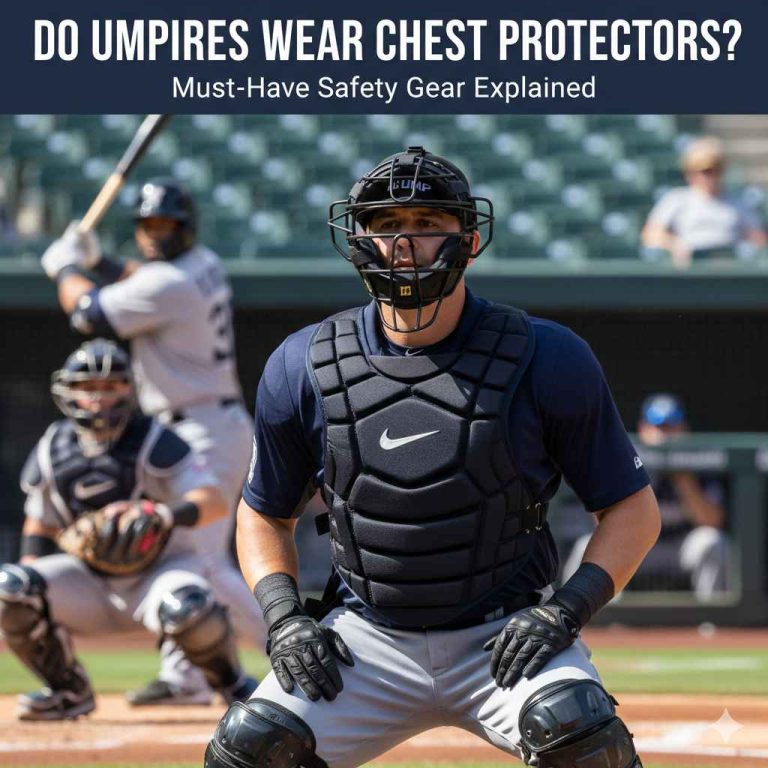
Baseball and Softball Catchers
Catchers are in a low, stable crouch for long periods. Their chest protector needs to stay put in this position. It must cover the sternum and ribs fully. It should also offer some protection to the throat area (though a separate throat guard is often used). The bottom edge should not interfere with their ability to get up quickly.
Lacrosse Players
Lacrosse involves a lot of running and quick changes of direction. Players also face fast shots. The chest protector needs to be flexible. It must allow for upper body rotation. Coverage of the ribs and abdomen is key. Some lacrosse chest protectors are more like padded shirts. They offer a different kind of fit.
Other Positions (e.g., First Base, Pitcher)
While catchers are the most common users, other players might wear chest protectors. First basemen might wear them for protection from errant throws. Pitchers might wear them to guard against line drives. In these cases, the fit might prioritize mobility even more. The protector needs to be less bulky.
When to Consider a New Chest Protector
Gear doesn’t last forever. How do you know when it’s time to get a new one?
Signs of Wear and Tear
Look for visible damage. Are there rips in the fabric? Are the straps frayed? Is the padding compressed or lumpy? If the protector is falling apart, it’s not providing good protection anymore. Even if it looks okay, age can degrade the materials.
Loss of Protection or Fit
If you notice the protector doesn’t feel as firm as it used to, that’s a sign. If it keeps slipping or riding up, even after adjustments, it might be time for a replacement. This often happens as the straps stretch out. The padding can also lose its shape over time.
Technological Updates
Gear technology improves. Newer models might offer better protection, be lighter, or fit more comfortably. If you’re playing at a competitive level, upgrading might be worth it. Safety features evolve. Materials get better.
What This Means for You
So, how does this all affect you on the field? It means paying attention to your gear.
Normal Fit vs. Concerning Fit
A normal fit means the protector covers you from your upper chest down to your waist. It stays in place when you move. You can breathe and bend without issue. A concerning fit means it rides up, leaves gaps, or restricts your movement or breathing. If you have a concerning fit, it’s time to make adjustments or get a new protector.
Simple Checks You Can Do
Before every game or practice, do a quick check. Put on your protector. Do a few deep breaths and bends. Ensure the straps are secure. Look for any obvious damage. This simple routine can save you from discomfort and potential injury.
When to Seek Expert Advice
If you’re struggling to get a good fit, or if you’re unsure about the condition of your gear, ask for help. Talk to a coach. Visit a reputable sporting goods store. They have staff who know gear well. They can help you find the right fit and style for your needs.
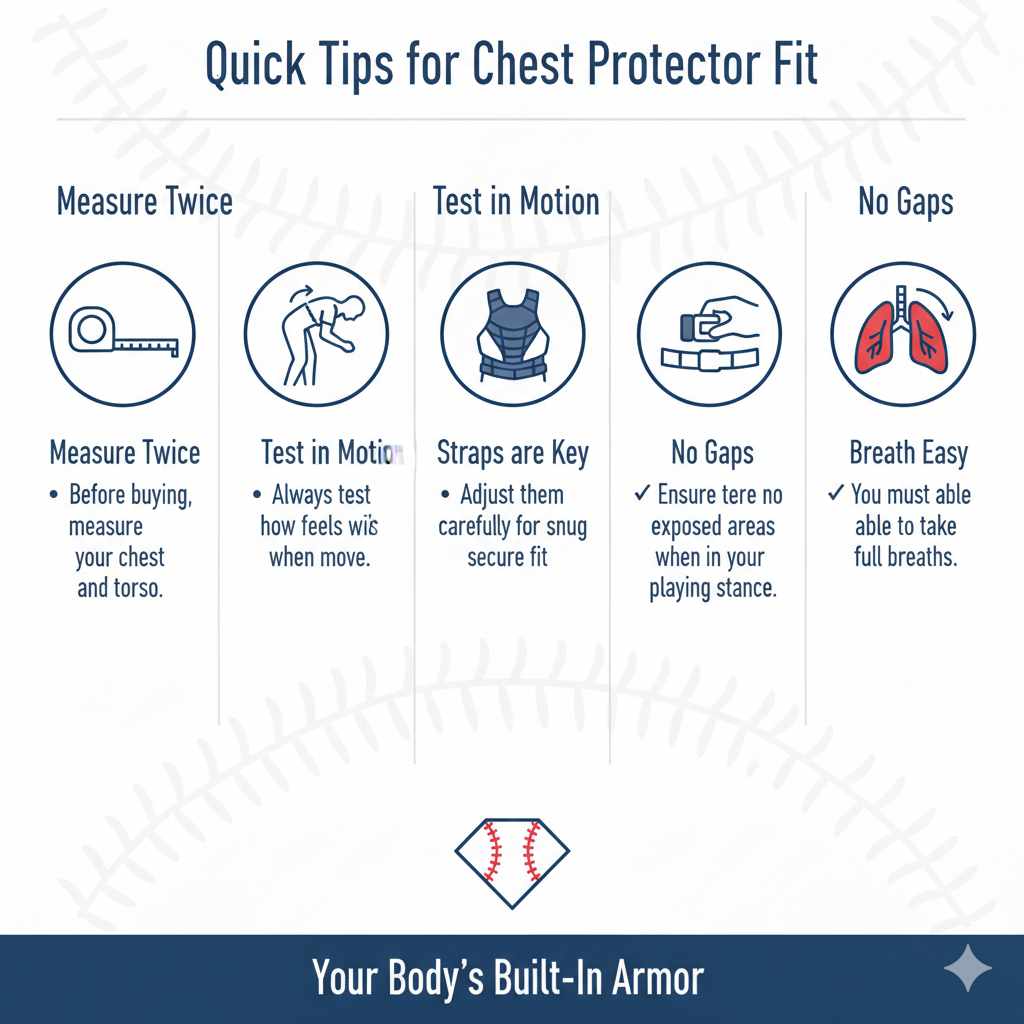
Quick Tips for Chest Protector Fit
Here are some fast takeaways to keep in mind.
Measure Twice: Before buying, measure your chest and torso.
Test in Motion: Always test how it feels when you move.
Straps are Key: Adjust them carefully for a snug, secure fit.
No Gaps: Ensure there are no exposed areas when you’re in your playing stance.
Breath Easy: You must be able to take full breaths.
Frequently Asked Questions
Do chest protectors need to be tight?
Do chest protectors need to be tight?
Chest protectors should be snug, not tight. You need them to stay securely in place without shifting during play. However, they should not restrict your ability to breathe deeply or move freely.
Finding that balance is key for both comfort and protection.
Can a chest protector be too low?
Can a chest protector be too low?
Yes, a chest protector can be too low. If it extends too far down your abdomen, it can interfere with your natural movements, like bending or squatting. It might also shift more easily.
The ideal placement is typically just above your belt line.
How do I know if my chest protector is the right size?
How do I know if my chest protector is the right size?
The right size chest protector will cover your sternum, ribs, and abdomen without gaps. When you wear it and move as you would in your sport, it should stay in place. It should allow you to breathe deeply and bend without feeling restricted or having the protector ride up.
Should chest protectors cover the shoulders?
Should chest protectors cover the shoulders?
Most standard chest protectors are designed to cover the chest, ribs, and abdomen. They do not typically cover the shoulders. Shoulder protection is usually provided by separate pads or integrated into shoulder pads in sports like football or hockey.
For baseball and softball, the focus is the torso.
What is the most important part of a chest protector fit?
What is the most important part of a chest protector fit?
The most important part of a chest protector fit is ensuring complete coverage of the vital areas it’s designed to protect: the sternum, ribs, and abdomen. It must also stay securely in place during active play and allow for unrestricted breathing and movement.
How often should I replace my chest protector?
How often should I replace my chest protector?
You should replace your chest protector when you notice significant wear and tear, such as rips, frayed straps, or compressed padding. If it no longer fits securely or provides adequate protection due to age or damage, it’s time for a new one. Typically, this might be every few years depending on usage and care.
Final Thoughts
Getting your chest protector to sit just right is a simple step that makes a big difference. It’s about feeling secure and knowing you’re protected, no matter what the game throws at you. Take a few extra minutes to adjust those straps. Test your movements. It’s a small effort for great peace of mind and safety on the field. Play hard, play smart, and play protected.