How Baseball Chest Protectors Are Measured
You’ve probably looked at a baseball chest protector and thought, “How in the world do they measure this thing?” It’s not like a shirt you just grab off the rack, right? There are all sorts of shapes and sizes. It can feel like a puzzle, trying to figure out what will actually protect you well without being too bulky or, worse, not covering enough.
A properly fitting chest protector is super important. It keeps you safe. It lets you move. It’s not just about buying something that looks good. It’s about making sure it does its job when you need it most. We’re going to break down exactly how these protectors are measured. We’ll cover what each number means. We’ll also talk about how to get that perfect fit yourself.
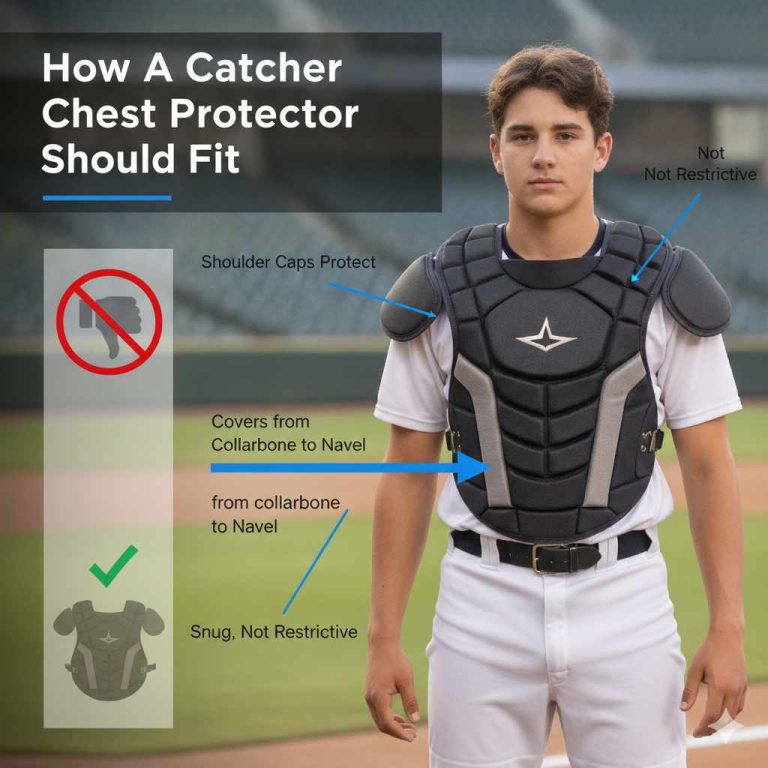
Baseball chest protectors are measured based on a combination of vertical length and width. The primary measurement is usually the vertical length from the sternum (top of the breastbone) down to the waistline or belt. Width measurements often refer to the chest circumference or the widest part of the protector. Fit is crucial for safety and mobility, ensuring full coverage without restricting movement.
Understanding Chest Protector Measurements
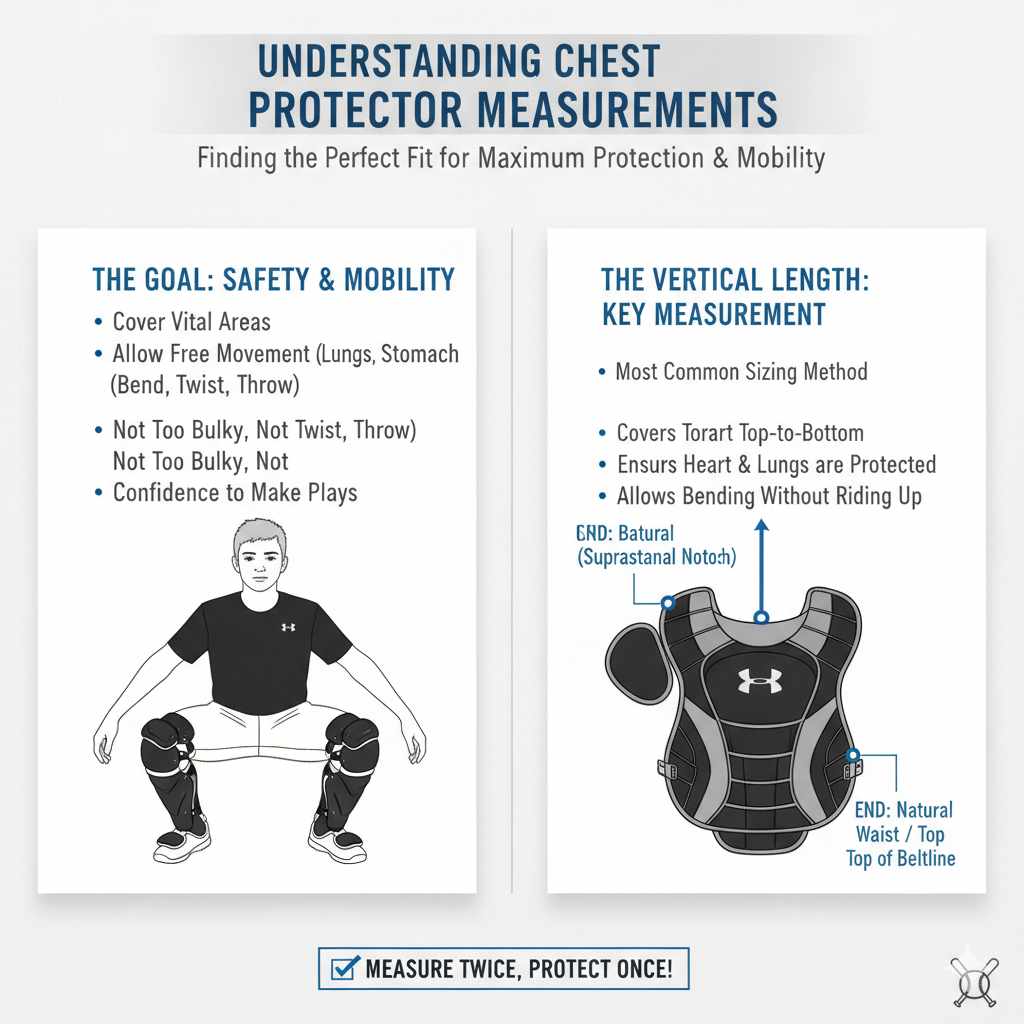
So, what goes into measuring a baseball chest protector? It’s not just one number. Think of it like fitting a suit. You need a few key points to make sure it’s right. The main goal is to cover the vital areas. This includes your heart, lungs, and stomach. It also needs to let you bend, twist, and throw without feeling restricted.
The Vertical Length
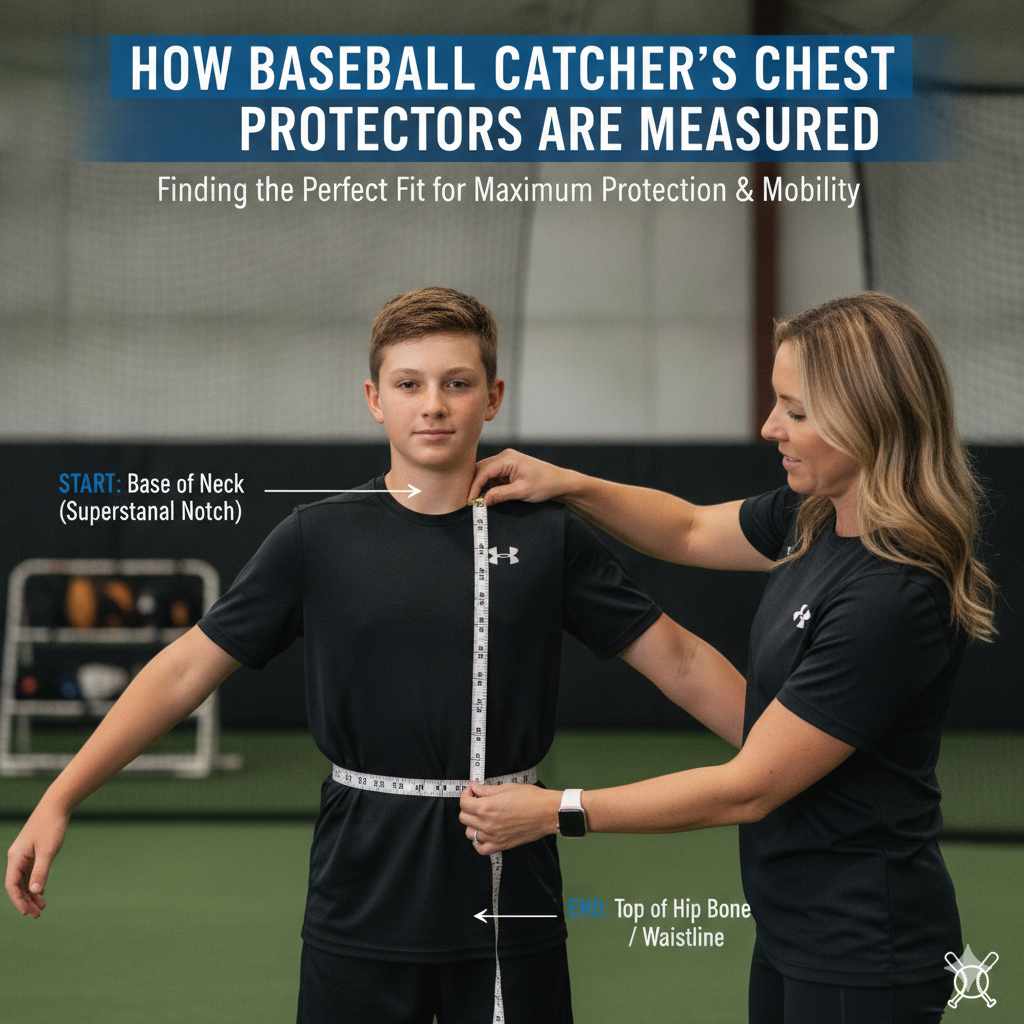
This is the most common way you’ll see chest protectors sized. The measurement starts at the very top of the sternum. That’s the flat bone in the middle of your chest. It runs straight down to where the protector should end. This is usually at your natural waistline or the top of your belt. This length ensures the protector covers your torso from top to bottom.
The Width or Chest Circumference
This measurement tells you how wide the protector is. It’s often related to your chest size. Some brands give a chest circumference. Others might measure the actual width of the protector across its widest point. This part is key for making sure the protector wraps around you properly. It stops any balls or bats from slipping around the edges.
How Brands Approach Sizing
Different brands might use slightly different terms. Some focus on age ranges. Others use specific measurements like inches or centimeters. You’ll often see charts that list sizes like “Youth,” “Intermediate,” and “Adult.” Then, within those, they’ll give a range of lengths or chest sizes. Always check the brand’s specific sizing guide. What one brand calls “adult large” might be different for another.
Why These Measurements Matter for Fit and Safety
You might wonder why all this detail is necessary. It boils down to two big things: safety and performance. A poorly fitting protector can be dangerous. It can also hinder your game.
Optimal Coverage
The length measurement ensures the protector extends far enough down your torso. This guards against wild pitches or foul balls that might hit you lower on your chest or stomach. The width ensures it covers your sides. This stops any gaps where an impact could occur. Proper coverage means the padding is exactly where it needs to be.
Mobility and Comfort
This is where the width and overall design come in. A protector that’s too wide might dig into your armpits. It could also rub your sides uncomfortably. If it’s too long and hits your groin area, it will be very uncomfortable. You need to be able to move freely. This means bending over to field a ground ball or reaching for a high pitch. The protector should feel like a second skin, not a straitjacket.
Preventing Injuries
The whole point of a chest protector is to absorb impact. If it doesn’t fit right, it can’t do its job. A protector that shifts during play might not protect the spot that gets hit. It could lead to bruising or even more serious injuries. A snug, secure fit means the protective material stays put. This gives you the best possible defense.
Experiencing the Fit Struggle: A Catcher’s Tale
I remember when I was a young catcher. I had this one chest protector. It felt okay in the store. But on the field, it was a nightmare. It was a bit too long, and the bottom edge would dig into my thighs when I was in my crouch. I’d constantly be adjusting it. It felt like it was always in the way.
One game, a really fast pitch got past me. I scrambled to get up. Because the protector was bunching up and rubbing, my movement was slowed just enough. I missed the runner sliding into home. It was a close play, and I felt so frustrated. It wasn’t just about the run; it was about knowing my gear was holding me back.
That experience made me realize how crucial a good fit is. I ended up investing in a protector that was a bit more expensive. But the difference was night and day. It hugged my body just right. I could move without even thinking about it. The peace of mind knowing I was fully protected, without any distractions, was worth every penny.
How to Measure Yourself for a Chest Protector
Measuring yourself is simple. You just need a flexible measuring tape. Grab a friend or family member to help you get an accurate reading.
Step 1: Find Your Sternum
Locate the top of your breastbone. This is where the measurement will start. It’s a bony ridge at the base of your neck.
Step 2: Measure the Vertical Length
With the measuring tape, start at the top of your sternum. Let it hang straight down your torso. Measure to where you want the protector to end. Most people aim for their belt line. Some might prefer it a bit shorter or longer. This is your main length measurement.
Step 3: Measure the Chest Width
Wrap the measuring tape around the widest part of your chest. Keep it snug but not too tight. This gives you your chest circumference. This helps in choosing a protector that will wrap around you.
Step 4: Consider Your Body Type
Are you lean? Do you have a broader frame? This can influence how a protector fits. A very lean person might find a protector that’s too bulky. Someone with a larger frame might need a wider protector.
Quick Fit Check: What to Look For
Length: Should reach your belt line without going too far down your stomach.
Width: Should comfortably wrap around your chest and sides.
Straps: Adjustable straps are key for a snug, secure fit.
Coverage: Ensure it covers your heart, lungs, and upper abdomen.
Decoding Sizing Charts
Once you have your measurements, you can look at sizing charts. These are usually found on the manufacturer’s website or on retail sites.
Using Your Measurements
Find the chart for the brand you are interested in. Match your vertical length measurement to the closest size. Then, look at the chest circumference. You want a protector that fits both. Sometimes, your measurements might fall between two sizes. In this case, it’s often better to go with the smaller size. You can usually adjust it with the straps for a tighter fit. A protector that’s too big is harder to fix.
Understanding Size Designations
Youth: Designed for younger players. They are typically shorter and narrower.
Intermediate: A bridge between youth and adult sizes. They offer more coverage than youth sizes but are not as large as adult ones.
Adult: For older teens and adults. These are the largest and offer the most coverage.
You’ll also often see specific numbers associated with these. For example, a youth size might be 12-14 inches in length. An adult size could be 15-17 inches. Always double-check what the numbers represent.
Common Sizing Pitfalls to Avoid
Even with measurements, it’s easy to make a mistake. Here are some common problems people run into.
Pitfall 1: Relying Only on Age or General Size
“I’m an adult, so I need an adult protector.” This is a common mistake. People come in all shapes and sizes. An adult male catcher might be shorter than a youth catcher. Always use your actual measurements. Don’t guess based on age or height alone.
Pitfall 2: Not Checking Brand-Specific Charts
As mentioned, brands vary. A “Medium” from one company could be a “Large” from another. Treat each brand’s sizing chart as its own unique guide. Don’t assume consistency across different manufacturers.
Pitfall 3: Forgetting About Shoulder Straps and Side Adjustments
Many chest protectors have adjustable shoulder straps and side straps. These are vital for fine-tuning the fit. Make sure the protector you choose has these. They allow you to get a custom feel. A protector that seems a bit loose can often be tightened with good straps.
Pitfall 4: Not Considering the Catcher’s or Player’s Stance
A catcher’s crouch is different from an infielder’s ready stance. If you are a catcher, think about how the protector feels when you are in your low stance. Does it pinch? Does it ride up? This is where trying it on, if possible, is really helpful.
Fit vs. Protection Level
High Protection: Often bulkier, might require slightly more room for movement. These are great for catchers and pitchers.
Lightweight Protection: Slimmer, designed for maximum agility. Good for infielders or players who prioritize speed.
Material Matters: Foam, plastic, and hybrid designs all offer different levels of protection and flexibility.
Combination is Key: A good protector balances impact absorption with your playing position.
What the Numbers Really Mean: A Closer Look
Let’s break down what those numbers on a sizing chart typically represent. You’ll often see ranges, and that’s intentional.
Vertical Length Range
If a chart says “14-16 inches,” it means that size protector is designed to fit players whose sternum-to-waist measurement falls within that range. The protector itself might be about 15 inches long, but the elastic straps and design allow it to fit someone a bit shorter or a bit taller.
Chest Width or Circumference Range
Similarly, a chest circumference of “36-40 inches” means the protector is built to accommodate players with chests in that size range. The actual protector might be wider to allow for this flexibility. The straps play a big role here too, allowing you to cinch it down or let it out.
How to Use the Ranges
If your measurement is at the high end of a range (e.g., 15.5 inches for a 14-16 inch range), you might be borderline. You could consider the next size up. However, always check the strap adjustability. If the smaller size has plenty of strap length to go larger, it might still work.
Personal Experience: The “Too Small” Protector
I made the mistake of buying a protector that was a bit too small once. I was confident in my measurements, but I think I underestimated how much padding would compress. It was a sleek, low-profile model for an infielder. I wanted something I could barely feel.
When I put it on, it felt snug. A little too snug, perhaps. The sides dug in a bit. The straps felt like they were stretched to their limit. I wore it for a practice. Every time I bent over or stretched, I could feel it constricting me. It was a constant, low-level annoyance.
After that practice, I realized this wasn’t going to work. It felt like I was wearing a very stiff, restrictive vest. It wasn’t protecting me better; it was just making me uncomfortable and, honestly, a little worried about it restricting my breathing if I got hit hard. I exchanged it for the next size up. The difference was immediate. The new one felt secure but not tight. I could breathe easily and move freely. It was a simple mistake, but it taught me to respect the sizing ranges and not to push the limits of a size.
Key Components of a Chest Protector
Outer Shell: Often made of durable plastic or composite materials to deflect impacts.
Padding: Layers of foam (EVA, high-density foam) to absorb shock.
Straps: Adjustable elastic or Velcro straps for a secure fit.
Liner: Soft inner material for comfort against the skin.
Real-World Scenarios: Who Needs What Size?
The type of player and their position often dictate the best size and style of chest protector.
The Catcher
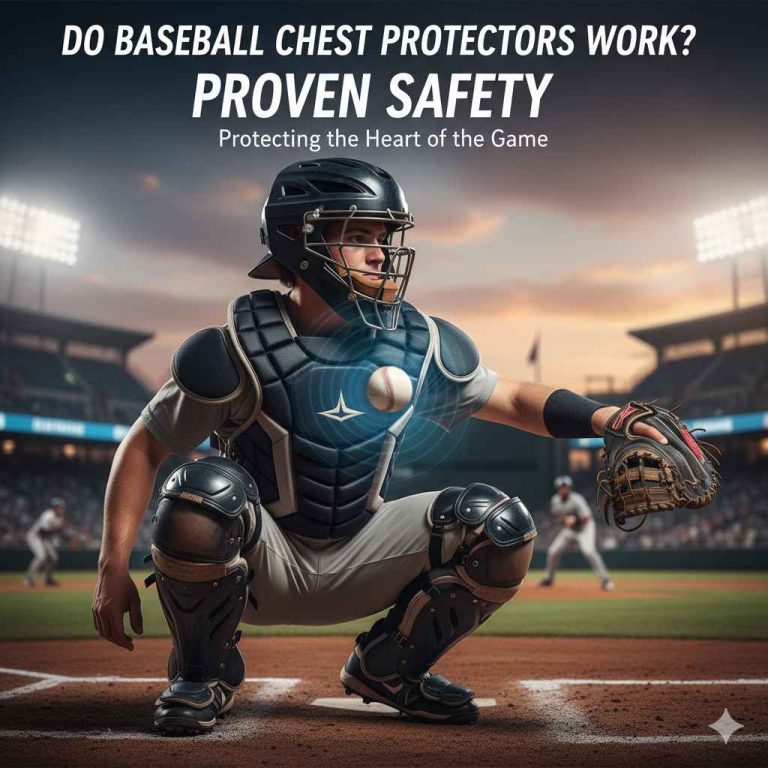
Catchers take the most direct hits. They are in a low crouch for extended periods. They need a protector that is long enough to cover their abdomen and wide enough to offer full side protection. Mobility is still key, but coverage is paramount. Many catchers opt for sizes that offer maximum length and width within their personal comfort.
The Pitcher
Pitchers also face a high risk of being hit by line drives. They need good protection but also need to be able to execute their pitching motion smoothly. A pitcher’s chest protector might be slightly shorter than a catcher’s. This ensures it doesn’t interfere with their follow-through. The width needs to be sufficient for coverage without restricting arm motion.
The Infielder
Infielders are more likely to take ground balls or errant throws. They might choose a slimmer, more flexible protector. The goal is agility and quick reactions. They often prioritize a protector that doesn’t add bulk and allows them to dive or field low balls with ease. Shorter lengths and narrower widths are common here.
The Batter
Batters need protection from pitches that get away from the catcher. They also might be concerned about foul tips. The ideal protector for a batter is one that offers good coverage without being cumbersome. It shouldn’t impede their swing or their ability to run the bases. Many batters opt for a middle-ground size.
What This Means for Your Gear Choice
Understanding how chest protectors are measured helps you make a smarter purchase. It’s not just about picking a size; it’s about choosing a protector that truly fits your needs.
When a Standard Fit is Fine
For many players, following the sizing chart precisely will lead to a good fit. If you play a position where extreme agility isn’t the absolute top priority, a standard measurement should work well. Just ensure you have enough room to move comfortably.
When to Consider Customization or Specific Models
If you have an unusual body shape, or if you’re a player like a catcher who needs specialized protection and maximum coverage, you might look into more advanced models. Some high-end protectors offer extra adjustability. Custom-fit options exist, though they are usually much more expensive.
The Importance of Trying It On (If Possible)
Nothing beats trying a protector on. If you can go to a sports store, measure yourself, and then try on several models, do it. Move around in it. Simulate your playing stance. See how it feels. This is the best way to guarantee a great fit.
Quick Tips for Measuring and Fitting
Here are some simple tips to make the process easier.
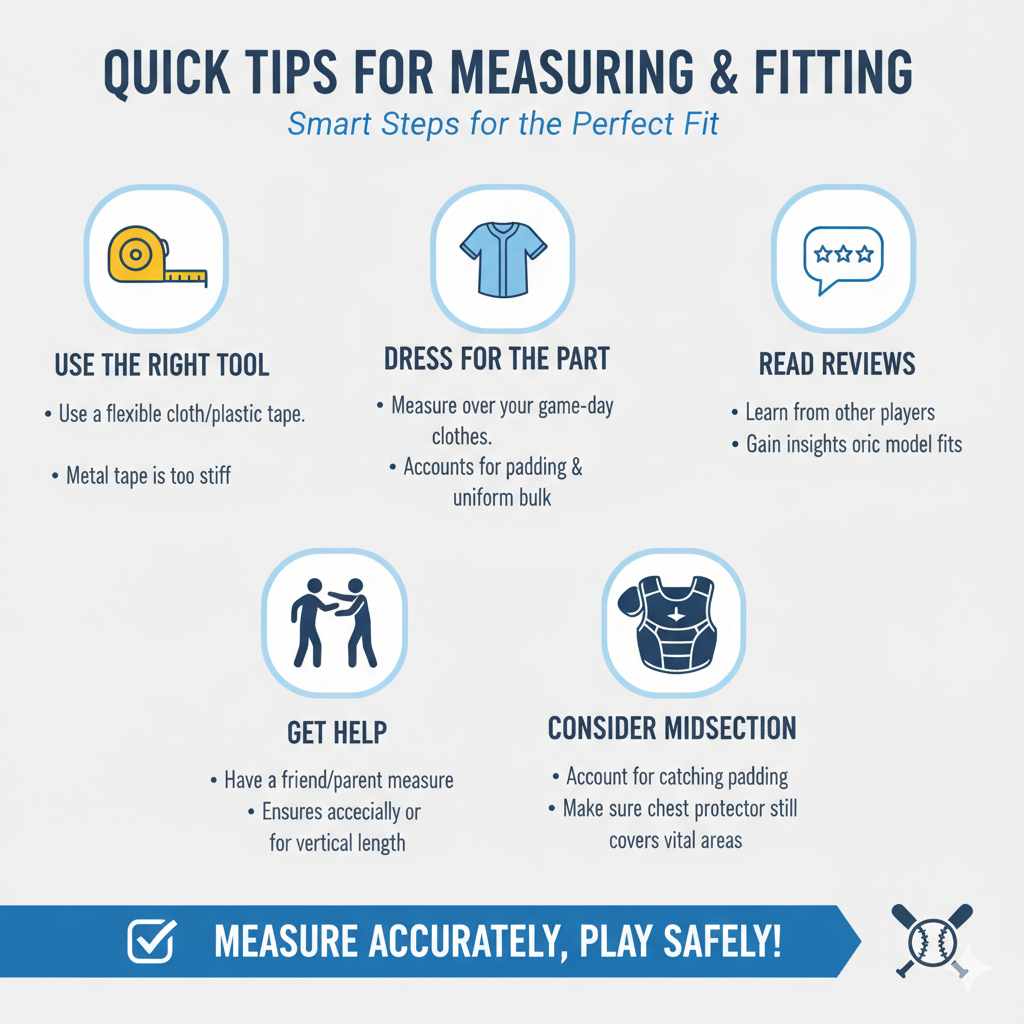
- Use a flexible tape measure. A metal one is too stiff.
- Measure over the clothes you’d wear while playing. This gives a more accurate size.
- Have someone help you. It’s hard to measure your own sternum-to-waist accurately.
- Don’t forget your midsection. If you wear a lot of padding on your uniform, account for that.
- Read reviews from other players. They might offer insights into how a specific model fits.
Frequently Asked Questions About Baseball Chest Protector Measurements
How do I know if my chest protector is too big?
If the chest protector slides around on your body, has large gaps on the sides, or extends too far down your stomach, it’s likely too big. You should feel secure and covered, not swamped.
Can I use a catcher’s chest protector as an infielder?
You can, but catcher’s protectors are often larger and bulkier. An infielder might find it restricts movement too much. Look for a slimmer, more agile model designed for infield play if possible.
What is the typical length of an adult baseball chest protector?
Adult chest protectors typically range from about 14 to 17 inches in vertical length, measured from the sternum to the waist. This can vary by brand and specific model.
Do I need to measure my arm length for a chest protector?
No, arm length is not a primary measurement for chest protectors. The fit is focused on your torso coverage and shoulder strap adjustability.
Are there different measurement standards for youth versus adult sizes?
Yes. Youth sizes are significantly smaller in both length and width to fit younger players. Adult sizes are larger to accommodate adult frames.
How should the chest protector feel when I’m in a crouch?
It should feel snug and secure, but not constricting. You should be able to lower into a deep crouch without the protector pinching your sides or riding up uncomfortably.
Final Thoughts on Getting the Right Fit
Figuring out how a baseball chest protector is measured might seem technical. But it’s really about ensuring you get the best protection possible. When you know your measurements and understand what the sizing charts mean, you’re halfway there. A well-fitting protector lets you play your best game. It keeps you safe so you can focus on the field, not on your gear.