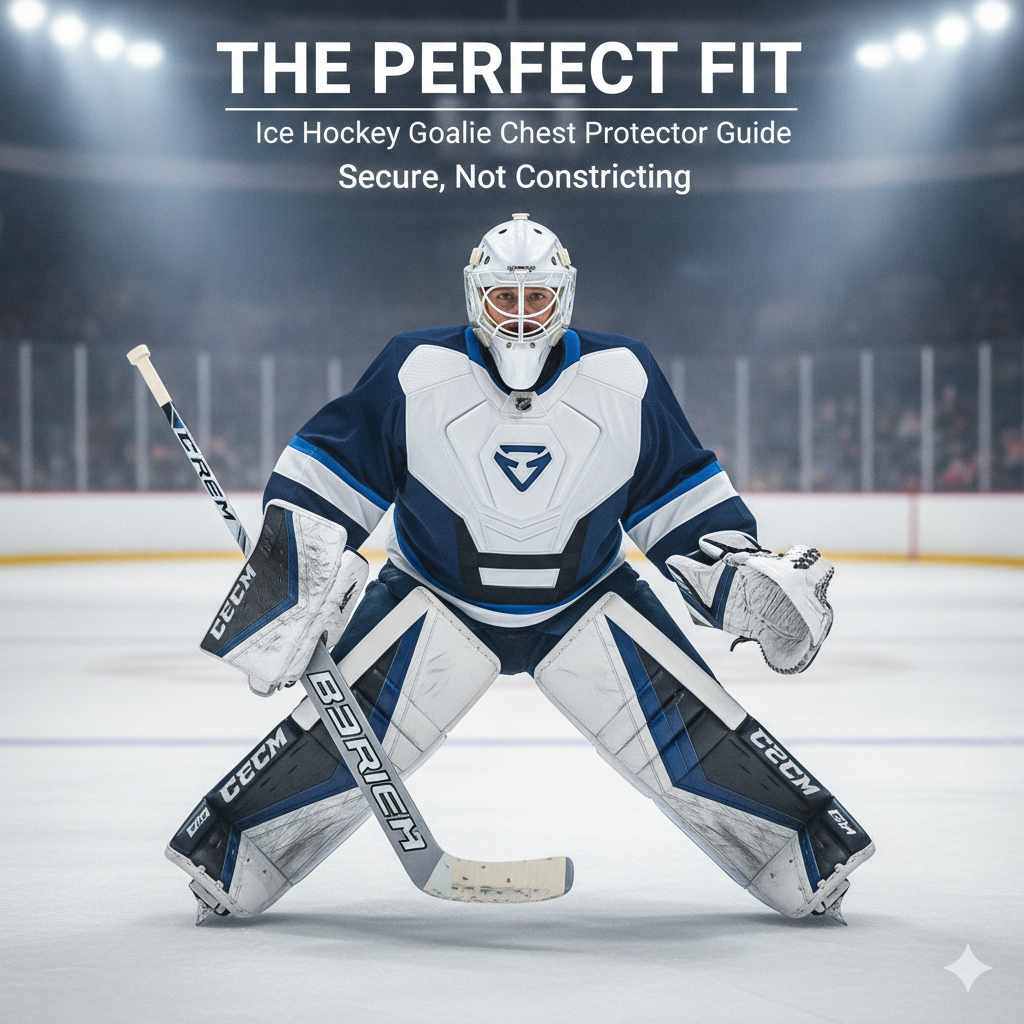
How Tight An Ice Hockey Goalie Chest Protector Should Be
A goalie chest protector. It’s one of the most critical pieces of gear. It has to shield you from hard shots.
It also needs to let you move freely. But how tight should it be? This is a question many goalies ask.
Getting it wrong can lead to pain or poor play.
Let’s dive into this. We’ll figure out the best fit for your chest protector. This will help you feel more confident and safe on the ice.
What is a Goalie Chest Protector?
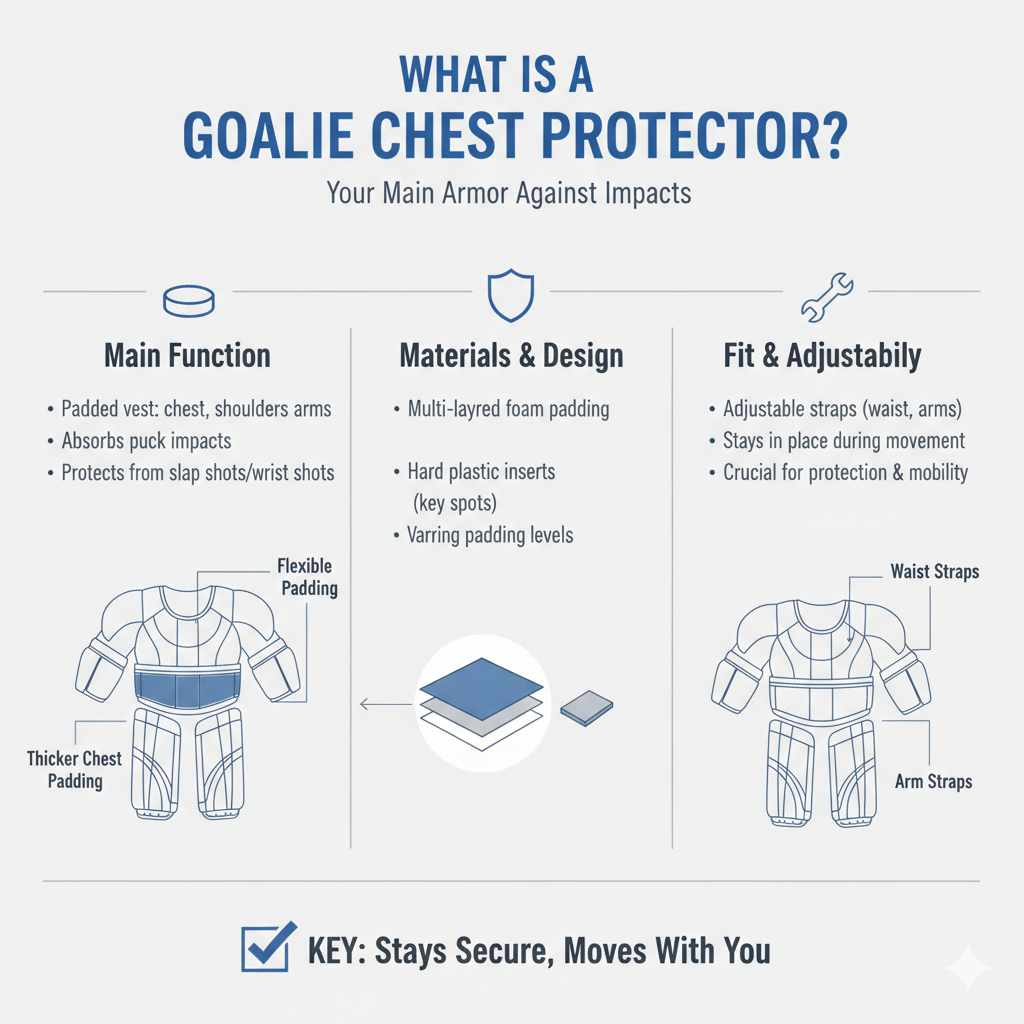
A goalie chest protector is a padded vest. It covers the chest, shoulders, and arms. It’s designed to absorb puck impacts.
Think of it as your main armor. It keeps you safe from slap shots and quick wrist shots.
The padding is usually made of foam. It might also have plastic inserts. These add extra protection in key spots.
Different parts of the protector have different levels of padding. The chest might be thicker. The arms might be more flexible.
Goalie chest protectors also have straps. These help you adjust the fit. They go around your waist and arms.
A good fit is key for it to work right. It needs to stay in place when you move.
Why the Right Fit Matters So Much
Getting the fit of your chest protector just right is super important. If it’s too loose, it can slide around. This leaves gaps.
Pucks can hit you in unprotected areas. That would really hurt. It could also cause injuries.
On the flip side, if it’s too tight, it’s a problem too. It can restrict your movement. You need to move your arms and shoulders freely.
You need to bend and twist. A tight protector can make this hard. It can also feel uncomfortable.
This can distract you during a game.
A chest protector that fits well helps you play better. You can reach for shots. You can track the puck easily.
It feels like a second skin. It’s there to protect you without getting in your way.
Personal Experience: The Too-Loose Nightmare
I remember my first season playing goalie in a competitive league. I was thrilled with my new gear. It looked awesome.
But I made a mistake with the fit. I thought looser was better for movement. I didn’t tighten the shoulder straps enough.
I also left the waist strap a bit slack.
During one game, a hard shot came from the point. I went down to make the save. The puck hit me square on the shoulder.
But because the protector had shifted, it wasn’t fully covered. The impact felt much worse than it should have. It wasn’t a serious injury, just a big bruise.
But it scared me. I realized how crucial that snug fit was.
That night, I spent hours adjusting it. I tried different strap tensions. I moved around my room.
I practiced dropping into the butterfly. I learned that day that a chest protector needs to feel secure. It needs to stay put no matter what you do.
Chest Protector Fit Check: Key Areas
Shoulder Caps: Should sit directly on top of your shoulders. They shouldn’t droop or slide off.
Arm Length: The sleeves should reach your wrists comfortably. They shouldn’t be too long or too short.
Chest Coverage: The main chest padding should cover your sternum and ribs well.
Waist Fit: The bottom edge should rest comfortably around your waist or hips.
Mobility: You should be able to raise your arms fully. You should also be able to bend and twist easily.
How Tight is “Just Right”? The Goldilocks Zone
So, what’s the perfect tightness? It’s not about feeling squeezed. It’s about a secure, snug fit.
Imagine putting on a comfortable jacket. It feels close to your body. It doesn’t flap around.
But it also doesn’t restrict your breathing.
The chest protector should feel like it’s hugging you. Not like it’s crushing you. The padding should stay in place.
It should cover all the important areas. When you move, the padding moves with you. It doesn’t shift independently.
You want to achieve a balance. This balance is between protection and freedom of movement. You need to be able to reach.
You need to be able to move your arms quickly. You also need to absorb impacts without pain.
Understanding the Straps: Your Adjustment Tools
Most chest protectors have several straps. These are your main tools for getting the right fit. There are usually shoulder straps.
These connect the shoulder caps to the chest piece. There are also arm straps. These secure the sleeves to your arms.
Then there’s the waist or belly strap. This helps keep the whole unit snug against your body. Some protectors also have adjustment points on the elbows or wrists.
You need to adjust each strap. Make them snug but not tight. Pull each strap until you feel gentle resistance.
Then, move around. See how it feels. If it feels restrictive, loosen it a bit.
If it feels loose or sloppy, tighten it more.
Strap Adjustment Tips
- Start Loose: Begin with all straps loosened.
- Shoulders First: Adjust shoulder straps so caps sit right.
- Arms Next: Secure arm sleeves to your arms.
- Waist Snug: Cinch the waist strap for stability.
- Test Movement: Raise arms, twist torso, bend knees.
- Fine-Tune: Adjust each strap for comfort and security.
How to Test the Fit: Moving Like a Goalie
Once you’ve adjusted the straps, you must test it. Put on your goalie pants and pads. Then, put on your chest protector.
Now, move like a goalie. Don’t just stand there.
Try to get into your stance. Drop into the butterfly. Can you spread your legs fully?
Does the chest protector bunch up or restrict you? Try reaching across your body. Can you extend your arms fully?
Practice catching motions.
Try rotating your torso. Can you twist from side to side easily? Pay attention to any pinching or tightness.
Also, check for any looseness. Does any part of the padding slide around when you move?
A good test is to do some on-ice warm-ups. Even just skating around and doing basic movements can tell you a lot. If something feels off, go back and adjust the straps.
It might take a few tries.
Movement Tests Checklist
- Butterfly stretch
- T-push movement
- Reach across the body
- Full arm rotation (up, forward, side)
- Torso twist (left and right)
- Getting up and down quickly
Common Fit Mistakes Goalies Make
Many goalies make similar mistakes when fitting their chest protector. One common error is over-tightening. They pull the straps too hard.
This feels secure but kills mobility. It can also cut off circulation. That’s never good.
Another mistake is leaving it too loose. As I mentioned, this can lead to unprotected areas. It can also cause the protector to feel heavy or bulky.
It’s not as efficient.
Some goalies don’t adjust the shoulder straps enough. They focus too much on the waist. The shoulder caps need to sit correctly.
They are a key part of your protection. If they are too high or too low, they won’t work as well.
Also, some goalies don’t adjust for their equipment. They might try on the chest protector alone. But it needs to fit over their base layers and under their goalie jersey.
Your jersey fit can also affect how the chest protector feels.
Chest Protector Sizing: Beyond Just Tightness
Before you even think about tightness, you need the right size. Chest protectors come in different sizes. These are usually based on height and chest measurement.
Always check the manufacturer’s sizing chart.
Don’t assume your size from one brand will be the same for another. Different companies have slightly different fits. It’s always best to try on a protector if you can.
Or, measure yourself carefully.
When you try one on, even before adjusting straps, it should feel generally right. If it feels too short or too wide, it might be the wrong size. Then, no amount of strap adjustment will make it perfect.
Sizing Guide Basics
Height: Most charts list ranges like 5’0″-5’6″.
Chest Measurement: Measure around the fullest part of your chest.
Sleeve Length: This is often a secondary measurement.
Consult Charts: Always refer to the specific brand’s size chart.
How Different Styles Affect Fit
Goalie chest protectors come in different styles. Some are more traditional. Others are more modern and streamlined.
This affects how they feel and how you should fit them.
Traditional protectors tend to be baggier. They offer a lot of padding. They might require a looser fit in some areas to allow for the extra bulk.
You still need it secure, but maybe not as form-fitting as a modern one.
Modern protectors are often designed to be more mobile. They use lighter materials. They might have more articulated joints.
These often require a snugger fit. You want them to feel more like a second skin. This lets you take advantage of their advanced design.
The key is to understand the design intent of your specific protector. Read reviews. Talk to other goalies.
See how they fit their similar gear.
When is a Chest Protector Too Loose? Signs to Watch For
You can tell if your chest protector is too loose by a few signs. One is if the shoulder caps droop. They should sit high and wide on your shoulders.
If they slide down your arms, it’s too loose.
Another sign is if the chest piece shifts when you move. When you reach for a save, does the padding lag behind? Does it feel like it’s not connected to your body?
You might also see gaps. Look in a mirror. Are there spaces between the padding and your body?
Especially around your ribs or sides? These gaps are danger zones.
If you can easily pull the sides of the protector away from your body, it’s likely too loose. When you move your arms, does the protector flap or feel disconnected? That’s a sign it needs to be tighter.
Signs of a Loose Fit
- Shoulder caps droop or slide.
- Chest padding shifts during movement.
- Visible gaps in coverage.
- Protector feels bulky or floppy.
- Pants seem to pull down the back of the protector.
When is a Chest Protector Too Tight? Signs to Watch For
How do you know if it’s too tight? The most obvious sign is pain. If you feel sharp points digging into you, it’s too tight.
You might feel discomfort constantly.
Restricted breathing is another big clue. Can you take a deep breath without feeling choked? If the protector is constricting your chest, it’s too tight.
This can affect your stamina and performance.
Limited range of motion is also a tell-tale sign. Can you reach overhead? Can you twist your body easily?
If you feel resistance when you try to move, it’s too tight. This is dangerous because you can’t make saves properly.
You might also feel numbness or tingling in your arms. This can happen if straps are cutting off circulation. Always check your arms and hands for color and warmth.
Signs of a Tight Fit
- Constant discomfort or pain.
- Difficulty taking deep breaths.
- Restricted arm or torso movement.
- Numbness or tingling in arms/hands.
- Straps digging into skin.
Impact of Fit on Goalie Performance
The fit of your chest protector directly impacts how you play. A well-fitting protector lets you move freely. You can react faster.
You can track the puck better because nothing is obscuring your vision or range of motion.
When it fits right, you have more confidence. You know you are protected. This lets you focus on the game.
You’re not worrying about gear malfunctions or pain. This mental edge is huge in hockey.
A poorly fitting protector can lead to bad habits. You might start avoiding certain movements. You might compensate for stiffness by using less efficient techniques.
Over time, this can hurt your development as a goalie.
Think about it: if you can’t fully extend your arm to cover a post, you’re more likely to let in a soft goal. If you can’t get into your stance quickly, you might miss a key save. The fit matters more than you might think.
How to Adjust for Different Jersey Fits
Goalie jerseys can vary. Some are very loose and baggy. Others are a bit more fitted.
Your chest protector fit might change depending on your jersey.
If you wear a baggy jersey, you might need to tighten your chest protector a little more. This keeps it snug under the loose fabric. You don’t want the protector to feel like it’s floating around inside your jersey.
If you wear a more fitted jersey, you might need to loosen your chest protector slightly. You don’t want the jersey to bunch up over the pads. It should lay relatively smoothly.
Always try on your chest protector with the jersey you plan to wear for games or practices. This gives you the most accurate feel of the overall fit.
Jersey Fit Adjustment
- Baggy Jersey: May require slightly tighter chest protector.
- Fitted Jersey: May require slightly looser chest protector.
- Always Test: Try on with your actual game jersey.
- Avoid Bunching: Ensure smooth fabric drape over pads.
The Role of Weight in Fit Perception
The weight of a chest protector can influence how tight it feels. Lighter protectors might feel more streamlined. They might allow for a snugger fit without feeling heavy.
Heavier protectors might feel more substantial. Some goalies might prefer to wear these a bit looser. This is to account for the extra weight.
But the goal is still security.
Don’t confuse weight with protection. Modern, lighter materials can offer excellent protection. Always check the protection ratings and features, not just the weight.
When fitting, consider the protector’s weight. If it feels heavy, try adjusting the straps to distribute that weight evenly. You don’t want it pulling down on your shoulders or back.
What About Break-In Period?
Most new goalie gear needs a break-in period. Chest protectors are no different. When it’s brand new, it might feel a bit stiff.
The padding might not flex as easily.
During the break-in, the padding softens. It starts to mold to your body shape. The straps might stretch slightly.
This can change the feel of the fit.
So, if a protector feels a little tight or stiff at first, give it some time. Wear it for practices. Do drills.
Gradually, it should become more comfortable and conform to your movements. You might need to make minor strap adjustments as it breaks in.
Break-In Tips
- Wear it around the house.
- Use it for practice sessions.
- Perform various goalie movements.
- Adjust straps as it softens.
- Expect gradual comfort improvement.
Quick Fixes: When It Feels “Almost” Right
Sometimes, your chest protector feels almost perfect. It’s just one small thing. Maybe the shoulder pads are just a bit too high.
You can often fix these small issues with strap adjustments. Try adjusting the shoulder straps up or down slightly. See if that repositions the pads correctly.
If the arms feel too loose, try tightening the arm straps.
If the main chest piece feels like it’s riding up, ensure the waist strap is snug. It should pull the chest piece down against your body.
For minor discomfort, you can sometimes add extra padding. Some goalies use thin foam inserts in specific spots. But be careful.
Adding too much can make it too bulky or shift the balance.
When to Consider a New Chest Protector
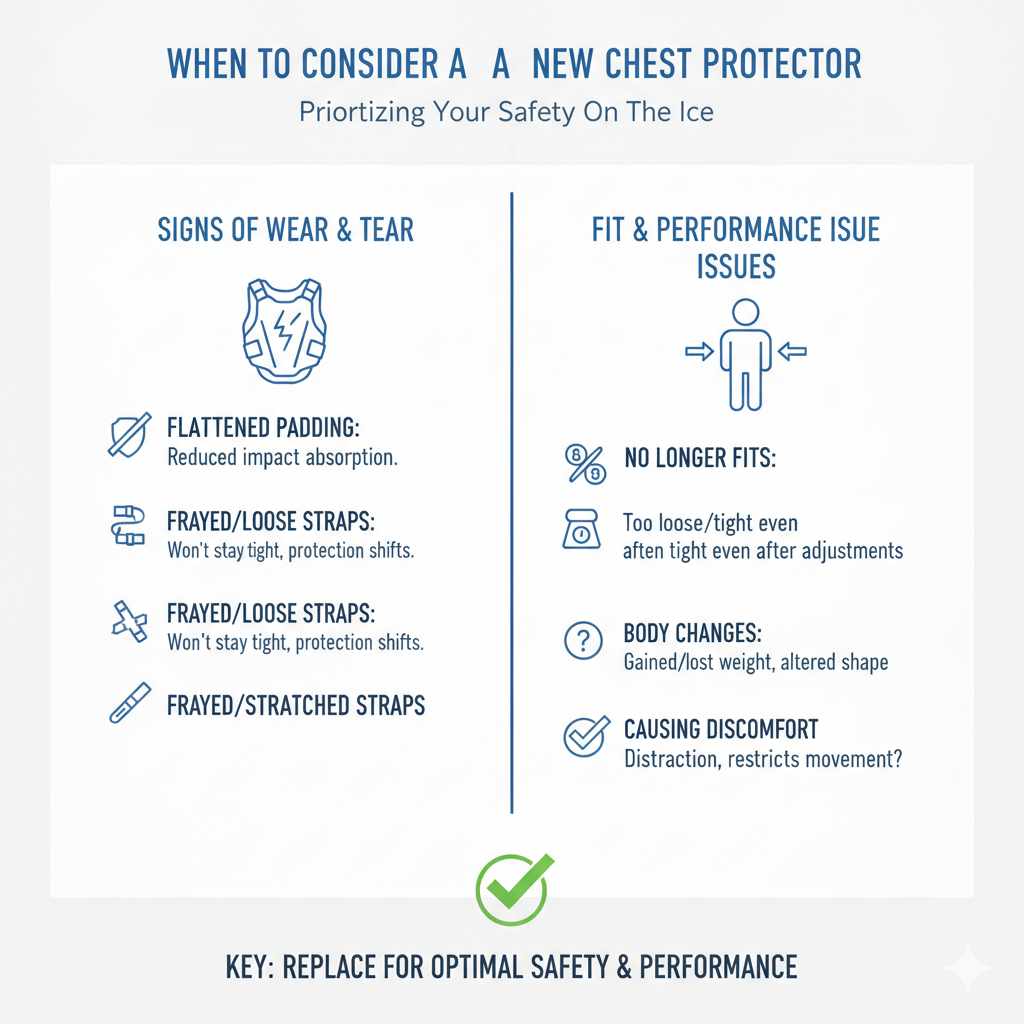
Chest protectors don’t last forever. Over time, the padding can break down. The straps can get worn out.
If you notice significant wear and tear, it might be time for a new one.
Signs include flattened padding. This means it can’t absorb impacts as well. If straps are frayed or won’t stay tight, that’s a problem.
If the protector no longer fits correctly, even after adjustments, it might be the wrong size or shape for you now. Perhaps your body has changed. Or the gear has lost its structure.
Ultimately, if it’s not protecting you well or is causing discomfort, it’s time to look for a replacement. Your safety on the ice is paramount.
Frequently Asked Questions About Goalie Chest Protector Fit
How loose should goalie shoulder pads be?
Goalie shoulder pads, part of the chest protector, should sit squarely on top of your shoulders. They should not droop down the sides of your arms or feel like they are sliding off. You want them snug enough to stay in place during intense movements but not so tight they restrict your shoulder rotation.
Can a chest protector be too tight to breathe?
Yes, a chest protector can be too tight, leading to breathing difficulties. If you feel restricted when taking a deep breath, or if the protector digs into your chest and makes breathing uncomfortable, it is too tight. This can impact your stamina and overall performance on the ice.
Do I need to wear a jersey over my chest protector?
Yes, a goalie jersey is typically worn over the chest protector. The jersey helps to keep the chest protector in place and provides a consistent surface for players to shoot at. Ensure your jersey fits comfortably over the chest protector without bunching up or restricting movement.
Should my chest protector feel stiff when new?
New chest protectors can feel a bit stiff. The padding needs time to break in and mold to your body. This process allows the materials to become more flexible and conform to your movements.
You might need to adjust the straps slightly as the protector breaks in.
How do I adjust chest protector arm straps?
Adjust the arm straps so the sleeves of the chest protector fit snugly against your arms. They should not be so tight that they cut off circulation or restrict movement, but tight enough that the arm pads stay in place and don’t shift during play. You should be able to fully extend your arms without resistance.
What if my chest protector causes hip pain?
Hip pain is usually related to your goalie pants and leg pads. However, if your chest protector is too long and the bottom edge digs into your hips, it could contribute to discomfort. Ensure the chest protector sits properly around your waist and doesn’t extend too far down your torso.
Conclusion
Finding the right fit for your goalie chest protector is a journey. It’s about that perfect balance. You want protection.
You need freedom. It takes a bit of adjustment and testing.
Pay attention to how it feels. Listen to your body. The right fit will make you a safer, more confident goalie.
And that’s what truly matters on the ice.