How The Ball Stuck To Molina’S Chest Protector
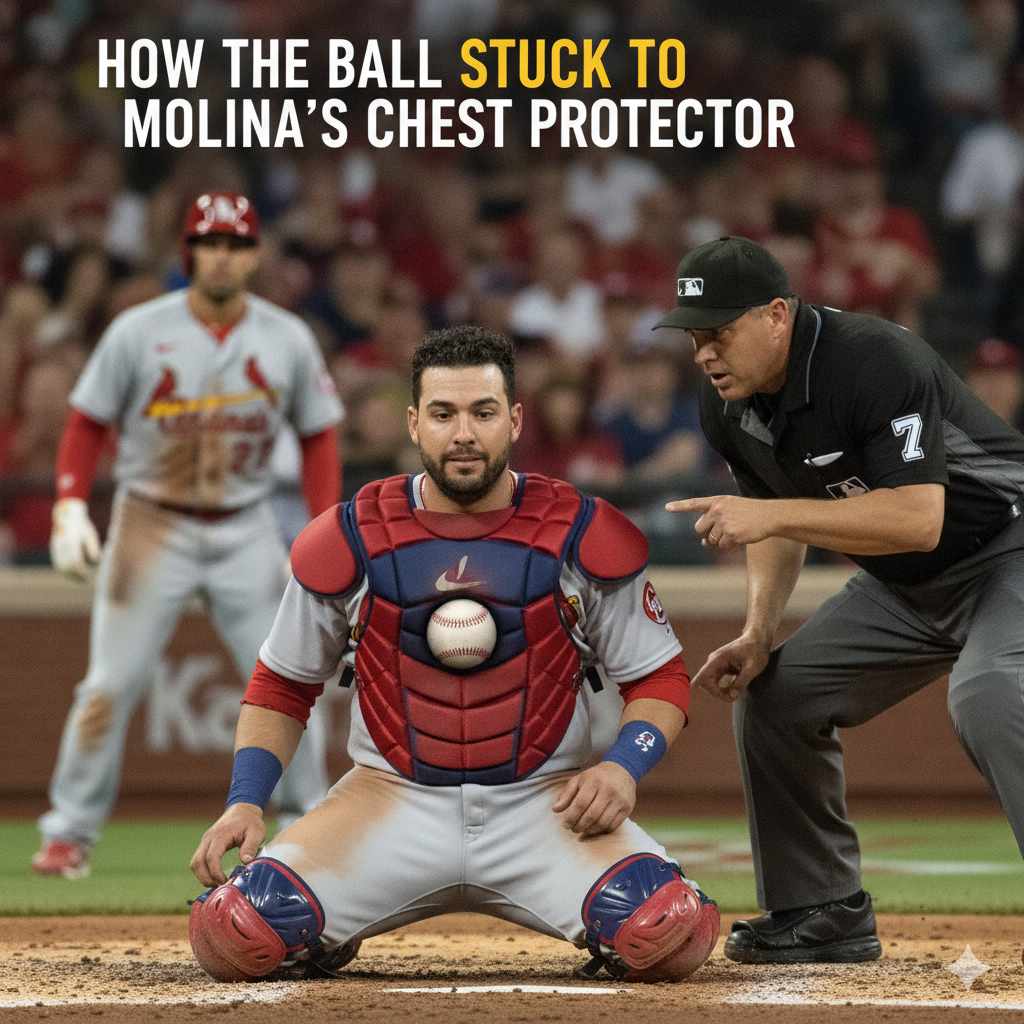
The baffling sight of a baseball sticking to a catcher’s chest protector is a result of a unique combination of material science, impact physics, and catcher technique. It’s not magic, but clever design and opportune moments. This phenomenon helps preserve outs and adds to the game’s dramatic flair.
The Science Behind a Sticky Ball
A baseball doesn’t just stick by accident. There’s science involved. It’s all about how the ball and the protector interact when they crash together.
This isn’t just for Yadi Molina; many catchers have seen this happen.
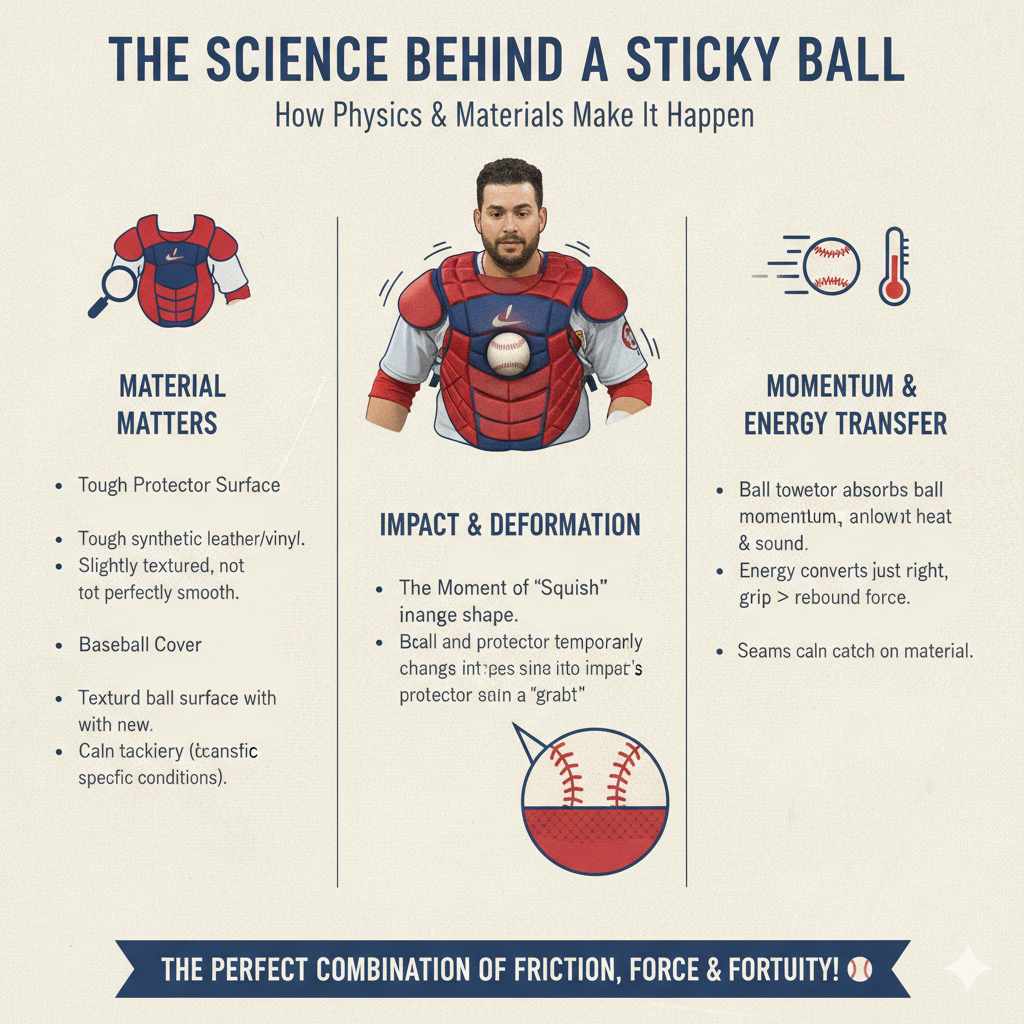
Material Matters
Catchers’ gear is built tough. Chest protectors are made with layers. These layers often include foam and plastic.
The outside part is usually a tough synthetic leather or vinyl. This material isn’t perfectly smooth. It has a little bit of grip to it.
Think about a sticky note. It’s not super sticky, but it holds. The catcher’s gear has a similar kind of grip.
It’s designed to absorb the impact of the ball. It needs to protect the catcher. This protection means it needs to be firm but also have some give.
Impact and Deformation
When a fast-moving baseball hits the chest protector, both the ball and the gear change shape for a tiny moment. The ball squishes a bit. The protector also gives way under the force.
This moment of “squish” is key.
During this quick deformation, the rough surface of the ball can press into the slightly textured surface of the chest protector. Tiny bits of the ball’s cover might even get caught in the protector’s surface. It’s like pressing a soft sticker onto a bumpy surface.
They can grab onto each other.
Momentum and Energy Transfer
A baseball carries a lot of momentum. It’s moving fast and has weight. When it hits the chest protector, the protector tries to stop that momentum.
But it doesn’t always stop it instantly. Some of the ball’s energy is absorbed.
Some of the ball’s forward motion is turned into heat and sound. But if the impact is just right, the ball might slow down enough. It slows down so much that its own grip on the protector is stronger than the remaining force trying to push it away.
It then seems to “stick.”
This is more likely with balls that are a bit softer or have a slightly tackier cover. The seams of the ball can also play a role. They can catch on the protector’s material.
When Does the Ball Get Stuck?
Certain game situations make this “sticky ball” event more likely. It’s not an everyday occurrence, but it happens enough to be a known part of baseball. Understanding these moments helps explain why it seems to happen more often for some players.
The “Soft Hands” Technique
Great catchers have what players call “soft hands.” This means they can catch the ball without a lot of jarring. They let their mitt or chest protector give a little with the impact. This absorbs the shock.
When a catcher uses soft hands on a chest protector, they are essentially controlling the impact. They are not fighting the ball. They are moving with it.
This controlled movement can allow the ball to settle into a position where it grips the gear. It’s a skill that takes practice.
The Type of Pitch Matters
Some pitches are more likely to result in a stuck ball. Breaking balls, like curveballs and sliders, can have unpredictable movement. They can also hit the protector at odd angles.
A pitch that’s not perfectly thrown might hit the chest protector off-center. This can cause the ball to roll or settle into a crevice. Fastballs can also stick, especially if they hit with just the right force and angle.
It’s a mix of speed, spin, and where it lands.
The Protector’s Condition
The wear and tear on a catcher’s chest protector can also influence this. A brand new protector might be too stiff. An older one might have lost some of its protective padding.
The outer material can also get scuffed or worn.
Over time, the outer surface can develop tiny nicks and grooves. These small imperfections can actually increase the grip. They give the ball more places to catch.
It’s like an old glove that’s perfectly broken in. It has a feel that’s unique.
Ball-Sticking Scenarios
Foul Tip: A pitch that just grazes the bat can hit the catcher’s chest protector directly. These hits are often hard and fast. They can cause the ball to embed momentarily.
Wild Pitch/Passed Ball: If a pitch is off target, it might bounce oddly. A bounce off the ground or a missed block can send the ball into the chest protector at an unpredictable angle.
Deflected Ball: Sometimes, a ball will hit the bat, then the catcher’s glove, then the chest protector. Each hit changes its speed and angle. This can lead to a tricky trajectory that ends up sticking.
Real-Life Moments: The Molina Factor
When people talk about a ball sticking, the name Yadi Molina often comes up. He’s famous for his incredible defense. His ability to frame pitches and block balls is legendary.
It makes sense that he’d be involved in these memorable plays.
I remember watching a game where a foul tip rocketed towards Molina. It seemed like a sure thing that the ball would carom off. But he stayed solid.
The ball hit his chest protector and just… stayed there. For a second, you could see him pause. Then he quickly scooped it up for the out.
The crowd roared. It was one of those moments that defines his game. He makes the difficult look easy.
It’s not just about luck for players like Molina. It’s about years of training. They learn how to position their bodies.
They learn how to absorb impact. They have a feel for the game. This feel helps them react perfectly.
They can use the equipment to their advantage. It’s a testament to their skill and the gear they use.
What’s interesting is how often this happens in crucial moments. A runner might be trying to steal a base. The pitcher throws a breaking ball.
It’s hit as a foul tip. The ball sticks. An out is recorded.
That one out can change the momentum of the entire game. Molina has been involved in countless such plays.
How Catchers Use Their Gear
Padding and Cushioning: The layers inside the chest protector soak up shock. This protects the catcher’s body. It also helps slow the ball down.
Form and Fit: A well-fitting chest protector stays in place. It doesn’t shift much. This stability allows the catcher to control impacts better.
Surface Texture: The outer material is designed for durability. It also provides enough grip. This grip is just enough to catch a ball without being sticky all the time.
What This Means for You
For the average fan, seeing a ball stick is a cool visual. It’s a reminder of the athletic skill and specialized equipment in baseball. It’s a small detail that adds to the game’s excitement.
When It’s Normal
It’s totally normal for a baseball to get stuck to a catcher’s chest protector in the right circumstances. Foul tips that hit the protector directly are a prime example. Pitches that bounce and hit the gear at a weird angle can also do this.
It’s a natural outcome of physics and equipment design.
When to Worry (Or Not)
There’s generally no need to worry when a ball sticks briefly. It’s a fleeting moment. The catcher is trained to handle it.
They recover quickly to make the play. The gear is designed to withstand these impacts.
If a ball seemed to get permanently lodged or caused damage, that would be different. But in baseball, these moments are temporary. They are part of the game’s dynamic.
They show the strength of the catcher and the design of their gear.
Checking Your Gear (For Players)
Inspect for Tears: Look for any rips or significant wear on the outer material. Small scuffs are usually fine, but large tears can affect performance.
Check Padding: Ensure the padding inside is still firm and evenly distributed. Deteriorated padding won’t absorb impact as well.
Test the Fit: A chest protector that’s too loose or too tight won’t function optimally. Make sure it fits snugly but comfortably.
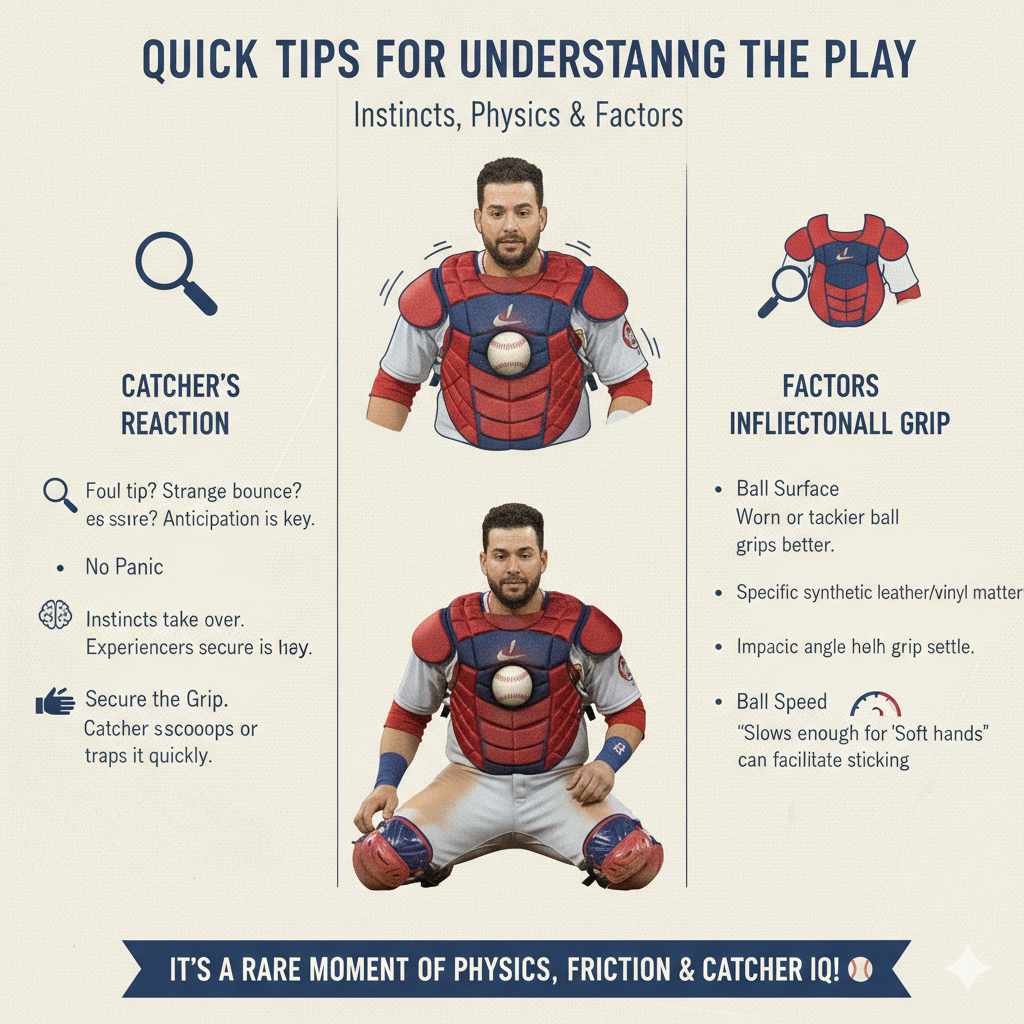
Quick Tips for Understanding the Play
When you see this happen, think about a few things. Was it a foul tip? Did the ball bounce strangely?
Did the catcher seem to anticipate it?
The catcher’s ability to react quickly is crucial. They don’t panic. They use their instincts.
They grab the ball. This shows their experience. It’s what makes them valuable players.
Remember, the ball isn’t glued. It’s just caught in a momentary grip. The catcher’s next move is to secure it.
They often do this with a quick scoop or by trapping it.
Factors Influencing Ball Grip
- Ball Surface: A slightly worn or tackier baseball might grip better.
- Protector Material: The specific synthetic leather or vinyl used matters.
- Impact Angle: Hitting the protector at a specific angle can cause the ball to settle.
- Ball Speed: The ball needs to slow down enough for the grip to hold.
- Catcher’s Movement: “Soft hands” can facilitate the sticking.
Frequently Asked Questions
Why does a baseball sometimes stick to a catcher’s chest protector?
The ball sticks because of the interaction between the ball’s cover and the protector’s material. When the ball hits with just the right force and angle, its surface can grip the slightly textured protector. The ball also deforms, pressing into the gear. This slows it down enough for the grip to hold momentarily.
Is this common in baseball?
It happens, but it’s not extremely common. You’ll see it more often with skilled catchers who have excellent technique. Foul tips and pitches that bounce oddly are situations where it’s more likely to occur.
Does the type of baseball matter?
Yes, the condition of the baseball can play a role. A ball that is slightly newer or has a tackier cover might grip more easily than a very worn or slick ball. The seams also add texture.
Does this happen to all catchers?
It can happen to any catcher, but players like Yadi Molina are known for making great plays. Their skill and technique, combined with their equipment, create more opportunities for such moments. Great catchers often have a knack for making the unusual happen.
Is the chest protector special to make the ball stick?
The chest protector isn’t specially made to make balls stick. It’s designed for protection and to absorb impact. However, the materials used for durability and grip, along with its shape and padding, can contribute to this phenomenon when combined with the right impact.
How do catchers recover the ball when it sticks?
Catchers are very quick. They use their hand or glove to scoop up the ball. Sometimes they will press it in slightly more with their body to secure it. They are trained to react instantly to make the out.
The Takeaway on the Sticky Ball
Seeing a baseball stick to a catcher’s chest protector is a fun part of the game. It’s a perfect blend of physics, equipment design, and player skill. It shows how even the smallest interactions can lead to memorable baseball moments.