CCM vs Vaughn Chest Protector: Essential Showdown
Choosing between a CCM and Vaughn chest protector depends on your budget, fit preference, and playing style. Both offer excellent protection, but CCM often excels in mobility and lighter weight, while Vaughn is known for robust, traditional coverage. Try both on to find the best personalized fit for superior comfort and safety.
Welcome, fellow goalie! It is exciting that you are looking closely at your protection. A chest and arm protector (CAP) is your second skin out there. It keeps you safe so you can focus on stopping pucks, not worrying about gear that moves or pinches. When you start shopping, two big names always pop up: CCM and Vaughn. It can feel like a confusing match-up, like trying to pick between two fantastic goalie pads! Do not worry. We will break down the differences in plain language. By the end, you will know exactly which brand’s gear is the perfect partner for your saves. Let’s dive into this essential showdown to find your best fit.
Why Your Chest Protector Matters So Much
The chest protector is one of the most crucial pieces of gear you own. It does more than just pad your ribs; it helps shape your stance and controls how your arms move when blocking shots.
Protection and Coverage: The Basics
A good chest protector must meet basic safety standards. Organizations like the USA Hockey mandate certain safety levels for competitive play, ensuring the equipment absorbs impact effectively.
What does the protector cover?
- The chest and sternum area (the most important part).
- The stomach and lower ribs (sometimes adjustable).
- The arms and elbows (the “arm system”).
If a chest protector is too bulky, it might hinder your movement, making it hard to track the puck or drop into the butterfly. If it is too thin, you risk painful bruises. Finding that sweet spot is what CCM and Vaughn aim to deliver in different ways.

Understanding CCM Chest Protectors: Mobility Meets Modern Tech
CCM is a powerhouse in hockey gear, known for constantly pushing the envelope with new materials and designs, often focusing on lightweight performance and flexibility.
CCM’s Design Philosophy: Light and Quick
CCM tends to lean toward goalies who prioritize speed, flexibility, and a streamlined profile. Their gear often feels less restrictive right out of the box.
Key Features You Will See in CCM Protectors:
- Adjustability for Precision Fit: CCM often incorporates numerous buckles, straps, and sometimes even Velcro adjustments in the bicep and forearm areas. This allows goalies to truly dial in the fit so the elbow pads sit exactly where they need to be.
- Segmented Coverage: Their designs frequently use smaller, overlapping foam blocks (segmentation). This lets the protector bend and twist with your body, which is great for aggressive butterfly movements or tracking shots high and wide.
- Lighter Materials: They often utilize high-density foams that offer excellent impact absorption without adding excessive weight. This reduces fatigue over a long game or practice.
The Pros and Cons of Choosing CCM
When comparing CCM vs Vaughn chest protector models, CCM shines in certain areas:
| CCM Pros | CCM Cons |
|---|---|
| Excellent mobility and range of motion. | May have slightly less bulk/coverage than Vaughn equivalents. |
| Lighter overall weight, reducing fatigue. | Can sometimes feel more expensive in top-tier models. |
| Great for faster, reactive goalies. | Strapping systems can sometimes be complex to adjust initially. |
Diving into Vaughn Chest Protectors: The Wall of Protection
Vaughn has been a staple in the goalie world for decades, building a reputation based on solid, reliable protection that often looks and feels more traditional, emphasizing coverage and stopping power.
Vaughn’s Approach: Coverage and Durability
Vaughn generally designs protectors to look a bit bigger and more substantial. They often use thicker, denser foams, making the goalie look like a true barrier in the net.
Hallmarks of Vaughn Chest Protector Construction:
- Thicker Foam Layers: Vaughn frequently employs multi-density foam construction where the outer layers are designed to disperse the initial impact, while denser inner layers absorb the shock. This results in a commanding presence in the crease.
- Simpler, Robust Strapping: While they have modern adjustments, Vaughn often favors robust, easy-to-use strapping that holds securely and doesn’t require constant fiddling once set.
- Superior Arm Protection: Many goalies feel that Vaughn’s arm and elbow systems provide slightly bulkier and more consistent coverage, especially for blocking shots directly off the arm.
The Pros and Cons of Opting for Vaughn
If you prefer feeling completely encased in protection, Vaughn is a serious contender in the CCM vs Vaughn chest protector debate:
| Vaughn Pros | Vaughn Cons |
|---|---|
| Excellent, broad coverage; great for shot absorption. | Can feel bulkier and slightly heavier than CCM counterparts. |
| Very durable and built to last through heavy use. | May slightly restrict extreme flexibility needed for modern movement. |
| Often perceived as offering a “bigger” look in the net. | Break-in time might be slightly longer for achieving optimal comfort. |
Head-to-Head Comparison: Key Areas of Difference
To make this comparison truly helpful for a beginner, let’s look at the most important functional areas where these two brands diverge.
1. Fit and Sizing Philosophy
The fit is everything. A poorly fitting chest protector exposes gaps where shots can sneak through or causes discomfort that distracts you.
CCM: Often uses a slightly more tailored or slim cut, especially in the shoulders, which suits goalies who have narrower frames or prefer maximum arm freedom.
Vaughn: Tends to have a straighter, squarer cut, providing a broader surface area across the chest, which is great if you naturally carry more size or want maximum visual blockage.
2. Mobility vs. Coverage Trade-Off
This is the core of the CCM vs Vaughn chest protector discussion.
If you are a butterfly goalie who drops down fast and needs to sweep the puck along the ice, you need flexibility. CCM often wins here due to more articulation in the foam blocks.
If you are a hybrid goalie who relies heavily on blocking shots with your chest and shoulders while remaining standing or in an upright stance, the solid, dense coverage of Vaughn might feel more reassuring.
3. Adjustability and Customization
Modern goalies expect gear that moves with them.
CCM Adjustments: Look for features like adjustable bicep length or overlapping abdominal padding that can be tucked or extended. This precision is excellent once you find your sweet spot.
Vaughn Adjustments: Their adjustments are typically very reliable—buckles that stay put. They focus more on getting the primary fit correct, relying less on micro-adjustments throughout the game.
4. Price Point and Value
Both brands offer entry-level, intermediate, and professional-level protectors. Generally speaking:
Entry Level: Both brands offer solid protection that is perfect for pond hockey or low-level league play. Differences here are mostly cosmetic or based on foam density.
Pro Level: The high-end models from both CCM and Vaughn incorporate proprietary materials (like D3O or XRD foams) that offer elite protection at a high cost. At this level, the choice truly boils down to the specific feel and fit profile you prefer.
How to Try On Your New Chest Protector: A Step-by-Step Guide
Gear shopping can be frustrating when buying online, but the chest protector is the one item you absolutely must try on before buying. Follow these steps, just as you would when selecting your skates.
Step 1: Wear Your Base Layers
Never try on a chest protector over just a T-shirt. Put on the actual compression shirt, or padded shirt, you plan to wear under the gear. This ensures you are measuring the fit over the bulk you will actually use.
Step 2: Achieving the Right Torso Fit
Put the protector on and secure the main torso straps.
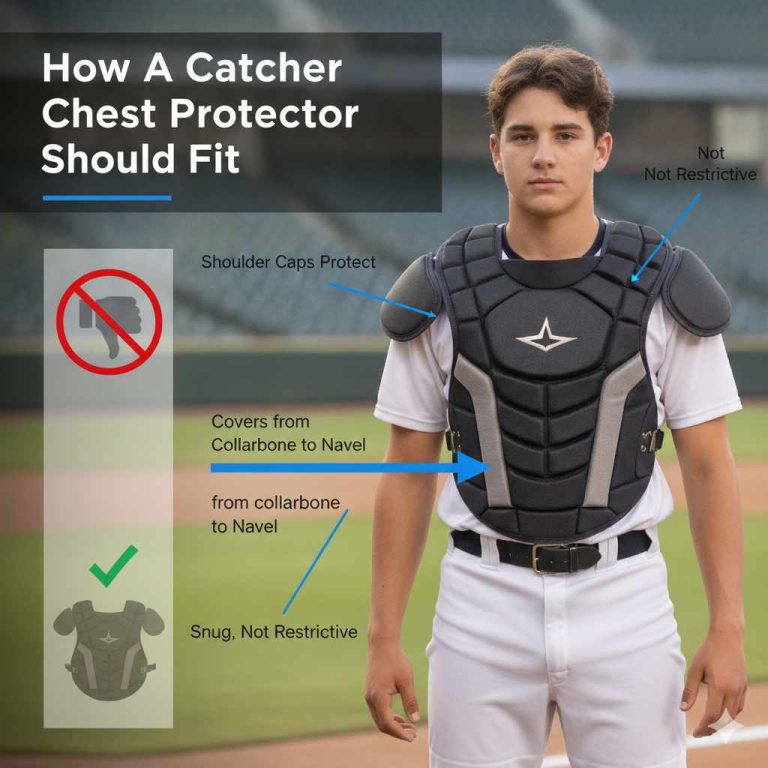
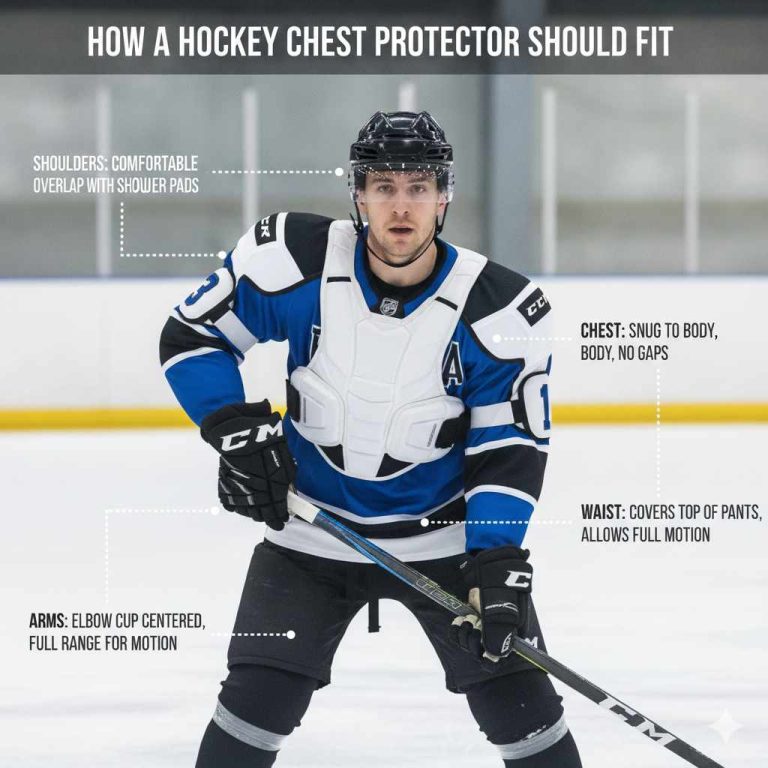
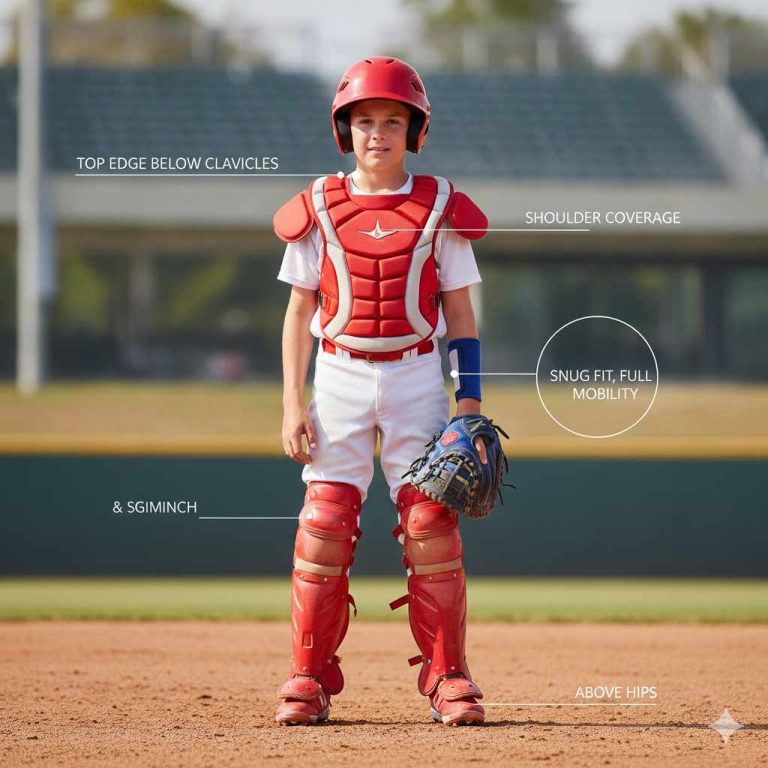
The Belly Tuck: The bottom edge of the protector should sit comfortably just below your sternum, extending down to your waistline. If it rides up too high when you raise your arms, it’s too small or the adjustment is wrong. If it hangs too low and bunches when you bend over, it is too big.
Shoulder Alignment: Ensure the shoulder caps sit squarely over your natural shoulders. They should not droop down your arms or create pressure points near your neck.
Step 3: Checking Arm Placement (The Most Important Test)
This is where the CCM vs Vaughn chest protector difference often becomes apparent in how the arms move.
- Elbow Lock: With the elbow pads fastened, bring your arms up into your glove-catching position (bent 90 degrees at the elbow, pointing forward). The elbow pad MUST cover the point of your elbow joint completely. If the joint is exposed, the protector is a serious safety risk.
- Bicep Coverage: Move your arms out wide, as if reaching for a top corner. The bicep padding should maintain contact with your arm; it should not flap away freely.
- Wrist Area: When you extend your arms fully toward the ice (like catching a low shot), the cuffs of the arm protection should align reasonably close to where your glove cuff begins, minimizing the gap.
Step 4: The Butterfly Test
Drop into your butterfly stance on a stable surface (or even on the floor if allowed).
Do the shoulder caps pinch your neck when you flatten out?
Does the stomach section ride up too high, exposing your belly/shorts area?
Can you easily move your arms across your body to cover the post?
If the gear restricts your natural movement, choose the one that feels less like a constraint. For many, this means the lighter, more segmented feel of CCM; for others, it means the solid anchoring of Vaughn.
Who Should Lean Towards CCM?
If the following descriptions fit you well, you might find CCM is the better starting point in the CCM vs Vaughn chest protector matchup:
You play a very active, athletic style (e.g., playing the puck often, moving outside the crease frequently).
You feel restricted or bulky in traditional gear.
You are a slimmer or smaller goalie who needs a more tailored fit that won’t swallow you whole.
You prioritize being lightweight to reduce fatigue during long tournaments or heavy practice schedules.
CCM gear is engineered to feel less intrusive, allowing you to rely more on quick reflexes and agility.
Who Should Lean Towards Vaughn?
If these points sound more like your game, Vaughn might be your perfect match:
You prefer a “set it and forget it” feel with durable, reliable padding.
You take a lot of direct shots and appreciate thicker, denser foam coverage across the chest.
You play a more traditional, reactionary style, focusing on solid positioning.
You feel more confident when you look and feel physically larger in the net.
Vaughn gear is built like a fortress, offering confidence through sheer protective bulk.
Beyond the Brands: Essential Chest Protector Maintenance Tips
No matter which brand you choose, proper care extends the life of your equipment and keeps it safe to wear.
Cleaning Your Gear Regularly
Sweat is the enemy of protective foam. It breaks down the material and breeds odor-causing bacteria.
1. Air it out immediately: After every session, unbuckle everything and hang it up in a well-ventilated area. Never leave it balled up in your bag.
2. Wipe down: Use a mild cleaner (like a specialized sports gear wash or diluted vinegar solution) on all interior surfaces weekly.
3. Deep Clean (Seldom): For a full wash, carefully submerge the protector in a bathtub with cool water and mild soap. Rinse thoroughly until no soap residue remains. Crucially, let it air dry completely—never use a machine dryer.
Checking Straps and Velcro
Wear and tear show up first on the connection points.
Check all plastic buckles for cracks.
Inspect elastic straps for fraying or stretching out. If the elastic is stretched, the protector will shift during play, compromising safety.
By taking care of your investment, you ensure that whether you choose the flexibility of CCM or the robust coverage of Vaughn, your gear will be ready for the next game. For more general equipment maintenance advice, resources like the USA Hockey Goaltending Tips often provide great supplemental advice on keeping gear sound.

CCM vs Vaughn Chest Protector: Summary Table of Key Differences
This quick look summarizes the main takeaways from our comparison:
| Feature | CCM | Vaughn |
|---|---|---|
| Primary Focus | Mobility and lightweight performance | Maximum coverage and durability |
| Feel in Net | Streamlined, less restrictive | Solid, commanding, and protective |
| Arm/Elbow Fit | Highly adjustable, often segmented | Robust, consistent coverage |
| Ideal Goalie Style | Agile, quick, reactive | Position-oriented, strong blocker |
Frequently Asked Questions (FAQ) for Beginner Goalies
Q1: Is it okay if my new chest protector feels a little tight at first?
A: Yes, slightly tight is usually better than too loose, especially with quality gear. Modern foams need a few hours of skating or practice time to mold to your body shape—this is called the “break-in” period. If it causes sharp pain or numbness, it is too small, but general tightness should ease up.
Q2: How often should I replace my chest protector?
A: For a dedicated player, a chest protector usually lasts 3 to 5 years. You know it is time to replace it when the foam feels brittle, the outer stitching starts ripping badly, or the impact absorption seems significantly reduced (i.e., you start feeling more bruises than before).
Q3: Does the brand of my chest protector need to match my leg pads?
A: Absolutely not! While many goalies like matching sets for aesthetic reasons, protection performance is completely independent of color coordination. Choose the chest protector that fits your body and style best, regardless of whether you wear CCM pads or Vaughn pads.
Q4: What does “segmentation” mean in chest protectors?
A: Segmentation refers to how the foam is cut into smaller, overlapping pieces rather than being one solid slab. This allows the protector to bend and flex with your movements, increasing flexibility. CCM uses high levels of segmentation.
Q5: Do I need a separate neck guard even if my chest protector has a high collar?
A: Yes, always. The collar on a chest protector is designed to keep the main unit in place and prevent pucks from sliding under the unit. A dedicated neck guard (or throat protector) is essential to protect your throat and neck area from direct shots that miss the collar entirely.
Q6: Which brand is generally better for blocking shots high in the corners?
A: This depends on how you cover the area. Vaughn’s generally broader shoulder caps might offer a larger surface area when squared up. However, CCM’s better articulation might allow you to reach that high corner faster. Focus on getting the shoulder caps perfectly aligned with your stance.
Conclusion: Making Your Confident Choice
The showdown between CCM vs Vaughn chest protector** rarely has one single “winner.” Both companies produce top-tier equipment that will keep you safe and allow you to play your best game.
Your choice should be deeply personal. Think about your strengths as a goalie. Are you a fast, acrobatic player who needs gear that moves with every twitch? CCM might offer that streamlined advantage. Are you a strong positional goalie who wants the confidence of a thick, enveloping shield? Vaughn’s robust construction might be your ideal match.
The most important advice I can give you, as a fellow goalie guide, is this: Go to a reputable hockey shop. Try on several models from both brands. Adjust every strap exactly how you would wear it during a game. Move, reach, drop, and stretch. The protector that feels like it disappears on your body while still offering excellent coverage is the champion for your* net. Trust your comfort, trust your fit, and get ready to make some great saves!