Do Chest Protectors Work? What Archers Should Know
Yes, chest protectors absolutely work. They are essential gear designed to shield vital areas from bowstring slap, accidental arrow contact, and impact, significantly increasing safety and allowing new archers to build confidence without fear of painful mishaps.
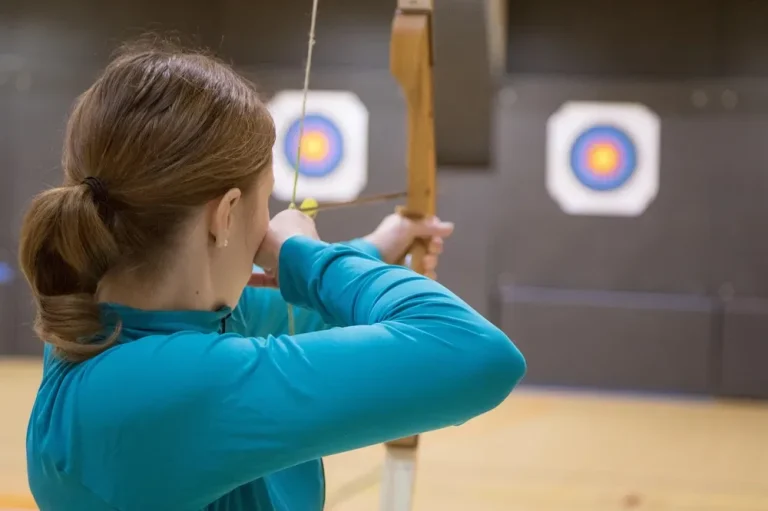
Welcome to the archery range! Are you ever nervous about that sharp “thwack” when the string hits your arm? You are certainly not alone. Many beginners worry about painful string slap or the safety of handling arrows near their body. It’s frustrating when you can’t focus on your shot because you are anticipating a sting. The good news is that we have simple, proven solutions! A chest protector is one of the easiest pieces of gear to add for instant peace of mind. I’m Salman, and I’ll walk you through exactly why these protectors are so effective, how they fit into your growing archery kit, and how they help you focus on hitting that gold. Let’s look at how essential this piece of safety gear really is.
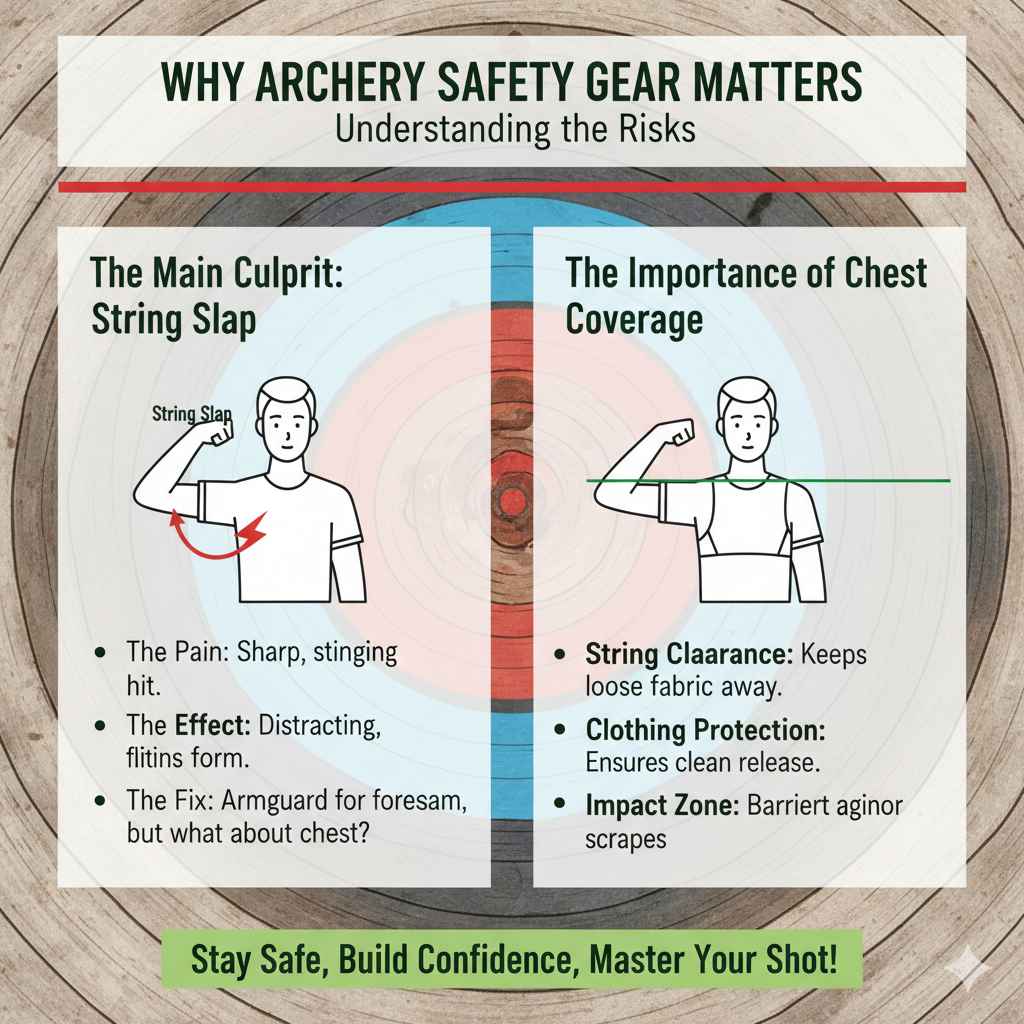
Why Archery Safety Gear Matters: Understanding the Risks
As a beginner, your primary goal should be consistency and safety. You want to enjoy the process, not worry about getting hurt. While archery is generally safe, a few common risks often surprise new shooters.
The Main Culprit: String Slap
String slap is the most common minor injury for new archers. It happens when your bowstring, traveling at high speed after release, catches loose clothing or the sleeve of your shirt and snaps against your forearm or chest area.
- The Pain: It feels like a sharp, stinging rubber band hitting your skin.
- The Effect: It’s distracting, painful, and can cause you to flinch on your next shot, ruining your form.
- The Fix: A good armguard solves forearm slap, but what about the chest area?
The Importance of Chest Coverage
While less common than arm slap, protecting your chest is crucial for several reasons, especially if you shoot recurve or traditional bows.
- String Clearance: When you draw back, the string needs a clear path to travel forward. Loose shirts or jackets can get caught.
- Clothing Protection: A chest guard keeps loose fabric tucked away, ensuring a clean release every time.
- Impact Zone: If you are shooting closely with a partner, or even practicing close-range target shooting, a protector offers a barrier against minor scrapes or accidental contact with the bow handle or arrow shaft.
Do Chest Protectors Work? The Science of Protection
The simple answer is yes, they work very well! But how they work relates directly to the materials used and their placement on your body. Chest protectors are not about stopping a direct arrow hit—they are designed for the bowstring and minor debris.
What a Chest Protector Actually Protects Against
A chest protector, sometimes called a chest guard or chest harness, is designed specifically for the string path. Think of it as a lightweight shield placed exactly where the string moves across your body from brace height to full draw.
Primary Functions:
- Preventing Fabric Snag: This is the main job. It smooths out the area over your sternum and shoulder, allowing the string to pass cleanly without catching on seams or loose material.
- Minimizing Vibration Transfer: While minor, the material absorbs some of the vibration transferred by the string contact, leading to a slightly quieter and less jarring release feel.
- Keeping Loose Items Tucked: It ensures drawstrings, lanyards, or dangling jewelry stay clear of the shot path.
Material Matters: How They Absorb Energy
Most quality chest protectors are made from lightweight, durable synthetic materials like nylon, mesh, or thin neoprene.
They work using simple physics: absorption and deflection.
When the string lightly brushes against the protector instead of bare skin or fabric, the material stretches slightly and disperses that small amount of kinetic energy across a wider surface area, turning a sharp “slap” into a dull “brush.”
For a deeper understanding of the physics involved in archery release and equipment, resources from university sports science departments often detail the impact dynamics of string movement. For instance, research into shooting mechanics emphasizes the need for a consistent anchor point and clear release path, both aided by gear like this.
Types of Chest Protectors for Beginners
Choosing the right protector depends on your discipline (recurve vs. compound) and how much coverage you prefer. For beginners, simplicity and comfort are key.
1. The Simple Elastic Strap Guard (Best for Many Beginners)
These are the most common and beginner-friendly options. They usually consist of a wide, elastic strap with a small central protective panel.
- How it Works: You slip it over your head, and the strap sits across your chest, with the protective pad centered over your sternum.
- Pros: Very affordable, easy to put on and take off, highly adjustable for a snug fit.
- Cons: Offers less overall coverage than a full vest style.
2. The Full Mesh Vest Guard (Good for Heavy Clothing Days)
These look more like a very light vest, often made almost entirely of breathable mesh, with a reinforced strip running down the center chest.
- How it Works: Straps over one shoulder and secures on the side or back, offering full torso coverage against stray strings or clothing interference.
- Pros: Excellent airflow, great if you wear bulky layers, offers protection even when moving or turning slightly.
- Cons: Can sometimes shift position more easily than the simple strap style.
3. Traditional Leather or Cloth Patches (Less Common Now)
These are older designs, often made of leather or heavy canvas, sometimes secured with buckles. While durable, they are usually bulkier.
For the modern beginner using a recurve bow, the elastic strap guard is usually the perfect starting point because it focuses protection exactly where the string crosses.
Step-by-Step Guide: Choosing and Wearing Your Chest Protector
Getting the fit right is crucial. If it’s too loose, it moves; if it’s too tight, it restricts your draw. Here is a simple guide to getting set up correctly.
Step 1: Determine Your Needs
Ask yourself: What am I shooting?
- Recurve/Traditional: You need protection primarily from the string passing over your chest after release. A simple elastic strap guard is usually ideal.
- Compound: While string slap on the arm is more common, a chest guard still helps keep clothing clear of cables and cams, especially if you have a high wrist bow grip.
Step 2: Sizing for Comfort and Coverage
Chest protectors usually come in Small, Medium, Large, or are one-size-fits-all with adjustable straps.
- Measure (If Necessary): If sizing is provided, measure around your chest, just below the pectoral muscles.
- Check the Center Pad: Ensure the reinforced center section covers your sternum area adequately. It should be centered, not sitting off to one side.
- Check the Length: If it’s a strap model, make sure the bottom edge sits comfortably below where your draw arm ends, and the top strap doesn’t interfere with your anchor point near your jaw.
Step 3: Putting It On Correctly
Putting on a chest protector is simpler than putting on an armguard sometimes!
- For Strap Guards: Slip it over your head like a necklace. Adjust the side tensioners (if any) so that the central pad sits firmly against your shirt over your sternum without feeling restrictive when you take a deep breath.
- For Vest Guards: Put one arm through first, then the other, and clip the side buckle. You want it snug enough that it won’t slide down when you lean forward to shoot, but loose enough that you can breathe deeply without feeling compressed.
Step 4: Test the Draw
Before firing an arrow, draw your bow fully while looking in a mirror or having a friend watch you.
Does the string hit the protector cleanly? Does the protector shift when you hold full draw? Make small adjustments until the path is perfectly clear and the protector stays in place.
Chest Protector vs. Armguard: Which One First?
This is a very common question for new archers building their essential gear list. My advice is almost always to buy both, but if you must prioritize, consider this breakdown:
| Gear Item | Primary Protection Area | Severity of Common Issue | Recommended Priority |
| :— | :— | :— | :— |
| Armguard | Forearm/Elbow | High (Frequent, painful slap) | #1 Priority |
| Chest Protector | Sternum/Clothing Path | Medium (Stops clothing snag/minor rub) | #2 Priority |
| Finger Tab/Release Aid | Finger/Hand | Critical (Affects accuracy and safety) | Varies by bow type |
If you are shooting a traditional or recurve bow and notice your string occasionally brushing your shirt near your chest, get the chest guard. If you are getting painful hits on your inner forearm, get the armguard first.
Durability and Maintenance of Your Protector
Good gear should last a long time, especially protective equipment. Chest protectors are low-maintenance, which is another reason they are fantastic for beginners.
Caring for Your Gear
Since chest protectors are usually made of synthetic materials, they are tough, but a little care goes a long way.
- Washing: Most modern protectors can be hand-washed with mild soap and cool water. Check the tag if there is one. Do not put them in a hot dryer, as this can break down the elastic components.
- Drying: Always air dry. Lay it flat or hang it up away from direct, harsh sunlight.
- Inspection: Before every session, quickly check the material. Are there any tears in the mesh? Is the elastic stretched out beyond recovery? If the material is damaged, it might not disperse energy effectively, and it’s time for a replacement.
A well-maintained chest protector can easily last you several years of regular weekend shooting, making it an excellent, long-term investment in your comfort and safety.
The Confidence Boost: Archery Mental Game
Sometimes the best function of protective gear isn’t physical—it’s mental. When you know you are covered, you relax.
Removing the Fear Factor
Beginners often hold back tension in their bow arm or hesitate during the release because they anticipate pain. This hesitation directly impacts accuracy.
When you are wearing a chest protector (and an armguard), you eliminate two major physical worries:
- “Will my string slap my arm?”
- “Will my shirt catch the string and pull my shot offline?”
With those worries gone, your focus shifts entirely to your anchor point, sight picture, and follow-through. This removal of subconscious tension is often the secret ingredient that helps beginners group their arrows better very quickly. It allows you to practice bad habits less because you aren’t flinching away from the release.
Advanced Considerations: When to Upgrade Your Protection
As you progress beyond the beginner stage, your needs might change, especially if you move into 3D archery or competitive target shooting where distances are greater and draw weights might increase.
1. Increased Draw Weight
If you move from a 20-pound beginner bow to a 40-pound recurve, the force generated by the string increases. While the chest protector is still only stopping fabric interference, you might prefer a slightly more robust material that feels more substantial against your body, even if the risk of impact remains low.
2. Shooting Barebow or Traditional
Archers shooting without stabilizers or sights (barebow/traditional) often stand slightly differently and may rely more heavily on body positioning relative to the string. In these styles, having zero interference from clothing is paramount. Many serious barebow shooters opt for high-quality mesh vests for total freedom of movement while maintaining a guaranteed clear path.
3. Environmental Factors
If you often shoot in cold weather while wearing several layers (sweaters, thick jackets), a chest protector becomes even more necessary because those bulky layers are much more likely to snag the string than a thin t-shirt. The protector compresses that fabric slightly and creates a smooth surface.
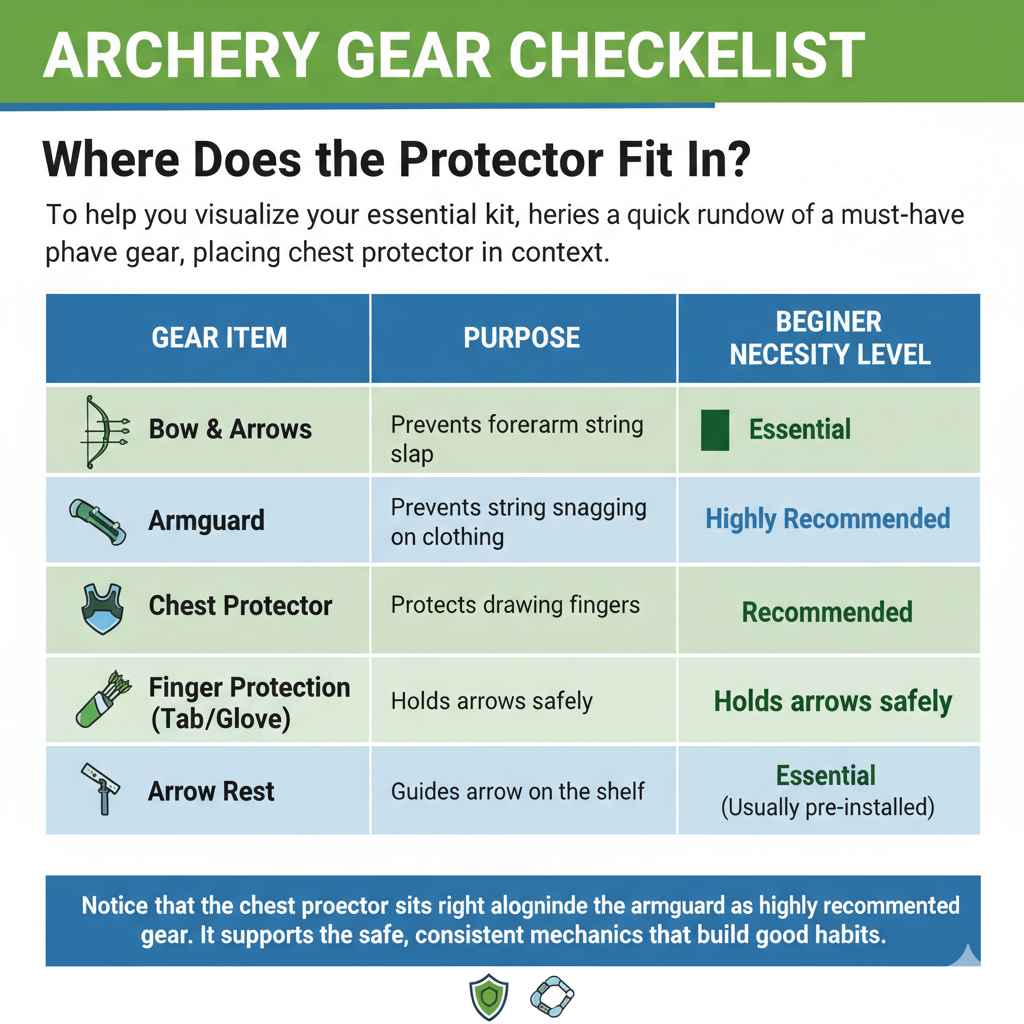
Archery Gear Checklist: Where Does the Protector Fit In?
To help you visualize your essential kit, here is a quick rundown of must-have gear, placing the chest protector in context.
| Gear Item | Purpose | Beginner Necessity Level |
| :— | :— | :— |
| Bow & Arrows | Shooting the target | Essential |
| Armguard | Prevents forearm string slap | Highly Recommended |
| Chest Protector | Prevents string snagging on clothing | Recommended |
| Finger Protection (Tab/Glove) | Protects drawing fingers | Essential |
| Quiver | Holds arrows safely | Highly Recommended |
| Arrow Rest | Guides arrow on the shelf | Essential (Usually pre-installed) |
Notice that the chest protector sits right alongside the armguard as highly recommended gear. It supports the safe, consistent mechanics that build good habits.
Frequently Asked Questions (FAQ) for Beginner Archers
Getting clear answers to common questions helps build shooting confidence faster.
Q1: Do I need a chest protector if I shoot a compound bow?
While string slap on the armguard is the primary concern with compounds, a chest protector is still very helpful. Compound bows have cables and cam systems that can snag loose clothing just as easily as a recurve string, especially during a fast release. It ensures a clean, predictable shot path.
Q2: Can I use a thick shirt instead of a chest protector?
A very thick, tight-fitting, smooth fabric shirt might work sometimes, but it’s not reliable. Layers bunch up unevenly, and seams can still catch the string. A dedicated chest protector offers consistent, reinforced protection across the critical path area, giving you predictable results shot after shot.
Q3: Does the chest protector affect my accuracy?
If fitted correctly, absolutely not. In fact, it should improve accuracy by removing the mental distraction and physical disruption caused by string contact. An ill-fitting or shifting protector, however, could potentially interfere with your form, so make sure it stays snug.
Q4: Should I wear the chest protector over or under my shirt?
Almost always, you wear it over a base layer shirt but under any outer, loose layers (like a jacket). For most practice sessions, it goes directly over your shooting shirt. This ensures maximum fabric control right where the string travels.
Q5: What is the difference between a chest guard and a chest harness?
The terms are often used interchangeably! Generally, a “chest guard” refers to the simpler elastic strap model focused only on the sternum area. A “chest harness” might imply a more extensive vest-like piece that covers more of the shoulder and side, often with more complex adjustability.
Q6: How tight should my chest protector be?
It should be snug enough that it does not slide or rotate when you draw your bow, but loose enough that it doesn’t restrict your breathing or prevent you from drawing the bow completely. You should be able to put two fingers comfortably between the strap and your skin.
Q7: Is there a specific type for right-handed vs. left-handed shooters?
For the standard elastic strap chest protector, there is no specific handedness! Since the string crosses the centerline of the chest regardless of which shoulder you are drawing from, the same protector works for everyone. Harness styles might have adjustments that favor one side slightly, but the core protection remains central.
Conclusion: Shooting Safely and Confidently
Figuring out what gear you need when starting archery can feel like a maze, but when it comes to safety, keep it simple. Do chest protectors work? Yes, they are highly effective tools for ensuring a clean, safe release by managing clothing and minimizing minor impacts along the string path.
As your coach, my main goal is to see you enjoy every moment on the range. When you wear your armguard and your chest protector, you take away the fear of the sting and the frustration of a fouled shot due to a loose sleeve. This freedom allows you to concentrate purely on the beautiful mechanics of your draw, hold, and release. Invest a little time and a little money into these simple pieces of gear now, and you will build stronger, safer shooting habits right from the start. Keep practicing, stay safe, and enjoy the satisfying thwack of an arrow hitting the center!