Are Carbon Arrows Safe: Essential Guide
Yes, carbon arrows are generally very safe when handled properly and inspected regularly. Their durability and consistent performance make them a reliable choice for archers of all levels. Understanding how to use, maintain, and store them is key to ensuring their safety and your enjoyment of archery. If you’re cutting them to length yourself, see our guide on how to cut carbon arrows safely (respirator recommendations included).

SPG
SPG Archery Arrows for Compound Bow -…
- ARROW PARAMETERS: 30 inch Carbon fiber arrows with 100 grain aluminium alloy point, the length is suitable for almost all youth an…
- DURABLE & WELL MADE: These hunting arrows for compound bows are with 30 inch carbon shaft, 2" TPU Parabolic Shape Fletching Vanes,…
- ADJUSTABLE NOCKS AND TIPS: Archery arrows with inserted nock and metal threaded arrowheads for easy replacement, the nock can be p…
As an Amazon Associate I earn from qualifying purchases.
For a related arrow setup, How to Crest Carbon Arrows: Essential Tips gives readers another detail to check before shooting.
For a related arrow setup, How To Cut Fiberglass Arrows: The Essential, Safe gives readers another detail to check before shooting.
Welcome, fellow archery enthusiasts! If you’re venturing into the exciting world of archery, you’ve likely heard about carbon arrows. They’re popular, powerful, and often at the center of questions about safety. It’s completely natural to wonder about the tools you’re using, especially when precision and safety go hand-in-hand. Many beginners worry if carbon arrows might break unexpectedly or cause issues. But don’t let that stop you from enjoying this fantastic sport! This guide is here to clear up any confusion, offering straightforward answers and practical tips. We’ll walk through everything you need to know to use carbon arrows with confidence and safety, making your archery journey smooth and enjoyable.
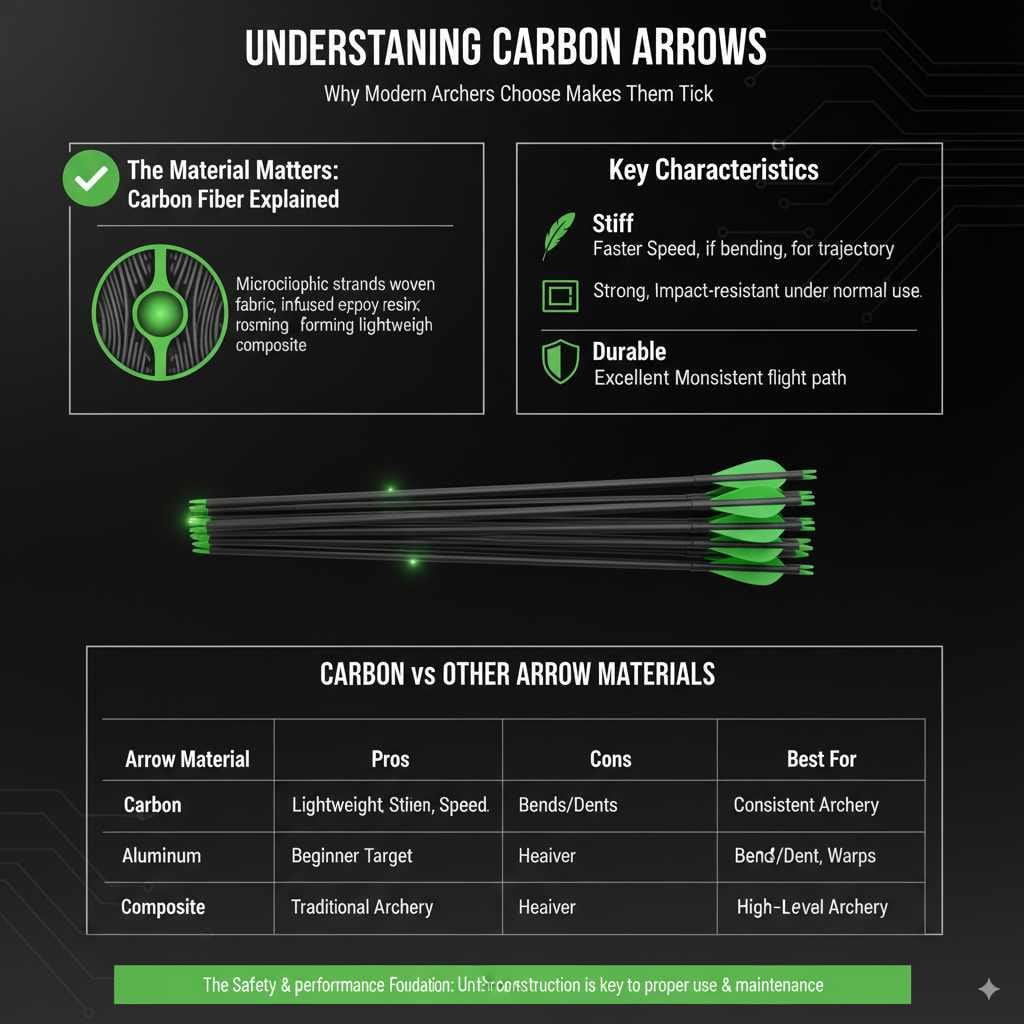
Understanding Carbon Arrows: What Makes Them Tick?
Carbon arrows have become a staple in modern archery, and for good reason. Unlike their predecessors, often made of wood or aluminum, carbon arrows offer a unique blend of characteristics that make them appealing to many archers. Their rise in popularity isn’t just a trend; it’s a reflection of their performance and the materials science behind them. Let’s dive into what makes these arrows special and why understanding their construction is the first step to ensuring their safety.
The Material Matters: Carbon Fiber Explained
At its core, a carbon arrow is made from carbon fiber composites. This material is created by weaving incredibly fine strands of carbon into a fabric, which is then impregnated with epoxy resin and molded into the shape of an arrow shaft. This process results in a shaft that is incredibly strong, lightweight, and stiff. Think of it like a very strong, hollow tube built from countless microscopic threads, all working together. This inherent strength is a primary reason why carbon arrows are considered safe and durable for archery.
Key Characteristics of Carbon Arrows
What are the main advantages you get with carbon arrows? They offer a great balance of features that archers appreciate:
- Lightweight: Carbon arrows are generally lighter than aluminum or wood arrows of similar stiffness. This can translate to faster arrow speed and a flatter trajectory, making target acquisition easier.
- Stiff: They are very stiff, meaning they resist bending under the force of the bowstring. This stiffness is crucial for accurate arrow flight. A flexible arrow can wobble, affecting its accuracy.
- Durable: Carbon fiber is remarkably strong and resistant to bending and breaking under normal shooting conditions.
- Straightness: Carbon arrows are manufactured to very tight straightness tolerances, ensuring consistent flight.
- Penetration: Their lightweight and stiffness can offer excellent penetration on targets.
Carbon vs. Other Arrow Materials
To truly appreciate the safety and performance of carbon arrows, it’s helpful to see how they stack up against other common arrow materials:
| Arrow Material | Pros | Cons | Best For |
|---|---|---|---|
| Carbon | Lightweight, stiff, durable, excellent straightness, good speed. | Can be brittle if damaged, cost can be higher than aluminum. | Most modern archery disciplines (hunting, target shooting, 3D). |
| Aluminum | Consistent spine (stiffness), relatively inexpensive, good for beginners in some groups. | Can bend or dent easily, heavier than carbon, less durable over time with dents. | Beginner target shooting, some traditional archery. |
| Wood | Classic aesthetic, affordable, forgiving at lower draw weights. | Inconsistent, prone to warping, less durable, significantly heavier. | Traditional archery, historical reenactments. |
| Composite (Carbon/Aluminum or others) | Combines benefits of materials (e.g., rigidity of carbon with consistent spine of aluminum). | Can be more expensive, potential for delamination. | High-level target archery where precise consistency is paramount. |
Are Carbon Arrows Safe? Addressing the Core Concerns
The primary concern when asking “are carbon arrows safe?” usually revolves around the potential for breakage and injury. It’s a valid question, and the answer is encouraging when you understand the nuances. Carbon arrows, when manufactured correctly and used within their intended parameters, are exceptionally safe. The key is knowing what to look for and how to maintain them properly.
The Myth of Spontaneous Breakage
One of the common fears is that carbon arrows might snap mid-shot, leading to dangerous fragments. While any arrow can break, carbon arrows are designed to withstand significant stress. Unlike materials like aluminum that tend to bend or dent, carbon fiber typically fails in a more noticeable way if it is compromised. The composite structure means it’s less likely to shatter explosively unless subjected to extreme, improper force or pre-existing damage. Responsible archery practices, including regular inspection, are your best defense against any arrow-related mishaps.
Understanding Arrow Spine and Matching It to Your Bow
An arrow’s “spine” refers to its stiffness. This is perhaps the most critical factor in ensuring both arrow performance and safety. An arrow with the correct spine will flex just the right amount when it leaves the bow. If an arrow is too weak (under-spined) for your bow’s draw weight and length, it can flex excessively and potentially break upon release. Conversely, an over-spined arrow is too stiff and won’t fly as accurately. Always ensure your carbon arrows are matched to your bow’s specifications. Reputable archery shops and online resources can help you find the right spine chart.
For instance, major archery manufacturers like Easton Archery provide detailed guides on selecting the correct arrow spine based on bow weight, draw length, and arrow length. This is a vital piece of information for any archer.
When Can Carbon Arrows Become Unsafe?
Even the best materials have limits. Carbon arrows can become unsafe if:
- Damaged: Cracks, deep scratches, or significant dents from impacts.
- Compromised Fletching/Nocks: Damaged or loose components can affect flight and make the arrow unsafe.
- Incorrect for the Bow: Using arrows with the wrong spine for your bow’s draw weight and length.
- Bent Shafts: While rare with carbon, a significant impact could potentially cause subtle bends that are hard to see but affect flight and integrity.
Essential Safety Practices for Carbon Arrows
Using carbon arrows safely is straightforward when you adopt a few key habits. These practices ensure your arrows perform as they should and protect you and others on the range.
1. Always Inspect Your Arrows Before Shooting
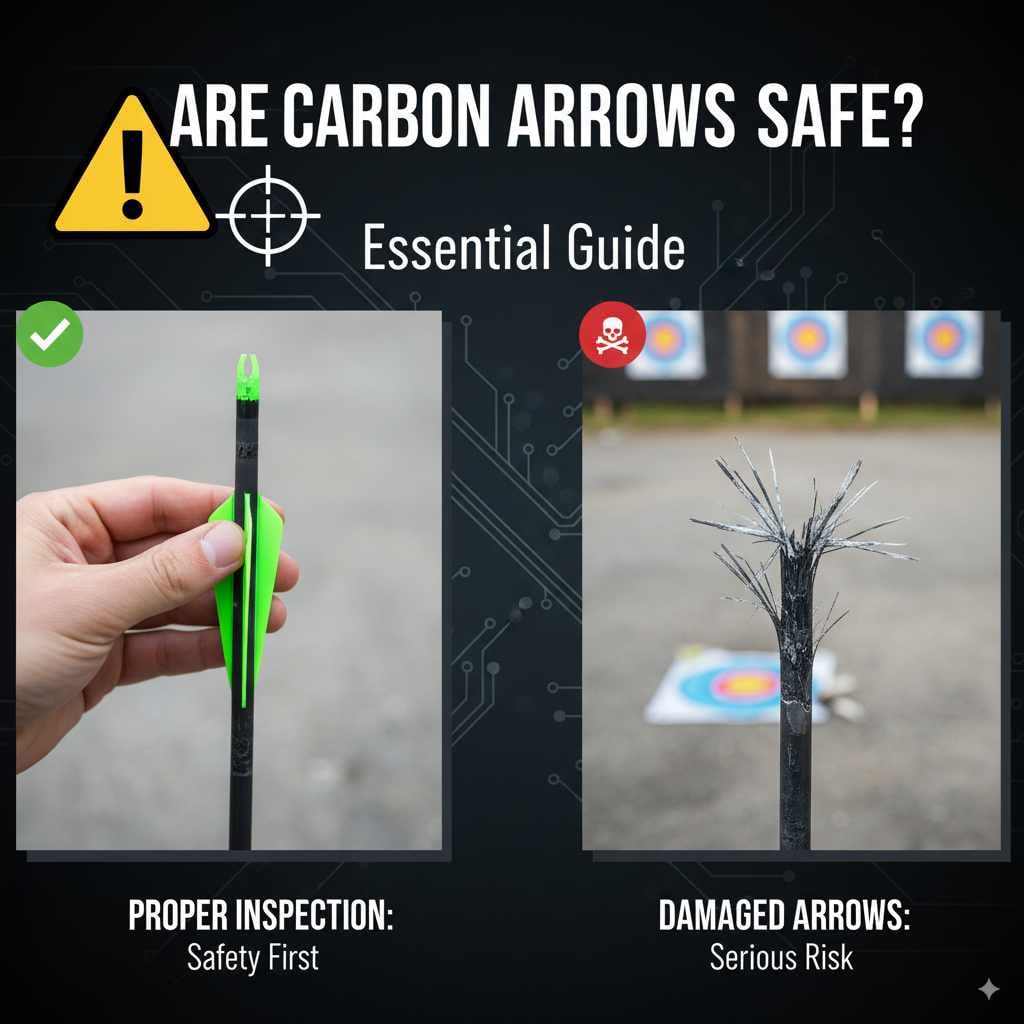
This is the golden rule. Before you nock an arrow and draw your bow, give each arrow a quick but thorough inspection. This includes:
- Visual Check: Look for any visible damage on the shaft. Check for cracks, splintering, deep gouges, or dents. Pay close attention to areas near the nock and the front of the arrow.
- Feel Test: Gently run your fingers along the shaft. You can sometimes feel small cracks or imperfections that might be hard to see.
- Flex Test (Gentle): Some archers perform a gentle flex test. Hold the arrow at both ends and apply a slight, controlled inward pressure. You should feel resistance, and the arrow should return to its straight form without any crunching sounds or visible damage. Be very careful not to over-flex, as this can induce damage.
- Nock and Fletching Check: Ensure the nock is securely attached, spins freely on the string, and is not chipped or cracked. Check that all fletchings (vanes) are intact and firmly glued to the shaft.
If any arrow shows signs of damage, do not shoot it. Set it aside for repair or disposal.
2. Maintain Your Arrows Properly
Proper care extends the life and safety of your arrows:
Storage:
- Store arrows in an arrow case or quiver.
- Keep them away from extreme heat and direct sunlight, which can degrade the epoxy in the carbon composite over time.
- Avoid storing them where they can be bent or crushed.
Transporting:
- Use a durable arrow tube or case when transporting them to and from the range or hunting grounds. This protects them from impacts and the elements.
3. Use Arrows Matched to Your Bow
As mentioned earlier, this is crucial. Arrows must be correctly spined for your bow’s draw weight and your personal draw length. Using an under-spined arrow is a significant safety risk. If you’re unsure, consult your local archery pro shop. They have the expertise and tools to help you select the right arrows.
A good general guideline for arrow spine selection often involves:
- Bow’s Draw Weight: The total amount of force your bow exerts at full draw (e.g., 50 lbs).
- Your Draw Length: The length you draw the bowstring back to (measured in inches). Longer draw lengths typically require a weaker (higher number) spine, or a shorter arrow.
- Arrow Length: The finished length of the arrow, usually measured from the bottom of the nock groove to the end of the shaft.
- Point Weight: The weight of the field point or broadhead (measured in grains). Heavier points generally make an arrow act weaker.
You can find a general understanding of arrow spine relationships from resources like Wikipedia’s Arrow Spine section, though specialized charts from manufacturers are more precise.
4. Proper Shooting Technique and Range Etiquette
Safety on any archery range involves more than just your equipment. It’s about responsible behavior:
- Follow Range Commands: Always listen to and obey the instructions of range masters or experienced shooters.
- Unload When Not Shooting: If you’re not actively shooting, un-nock your arrow and rest it on your bow or place it down safely.
- Never Dry Fire: Never draw and release a bow without an arrow nocked. This can cause significant damage to the bow and can be dangerous.
- Be Aware of Your Surroundings: Ensure no one is in the path of your arrow or behind the target.
- Retrieve Arrows Safely: Wait until shooting is finished and the range is clear before retrieving arrows.
5. What to Do with Damaged Arrows?
If you find a damaged carbon arrow, it’s essential to dispose of it properly. Don’t try to repair cracked or significantly damaged shafts, as this can compromise their integrity. A common way to render a damaged arrow unusable and safe is to break it completely into smaller pieces. Some archers will also carefully cut them in half. This ensures they can’t be accidentally used again.
Common Issues and How to Handle Them
Even with the best care, you might encounter minor issues. Knowing how to address them keeps your archery experience positive and safe.
Fletching Damage
Fletchings can get bent or torn from impacts with other arrows, targets, or equipment. A bent fletching can cause an arrow to fly erratically. You can often fix this with a fletching jig and new vanes, or by gently heating the vane with a hairdryer to straighten it. If a fletching is torn or missing, it’s best to replace it or the entire set.
Loose Nocks
Arrow nocks can loosen over time or after impacts. A loose nock can cause the arrow to fall off the string or mis-align, leading to poor flight and potentially a misfire. Most nocks are designed to be replaced. Simply remove the old one and press or glue in a new one. Ensure it fits snugly and rotates smoothly.
Dealing with Bent Components (Bushings, Inserts)
Sometimes, the insert (where the point screws in) or the bushing (where the nock attaches) can become slightly bent. This is often due to hard impacts. If you notice this, it’s usually best to replace the damaged component rather than risk compromising the arrow shaft’s integrity. Many online resources and archery shops can guide you through replacing these small parts.
When to Consider Replacing Carbon Arrows
While carbon arrows are durable, they aren’t invincible. Knowing when to retire an arrow is key to safety. Here are signs an arrow has reached the end of its useful life:
- Visible Cracks or Splinters: Any crack or splintering on the shaft, no matter how small.
- Deep Gouges: Significant indentations that penetrate the outer layers of carbon.
- Compromised Spine: If an arrow feels noticeably less stiff than others of the same model, or if it makes a “crunching” sound during a gentle flex test.
- Bent Shaft: If the arrow itself is visibly bent, even slightly.
- Repeated Fletching/Nock Issues: If you find yourself constantly having to repair or replace components on the same arrow, it might indicate underlying damage to the shaft.
Always err on the side of caution. It’s far better to replace an arrow prematurely than to risk injury from a damaged one.
Choosing the Right Carbon Arrows for You
Selecting your first set of carbon arrows can seem daunting, but it doesn’t have to be. Focus on these key factors:
1. Spine is King
As we’ve stressed, matching the arrow spine to your bow is paramount. Don’t guess – get it right. Your local archery shop is your best friend here.
2. Straightness and Weight Tolerance
Look for arrows with tight straightness tolerances (e.g., ±0.001 inches or ±0.003 inches). Most reputable brands offer arrows in different straightness grades. For beginners, ±0.003 inches is usually perfectly adequate. Weight tolerance also matters for consistency; tighter tolerances mean arrows will weigh very close to each other.
3. Components Matter
Consider the quality of the included nocks and inserts. Some arrows come with pre-installed components, while others require assembly. Ensure the components are compatible with your bowstring and release aid.
4. Brand Reputation
Stick with well-known and respected archery brands. Companies like Easton, Gold Tip, Victory Archery, and Beman have a reputation for quality and consistency, which translates directly to safety and performance.
5. Price vs. Value
While budget is a factor, try not to buy the absolute cheapest option. Investing a little more in a quality arrow from a reputable brand will generally yield better durability, consistency, and safety. For beginners, a good mid-range arrow is often the best value.
FAQ Section
Q1: Can carbon arrows break easily?
No, carbon arrows are very strong and durable when used correctly. Like any equipment, they can break if damaged or used improperly, but spontaneous breakage is rare with properly inspected shafts.
Q2: How do I know if my carbon arrow is damaged?
Look for visible cracks, splinters, or deep gouges on the shaft. You can also gently flex the arrow to listen for any “crunching” sounds. Always perform a visual and tactile inspection before shooting.
Q3: What happens if I shoot a damaged carbon arrow?
Shooting a damaged carbon arrow can be dangerous. The shaft can break upon release, potentially sending fragments in unpredictable directions, which could cause injury to the shooter or bystanders.
Q4: Is it safe to carry carbon arrows in a quiver?
Yes, as long as your arrows are undamaged and your quiver is designed to hold them safely. Avoid quivers that allow arrows to bounce around excessively, increasing the risk of damage. Always check arrows after transport.
Q5: How long do carbon arrows typically last?
The lifespan of a carbon arrow varies greatly depending on how much you shoot, how well you care for them, and the severity of any accidental damage. Well-maintained, undamaged arrows can last for many seasons of recreational use. However, it’s crucial to inspect them regularly and retire any that show signs of damage.
Q6: Can I repair a cracked carbon arrow shaft?
It is generally not recommended to repair cracked carbon arrow shafts. A crack compromises the structural integrity of the arrow, and even an attempted repair can lead to unpredictable failure. It’s safest to break the damaged arrow and dispose of it.
Related pick: Check today's price on Amazon