How are Wooden Arrow Shafts Made: Crafting Precision
Imagine holding a finely crafted wooden arrow in your hands. You might wonder about the journey this piece of wood took to become a tool of precision and beauty.
For a related arrow setup, How to Date an Antique Wooden Arrow Wheelchair gives readers another detail to check before shooting.
How are wooden arrow shafts made? This question is more intriguing than you might think. By understanding the process, you can appreciate the craftsmanship and skill that goes into creating something so seemingly simple yet so essential. You’ll discover the fascinating steps involved in transforming raw timber into sleek arrow shafts.
You’ll learn how craftsmen select the right wood, shape it with precision, and finish it with care. As you delve deeper, you’ll realize that every detail matters, from the choice of wood to the final polish. By the end, you’ll have a newfound appreciation for the art of arrow-making and perhaps even feel inspired to build your own wood arrow. Stay with us as we uncover the secrets behind these ancient tools that continue to capture the imagination today.
History Of Wooden Arrow Shafts
Wooden arrow shafts have been used for thousands of years. Ancient people used them for hunting and war. Early shafts were often made from straight tree branches. They chose wood that was strong and light. Over time, people learned to make better arrow shafts. They used tools to make the wood smooth.
Different cultures had their own ways of making shafts. Native Americans used cedar and bamboo. Europeans often used ash and birch. Each type of wood had its own benefits. Some were strong, while others were more flexible. Today, people still make wooden arrow shafts using these old methods.
Selecting The Right Wood
Wooden arrows need strong wood. Popular choices include cedar and spruce. Cedar is light and straight. It helps arrows fly smoothly. Spruce is tougher than cedar. It offers more durability. Both woods are easy to shape. They are preferred by many archers.
Ideal wood must be straight and smooth. It should not bend easily. Straight wood keeps the arrow steady. Lightweight wood helps in swift flying. Smooth texture reduces air drag. This aids in accurate shooting. The wood should also be flexible. This allows better handling during flight.
Preparation Of Raw Materials
Wooden arrow shafts start with strong wood. Trees like cedar and pine are good choices. Harvesting happens during dry seasons. This is when trees have less moisture. The wood is then cut into logs. Seasoning is the next step. The logs dry for several months. This makes them strong and straight.
Once seasoned, the logs go to the workshop. Workers cut them into thin strips. These strips become shafts. Machines help to make them smooth and round. Each shaft is checked for straightness. Bent shafts are not used. The final shafts are ready for arrows.
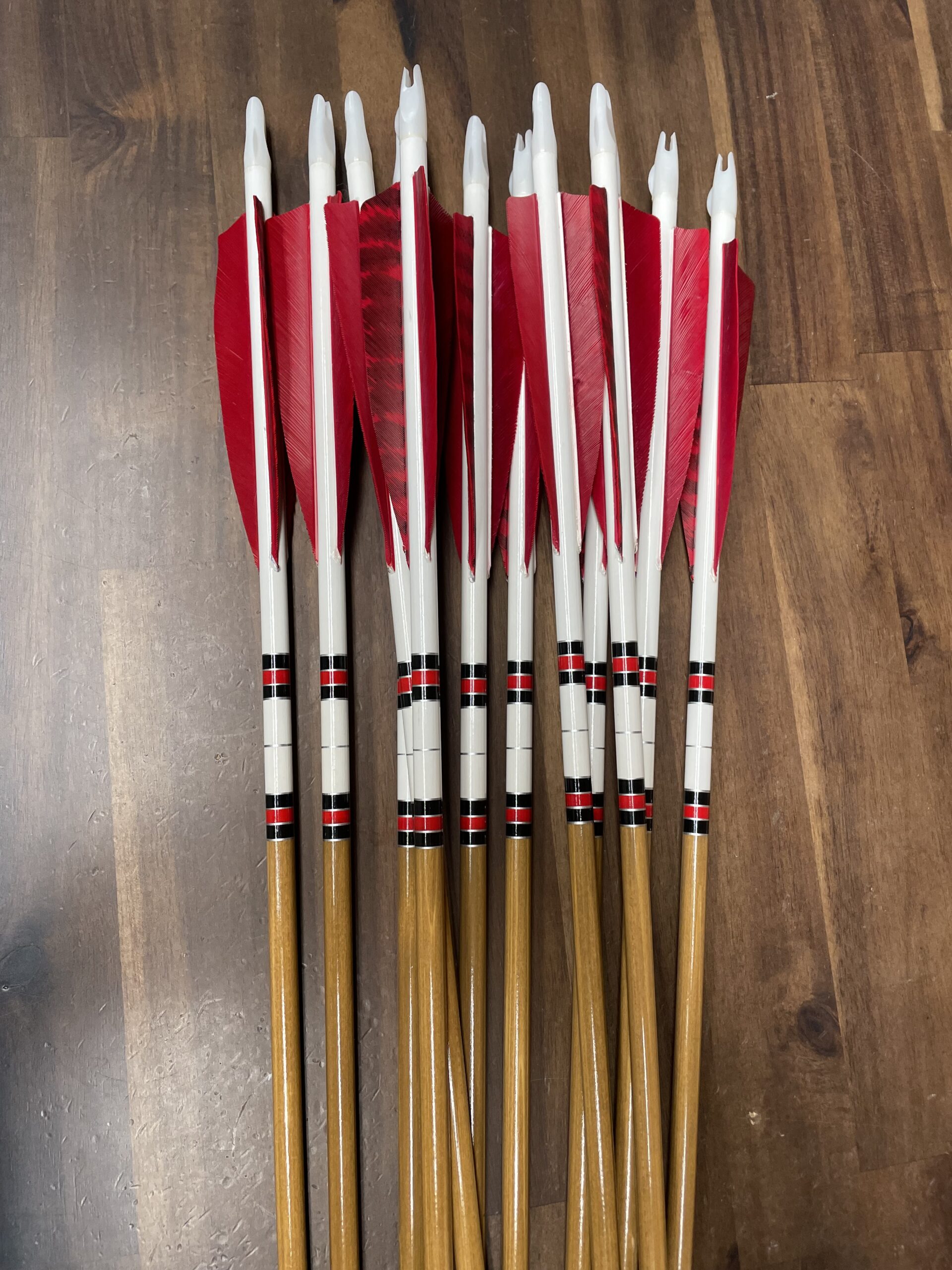
Credit: wapitiarcherypoc.com
Crafting Techniques
Wooden arrow shafts have been made for many years. People use hand tools to shape the wood. They choose straight and strong wood pieces. The wood is cut and smoothed with care. Each shaft must be light and balanced. Craftsmen often use cedar or pine wood. These woods are durable and flexible. The shafts are then sanded to make them smooth. This helps in accurate flight. Making arrows this way takes time. But the results are very reliable and precise.
Today, machines help in making arrow shafts. They speed up the process. Machines cut and shape wood faster and more accurately. Carbon and aluminum materials are also used now. These materials are strong and light. They help arrows fly further and straighter. Modern shafts are often uniform in size. This helps in consistent performance. Technology brings new designs and better results. Yet, the love for wooden shafts remains strong among many archers.
Balancing And Straightening
Balance in arrow shafts helps them fly straight. An unbalanced arrow wobbles. It can miss the target. Crafting balanced arrows is key for accuracy. Weight must be even along the shaft. This makes arrows stable. Balanced arrows perform better. Archers rely on good balance for their shots. Without balance, arrows can drift. Drift affects aim and precision.
Straightening makes arrows fly true. Bent arrows are hard to shoot. Tools can help with straightening. Heat is one method. Gently warming the wood can fix bends. Another way is using pressure. Bending the wood in the opposite direction helps. Some use tools like jigs or clamps. These tools hold the arrow in place. Patience is needed. Straightening takes time and care.
Finishing Touches
Crafting wooden arrow shafts involves selecting quality wood, shaping, and smoothing it for optimal performance. Precision tools help ensure straightness and uniformity. Each shaft undergoes careful inspection to meet archery standards.
Sanding And Smoothing
Wooden arrow shafts need to be smooth. Sanding helps to remove rough spots. Fine grit sandpaper is used. It makes the wood surface even. Smooth shafts fly better. They also look nicer. Sanding takes time but is worth it. A smooth arrow helps in precise shooting.
Applying Protective Coatings
Protection for wooden shafts is important. It prevents damage from moisture. Protective coatings add a layer of defense. They keep the wood from cracking. Varnish or lacquer is often used. They give a shiny finish. Some prefer wax for a natural look. Coatings also enhance durability. A well-coated shaft lasts longer.
Testing And Quality Control
Ensuring Precisionin wooden arrow shafts is crucial. Each shaft must be straight. It needs to have the right length. A slight bend can impact accuracy. Weightis carefully checked. Every shaft should weigh the same. This helps in shooting consistently. Diameteris measured precisely. It affects how the arrow flies. Wood grainis inspected closely. It must be even and aligned. This ensures durability and strength.
Common Tests Conductedinclude bending tests. Shafts are bent to check flexibility. Balance tests are done. A balanced shaft flies better. Compression tests are vital. They ensure shafts can withstand force. Vibration tests are performed. They check stability in flight. Moisture tests ensure dryness. Wet wood can warp easily. These tests are crucial for quality.
Environmental Considerations
Sustainable practicesin making wooden arrow shafts are crucial. Wood is a natural resource. Using it wisely helps the environment. Makers often choose wood from sustainable forests. These forests grow back after cutting. This keeps the wood supply steady.
Many makers use recycled wood. This reduces waste and saves trees. Recycling also saves energy. Less energy means less pollution. It’s good for the planet.
Impact on Natural Resourcesis another key point. Cutting trees affects animals and plants. They lose their homes. Careful planning helps reduce this impact. Makers follow rules to protect nature. They avoid harming wildlife.
Using local wood is smart. It reduces transport pollution. Local wood supports nearby workers. It’s a win-win for nature and people.
Future Of Wooden Arrow Shafts
New tools are making arrow shafts better. Machines can now cut wood very precisely. This helps in making the arrows straight and strong. Some tools can even test the strength of each shaft. Computers help in designing perfect shapes for arrows. These advances make arrows fly better and faster.
Many people like the classic feel of wooden arrows. They are often used for traditional archery. More folks are learning archery as a hobby. This increases the demand for wooden arrows. Some companies are also offering custom designs. Unique patterns and colors are becoming popular. This makes wooden arrows not just tools, but also art.

Credit: makestuffwithyourhands.com
Frequently Asked Questions
What Wood Is Used For Arrow Shafts?
Arrow shafts are typically made from woods like cedar, pine, or spruce. These woods are chosen for their lightweight and durability. Cedar is especially popular due to its straight grain and ease of shaping. The type of wood can affect the arrow’s performance and shooting experience.
How Is Wood Prepared For Arrow Shafts?
Wood is carefully selected and dried to prevent warping. It is then cut into dowels and sanded for smoothness. This process ensures the shaft is straight and balanced. Proper preparation enhances the arrow’s accuracy and durability, making it crucial for quality arrow shafts.
What Tools Are Used In Making Wooden Arrow Shafts?
Common tools include saws, sanders, and spokeshaves. These tools help in shaping, smoothing, and finishing the shafts. Precise measurement tools ensure consistent diameter and straightness. Using the right tools is essential for crafting high-quality wooden arrow shafts that perform well.
Why Is Shaft Straightness Important?
Straightness directly affects an arrow’s flight accuracy. A straight shaft ensures consistent performance and precision. Warped or crooked shafts can lead to erratic flight paths and missed targets. Therefore, ensuring the shaft’s straightness is crucial for achieving optimal shooting results.
Conclusion
Crafting wooden arrow shafts blends tradition with skill. Each step involves care and precision. Selecting the right wood is crucial for durability and performance. The shaping process demands attention to detail and time. Sanding and finishing add smoothness and appeal.
Quality checks ensure each shaft meets high standards. These techniques honor the art of archery, preserving its essence. Wooden shafts connect us with nature, offering a tactile experience. Embrace this craftsmanship to enhance your archery journey. Appreciate the craftsmanship behind each arrow.
Feel the satisfaction of using handmade wooden shafts.