Gold Tip Hunting Arrows Review: Which Models Fit Best?
Hunting arrows can be a good choice when the spine matches the bow and the finished arrow weight stays in a typical range for compounds. Miss that mark and broadheads can plane, groups open, and shafts can lose penetration or fail on impact. This review covers the Gold Tip models, spine and GPI selection, and setup rules for compound and recurve hunters.
Gold Tip hunting arrows: the short verdict


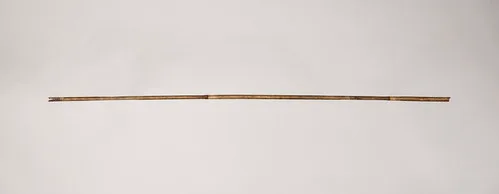
Gold Tip hunting arrows are worth a look for bowhunters who want a carbon shaft with predictable component fit, reasonable weight consistency, and broadhead-capable setup options. They do not fix bad broadhead flight by themselves. The right spine, arrow length, point weight, and fletching choice still decide how the setup behaves.
Best use case for compound-bow hunters
For compounds, Gold Tip Hunter arrows fit the common “one arrow for practice and hunting” role well. The Hunter line uses a carbon shaft, lists a GPI of 9.3, and is built for hunting and target use. That makes it a practical middle ground for shooters who want manageable speed without giving up too much penetration.
Where Gold Tip Hunter and Hunter XT fit
Gold Tip Hunter is the standard hunting option; Hunter XT is the hunting-focused variant that buyers often compare when they want a tougher or more purpose-built setup. The real question is not brand prestige. It is whether the shaft weight, spine, and component package match the bow and broadhead you plan to shoot.
Quick verdict for recurve hunters
Gold Tip traditional arrows can make sense for recurve bowhunters, but only when arrow length and point weight are matched carefully. Recurves are less forgiving of spine mistakes than many compounds. A small spine mismatch can show up fast as poor bareshaft behavior, broadhead drift, or weak clearance.
📊 Gold Tip Hunter arrows have a GPI of 9.3. Source: Gold Tip Hunter Arrows Review.
What is the difference between Gold Tip Hunter and Hunter XT?
Gold Tip Hunter is the standard carbon hunting shaft, while Hunter XT is the hunting-oriented step up that buyers usually consider when they want a different balance of toughness, arrow mass, and field use. The practical difference is less about marketing and more about setup goals, arrow weight, and hunting distance.
Core build and hunting focus
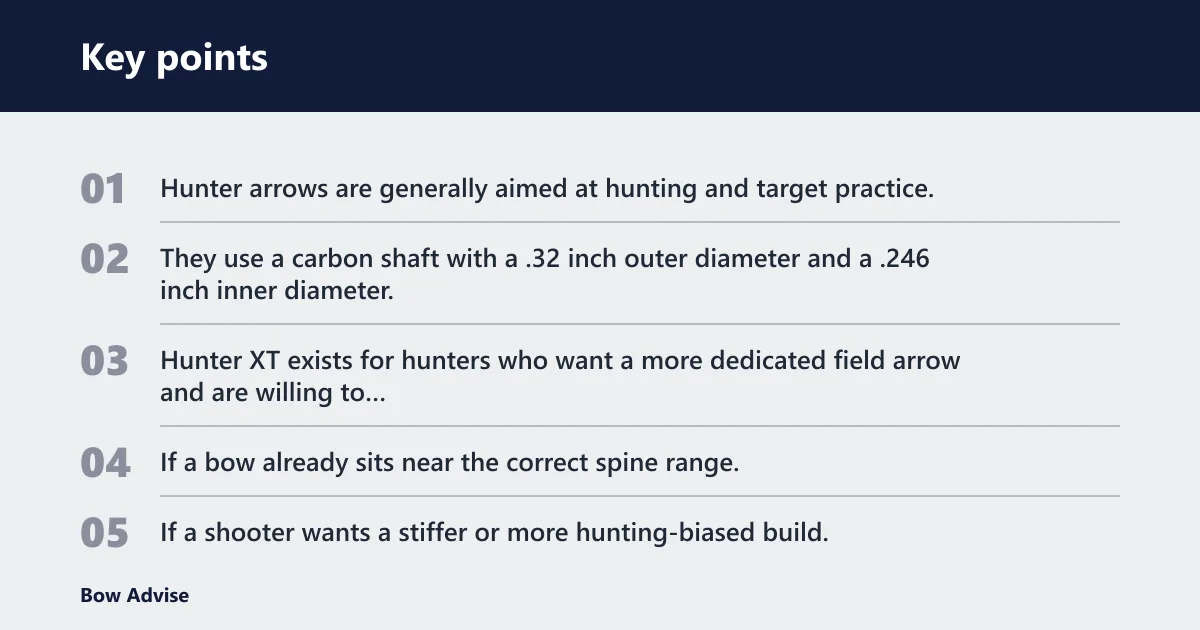
Hunter arrows are generally aimed at hunting and target practice. They use a carbon shaft with a .32 inch outer diameter and a .246 inch inner diameter, which tells you something about component fit and insert sizing. Hunter XT exists for hunters who want a more dedicated field arrow and are willing to tune around it.
Practical setup differences that matter at broadhead season
If a bow already sits near the correct spine range, the Hunter can be the cleaner buy because it keeps the setup simple. If a shooter wants a stiffer or more hunting-biased build, Hunter XT may be the better fit. Either way, broadhead flight depends more on arrow length, point weight, and tune than the label on the shaft.
Which one to choose by bow type and draw weight
Choose the standard Hunter when the goal is a balanced all-around hunting shaft for common compound setups. Choose Hunter XT when the setup needs a more deliberate hunting configuration and the shooter is already comfortable tuning. For recurve use, either can work only if the spine chart and point weight line up correctly.
Are Gold Tip arrows accurate enough for broadheads?
Yes, Gold Tip arrows can be accurate enough for broadheads when the shaft spine, straightness tolerance, and weight match are right for the bow. They are not magic. Broadhead flight still depends on tune, arrow length, point weight, and whether the arrow clears the rest cleanly.
Straightness tolerance and what it means for grouping
Gold Tip Hunter arrows list a straightness tolerance of +/- .6 inch. Straightness tolerance is a quality-control indicator, not a promise of perfect broadhead flight by itself. Tighter straightness generally helps consistency, but a straight shaft can still fly badly if the spine is wrong or the bow is out of tune.
Weight tolerance and matched-arrow consistency
The Hunter line lists a weight tolerance of +/-2 grains. That matters because arrows in a matched set are more likely to leave the bow with similar speed and behavior. Small weight differences can matter more once broadheads are attached, especially at longer hunting distances.
Broadhead flight, helical fletching, and tuning sensitivity
Fixed-blade broadheads punish weak setups. Helical fletching can help stabilize the arrow faster, but it can add clearance risk and a small speed penalty. A common first-timer mistake is adding a big fixed blade to an under-spined shaft and hoping extra fletching will solve it. It usually does not.
Say your recurve is tuned for a moderate draw weight and a light practice point, but the arrow spine is still too stiff for clean flight. If the shaft is too soft, the arrow can kick left or right, group changes at distance, and broadheads start to plane in wind. The fix is usually spine and tune, not more sight adjustment.
Gold Tip specs that actually matter in the field
The useful specs are the ones that affect arrow behavior, not the ones that only sound technical. For Gold Tip Hunter arrows, GPI, straightness tolerance, weight tolerance, and diameter dimensions all affect how the shaft behaves with inserts, nocks, and broadheads.
Carbon shaft durability and impact survival
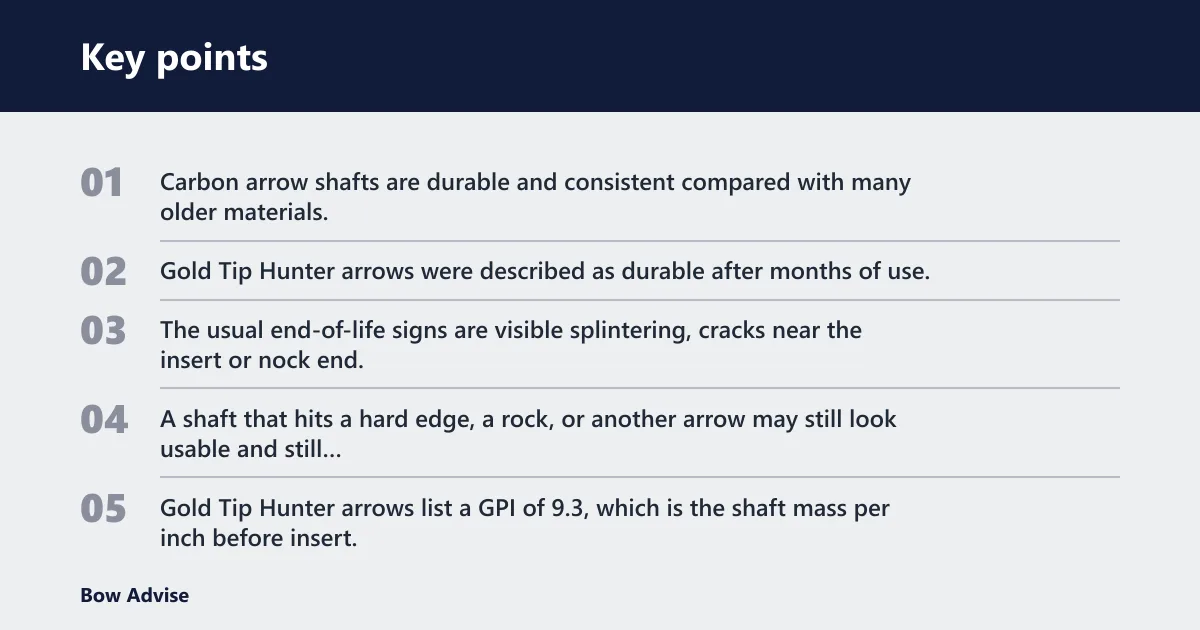
Carbon arrow shafts are durable and consistent compared with many older materials, but durability is not endless. Gold Tip Hunter arrows were described as durable after months of use, and that is the right way to think about carbon: repeatable until impact damage, cracks, or delamination make a shaft unsafe to shoot.
The usual end-of-life signs are visible splintering, cracks near the insert or nock end, and a shaft that no longer spins true. A shaft that hits a hard edge, a rock, or another arrow may still look usable and still be compromised.
GPI, speed, and penetration tradeoff
GPI means grains per inch. Gold Tip Hunter arrows list a GPI of 9.3, which is the shaft mass per inch before insert, point, fletching, and nock. Lower GPI usually means a lighter shaft and more speed; higher GPI usually means more total arrow mass and often better penetration, if the bow still tunes well.
Outer diameter and inner diameter for inserts, nocks, and point fit
The Hunter’s .32 inch outer diameter and .246 inch inner diameter matter for component compatibility. Outer diameter affects drag, clearance, and sometimes wind drift. Inner diameter affects which inserts, bushings, and nock systems fit the shaft. A mismatch here can create a setup problem before the bow is even tuned.
Launchpad Precision Nock and component compatibility
Gold Tip’s Launchpad Precision Nock is a named component feature that buyers should verify for fit and consistency. Nocks matter because small fit differences can affect release and string contact. Component compatibility is not optional on hunting arrows. It is part of the tuning system.
Dynamic Spine Control as a comparison benchmark
Dynamic Spine Control is a Carbon Express technology worth comparing, not because every Gold Tip arrow needs it, but because it reminds buyers that spine behavior under launch matters. For broadheads, the practical question is always the same: does the shaft recover cleanly enough to keep the head flying straight?
Gold Tip hunting setup matrix by bow and broadhead
Use this matrix as a selection guide, not a shortcut around tuning. The most common failures show up when arrow length is too long, point weight is too heavy, or the spine is wrong for the draw weight. Broadhead choice changes the margin for error.
| Bow type | Draw weight | Arrow length | Spine range | Intended broadhead weight | Most likely failure mode |
|---|---|---|---|---|---|
| Compound | 50 to 60 pounds | Short to medium, matched to draw | Usually mid-stiff | 100 grains | Overspined shaft if the arrow is short and the point is light |
| Compound | 60 to 70 pounds | Medium to long | Usually stiffer | 100 to 125 grains | Underspined shaft with fixed blades, causing broadhead plane and weak recovery |
| Recurve | 35 to 45 pounds | Often longer than compound arrows | Usually softer than many compound setups | 100 grains or heavier, depending on tune | Overspined shaft if the point is too light or the arrow is too short |
| Recurve | 45 to 55 pounds | Matched carefully to draw length | Medium to stiff, depending on point weight | 125 grains common for tuning margin | Clearance issues and poor bareshaft behavior if fletching is too aggressive |
- Measure true draw length and arrow length first.
- Pick spine from the bow’s actual holding weight and point weight, not headline draw weight alone.
- Verify insert, nock, and shaft diameter compatibility before ordering components.
- Check finished arrow weight, not shaft weight alone.
- Confirm broadhead flight at hunting distance before the season.
Pros and cons of Gold Tip hunting arrows
Gold Tip Hunter arrows bring a practical mix of consistency and hunting utility. They are not the only good carbon shafts on the market, but they fit a lot of bowhunters who want a dependable all-around hunting arrow without chasing exotic specs.
Pros
- Carbon shaft construction with hunting and target use in mind.
- GPI of 9.3 gives a workable speed and mass balance.
- Weight tolerance of +/-2 grains helps matched sets behave similarly.
- Component fit is predictable when diameter and insert choice are checked.
- Suitable for broadhead practice when spine and tune are correct.
Cons
- Straightness tolerance of +/- .6 inch is not the tightest on the market.
- Fixed-blade broadheads still expose poor tuning quickly.
- Wrong spine choices can reduce penetration and increase planing.
- Carbon shafts can sometimes be damaged in ways that are hard to see after hard impacts.
- Recurve setups need more careful arrow length and point-weight matching.
Who should be cautious
Be cautious if you shoot heavy fixed blades from a fast compound and do not want to tune. Be cautious if you run a recurve with little room for error. Be cautious if you assume all Gold Tip shafts behave the same; they do not.
Who are Gold Tip hunting arrows for?
Gold Tip hunting arrows are for bowhunters who want a practical carbon arrow and are willing to match spine, point weight, and arrow length correctly. They are also a fit for DIY archers who sort by straightness and weight consistency before hunting season. They are less ideal for shooters who want a pure plug-and-play fix for tune problems.
Bowhunters who want forgiving broadhead tuning
These arrows suit compound shooters who already know their bow’s holding weight and need a predictable hunting shaft. The less sensitive to minor form flaws note matters here: a decent shaft can help, but it will not rescue a badly mismatched setup.
DIY archers who sort by straightness and weight
If the plan is to build matched hunting arrows, the straightness tolerance and weight tolerance are useful filters. That is where Gold Tip makes sense. It gives the archer something measurable to inspect before broadheads ever go on.
Traditional archers considering Gold Tip traditional arrows
Are Gold Tip traditional arrows worth it for recurve bowhunters? Yes, if the archer accepts careful tuning and chooses the spine around actual setup conditions. No, if the goal is to ignore point weight, brace height, or arrow length and still expect clean broadhead flight.
Frequently asked questions
Are Gold Tip arrows good for hunting?
Yes, Gold Tip arrows are a solid hunting option when the spine matches the bow and the finished setup is tuned for the broadhead you plan to shoot. Their carbon construction, weight consistency, and component compatibility make them practical, but the correct arrow build matters more than the brand name.
Which Gold Tip arrows should I use for hunting?
Use Gold Tip Hunter arrows for a straightforward hunting setup, and look at Hunter XT if you want a more hunting-focused variant and understand your tune needs. The best choice depends on bow type, draw weight, arrow length, and the broadhead weight you intend to carry.
What is the difference between Gold Tip Hunter and Hunter XT arrows?
Hunter is the standard all-around hunting shaft. Hunter XT is the hunting-oriented variant that buyers usually compare when they want a different field setup emphasis. The practical decision comes down to whether the bow needs a general-purpose shaft or a more deliberate hunting configuration.
Are Gold Tip arrows accurate enough for broadheads?
They can be, provided the spine is correct and the bow is tuned. Straightness tolerance helps quality control, and weight tolerance helps matched-arrow consistency, but broadhead accuracy is still driven by arrow length, point weight, fletching choice, and launcher or rest clearance.
What spine and GPI should I choose for my bow?
Choose spine from actual draw weight, draw length, and point weight together, not draw weight alone. Gold Tip Hunter arrows list a GPI of 9.3, which is a useful middle-ground shaft mass. For hunting, the right finished arrow weight and correct spine matter more than chasing speed.
How durable are Gold Tip hunting arrows after misses or target impacts?
They are durable enough for repeated use, but hard impacts can still damage any carbon shaft. The key failure signs are cracks, splintering, or a shaft that no longer spins true. After a hard miss, inspect both ends and retire any shaft with visible damage.
What arrow straightness tolerance should I look for in Gold Tip hunting arrows?
Gold Tip Hunter arrows list a straightness tolerance of +/- .6 inch. In practical terms, tighter is usually better for quality control, but straightness alone does not guarantee broadhead flight. Spine, weight match, and tune still decide whether the arrows group cleanly at hunting distance.