AAE Arrow Vanes Review
AAE Arrow Vanes Review: AAE’s low-profile vanes suit tuned compound and recurve setups best. Pick them when less drag matters at normal hunting distances, but choose a taller vane if the arrow needs stronger steering or fixed-blade broadheads are hard to control. A poor vane choice can cost clearance, broadhead flight, and wind performance. This guide compares AAE vane options for hunting, tuning, and windy conditions, and explains which setups each vane suits.
This guide is part of our Arrow making guide: tools, materials, and methods series.
Verdict on AAE Hybrid 2.0 vanes
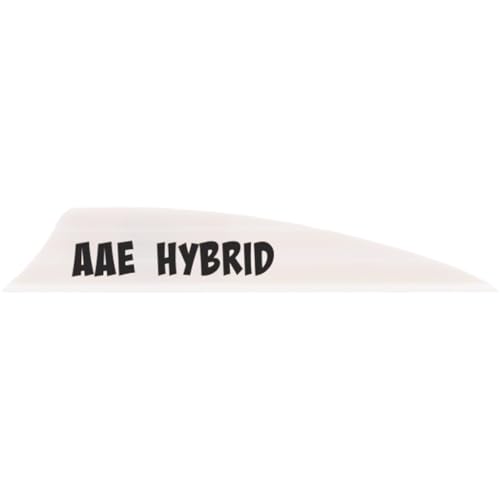

AAE Hybrid 2.0 vanes make sense for archers who want a compact hunting vane with a clean bond and a low-drag profile. They fit tuned compound and recurve setups better than bows that already struggle with arrow clearance, broadhead control, or vane contact noise.
The key strength is balance. The 1.95-inch by 0.33-inch shape is small enough to cut surface area, yet still built for hunting use, where arrow stabilization matters more than pure drag reduction. That makes the Hybrid 2.0 a practical middle ground, not a universal answer.
Bottom-line recommendation by setup
Choose the Hybrid 2.0 for hunting arrows, fixed-blade broadheads, and setups that already fly cleanly with modest fletching height. Skip it if the arrow needs extra steering help, if vane clearance is tight, or if a taller vane is already fixing a weak-tuning problem.
Where the Hybrid 2.0 design makes sense
The low-profile shape helps when wind exposure and drag matter, especially on outdoor hunting arrows. It also fits bows that need dependable flight without a bulky vane that can catch more air than needed. For many compound bow hunting setups, that is a useful tradeoff.
Where a different vane is the better fit
A taller or more forgiving vane is often the better buy for broadheads with large cutting diameter, poor tune, or setup issues that need stronger steering authority. If the arrow still shows vane contact, weak grouping, or broadhead planing, the first fix is often more vane, not a smaller one.
Are AAE vanes good for hunting arrows?
Yes, AAE vanes are a solid hunting choice when the bow is already tuned and the arrow needs a compact fletching profile. They are especially useful for archers who want good broadhead control without moving to a tall, high-drag vane that can be less forgiving in wind.
Low-profile hunting vane tradeoffs
Low-profile hunting vanes reduce drag and often help clearance, but they give up some steering authority. That tradeoff matters most when the arrow carries a fixed-blade broadhead or the bow is sensitive to tune. A smaller vane can fly clean, yet still leave the arrow under-corrected.
Broadhead steering and wind stability
Broadheads need steady steering because the blades act like a front-end sail. A low-profile vane can control them well when the rest of the setup is sound, but it does not replace good tune. In wind, the smaller profile may help cut drag, though it will not fix a poorly tuned arrow.
What fixed-blade hunters should watch
Fixed-blade hunters should check arrow spine, nock fit, rest timing, and vane clearance before choosing a compact vane. If broadheads group differently from field points, the vane may be too small for that setup, or the bow may need more tune work before vane choice can do its job.
Say your 29-inch carbon shaft with a fixed-blade head clears the rest cleanly but still hits left at distance. A smaller vane may not solve that. The arrow may need more steering surface, or the broadhead setup may need better tune before changing vane style again.
AAE vane specs and design
AAE says it is the world’s largest manufacturer of nocks and vanes, has been in business for 50 years, and makes 100% of its products in Prescott Valley, Arizona. Vanes are a core product category, and AAE also sells rests, stabilizers, adhesives, and glue for archery setup.
Hybrid 2.0 dimensions and weight
The Hybrid 2.0 vane measures about 1.95 inches long, about 0.33 inches high, and weighs about 3.9 grains. Those numbers put it firmly in the low-profile hunting category. It is small enough to avoid excess drag, but not so tiny that it becomes a pure target-only vane.
Plastifletch Lick and Stick material
AAE says the Hybrid 2.0 line uses Plastifletch Lick and Stick material. That matters because the vane material and adhesive system are part of the setup, not an afterthought. A vane that bonds well and stays flat is easier to trust on a hunting arrow.
Factory activator and air-channeled ribbed profile
The factory-applied activator is meant to help bonding during installation and may help reduce a common cause of vane failure, weak adhesion. The air-channeled ribbed design also gives the vane a defined profile that aims to move air cleanly while keeping the vane compact.
Base Dynamics technology in the line
AAE says Base Dynamics is its bonding and adhesion concept in the Hybrid 2.0 line. In practical terms, that puts attention on how the vane attaches to the shaft, not only on how it flies. For archers, that means setup quality matters as much as shape.
AAE vane decision table
| Setup type | Recommended vane profile | Likely tradeoff | Installation risk | When to choose a different vane |
|---|---|---|---|---|
| Hunting | Low-profile vane like Hybrid 2.0 | Less drag, less steering authority | Moderate if broadheads need careful alignment | Choose taller vanes if fixed-blade broadheads plane badly |
| Target | Cleaner, larger vane if extra correction is needed | More drag, more visible fletching behavior | Low to moderate | Choose compact vanes if clearance matters more than correction |
| Windy conditions | Compact, low-drag vane | May give up some steering margin | Moderate because bond quality matters | Choose a taller vane if arrow control drops in crosswind |
| High-FPS compound | Low-profile vane with clean clearance | Less forgiveness if tune is rough | Moderate to high on tight-clearance rigs | Choose more vane if the arrow still needs correction |
| Recurve | Low-profile or medium vane, depending on tune | Can be too little steering on weaker tune | Moderate | Choose a taller vane if arrow flight needs more help |
| Beginner build | More forgiving, easier-to-read vane | More drag, less compact profile | Low if setup is simple | Choose compact vanes later, after basic tune is stable |
How do AAE Hybrid vanes compare with Blazer vanes?
AAE Hybrid vanes and Blazer-style vanes sit in the same broad low-profile hunting category, but the Hybrid 2.0 leans toward a compact bonding-first design with a little less height. Blazer-style vanes are often chosen because their familiar shape gives direct steering and a well-known tuning baseline.
Length, height, and profile differences
The Hybrid 2.0 is about 1.95 inches long and about 0.33 inches high, which keeps it compact. Many Blazer-style hunting vanes are known for a short, high-profile shape that creates more steering surface in a small footprint. That extra profile can help when the arrow needs a stronger correction.
Wind and drag tradeoffs
The AAE vane’s lower profile can help cut drag and may be easier to live with in wind. The tradeoff is steering margin. A more aggressive vane shape can stabilize a broadhead faster, while a smaller vane may stay quieter through the air but correct less.
When the more compact AAE vane wins
The compact AAE vane wins on bows that already tune well and on hunting arrows that need less drag at normal field distances. It is also a practical choice for archers who want a smaller profile without jumping to a much larger vane that could add more wind exposure.
When a taller vane is easier to tune
A taller vane is easier to tune when the setup is forgiving, the bow is not perfectly sorted, or broadheads still show planing. If the arrow needs more help leaving the bow straight, more vane surface often solves problems faster than a smaller, cleaner design.
Installation, adhesion, and shaft compatibility
AAE says its vanes work with carbon, aluminum, and wood shafts, and that is a real advantage for mixed archery setups. The catch is simple: compatibility does not remove the need for clean shaft prep, correct adhesive, and careful vane alignment during fletching.
Fletching adhesive compatibility with Plastifletch
Plastifletch material is only as reliable as the adhesive bond. AAE sells adhesives and glue for archery setup, and AAE recommends adhesive plus careful alignment during fletching. The material should bond cleanly when the shaft is cleaned and the vane is seated fully.
Carbon shaft setup and jig use
Carbon shafts are a common match for this vane type. A fletching jig can help with consistent results because it holds vane angle and placement more evenly than hand alignment. That matters most when using short vanes, where small placement errors can affect clearance or steering.
Common failure cases and clearance checks
Failure usually starts with poor surface prep, rushed adhesive use, or vane contact with the rest, cables, or shelf. A compact vane does not excuse poor clearance. If the vane shows scuffing, lifting edges, or uneven contact marks, the problem is often the setup, not the vane brand.
Suppose a compound bow hunter runs a right-offset rest and a fixed-blade broadhead. If one vane lifts after curing, the issue may be incomplete adhesive contact or poor shaft cleaning, not vane shape. Repeating the same install with better prep often tells the difference fast.
Who should buy AAE vanes?
AAE vanes suit archers who already value clean setup and want a hunting vane with a low profile. They are strongest for compound bow hunting setups, tuned recurve arrows, and outdoor rigs where drag and clearance matter more than extra steering surface. They are weaker for beginners who still need broad correction and easy visual feedback.
Compound bow hunting setups
Compound bow hunters appear to be the clearest fit. The Hybrid 2.0 design can support wind stability, outdoor use, and broadhead flight when the bow is tuned correctly. If the setup already groups field points and fixed blades close together, a compact vane is a sensible buy.
Target, 3D, and windy-condition archers
Target and 3D archers may like the smaller profile if they want less drag and cleaner travel, but those who need more correction should look at a taller vane. In windy conditions, a compact vane can be a strong choice, yet it cannot compensate for weak tune or poor arrow spine.
Recurve and beginner builds
Recurve bows can use AAE vanes well when the arrow is tuned and clearance is clean. Beginner builds are different. A beginner often benefits more from an easier-to-read vane that gives extra steering and clearer flight feedback, even if it adds a little drag.
Which AAE vane color should I choose for visibility?
Color is mostly a visibility choice, not a flight choice. Bright colors help in low light and make arrows easier to track and retrieve. Pick the color that is easiest to see against your usual backstop, ground, or target face. That is the practical standard.
Pros and cons
AAE’s Hybrid 2.0 line is easy to like for one reason: it gives a hunting-style low-profile vane without pretending that one fletching shape fits every bow. That makes it useful, but only when the setup already supports that choice.
Pros
- Compact 1.95-inch by 0.33-inch hunting profile
- Useful for low-drag arrow flight
- Works with carbon, aluminum, and wood shafts
- Factory activator supports cleaner installation
- Good fit for tuned compound hunting setups
Cons
- Less steering margin than taller vanes
- Can be the wrong choice for difficult broadhead flight
- Requires careful adhesive prep and alignment
- Not the easiest fix for poor arrow tune
- May give beginners less forgiveness than a larger vane
Frequently asked questions
What size AAE vanes should I use on my arrows?
Use 1.95-inch Hybrid 2.0 vanes when you want a compact hunting profile and your bow already shoots clean. Choose a larger or taller vane when the arrow needs more steering, broadheads are hard to control, or the bow still shows tune issues that need extra correction.
How do AAE hybrid vanes compare to Blazer vanes?
AAE Hybrid vanes are a compact, low-profile hunting option with a strong focus on clean bonding and reduced drag. Blazer-style vanes are often chosen for their familiar steering behavior and slightly more forgiving correction. If you need more arrow guidance, the Blazer-style shape can be easier to tune.
What are the best vanes for arrows in wind?
The best vane in wind is usually the one that gives enough steering without adding unnecessary drag. Compact hunting vanes like the AAE Hybrid 2.0 can help, especially on tuned setups. If the arrow still wanders or broadheads plane, a taller vane may be the better answer.
Do low profile arrow vanes stabilize broadheads well?
They can, but only when the rest of the setup is right. Low-profile vanes often stabilize broadheads well on tuned hunting arrows, especially at practical field distances. If the broadhead is large or the bow is not tuned, more vane surface may be needed.
Are AAE vanes easy to fletch on carbon shafts?
Yes, carbon shafts are a normal match for AAE vanes. The main requirement is clean surface prep, good adhesive, and straight alignment. A fletching jig can help produce consistent results, which matters more when the vane is short and clearance is tight.
What is the difference between AAE Hybrid and other AAE vanes?
The Hybrid 2.0 is a low-profile hunting vane with a compact shape, factory activator, and a bonding-focused design. Other AAE vanes may prioritize different levels of steering, profile height, or use case. The practical difference is whether the setup needs less drag or more correction.