Wood Arrow Shafts vs Bamboo Arrow Shafts: Build Ease
For many traditional archers, bamboo arrow shafts can be easier to build consistently than wood because, once sorted, they may show less spine spread. Wood can be easier to find and sort, and it may fit a lighter, quieter setup. Poor matching causes erratic flight, weak broadhead tune, and broken shafts. This guide compares straightness, spine, weight, durability, and buying tips so you can pick the right shaft material for your bow.
This guide is part of our Arrow making guide: tools, materials, and methods series.
Wood arrow shafts vs bamboo arrow shafts: the real trade-off



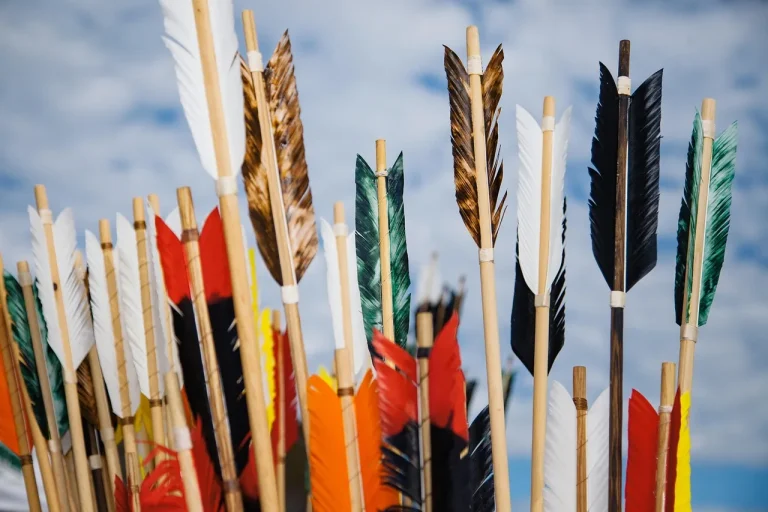
The real trade-off is consistency in the build versus natural variation in the shaft. Bamboo brings a hard outer fiber shell, a natural taper, and often steadier spine after sorting, while wood is usually easier to buy and cut into a familiar round shaft. The right answer changes with bow type, shelf depth, and how much prep time the builder wants to spend.
| Decision factor | Wood Arrow Shafts | Bamboo Arrow Shafts | Winner |
|---|---|---|---|
| Straightness control | Usually easy to inspect, but grain and machining can leave hidden weak lines | Natural taper can help, but nodule spacing and twist must be checked closely | Tie |
| Spine consistency after sorting | Needs careful selection because grain and machining affect stiffness | Often easier to batch-sort once nodule count, taper, and weight are matched | Bamboo Arrow Shafts |
| Weight spread | Can vary with grain density and machining finish | Can vary with diameter taper, nodule spacing, and shaft selection | Tie |
| Prep steps before use | Sand, seal, sort, and check for grain runout | Align, sand nodules, confirm straightness, and keep wax coating intact | Wood Arrow Shafts |
| Moisture response | Can warp or crack if storage is poor | Often resists abuse well, but still needs dry storage and surface care | Bamboo Arrow Shafts |
| Likely failure mode | Warping, cracking, or splintering at weak grain areas | Twist, nodule mismatch, surface damage, or breakage at stressed spots | Tie |
Straightness and shape
Wood arrow shafts are milled and sanded to a round shape, so the builder gets a familiar profile but also the risk of fiber cutting during machining. Bamboo shafts are naturally conical in form, so the shaft shape is already doing part of the work before any final prep. That natural taper helps some builds, but only if straightness and nodule spacing are acceptable.
Spine behavior and build consistency
Bamboo tends to sort into cleaner batches when the shafts are aligned, wax-coated, and matched for nodule count. Wood often needs more individual attention because machining can cut fibers and reduce strength in a way that is not obvious from the outside. In practice, bamboo usually asks for tighter lot control, while wood asks for more one-by-one spine selection.
Prep work and waste
Wood is often simpler to prep at the bench, but a poor grain line or hidden weak section can push a shaft into the reject pile later. Bamboo often demands more visual sorting up front, especially around nodules and taper, yet it can reward that effort with more repeatable groups. If a builder wants fewer surprises at final assembly, bamboo often has the cleaner path after sorting.
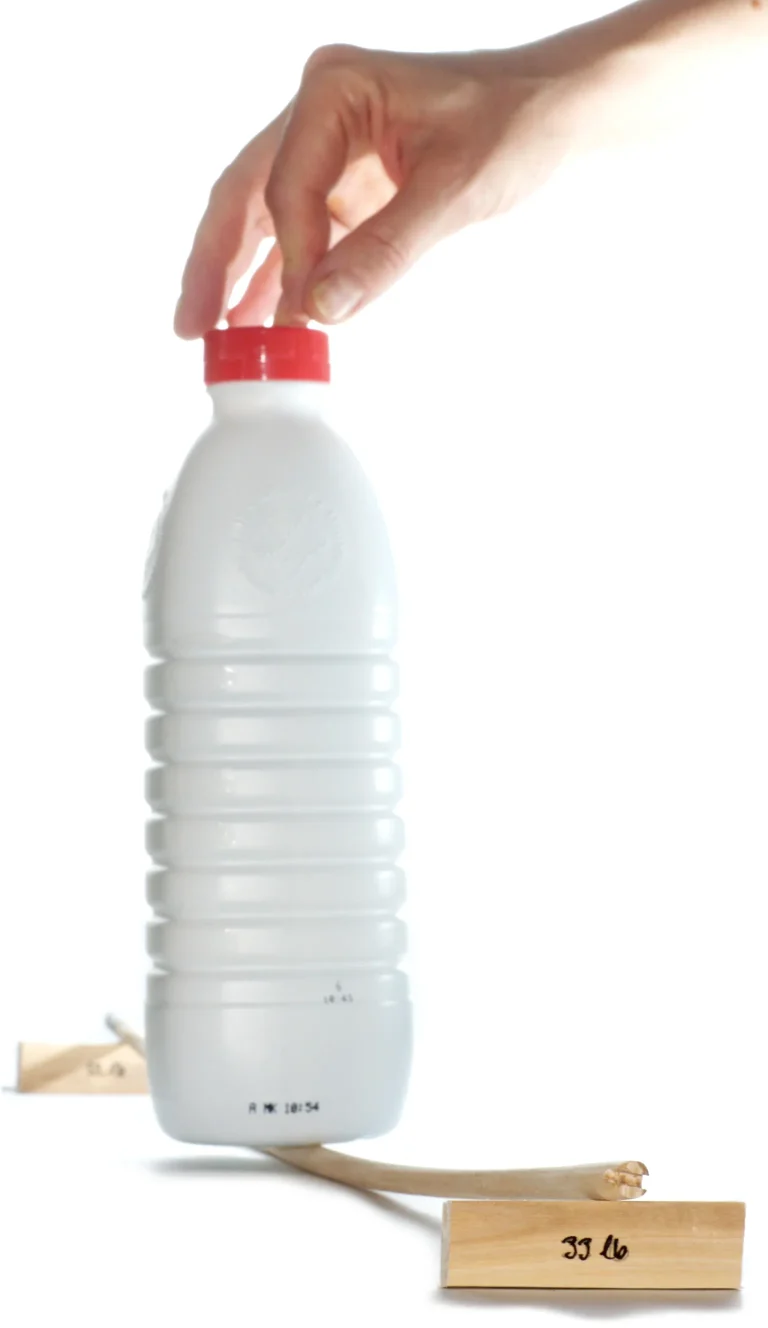
📊 Static spine is defined on a 28-inch shaft with 26-inch support points. Source: Occurrence of bamboo – Arrow-Fix.
How each shaft is made, and why that matters

Wood shafts start as material that is milled and sanded to a round form, which makes them easy to understand and easy to size. Bamboo shafts are selected from a natural tube with a hard outer fiber layer, a natural taper, and nodules that do not bend. Those structural differences drive nearly every real-world tuning result.
Wood arrow shafts: milled, sanded, and influenced by grain direction
Because wooden shafts are machined into shape, the fiber structure is altered during production. That is why grain direction and surface quality matter so much: the shaft may look uniform, yet still show weak spots from machining. Builders also need to select spine carefully, since two shafts of the same diameter can still react differently on the bow.
Bamboo arrow shafts: natural taper, hard outer fiber, and nodules
Bamboo shafts are usually described as a favorite natural material used in sport archery, and they must go through a slow drying process before fabrication. They are aligned, nodules are sanded, and shafts are wax-coated for protection. The hard shell can help durability, but nodules create stiff sections that must be matched across shafts.
Tonkin bamboo and why it is common in sport archery
Tonkin bamboo is imported from the highland of China and is commonly sold as bamboo shaft material. It is often described as strong, which helps explain why it appears so often in traditional archery use. Buyers should still treat “Tonkin” as a starting point, not a guarantee, because shaft-to-shaft variation still matters.
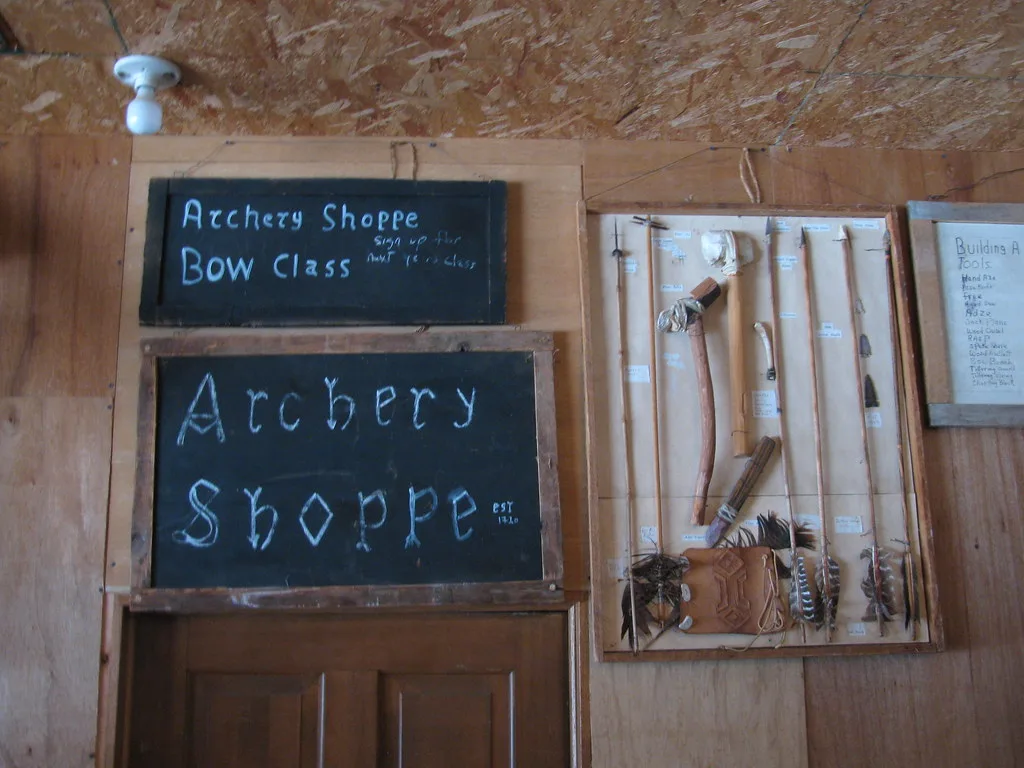
Which shaft is easier to spine-match?
Bamboo is usually easier to spine-match after sorting, but not easier to buy blindly. Static spine is measured on a 28-inch shaft length with 26-inch support points, using two English pounds, or 0.908 kg, as the test weight. Once a bamboo lot is matched for nodule count, taper, and weight, it can give more predictable grouping than mixed wood shafts.
Static spine basics and the standard test setup
Static spine is a deflection-based flexibility measure, not a promise of final arrow flight. It tells the builder how much a shaft bends under the standard load setup, which helps compare shafts before cutting or fletching. That matters because a shaft that is too stiff or too weak can make tuning harder on either material.
How weight spread affects matching in wood and bamboo
Wood shafts can vary in mass because grain density and machining are not identical from shaft to shaft. Bamboo selection should consider the same weight across shafts, because even good spine numbers can be thrown off by uneven mass. If the weight spread is wide, the sorting pile gets bigger and the tuning window gets smaller.
Why bamboo lot variation can change sorting time
Bamboo is not uniform from one nodule pattern to the next. Nodule count consistency matters because nodules are stiff sections that do not bend like the rest of the shaft, so mixed counts can create mixed reactions at the bow. A clean lot with similar taper and nodule spacing is easier to tune than a mixed bundle with scattered outliers.
Do bamboo arrows fly faster than wood arrows?
Sometimes, but only under the right setup. Arrow speed depends more on finished weight, spine match, point weight, and how cleanly the shaft leaves the bow than on the material name alone. A lighter bamboo shaft can be fast, yet still fly worse than a properly matched wood shaft if the bow and shelf combination are not right.
What speed depends on beyond shaft material
A shaft that leaves the bow with the wrong spine can waste speed through wobble and poor launch. That is why a well-matched wood arrow can outshoot a poorly matched bamboo shaft, even if bamboo is lighter on paper. Speed claims are only useful when the rest of the setup is already close.
Weight, spine match, and point weight as the real factors
Point weight changes dynamic behavior, and dynamic behavior changes how the arrow clears the bow. A properly tuned shaft of either material can fly faster than a poor match in the other material. For most archers, the real gain comes from reducing excess mass and getting spine in the right band, not from the label on the shaft.
When a lighter bamboo shaft can still tune worse than wood
Say your bamboo lot has mixed nodule spacing and one shaft is slightly twisted. It may still weigh less than a dense wood shaft, yet group worse because the bow sees inconsistent bend and release. In that case, the lighter shaft is not the better shaft.
Durability, weather resistance, and failure modes
Both materials can last, but they fail differently. Wood is more likely to warp, crack, or split along a weak grain line, while bamboo can twist, show nodule-related inconsistency, or suffer surface damage if the outer layer is abused. Storage and prep matter for both.
Wood: warping, cracking, and machining-related weak points
Because machining cuts fibers, a wooden shaft can lose strength where the grain was interrupted. That does not make wood fragile by default, but it does mean weak spots can hide until the shaft is stressed. Warping is also a real risk if shafts sit in poor humidity conditions.
Bamboo: twist, nodule issues, and surface damage concerns
Bamboo’s hard outer fiber layer helps, yet nodules create stiff sections that may change how one shaft behaves compared with the next. A shaft with damaged wax coating or a rough nodule area can pick up moisture and lose some of its practical advantage. Twisted shafts should be rejected early.
Moisture sensitivity and storage expectations for both
Neither material likes damp storage. Wood may absorb moisture and move more visibly, while bamboo can stay stable longer but still needs dry storage and a protected surface. If shafts are stored loosely in a wet truck bed or damp basement, either material can become a sorting problem later.
How shelf style changes shaft choice
Arrow shelf geometry changes how much the bow punishes a weak or stiff shaft. Small-shelf bows are more spine sensitive, while center-shot bows reduce that sensitivity because the arrow leaves closer to the bow’s center line. That means the same shaft can behave very differently on different bows.
Small shelf versus center-shot bows
A small shelf gives the shaft less forgiveness, so spine matching matters more and rejects rise faster. A closer-to-center shot bow reduces the influence of spine error, which helps both wood and bamboo. For many traditional recurve bows, shelf depth is one of the first details to check before choosing shaft material.
Why shelf depth changes spine sensitivity
The farther the arrow sits from the center line, the more it must bend around the riser on release. That extra bend exposes flaws in spine, straightness, and point fit. On a center-shot setup, the arrow path is cleaner, so the shaft material matters less than the quality of the match.
What this means for recurve and traditional bows
Are wood arrow shafts better for traditional recurve bows? Often, yes for builders who want a simple and familiar setup on a small shelf, especially with a moderate draw weight. Bamboo can still work very well, but it rewards tighter lot sorting and more attention to nodule consistency. On a more center-shot recurve, either material can tune well if the spine is right.
Builder’s comparison matrix: what to inspect before buying
This is the part many buyers skip. Inspect straightness, spine spread, weight spread, prep condition, and likely failure modes before cutting anything. A good shaft starts as a good raw shaft, not a rescue project.
| Inspection item | Wood Arrow Shafts | Bamboo Arrow Shafts | What to reject |
|---|---|---|---|
| Straightness tolerance | Sight down the grain and look for visible bends or runout | Check for twist, taper drift, and uneven nodule alignment | Any shaft that cannot roll true |
| Spine consistency | Sort by static spine; expect more lot-to-lot spread | Match by static spine plus nodule count and diameter taper | Mixed spine lots with no grouping pattern |
| Weight spread | Watch for density differences across the batch | Watch for outliers caused by taper or nodule mass | Heavy and light shafts in the same set |
| Prep steps | Seal, cut, fletch, and recheck grain near nocks | Confirm wax coating, sand nodules, and inspect taper | Surface cracks, soft spots, or damaged coating |
| Likely failure mode | Warping, cracking, splintering | Twist, nodule mismatch, breakage at damaged spots | Any shaft with visible fiber damage |
- Sort shafts by straightness before touching spine numbers.
- Match static spine on the same test setup.
- Weigh the shafts and pull out outliers.
- Check bamboo nodule count and spacing across the lot.
- Choose shaft length, point weight, and nock fit only after the raw batch is clean.
What should I look for when buying bamboo arrow shafts?
Look for straightness, taper, nodule spacing, nodule count consistency, a sound wax coating, and a weight spread that stays tight across the batch. Bamboo shafts are listed as 33 inches long, and a 28-inch draw length leaves 5 inches from a 33-inch bamboo shaft. That extra length can help, but only if the shafts are clean and consistent.
What spine do I need for wood or bamboo arrow shafts?
Start with the bow’s draw weight, shelf style, and point weight, then choose the static spine band that matches that setup. A stiffer shelf setup usually asks for more exact matching, while a deeper shelf can require more careful tuning. The best spine is the one that gives a clean launch with the least correction at the bow.
Choose wood shafts if… / Choose bamboo shafts if…
Choose wood shafts if you want a more familiar round profile, easier replacement shopping, and a setup that is straightforward to inspect for a beginner. Choose bamboo shafts if you want better batch-to-batch build consistency after sorting, are willing to inspect nodules and taper carefully, and want a strong traditional shaft for a traditional recurve or bowhunting build.
Choose wood shafts if…
Wood is the better pick for a beginner who wants simple sourcing and a lighter, quieter traditional arrow. It also fits archers who prefer a classic build process and do not mind checking each shaft for grain, warp, and spine before assembly. For moderate target use, that is often enough.
Choose bamboo shafts if…
Bamboo is the better pick for a builder who wants more consistency after the shafts are sorted by spine and weight. It also suits archers using traditional recurves with enough time to match nodule count, taper, and shaft mass. For bowhunters, that consistency can matter more than the easier shopping experience of wood.
Frequently asked questions
Are bamboo arrow shafts better than wood arrow shafts?
For many traditional archers, bamboo is better when the goal is consistent building after sorting. Wood is better when the goal is easy sourcing and a familiar build path. The better choice depends on shelf style, bow weight, and how much time is available for spine matching.
Which arrow shaft is more durable, wood or bamboo?
Bamboo often holds up well because of its hard outer fiber layer, but it can fail if the nodule structure is mismatched or the shaft is twisted. Wood can last a long time too, yet it is more prone to warping, cracking, or splintering when grain is weak or storage is poor.
Do bamboo arrows fly faster than wood arrows?
Sometimes, but only if the bamboo shaft ends up lighter without losing tune quality. Speed comes from the full setup: shaft weight, spine match, point weight, and bow style. A poorly matched bamboo shaft can fly worse than a well-sorted wood shaft even if it weighs less.
Which is easier to spine-match, bamboo or wood shafts?
Bamboo is often easier to spine-match after a lot is sorted, because matched taper and nodule count can reduce scatter. Wood usually needs more careful individual selection because machining and grain direction can create hidden differences. That said, both materials still need static spine testing before final assembly.
Are wood arrow shafts better for traditional recurve bows?
Wood can be a very good choice for traditional recurves, especially on small-shelf bows where the archer wants a simple, familiar shaft. Bamboo also works well, but it rewards a tighter buying process. On deeper shelves or closer-to-center setups, either material can tune if spine is matched correctly.
How do bamboo shafts compare to wood for weather resistance?
Bamboo usually tolerates moisture changes better in practical use, but it still needs dry storage and surface care. Wood is more likely to warp or crack if humidity swings are severe. Neither material should be left in damp conditions, and both should be inspected before serious use after storage.
What should I look for when buying bamboo arrow shafts?
Check straightness, taper, nodule spacing, nodule count consistency, wax coating, diameter, and weight spread. Bamboo should look uniform within the lot, not just strong in the hand. The best purchase is a matched batch with the same spine band and minimal reject risk.
What spine do I need for wood or bamboo arrow shafts?
Use the bow’s draw weight, shelf style, and point weight to choose the spine band, then verify with static spine on the standard test setup. A small shelf usually needs tighter matching than a center-shot bow. The exact shaft material matters less than whether the final arrow matches the bow cleanly.