Easton Arrows vs Gold Tip Arrows: Which Fits You?
Easton is usually the safer pick for strict spine consistency and easier top-to-bottom shaft sorting, while Gold Tip is often the better value for hunters who want durable shafts and do not mind checking more arrows for match. Bad shaft consistency can throw broadheads out of tune, widen groups, and waste time chasing a setup problem that starts with the arrows. This guide compares Easton and Gold Tip by spine, sorting, and shooter fit for compound, recurve, and bowhunting setups.
This guide is part of our Arrow making guide: tools, materials, and methods series.
| Decision factor | Easton Arrows | Gold Tip Arrows | Winner |
|---|---|---|---|
| Spine consistency | Usually stronger fit for strict matching and sorting | Often good, but more shafts may need checking before build | Easton Arrows |
| Straightness tolerance | Strong on higher-end target and hunting lines | Strong on hunting lines, especially for field use | Tie |
| Tuning forgiveness | Better for shooters who want finer build control | Better for hunters who want a tough shaft without extra fuss | Tie |
| Hunting durability | Good, especially with FMJ-style construction | Very good for hard use and repeated practice | Gold Tip Arrows |
| Need for shaft sorting | Lower on many lines, higher on precision lines like ACE | Higher on many hunting builds if you want the tightest match | Easton Arrows |
Easton arrows vs Gold Tip arrows: the short answer
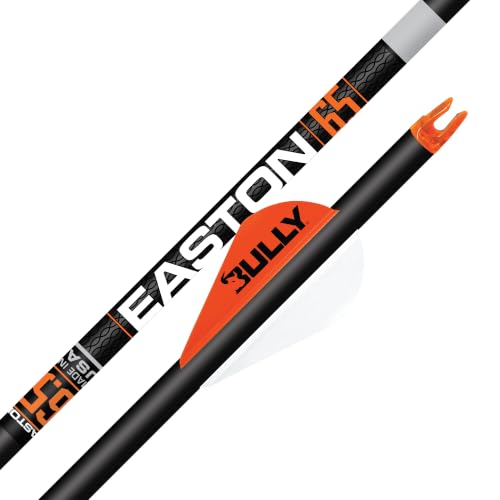

Easton and Gold Tip both make hunting-capable carbon arrows, but they do not fit every shooter the same way. Easton leans harder toward measured shaft control, with carbon and aluminum lines that cover target, hybrid, and hunting use. Gold Tip leans toward durable hunting shafts that can be a smart buy when the builder is willing to sort more carefully.
For strict tuning, Easton usually has the edge. For a rugged hunting build where value matters, Gold Tip often makes more sense. The choice matters less when the bow is already tuned well and the shooter is using fixed-heads with a forgiving setup.
Who each brand usually fits best
Easton fits better when the shooter wants fewer surprises from shaft variation. Gold Tip fits better when the shooter wants a dependable hunting shaft and plans to sort by spine, weight, and straightness before assembly.
That split matters most for broadhead shooters and recurve archers. It matters less for a casual target setup that uses field points and a clean tune already in place.
When the brand choice matters less than setup
Arrow brand will not fix poor center shot, weak rest settings, nock fit problems, or a broadhead that is acting like a steering vane. A shaft can look bad when the issue is brace height, draw weight, rest timing, or component alignment.
Suppose a 340 spine shaft group opens up only with fixed blades. The first suspect should be tune, point weight, and arrow build consistency, not the logo on the shaft.
📊 Easton says it weight-sorts shafts into categories like C1 and C2. Source: Easton Archery.
Which arrow brand is better for your bow?
The better brand depends on bow type and how much tuning room the shooter wants. A compound hunter often wants tighter shaft sorting. A recurve archer usually needs clean spine behavior. Beginners should pick the shaft that cuts down setup variables the most.
Compound hunter priorities
Compound bowhunters tend to see spine variation first through broadhead flight. Easton is often the safer choice for this crowd because the brand leans into measured consistency and published sorting practices, including weight classes like C1 and C2.
Gold Tip can still tune well for a compound, especially in hunting lines such as Hunter XT, but the buyer should expect to verify more shafts before building a matched dozen.
Recurve archer priorities
Recurve shooters are more sensitive to static spine changes because there is no cams-and-cables system masking arrow behavior. Easton has a strong edge in target and recurve work through shafts like X10 and ACE, where design details matter and shaft matching affects the result.
Gold Tip can work for recurve use, but it is usually the less obvious choice when the goal is the tightest spine match for bare shaft and point-on tuning.
Beginner buyer priorities
Beginners should buy the shaft that gives the clearest setup path, not the one with the flashiest reputation. Easton is often easier for this role when the archer wants predictable sorting and a cleaner starting point.
Gold Tip makes more sense for the beginner who values a tough hunting shaft and is willing to verify arrow match before heading into the field.
What actually changes arrow flight: spine, straightness, and sorting
Three things drive most real differences between these brands: static spine, straightness tolerance, and how much shaft sorting is needed before the arrows leave the bench. Static spine is the shaft stiffness rating and its variation from shaft to shaft. Straightness tolerance is how close each shaft stays to true alignment. Sorting matters because neither number guarantees a perfect tune by itself.
Static spine and batch variation
Static spine matters because a shaft that is even a little too stiff or too weak can move fixed-blade impact, especially on a compound or a tuned recurve. Easton says carbon arrows can vary in production stiffness compared with aluminum arrows, which is why shaft matching matters more with some carbon builds than with many aluminum setups.
That is also why a batch can feel inconsistent even when the label is correct. A dozen shafts marked the same can still need sorting if the actual bend response spreads too far.
Straightness tolerance and spin test limits
Straightness tolerance tells you whether the shaft runs true. An arrow spinner can reveal wobble after assembly, and that matters because a crooked shaft or poorly seated component can cause visible runout.
But a spin test does not prove the shaft spine is correct. A straight arrow can still tune badly if the dynamic stiffness, insert choice, or point weight is wrong.
Why shaft sorting matters more for some shooters
Precision builders care most because small build differences show up sooner. Broadhead hunters also care because fixed blades punish bad match quality fast. A more forgiving setup can hide a little variation, but it does not erase it.
Say your compound is set at 70 pounds with a stiff fixed blade. If two arrows from the same dozen fly differently, spine spread or component fit is often the first place to look.
Easton arrows: where they fit and where they do not
Easton fits best when the buyer wants higher control over shaft behavior, especially for target work, recurve tuning, and hunters who want predictable build quality. The brand’s line is broad: carbon and aluminum arrows for different uses, including hunting, 3D, and target. Easton says its arrows are used by more bowhunters, 3D competitors, target shooters and Olympic archers than other brands.
Easton X10 and long-range recurve use
Easton says X10 shafts have three distinct, custom spine zones, a smaller diameter shaft for less surface area in wind, and that cutting X10 shafts from the rear makes them effectively stiffer. That combination is why X10 is a serious target and long-distance recurve shaft, not a general-purpose hunting arrow.
For a recurve archer chasing clean arrow flight at distance, that kind of built-in control matters more than ruggedness alone. It is a precision shaft first.
Easton ACE and rear-cut sensitivity
ACE sits in the advanced target category and is more sensitive to build choices than a basic hunting shaft. Rear-cut behavior matters because changing the cut from the back changes stiffness behavior, so small mistakes can move the tune.
That is not a drawback for skilled builders. It is the reason ACE belongs with shooters who understand shaft preparation and want a tune that responds predictably.
Easton Full Metal Jacket for hunting
Easton Full Metal Jacket is the hunting model most buyers compare against Gold Tip hunting shafts. It combines carbon and aluminum in a penetration-focused build, which can appeal to hunters who want a tougher front end and a shaft that handles field abuse well.
For broadheads, FMJ is one of Easton’s clearest answers to the question of hunting durability without giving up a premium build. The tradeoff is that it is not the lightest or simplest shaft in the lineup.
Gold Tip arrows: where they fit and where they do not
Gold Tip fits best when the buyer wants hunting durability, broadhead-ready use, and a shaft line that can take hard field treatment. The brand has a strong following for carbon shaft consistency and toughness, but buyers who want the tightest build may need to sort more than they would with Easton.
Gold Tip Hunter XT and hunting use
Gold Tip Hunter XT is one of the clearest current hunting comparisons in this head-to-head. The forum thread even notes Hunter XT 340 shafts tested on a Ram spine tester, which is exactly the kind of screening serious bowhunters use before fletching.
A 340 label is only a starting point. The real question is whether the actual shafts cluster tightly enough for the draw weight, point weight, and broadhead setup being used.
Carbon shaft consistency and toughness
Gold Tip’s appeal is simple: the shafts are known for being hard to beat for hunting abuse. That makes sense for field use, transport, and repeated practice with the same arrow build.
One forum user reported a spine range from 326 to 362 on a dozen new shafts. That kind of spread is exactly why Gold Tip buyers often talk about sorting first and shooting second.
Broadhead tuning and shaft sorting with Gold Tip
Gold Tip can tune very well with fixed blades, but the shooter needs to verify the shafts before blaming the brand for poor arrow flight. If the broadheads plane left or right, the problem may be spine spread, nock fit, or component alignment rather than the hunting shaft design itself.
Gold Tip rewards a builder who sorts carefully. It is less friendly to the shooter who wants to grab a dozen, build fast, and hope the arrows match closely enough.
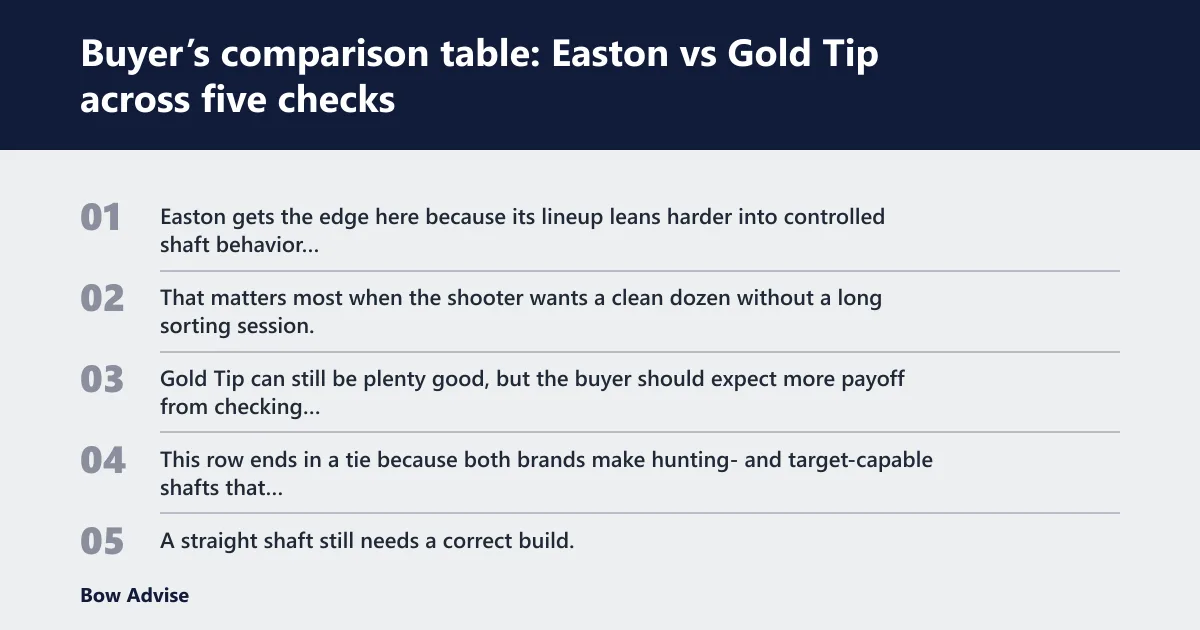
Buyer’s comparison table: Easton vs Gold Tip across five checks
| Build check | Easton Arrows | Gold Tip Arrows | Winner |
|---|---|---|---|
| Spine consistency | Usually easier to sort into a tight match | Can be consistent, but more checking is smart | Easton Arrows |
| Straightness tolerance | Strong, especially in premium target and hybrid shafts | Strong enough for hunting and field use | Tie |
| Tuning forgiveness | Better for precision tuning and repeated shaft matching | Better for a rugged hunting build with a little more tolerance for variation | Tie |
| Hunting durability | Excellent in FMJ-style hunting builds | Excellent in typical carbon hunting lines | Tie |
| Need for shaft sorting | Lower on many consumer builds, but still wise for precision work | Higher if the goal is tight broadhead and spine matching | Easton Arrows |
Spine consistency
Easton gets the edge here because its lineup leans harder into controlled shaft behavior and published sorting language. That matters most when the shooter wants a clean dozen without a long sorting session.
Gold Tip can still be plenty good, but the buyer should expect more payoff from checking shafts one by one.
Straightness tolerance
This row ends in a tie because both brands make hunting- and target-capable shafts that can be built into straight arrow systems. A straight shaft still needs a correct build, and a slightly less perfect shaft can still tune well if the rest of the setup is right.
For most bowhunters, straightness becomes a build quality check, not the whole story.
Tuning forgiveness
Tuning forgiveness depends on the full system, not just the name on the box. Easton helps the precision-minded shooter because it offers strong options across target and hunting categories. Gold Tip helps the practical hunter because its shafts are durable and predictable enough when the build is matched well.
Neither brand rescues bad rest timing or a bad broadhead choice.
Hunting durability
Gold Tip earns a tie or a slight edge in the minds of many hunters because its carbon hunting shafts have a reputation for taking abuse well. Easton closes the gap with FMJ, which is built for penetration-focused hunting use.
For most field shooters, this row is close enough that shaft line matters more than brand name.
Need for shaft sorting
Easton is easier when the shooter wants a cleaner starting point. Gold Tip is more likely to reward a careful matching session, especially if the buyer is chasing broadhead consistency or grouping that stays tight from shaft to shaft.
This is the row where the practical difference starts to matter. It affects build time, wasted components, and how fast the shooter finds a correct tune.
How to sort and verify new shafts before you build
New shafts are often checked in this order: first spine, then straightness, then weight. A spine tester measures shaft variation and can help diagnose batch consistency. An arrow spinner checks straightness after assembly and can help detect wobble that may come from the shaft, insert, point, or nock end.
- Measure static spine with a tester and group shafts by actual bend response.
- Weigh the shafts and keep like weights together, especially for fixed-blade hunting builds.
- Inspect straightness and component fit before fletching or final assembly.
- Spin the finished arrow to catch wobble from inserts, points, or crooked components.
- Paper tune or bare shaft tune after the build, not before.
Easton says it weight-sorts shafts into categories like C1 and C2, and that every dozen shafts are within 0.5 grains. Those are useful markers for builders who care about repeatability. Gold Tip buyers can still build tight sets, but the sorting job usually lands more on the archer.
Which brand fits which shooter profile?
Easton fits the shooter who wants tighter control over arrow behavior, especially in target-style builds and more exacting recurve or compound tuning. Gold Tip fits the shooter who wants a sturdy hunting shaft and is willing to sort and verify more often before the first shot.
Beginner
Beginners usually benefit from Easton because it gives a clearer path to a matched set and a cleaner starting point for tune. That lowers the chance of blaming the wrong part when an arrow does not fly correctly.
Compound hunter
Compound hunters who use fixed blades and want repeatable flight should lean Easton first, then Gold Tip if the hunting shaft line and price point fit better. If the rest of the setup is already solid, both can work well.
Recurve archer
Recurve archers should usually start with Easton, especially if the build goal is precise spine behavior and less guesswork. X10 and ACE sit in the part of the market where shaft design really changes outcomes.
Precision DIY builder
Precision DIY builders can get good results from either brand, but Easton is the easier place to start if the goal is to minimize sorting time. Gold Tip is better when the builder enjoys screening shafts and building a set from the best-matched pieces in the dozen.
Easton arrows vs Gold Tip arrows
Easton is the better fit when the buyer wants consistent spine behavior, simpler sorting, and a clearer path for recurve or precision compound tuning. Gold Tip is the better fit when the buyer wants a durable hunting shaft, broadhead-capable performance, and does not mind checking more shafts before building.
Choose Easton if the tune has to be tight from the start. Choose Gold Tip if the hunting build needs toughness first and the shooter is willing to sort, verify, and tune more carefully.
Verdict: Easton Arrows or Gold Tip Arrows?
Choose Easton Arrows if you want strict spine consistency and easier top-to-bottom shaft sorting for compound hunting, recurve tuning, or precision target builds like X10 and ACE.
Choose Gold Tip Arrows if you want a durable hunting shaft for hard field use, such as Hunter XT broadhead setups, and are willing to sort more arrows before assembly.
Frequently asked questions
gold tip arrows vs easton arrows
Gold Tip and Easton are both serious arrow makers, but they lean toward different priorities. Easton is usually the safer pick for shaft matching and precision build control. Gold Tip is often the better hunting value when durability matters and the buyer is willing to sort more shafts before final assembly.
easton vs gold tip arrows
Easton usually wins on spine consistency and easier matching, while Gold Tip often wins on rugged hunting value. The better choice depends on whether the shooter wants a cleaner build path or a tougher shaft that may need more screening before it is ready for broadheads.
are gold tip arrows good
Yes. Gold Tip arrows are a solid choice for hunters, especially when the buyer wants durable carbon shafts that hold up well in field use. They are strongest when the archer sorts shafts carefully and verifies tune before blaming the arrow line for poor flight.
Which is more consistent: Easton or Gold Tip arrows?
Easton is usually the safer choice for consistency, especially for shooters who care about tighter shaft matching across a dozen. Gold Tip can be consistent enough for hunting, but the buyer is more likely to benefit from extra spine and weight sorting before building.
Which arrows penetrate better, Easton or Gold Tip?
Penetration depends more on total arrow mass, broadhead style, and tune than on brand alone. Easton Full Metal Jacket is built with penetration-focused construction, while Gold Tip hunting shafts are durable and field-ready. The setup matters more than a simple brand answer.
Are Gold Tip arrows durable enough for hunting?
Yes. Gold Tip is known for tough hunting shafts that stand up well to field use. That durability is one reason the brand stays popular with bowhunters who want a practical shaft and do not mind sorting for the best-matched arrows before the season starts.