Best Arrow Wraps for Custom Arrow Builds: Fit Guide
The best arrow wraps for custom arrow builds are the ones sized to your shaft diameter first, then matched to the job: matte for hunting, bright or glossy for target and 3D, and heavy-duty vinyl if durability matters most. A bad fit can peel, wobble, add weight unevenly, and wreck vane adhesion. I’ll compare wrap types, sizing methods, and finish choices for hunting, target, youth, carbon, and wood arrows so you can order the right custom wrap the first time.
My top pick is a matte or reflective vinyl wrap sized from shaft diameter, because it gives me the cleanest fit and the fewest headaches at the fletching line. When I build arrows on my own bench, I care more about fit and finish than a flashy pattern that crowds the vanes.
Quick picks for custom arrow builds
- Best for low-light hunting: reflective vinyl wrap with a low-profile custom design.
- Best for 3D target arrows: matte vinyl with bold numbers or logos for fast ID without glare.
- Best for bright indoor range use: fluorescent wrap that stands out at a glance.
- Best for youth builds: simple matte or white wrap with an easy-to-read name or arrow number.
- Best for carbon shafts: a fit-to-shaft wrap sized from measured shaft diameter, not just the label on the box.
- Best for wood shafts: a wrap with enough width tolerance to handle slightly uneven shaft diameter.
According to arrowrap.com — Wrap width is calculated as arrow diameter multiplied by 3.14.
My first compound bow was set 10 lb too heavy; I flinched for a month before I backed the limb bolts out.
What I recommend first, based on your build
If you want one rule from me, start with the shaft, not the artwork. I’ve seen prettier wraps fail because they were cut for the wrong diameter, and I’d rather install a plain wrap that fits than fight a custom one that lifts at the seam.
My top wrap type for hunting arrows
For hunting, I reach for reflective or matte wraps depending on how much low-light pickup I need. Reflective wraps help me find arrows at dawn and dusk, but they can catch more light in the field. Matte keeps things quieter visually and usually looks cleaner beside dark vanes.
My top wrap type for target arrows
For target and 3D arrows, I prefer matte or fluorescent vinyl. Matte cuts glare under range lights and gives logos a cleaner look. Fluorescent works well when I want fast arrow ID from a distance, especially in mixed light where plain white blends in too much.
My top wrap type for branding-heavy builds
If the build is about names, logos, or artwork, I choose a custom design tool that lets me proof the layout before printing. The art matters, but fit-to-shaft sizing matters more. A sharp logo on the wrong wrap width still looks off once it reaches the shaft.
What are the best arrow wraps for custom arrow builds?
The best arrow wraps for custom arrow builds are the ones matched to the job first, then matched to the finish you actually need. I rank them by visibility, branding potential, shaft fit, and durability, because a wrap that looks great on a screen can still fail on a real shaft with real vanes.
How finish choice changes visibility
Finish changes how fast I can spot an arrow and how much glare it throws back. White and fluorescent wraps are easier to find at a glance. Reflective wraps are built to improve low-light visibility, which helps on early morning and late evening hunts, but that same shine can be a drawback in daylight.
How wrap material changes durability
I like vinyl because it adds little weight and holds up well when the surface prep is right. The wraps I test are printed on vinyl in a few finishes, using inks suited for outdoor use. That matters on arrows that see wet grass, cold truck beds, and repeated handling.
How custom designs change ordering time
Custom art adds proofing time. A good custom design tool should support names, logos, artwork, and fit-to-shaft sizing in one workflow. I want to see the layout on the actual shaft size before I order, because a design that looks centered on a mockup can shift once it wraps a real tube.
How do I size arrow wraps for my shafts?
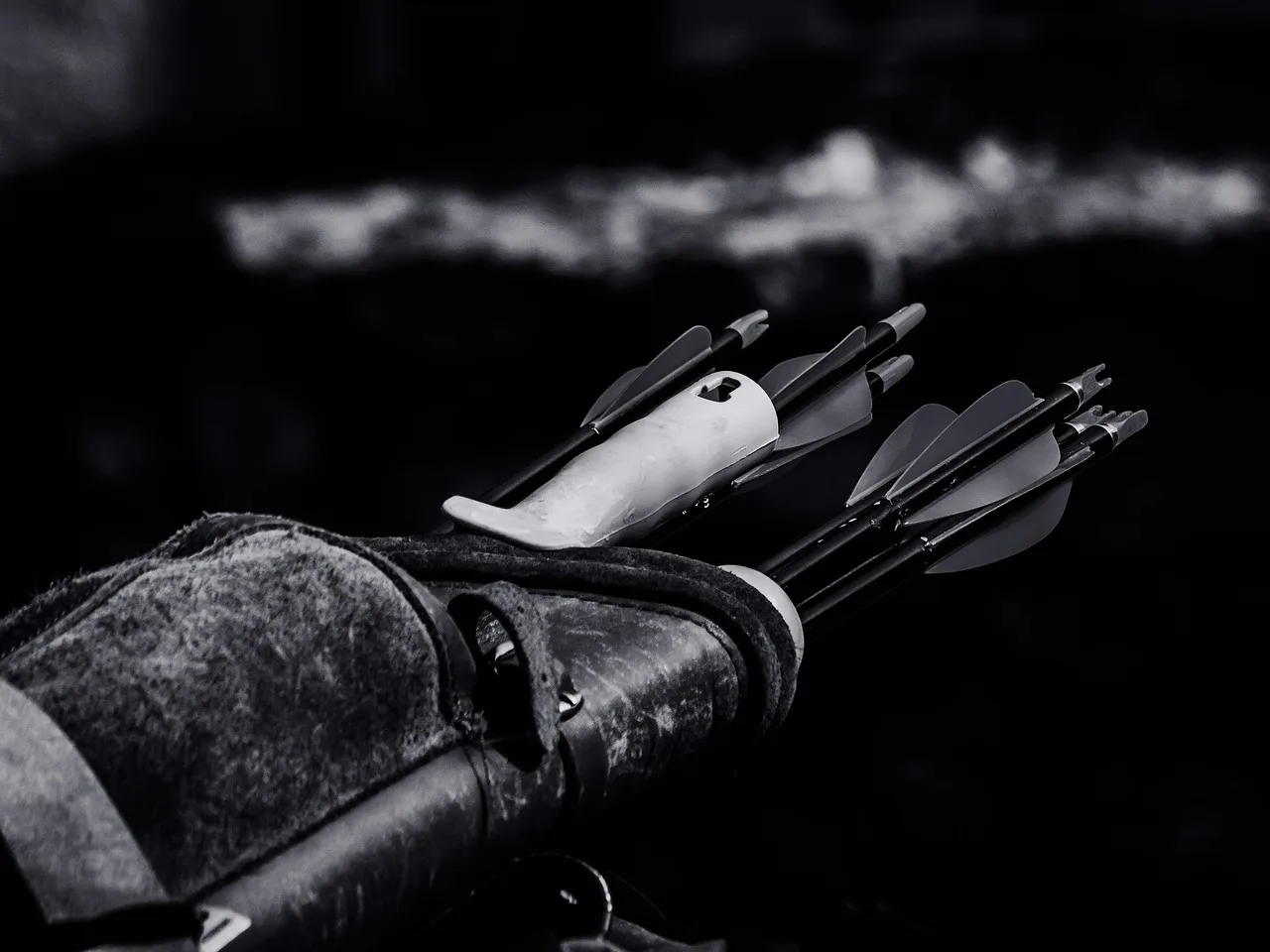
Size wraps from measured shaft diameter, not from guesswork. I use the shaft diameter as the input, calculate width with diameter × 3.14, and then choose the next size up if the exact cut looks tight. A little overlap is acceptable, but I avoid gaps because they create a visible seam and can lift later.
Measure shaft diameter the right way
Use the actual shaft, not the label alone. Brand and model variation can change fit even inside the same spine class, and I’ve seen shafts from different makers land at different diameters. Measure the naked shaft where the wrap will sit, especially if you use odd inserts, cresting, or thicker finish near the back.
Use diameter × 3.14 to estimate wrap width
The wrap width is calculated as arrow diameter multiplied by 3.14. That gives you a practical starting width for the wrap before trimming. I still like to check the shaft against the shop’s sizing chart or custom sizing support, because “fits one carbon shaft” does not mean it fits every carbon shaft.
When to choose the next size up
If the fit feels tight, consider sizing up, especially when you are between sizes, the shaft is a bit larger, or the wrap design needs extra room. I would rather trim a touch than stretch a wrap into place. Stretching invites wrinkles, and wrinkles become edge lift after a few sessions.
How much overlap or gap is acceptable
A little overlap is acceptable when installing wraps. I would not build around a visible gap unless the design hides it on purpose. My tolerance is simple: enough overlap to seal the seam, not so much that the edge stacks up and crowds the vanes or looks bulky under the fletching.
Which finish should I choose: matte, fluorescent, or reflective?
Choose the finish based on how you plan to use it, not on color alone. Matte is best when glare control matters. Fluorescent is best when you need quick visual pickup. Reflective is best when you hunt in dim light and want the arrow easier to find. The wrong finish can look loud, or worse, create glare that distracts you.
Matte for reduced glare and cleaner branding
Matte works well on hunting arrows and branding-heavy builds because it keeps logos readable without a slick reflection. I like matte on darker shafts and on setups where I want the fletching to stand out instead of the wrap. It also looks more finished under indoor lights.
Fluorescent for fast visual pickup
Fluorescent is my pick for range arrows, youth arrows, and bright 3D setups when I want the arrow easy to identify. It is not subtle, and that is the point. It helps with sighting, sorting, and recovery on busy practice days.
Reflective for low-light hunting use
Reflective wraps are worth it when I expect early morning and late evening shots or I want easier arrow recovery after a pass-through. The tradeoff is simple: they can look too bright in full sun and may show more glare than matte or fluorescent. I accept that tradeoff on hunting rigs.
When glare becomes a problem
Glare becomes a problem when the wrap competes with your sight picture, distracts from your fletching layout, or flashes under range lights. I noticed this clearly after I switched to a left-hand bow because I am left-eye dominant; my groups tightened within two weeks, and I became more aware of anything on the shaft that pulled my eye off target.
Proof asset: wrap choices by build type
| Build scenario | Best wrap finish | Sizing method | Common failure risk |
|---|---|---|---|
| Hunting low-light | Reflective vinyl | Measure shaft diameter and size up if the seam is tight | Too much glare in daylight |
| 3D target | Matte vinyl | Diameter × 3.14, then confirm clearance near vanes | Logo crowding at the fletching line |
| Bright indoor range | Fluorescent vinyl | Use manufacturer chart plus your measured diameter | Overly bright finish that hides cresting details |
| Youth build | Matte or white vinyl | Simple shaft measurement with next-size-up margin | Wraps cut too close and peel at the seam |
| Carbon shaft | Matte, fluorescent, or reflective by use | Measure the actual shaft model, not just the spine rating | Wrong diameter from model-to-model variation |
| Wood shaft | Matte or white vinyl | Check the shaft at the wrap location for taper or unevenness | Edge lift on slightly irregular surfaces |
How do I apply arrow wraps without bubbles or gaps?
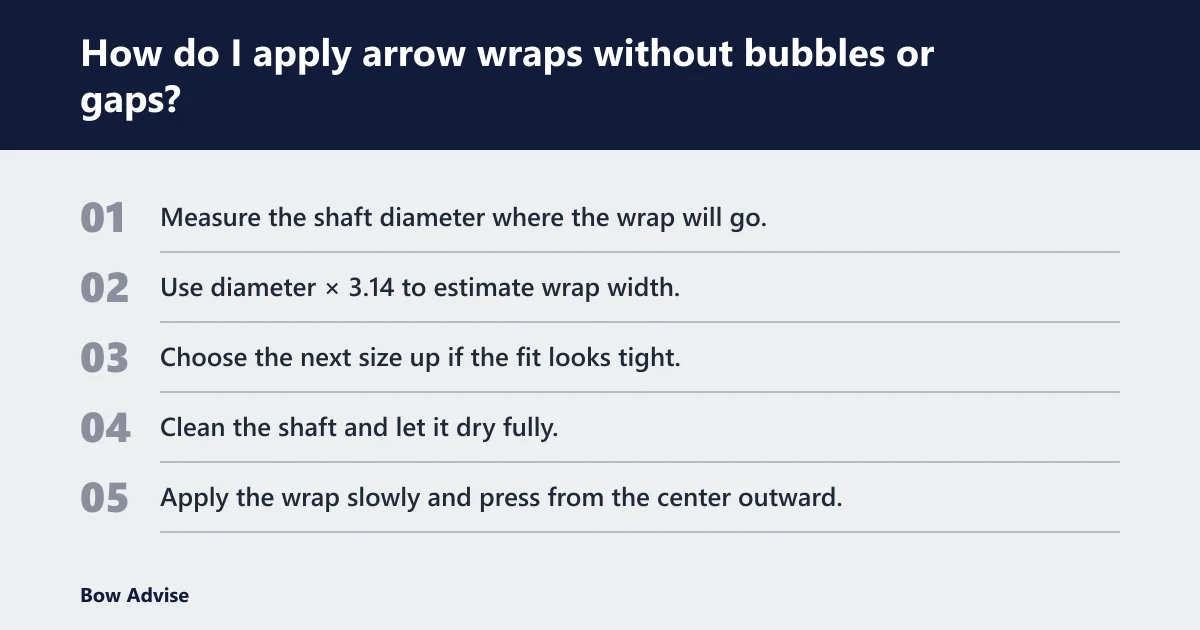
The cleanest wraps go on a clean shaft, before fletching, with the seam pressed down carefully as you roll it around the tube. Bubbles usually come from dust, oil, or a rushed install. Gaps come from poor sizing. Edge lift comes from weak prep or the wrong adhesive on the shaft finish.
Surface prep before the wrap goes on
Wipe the shaft with a clean solvent-safe prep and let it dry fully before applying the wrap. I also handle shafts with clean hands after that. Carbon shafts especially need a clean surface because residue can keep the adhesive from biting properly. Wood shafts need the same care, plus a check for rough spots.
Adhesive types that work best
I look for adhesive that is made for vinyl wraps and compatible with the shaft finish. Pressure-sensitive adhesive is what I want most often. It gives me a controlled install and stays put when the surface prep is right. Glue is not my first choice unless the specific wrap maker calls for it.
Where wraps go in the build order
Wrap before fletching. That keeps the seam clear and gives the vanes a clean surface to bond to. I usually build in this order: shaft prep, wrap, fletching, then nock and point setup. If the wrap sits too close to the vane path, it can crowd the layout and force a crooked vane line.
How to avoid edge lift and seam problems
- Measure the shaft diameter where the wrap will go.
- Use diameter × 3.14 to estimate wrap width.
- Choose the next size up if the fit looks tight.
- Clean the shaft and let it dry fully.
- Apply the wrap slowly and press from the center outward.
- Check that the seam does not interfere with vanes or nocks.
Can I order custom arrow wraps with logos or names?
Yes, and a good custom order should give you proofing, artwork support, and fit-to-shaft sizing in one place. I want to see how the name, logo, or graphic lands on the actual shaft width before I approve it. That saves me from wraps that look right on paper but wrong in hand.
What a good custom design tool should offer
The tool should let me add names, logos, and artwork, then preview the wrap on the correct shaft diameter. It should also support the wrap width calculation and offer sizing help by model when the manufacturer chart matters. If the tool ignores shaft size, I treat that as a warning sign.
Proofing and approval steps
Proofing matters because small changes on screen become big changes on the arrow. I check spelling, logo placement, vane clearance, and seam location before I approve anything. I also ask whether the print uses durable outdoor-rated solvent inks, since the art has to survive real weather and field use.
Sizing support for model-specific shafts
Brand-specific shaft sizing helps when the shaft model has a known outside diameter. Some common arrow models fit one wrap width better than another, even when the spine looks similar. I still measure my own shaft, because the chart gets me close and the caliper tells me the truth.
What to check before you place the order
Before I buy, I confirm shaft diameter, wrap width, finish, proof, and how the seam lands near the fletching. I also check whether the shop offers custom arrow wraps and stabilizer wraps, since I like matching gear when I build a full setup. Orders ship within 3 business days, which is useful when I am finishing a hunt setup on a tight schedule.
Frequently asked questions
What are the best arrow wraps for custom arrow builds?
The best arrow wraps are the ones that fit your shaft diameter first and your use case second. I choose matte for hunting and branding, fluorescent for fast pickup, and reflective when low-light visibility matters. A good fit keeps the seam stable, protects vane layout, and avoids the sloppy look that ruins a custom build.
Do arrow wraps affect arrow weight or flight?
Yes, but the change is small when the wrap is sized and installed well. I care more about uneven weight from poor overlap, wrinkling, or edge lift than the wrap itself. In practice, a clean wrap seems to add very little disturbance compared with a bad fletching layout or a damaged shaft finish.
What size arrow wrap do I need for my shafts?
Measure the shaft diameter at the wrap location, then estimate wrap width with diameter × 3.14. If you are between sizes, I prefer the next size up so the seam can close cleanly. That gives me a little installation margin without forcing the wrap to stretch or gap.
Are reflective arrow wraps worth it for hunting?
They are worth it when I hunt in early morning or late evening and want better arrow visibility in dim light. The tradeoff is extra glare in bright conditions, so I do not use them on every build. For low-light whitetail setups, I think they make sense often enough to keep in the kit.
How do I apply arrow wraps without bubbles or gaps?
Start with a clean, dry shaft and install the wrap before fletching. Work slowly, press the vinyl down as you roll it around the shaft, and make sure the size is right before you peel the backing. Bubbles usually come from dirt or rushing, while gaps usually mean the width was wrong.
Can I order custom arrow wraps with logos or names?
Yes, and I would insist on proofing before printing. A good custom order lets you place names, logos, or artwork, then confirms fit-to-shaft sizing so the design lands where you expect. I also check that the wrap clears the vane layout and does not crowd the nock end.