Wood Arrow Shafts Cost: Price Guide for DIY Builders
Wood arrow shafts usually cost about $5–$15 each for common spruce, pine, or cedar. A finished DIY arrow often ends up at about $8–$22 per shaft once points, feathers, nocks, glue, and finish are counted. Ignore the extras and a cheap shaft can become an overpriced arrow that flies badly or fails early. This guide breaks down raw shaft price, finishing cost, and shop-built convenience pricing so you can compare real totals.
Wood arrow shaft prices by build type
Raw shafts versus pre-finished shafts
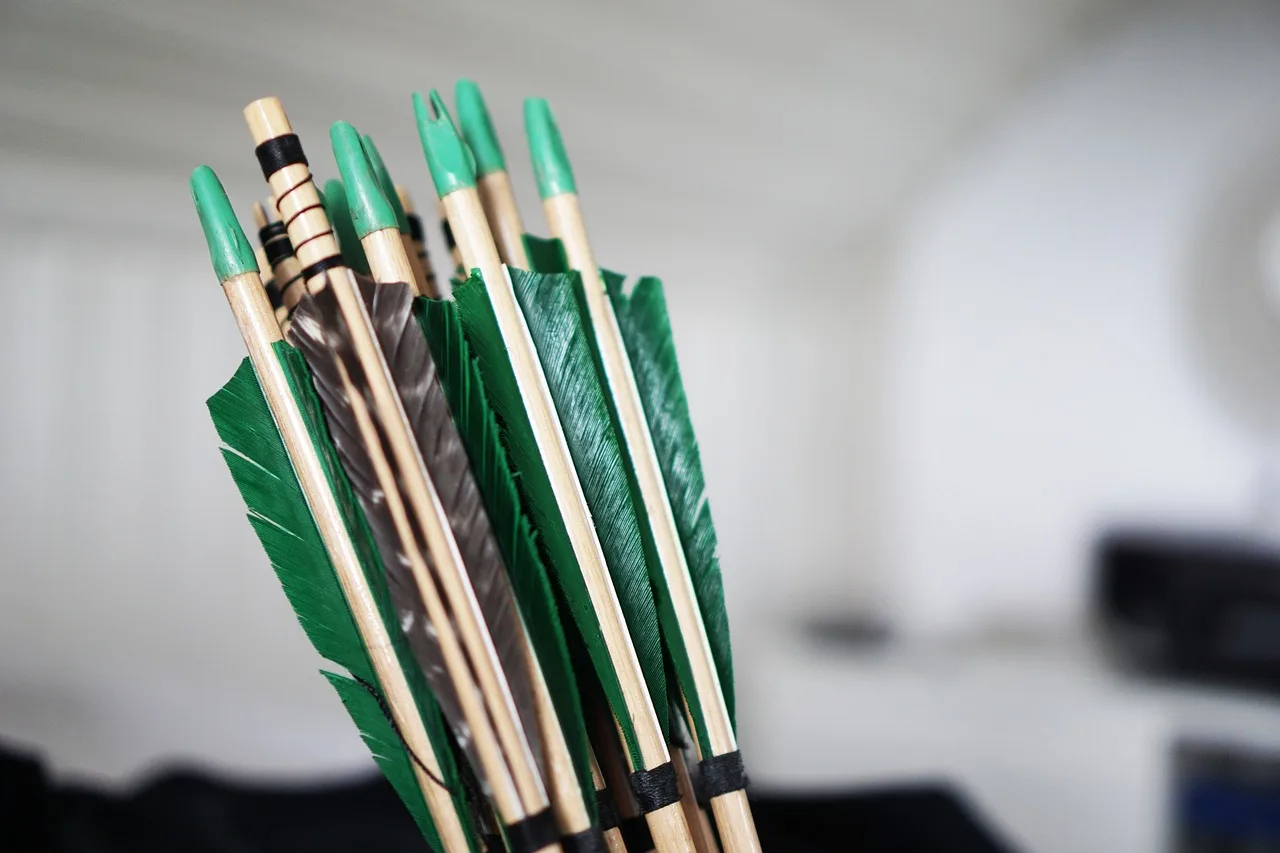
Raw shafts are the lowest sticker-price option, but they are only the start of the bill. Pre-finished shafts cost more up front because sanding, coating, and often spine sorting are already done, which can save time and cut down on mismatched builds.
3Rivers lists pre-finished wood shafts at $74.99-$79.99 per 12-pack, with spine groups from 30-35 through 80+. That puts the shaft-only price at about $6.25-$6.67 each before any cut-and-taper work or other finishing supplies.
Where DIY savings disappear
The savings shrink when the build needs sealer, glue, feathers, nocks, points, and discarded shafts that fail spine matching. A shaft that looks inexpensive on the product page can cost much more once the arrow is fully assembled and tuned for a recurve or longbow.
That gap matters most for buyers comparing a bare shaft against a prepped shaft on a per-dozen basis. Bulk packs reduce the shaft cost, but they do not remove the cost of setup, waste, or parts that still have to be added.
Best value by use case
For beginner practice, the best value is usually a plain shaft in a known length and diameter, because breakage and mistakes are part of the learning curve. For target shooting, pre-finished shafts can make sense if the buyer wants quicker assembly and fewer finishing steps. For traditional hunting builds, a more selective spine match often matters more than shaving a dollar or two from the shaft itself.
Port Orford cedar is prized for being lightweight yet durable, which is why it stays a traditional premium choice. Pine is the budget traditional option. Bamboo sits in the middle as a common alternative material for DIY arrows, especially when a buyer wants a traditional look with manageable cost.
How much do wood arrow shafts cost?
Most wood arrow shafts are sold in 6-packs or 12-packs, and the per-shaft price drops as the pack size rises. Cheap wood arrow shafts often include only the bare shaft, while better-priced listings may add closer sorting, sanding, or finish work. Expect price swings based on wood type, straightness, and whether the shaft is ready to build.
Typical per-shaft and per-dozen pricing
For common DIY builds, the shaft price alone can sit in the low single digits for budget pine and climb into the upper single digits for cedar or pre-finished stock. The cleanest way to compare sellers is by per-shaft and per-dozen price, because a 12-pack can hide a large difference in total outlay.
Some listings are sold by the pack only, so the buyer should divide by 6 or 12 before comparing. A 12-pack that looks expensive can still beat a cheaper-looking 6-pack once the per-shaft math is done.
What cheap wood arrow shafts usually include
Cheap shafts usually mean raw, unfinished wood with no point install, no nock install, and no finish. That is fine for a builder who already plans to taper, seal, and cut the shafts, but it is not the same as a ready-to-shoot arrow.
On product pages, cheap often means less sorting, not necessarily worse material. The real question is whether the buyer wants a budget shaft for practice or a shaft that is already close to finished.
Pack sizes buyers should expect
Wood arrow shafts are commonly sold in 6-packs and 12-packs. That matters because the service fee for cutting and tapering is often quoted by pack size, not by individual shaft, so the final total changes with quantity.
3Rivers charges $6.00 for cut-and-taper service on a 6-pack and $12.00 for cut-and-taper service on a 12-pack. That is a simple per-shaft add-on of $1.00 either way, before the rest of the build parts are counted.
What length and spine should you buy?
For most DIY wood arrows, 31 to 33.5 inches is the common length band to shop first. Spine should match the bow’s draw weight and the rest of the setup, especially for recurve and longbow use. Diameter matters too, because the shaft must fit the nock and point hardware.
Common lengths around 31 to 33.5 inches
Several listed shaft options sit inside that range: SHARROW wooden shafts are listed at 31 inches and 8 mm diameter, ZSHJGJR handmade wooden shafts are listed at 31.5 inches and 8 mm outer diameter, and e5e10 wooden shafts are listed at 33.5 inches. HNZMDY bamboo arrow shafts are listed at 33 inches.
Length choice should leave enough material for final trimming. A shaft that starts too short gives little room for tuning, and a shaft that starts too long can still be cut down if the spine and diameter work.
Spine ranges for recurve and longbow setups
Spine is the stiffness rating that helps determine how the shaft bends under launch. 3Rivers lists spine groups from 30-35 through 80+, and ZSHJGJR wooden shafts are described with a spine range of 35-65 pounds. That gives buyers a wide spread for recurve and longbow setups.
For traditional bows, the right spine range depends on draw weight, point weight, and arrow length. A mismatch can send the arrow left or right, reduce grouping, or make tuning harder than it needs to be.
Why diameter must fit nocks and points
Diameter is not a minor detail. A shaft that is around 7 mm or 8 mm must still fit the chosen nock and point system, and many wood builds live in that range. If the diameter is wrong, the builder may need different components or a different shaft.
That is why buyers should check both the listed diameter and the hardware they plan to use. A 7 mm bamboo shaft and an 8 mm wood shaft may both be usable, but they do not always take the same nocks, inserts, or points.
Cost ladder for wood shafts
This ladder shows how a wood arrow build grows from a raw shaft into a finished arrow. The right-hand column shows common failure costs, such as waste from a bad spine match or broken practice shafts. Those losses are easy to ignore when the first price is only the shaft.
| Build stage | Typical cost per arrow | Typical cost per dozen | Common failure costs |
|---|---|---|---|
| Raw shaft only | $5-$8 | $60-$96 | 1-2 rejected shafts from poor spine match: $5-$16 |
| Bare shaft + consumables | $6.50-$10.50 | $78-$126 | Glue, finish, and feather waste if a shaft splits: $2-$5 per damaged arrow |
| Optional cut-and-taper service | +$1.00 | +$12.00 | Wrong cut or wrong taper means another shaft may be needed: $5-$8 |
| Finished DIY arrow | $8-$22 | $96-$264 | Bad spine choice or broken practice shaft can add $6-$24 per dozen in waste |
Raw shaft cost
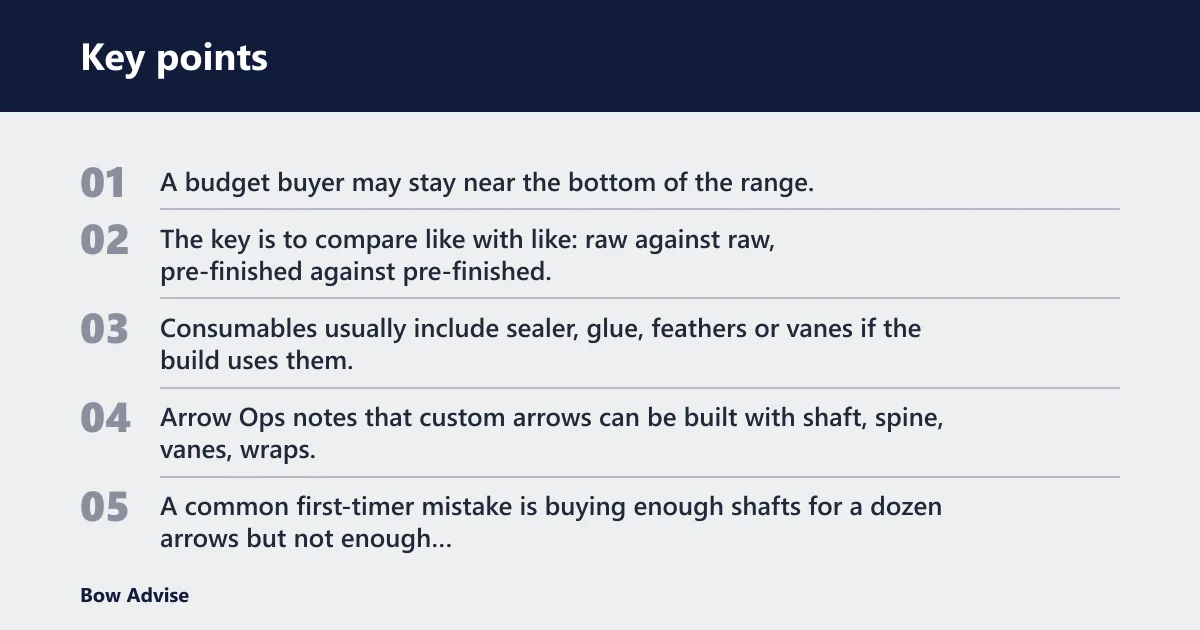
The raw shaft is the starting point. A budget buyer may stay near the bottom of the range, while a builder choosing straight cedar or sorted pre-finished stock can land higher even before any other parts are added.
The key is to compare like with like: raw against raw, pre-finished against pre-finished, and service-assisted builds against service-assisted builds.
Bare-shaft consumables and finishing supplies
Consumables usually include sealer, glue, feathers or vanes if the build uses them, nocks, and points. Arrow Ops notes that custom arrows can be built with shaft, spine, vanes, wraps, and tips, and every one of those parts adds cost once the shaft leaves the box.
A common first-timer mistake is buying enough shafts for a dozen arrows but not enough consumables for a dozen finished arrows. That turns a good shaft price into a stalled project and usually adds another trip to the checkout page.
Optional cut-and-taper service
Cut-and-taper service is a convenience fee, not a separate shaft category. 3Rivers charges $6.00 for a 6-pack and $12.00 for a 12-pack, so the math is easy to compare against the time and tools needed to do the work by hand.
Say your goal is a dozen arrows for a traditional practice set. If the service saves a wrong cut or uneven taper, the fee may be cheaper than sacrificing a shaft and starting over.
Finished-arrow cost and failure costs
The finished-arrow number is the one that matters to the buyer. A shaft that starts cheap can still become a costly arrow once it carries glue, points, fletching, finish, and one or two mistakes from spine mismatch or breakage.
Suppose a builder buys a dozen shafts, rejects two for poor spine fit, and breaks two more during practice. The effective cost per usable arrow jumps fast, which is why waste belongs in the budget from the start.
Are bamboo arrow shafts cheaper?
Bamboo is often a lower-cost alternative to premium cedar, but it is not always cheaper than every pine listing. Its value comes from the balance of price, length, and traditional look, especially for DIY practice arrows where a buyer wants a workable shaft without paying premium cedar prices.
Bamboo price position versus cedar and pine
Bamboo usually sits as a budget-to-midrange option in traditional arrow building. Port Orford cedar tends to sit higher because it is a premium traditional material, while pine is commonly used as the budget option for practice and entry-level builds.
The key is consistency: bamboo should be judged against other shafts by total cost, not by label alone. Straightness, diameter, and spine still matter just as much as species.
Common bamboo lengths and diameters
HNZMDY bamboo arrow shafts are listed at 33 inches, which fits well in the common DIY range. Lamehfyo bamboo arrow shafts are listed as 7 mm / 12 pcs, which is a helpful reminder that some bamboo options are sold by diameter and pack count rather than by elaborate finish details.
That makes bamboo easy to compare against other shafts when a buyer already knows the nock and point size needed for the build.
Where bamboo fits in practice builds
Bamboo is often a sensible pick for practice arrows, especially when a builder wants a traditional feel and a simple bulk purchase. It also gives the buyer a way to keep cost down without moving away from wood-and-bamboo materials entirely.
If the goal is frequent shooting with limited spend, bamboo can be a better buy than a prettier shaft that still needs the same hardware and labor.
Are pre-finished shafts worth the extra cost?
Pre-finished shafts are worth the extra cost when time matters, consistency matters, or the buyer wants less finishing work. They are less attractive when the builder already owns the tools, wants maximum control, and is comfortable handling sanding, sealing, and taper work separately.
What pre-finished wood shafts add
Pre-finished shafts remove a chunk of prep labor and often give the builder a cleaner starting surface. 3Rivers lists pre-finished wood shafts at $74.99-$79.99 per 12-pack, which is a real premium over raw stock, but the buyer is paying for readiness as well as wood.
That premium can be fair if the buyer values less time at the bench and fewer rough edges to manage before assembly.
When cut-and-taper service saves time
Cut-and-taper service is most useful when the builder wants a repeatable setup and does not want to buy separate tools for the job. The fee is easy to understand because 3Rivers charges $6.00 on a 6-pack and $12.00 on a 12-pack.
For a person building multiple arrows in the same spine group, that can be a practical shortcut. It removes one more variable before the first shot.
When raw shafts stay the better buy
Raw shafts stay the better buy when the buyer wants the lowest entry price and already has the tools for cutting, tapering, sealing, and assembly. They also make sense when the builder expects to tune several shafts and can afford to reject a few that do not match.
For recurve and longbow setups, raw shafts are strongest on value when the buyer knows the needed spine range and diameter before ordering. That keeps waste lower and keeps the budget under control.
Frequently asked questions
What is a good price for cheap wood arrow shafts?
A good cheap price is one that still leaves room for the rest of the build. For practice shafts, the buyer should compare per-shaft and per-dozen pricing, then check whether the shaft is raw or pre-finished. A cheap shaft that needs extra waste or rework may cost more in the end.
Are pre-finished wood shafts worth the extra cost?
They are worth it when the buyer wants less prep work, cleaner surfaces, and a faster path to finished arrows. 3Rivers lists pre-finished wood shafts at $74.99-$79.99 per 12-pack, so the added cost is real, but it may be easier to justify than buying tools and spending extra time on each shaft.
How many shafts come in a pack of wood arrow shafts?
Wood arrow shafts are commonly sold in 6-packs and 12-packs. That is why service pricing and per-shaft math matter so much. A 12-pack usually gives the best per-shaft value, while a 6-pack can be useful for testing a spine group before committing to a larger order.
What length wood arrow shafts should I buy for DIY arrows?
For most DIY builds, 31 to 33.5 inches is a practical place to start. SHARROW lists 31 inches, ZSHJGJR lists 31.5 inches, e5e10 lists 33.5 inches, and HNZMDY bamboo is listed at 33 inches. A slightly longer shaft gives more room for trimming and tuning.
What spine range should I choose for wood arrow shafts?
Choose a spine range that matches the bow’s draw weight and the arrow setup. 3Rivers lists spine groups from 30-35 through 80+, and ZSHJGJR lists 35-65 pounds. For recurve and longbow use, the right spine helps grouping, flight consistency, and tune quality.