Best Arrow Making Glues for Carbon and Wood Shafts (2026): we compared
For carbon shafts, I use a low-blooming cyanoacrylate for fletching and a 24-hour epoxy for inserts. For wood, epoxy or fletching cement works better. For mixed builds, I match the glue to the failure mode, not the clock. Bad glue choice means feathers pop off, inserts creep, and shafts split when a broadhead hits bone. I compare the best arrow making glues for carbon and wood shafts by material, bond type, cure time, and repair use.
This guide is part of our Arrow making guide: tools, materials, and methods series.
Quick picks
- Best overall: extra-thick gel cyanoacrylate. It controls squeeze-out, holds vanes in place, and still sets fast enough for most carbon and wood fletching jobs.
- Best for speed: CA glue with accelerator. That is the pick when I need quick turnaround builds or a range repair before a hunt.
- Best for traditional wood shafts: a fletching glue that stays put on feathers and gives you more working time than thin CA.
Quick comparison
| Product | Badge | Best for | Price | ||
|---|---|---|---|---|---|
 | Titebond III Ultimate Wood Glue, 16-Ounces #1414Titebond | Budget pick | 16 oz · Wood glue · Non-toxic | $9.58 Price as of 2 Oct 2026 | View |
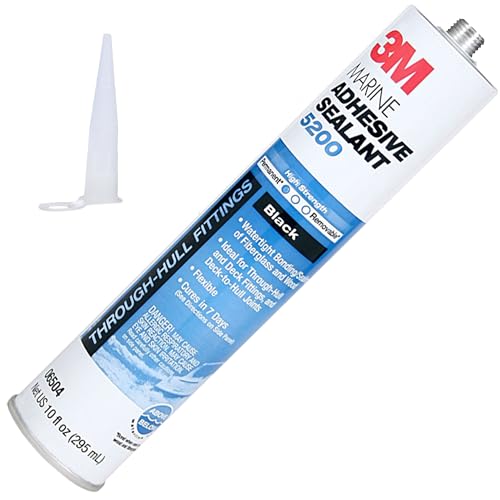 | 3M Marine Adhesive Sealant 5200, Black, 10 fl oz Cartridge3M | Upgrade pick | 10 oz cartridge · Permanent marine sealant | $22.48 Price as of 2 Oct 2026 | View |
I compare glues by what actually fails on the arrow, running adhesive, weak bond on sealed carbon, messy vane lift, or an insert that creeps after impact. Speed matters. Control and surface prep matter more.
How we chose
I sorted the options by bond control, how well they tolerate surface prep, cure speed versus repair time, and cost per arrow. I also checked whether each adhesive makes sense for carbon, wood, fiberglass, vanes, feathers, and inserts.
That is the part most buyers miss. I have watched people blame the glue when the real problem was finish contamination, a slick shaft, or a product matched to the wrong failure mode.
Best overall for most builders: extra-thick gel CA glue
Extra-thick gel cyanoacrylate is my default choice for most fletching work because it gives me more control than thin CA and less mess than runnier adhesives. It fits when I want vanes or feathers to stay where I placed them while the bond grabs.
Cyanoacrylate is the fast-setting adhesive family most arrow builders know as super glue. Thin CA wicks fast and can run; gel CA stays put longer, bridges small gaps, and cuts squeeze-out. On carbon, wood, and aluminum shafts, that difference matters more than a label that says “instant.”
I reach for gel when I am aligning vanes by hand and do not want the glue to creep under the vane foot. I also like it when I am fixing a small spacing issue on a shaft with a little texture or uneven finish.
The drawback is simple: gel is not the best choice when you need deep penetration or when the surface is oily, dusty, or badly sealed. If the shaft prep is poor, thicker glue can hide the problem for a day and then fail later.
Best for carbon and mixed-material builds: fast CA with accelerator
For carbon shafts, fast CA with accelerator is the option I use when turnaround matters more than open time. Accelerator makes thick super glue cure nearly instantly, which helps when I am fletching a batch at the bench or making a repair before leaving for the range.
Carbon arrow shafts need clean, dry bonding surfaces. If the finish is slick or sealed, I will wipe, lightly prep if needed, and then use CA with care. That matters because carbon can look clean and still resist bond if the surface is contaminated with wax, oil, or mold release.
The upside is speed and repeatability. The drawback is that accelerator can lock in a bad alignment if you rush. I have seen that happen when someone sprays it before checking vane position, then wonders why the arrow drifts right out of the bow.
I also like this setup for emergency field repairs. It is the closest thing to a “fix it now” option that still gives a clean bond when the prep is right.
Best for traditional wood shafts: fletching glue that stays put
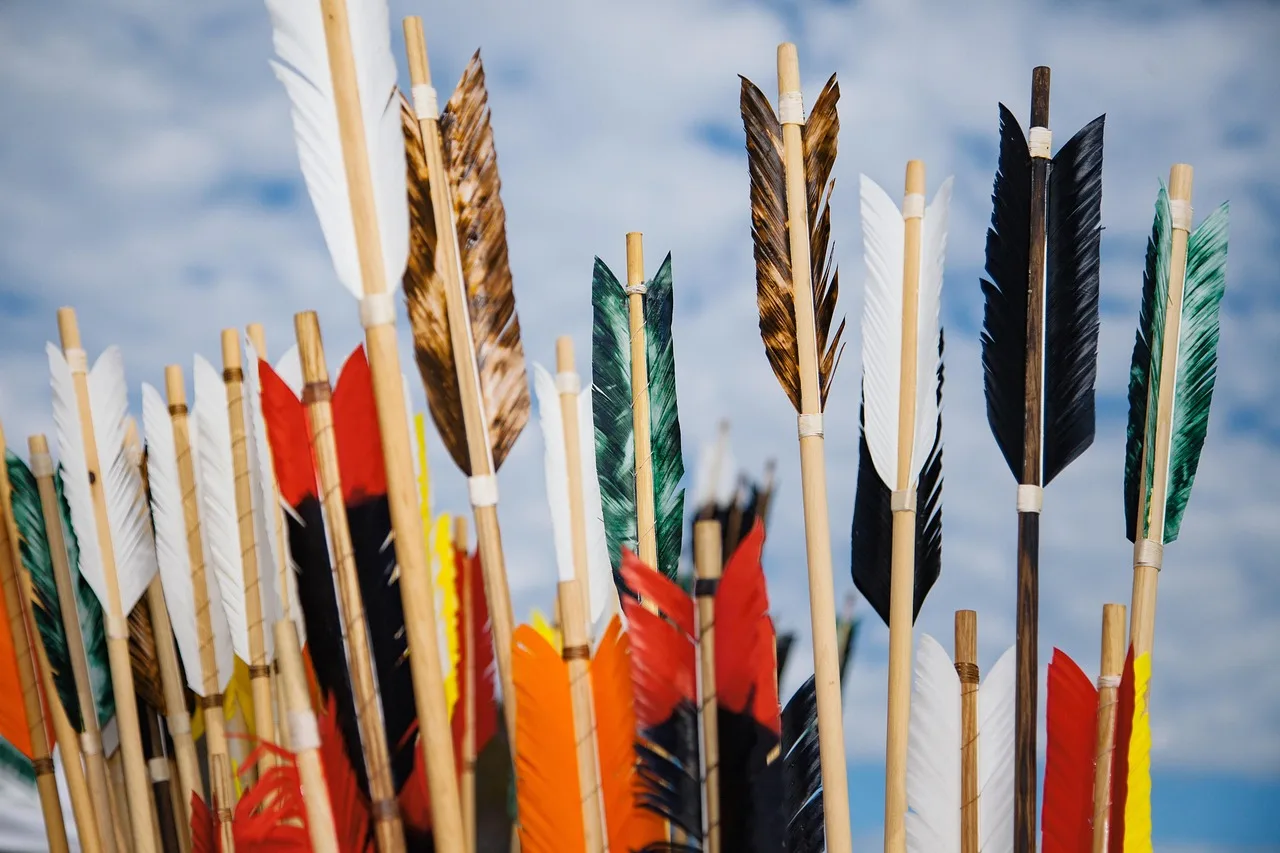
Wood shafts are more forgiving than carbon, and that changes the adhesive choice. For traditional arrows, I want a glue that gives me enough working time for feather placement and does not run into the grain or smear across the shaft.
Feathers usually tolerate a little more adhesive movement than stiff vanes, but wood can soak up or telegraph glue differently depending on finish. That is why a glue made for fletching often feels better on wood than thin CA alone, especially in a home shop with a steady build flow.
When I build a small batch of traditional arrows, I care less about instant grab and more about clean placement. If you are using feathers on wood, a controlled glue line beats a fast one that leaves ridges or blooms along the quill.
For me, the drawback is volume. If you build arrows often, a slower adhesive can hold up production unless your setup is organized and your clamps or jigs are ready.
What is the best glue for fletching carbon arrows?
For carbon fletching, I use extra-thick gel CA as the first choice because it stays where I place it and still cures fast. Thin CA can work too, but it is less forgiving on slick shafts and more likely to run under the vane foot or create a brittle-looking mess.
Carbon arrows need a clean, dry bond line. If the shaft has a glossy finish, I treat surface prep as part of the glue choice, not an afterthought. The best adhesive in the world will still fail if the shaft surface is dirty or polished smooth.
For most vane installs, gel CA gives the cleanest alignment without a clamp, tape, or a long wait. That is the sweet spot for a lot of home builders.
Can I use the same glue on wood and carbon shafts?
Yes, but I would not treat wood and carbon as identical jobs. A cyanoacrylate can bond both, but wood is usually more forgiving and carbon demands cleaner prep. If you want one bottle for both, extra-thick gel CA is the safer all-around choice for fletching.
Wood also accepts more traditional fletching glues, while carbon often rewards a cleaner, faster-setting adhesive. If you switch between shaft types, match the glue to the surface condition and the failure risk. That is where most mixed-build problems start.
How long does arrow fletching glue take to cure?
Cyanoacrylate fletching glues can grab in seconds, and some fletching glues dry in 10 to 45 seconds. That tells you when the vane stops moving, not when the bond has reached full strength. I still give the arrows extra time before hard use.
MAXI-CURE is an extra-thick gel cyanoacrylate glue, and it reaches full strength in about 3 hours. If you use accelerator like Insta-Set, it can make MAXI-CURE cure nearly instantly, which is great for speed but not a reason to skip good surface prep.
Sugru is different. It is marketed as a mouldable glue that turns into silicone rubber, can remain workable for about 30 minutes before setting, sets into a strong silicone rubber in 12 to 24 hours, and can fully set in up to 48 hours for load-bearing projects. That is useful for some repairs, but not my first pick for standard fletching.
What glue works best for vanes, feathers, and inserts?
For vanes, I want precise application and fast tack, so gel CA is usually the best fit. For feathers on wood, I like a glue that stays put and gives me enough working time to keep the quill aligned cleanly. For inserts, I want a bond that handles load and cure time more seriously than a quick vane install.
That is why I separate fletching glue from insert glue. Some adhesives bond both, but inserts take impact and torque, so I am less interested in “instant” and more interested in how the cured bond behaves under stress. I do not treat a vane bond and an insert bond as the same problem.
Do I need primer or sanding before gluing carbon shafts?
Often, yes. Carbon arrow shafts need clean, dry bonding surfaces, and some finishes benefit from light sanding or surface prep before the glue goes on. I would rather spend two minutes on prep than lose a vane later because the shaft was too slick.
My checklist is simple: clean, degrease, dry fit, and only then glue. If the finish is glossy or sealed, I will lightly abrade the bond zone and wipe it again before assembly. Fiberglass shafts may need scraping or sanding too, especially if the surface has a slick outer coat.
What is the strongest super glue for arrows?
If you mean the most reliable super glue for arrow fletching, I prefer extra-thick gel cyanoacrylate because it controls the bond line better than thin CA. For inserts or high-stress repair points, I move away from the idea of “strongest super glue” and choose the adhesive that matches the load path.
MAXI-CURE is an extra-thick gel cyanoacrylate glue that bonds carbon and aluminum arrow shafts, and also bonds hardwood, metal, rubber, and fiberglass. Based on the spec sheet and owner feedback, that kind of broad compatibility is useful, but the honest drawback is that it still needs proper prep and careful alignment.
Which glue is best for quick arrow repairs at the range?
For quick range repairs, I want fast CA with accelerator. That gives me a nearly immediate set for a vane that lifted or a feather that started peeling back. It is the closest thing to a field fix that still feels clean enough to trust for the next end.
I would not use that approach for every insert problem, though. A rushed insert repair can fail later if the bond line was contaminated or the part had already started to move. For repairs, speed is useful; for load-bearing parts, speed alone is a trap.
How do I stop fletching glue from running or squeezing out?
Use a thicker adhesive, apply less of it, and keep the shaft level while the bond sets. Extra-thick gel CA is better than thin CA for this because it bridges small gaps and holds the vane foot without flooding the edges.
I also clean the contact area before the glue comes out. Too much residue on the shaft or vane base turns a neat line into a mess. If I need a faster set, I use accelerator lightly and only after I have the alignment where I want it.
On some builds, I prefer holding the vane in place without tape because the gel is already doing the job. That is one reason gel CA is my default for most fletching work.
Is thick gel super glue better than thin CA for arrows?
For most arrow fletching, yes. Thick gel super glue is better when you need control, cleaner vane alignment, and less squeeze-out. Thin CA is better when you want wicking action or a very fast bite on a clean, well-prepped surface.
Think of it this way: thin CA is a speed tool, gel CA is a control tool. On carbon shafts with vanes, I reach for gel more often because the failure mode is usually mess or poor alignment, not a lack of raw bond speed.
Best for traditional wood shafts: Titebond III Ultimate Wood Glue, 16-Ounces #1414
I would buy this for a home traditional-arrows bench where wood is the main shaft material and cleanup matters. Based on the spec sheet and owner feedback, it is non-toxic, cleans up with water while wet, and is known for bonding stronger than the wood itself.
It makes the most sense for builders who want a forgiving wood glue rather than a super-glue approach. The drawback is that it is not my first pick for quick carbon vane installs, and it is not the fastest answer when I need an arrow back in service right away.
Best for mixed-material repair and inserts: 3M Marine Adhesive Sealant 5200, Black, 10 fl oz Cartridge with Nozzle
I would keep this around for multi-surface repairs where flexibility matters more than a brittle snap. Based on the spec sheet and reviews, it bonds wood, fiberglass, and metal, and its flexible elastomeric bond absorbs shock and vibration.
The drawback is that it is a permanent marine sealant, so it is not the cleanest choice for every fletching bench job. It is more suited to a repair mindset than a fast vane production workflow, and that makes it better for special cases than everyday carbon fletching.
What glue is best if I fletch arrows often in a home workshop?
If I were building arrows every week at home, I would keep one extra-thick gel CA for vanes and feathers, one accelerator for speed work, and one wood-friendly adhesive for traditional shafts. That gives me control for carbon, flexibility for wood, and less waste across small batches.
For volume, bottle size matters almost as much as chemistry. MAXI-CURE is sold in 1/2 oz, 1 oz, and 2 oz sizes, which makes it easy to match the bottle to how many arrows you actually build. Small bottles reduce waste when you build a few arrows at a time, while larger bottles make more sense when you fletch in batches.
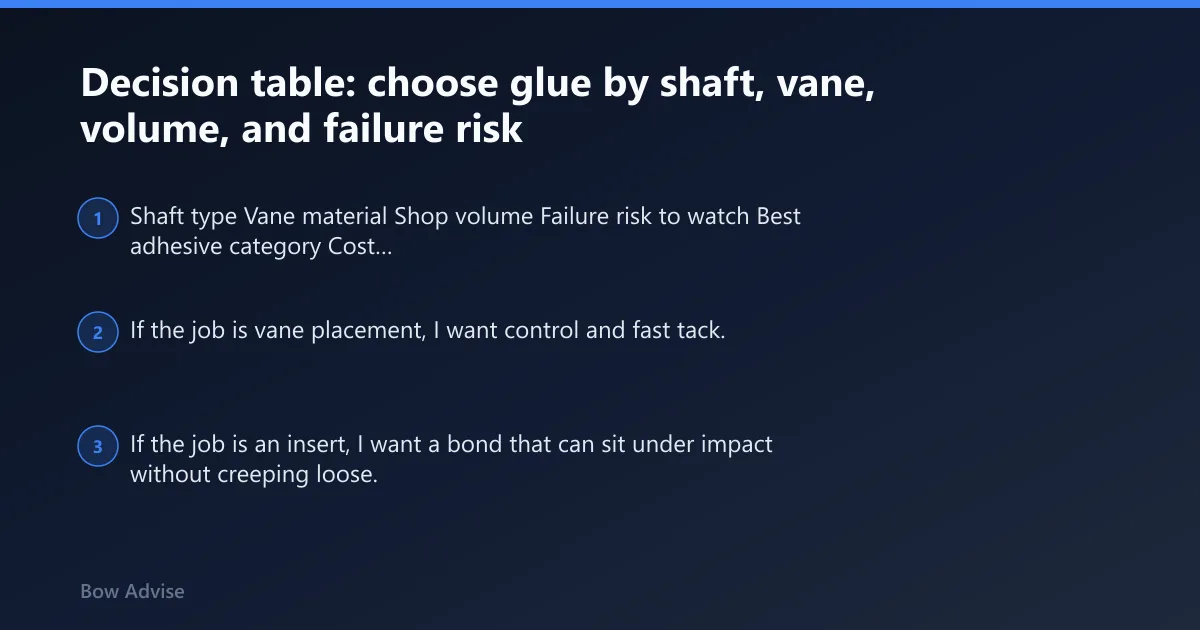
Decision table: choose glue by shaft, vane, volume, and failure risk
| Shaft type | Vane material | Shop volume | Failure risk to watch | Best adhesive category | Cost per arrow estimate | Surface-prep checklist |
|---|---|---|---|---|---|---|
| Carbon | Plastic vanes | Low to medium | Running, weak hold on slick finish | Extra-thick gel CA | Roughly low, since a tiny bead per vane goes far | Clean, degrease, lightly scuff if sealed, dry fit, apply thin bead, let cure fully |
| Carbon | Feathers | Low | Feather lift from poor contact or oil | Gel CA or specialty fletching glue | Low to moderate | Clean, degrease, check feather base fit, keep glue off the quill edges |
| Wood | Feathers | Medium to high | Over-wetting, crooked alignment, grain soak | Wood-friendly fletching glue or epoxy for special cases | Low | Dry shaft, light sanding if needed, dry fit, steady pressure during set |
| Wood | Vanes | Low to medium | Lift at the ends, glue squeeze-out | Gel CA | Low | Clean, mark placement, use a controlled bead, avoid excess adhesive |
| Fiberglass | Vanes or feathers | Low | Poor adhesion on slick skin | CA after scraping or sanding | Low | Scrape or sand, clean, degrease, dry fit, then bond |
| Carbon or aluminum | Insert bonding | Low | Creep under impact, poor bond line | 24-hour epoxy or a purpose-built insert adhesive | Moderate per arrow | Clean internal and external surfaces, roughen if needed, measure fit, full cure before shooting |
I build that table around failure mode, not hype. If the job is vane placement, I want control and fast tack. If the job is an insert, I want a bond that can sit under impact without creeping loose.
Which one should you buy
If you build mostly carbon arrows at home, buy extra-thick gel CA first. If you want faster turnover, add accelerator. If you mostly build traditional wood arrows, a wood-friendly fletching glue or wood glue makes more sense than trying to force a carbon-first adhesive into every job.
If you need the cleanest vane alignment, choose the gel over thin CA. If you need fast range repairs, choose CA with accelerator. If you are working on inserts, stop thinking about fletching glue and pick an adhesive meant for load-bearing attachment instead.
I also think bottle size should match your build volume. Small builders waste less with small bottles. High-volume home shops burn through too many tiny bottles and end up paying for convenience they do not need.
Frequently asked questions
What is the best glue for fletching carbon arrows?
For most carbon fletching, I would choose extra-thick gel cyanoacrylate. It controls squeeze-out better than thin CA, holds vanes in place, and still gives a fast set. The key is clean, dry prep on the shaft before the glue touches the surface.
Can I use the same glue on wood and carbon shafts?
Yes, but I would not treat both materials the same. A gel CA can work on both, yet wood is more forgiving and carbon usually needs better surface prep. If you want one glue for both, pick the option that gives you control instead of speed alone.
How long does arrow fletching glue take to cure?
Some fletching glues dry in 10 to 45 seconds, which is enough to hold the vane in place. Full cure takes longer. MAXI-CURE reaches full strength in about 3 hours, while some other materials, like Sugru, take 12 to 24 hours and can fully set in up to 48 hours.
What glue works best for vanes, feathers, and inserts?
Vanes usually do best with gel CA because alignment and low squeeze-out matter. Feathers on wood often favor a more forgiving fletching glue or wood glue. Inserts are different again; they need a bond chosen for load-bearing strength and cure time, not just quick tack.
Do I need primer or sanding before gluing carbon shafts?
Often yes. Carbon shafts should be clean and dry, and a slick or sealed finish may need light sanding or scraping before bonding. I treat degreasing and surface prep as part of the glue choice because a perfect adhesive still fails on a dirty shaft.
How do I stop fletching glue from running or squeezing out?
Use a thicker CA, apply less glue, and keep the shaft stable while it sets. Gel formula reduces running better than thin glue. If you add accelerator, use it lightly after alignment is correct, because a fast cure can lock in a bad bead just as quickly as a good one.