How Much Do Custom Arrows Cost?
Custom arrows usually cost about $60 to $200 per dozen for DIY builds, around $120 to $300 per dozen for shop-built setups, and premium micro-diameter hunting shafts can cost more. A poor shaft match can mean bad tune, wider groups, and shafts that break sooner than they should. This guide breaks down pricing by setup type, what drives the bill, and which features you can skip without hurting performance.
What a custom arrow build includes
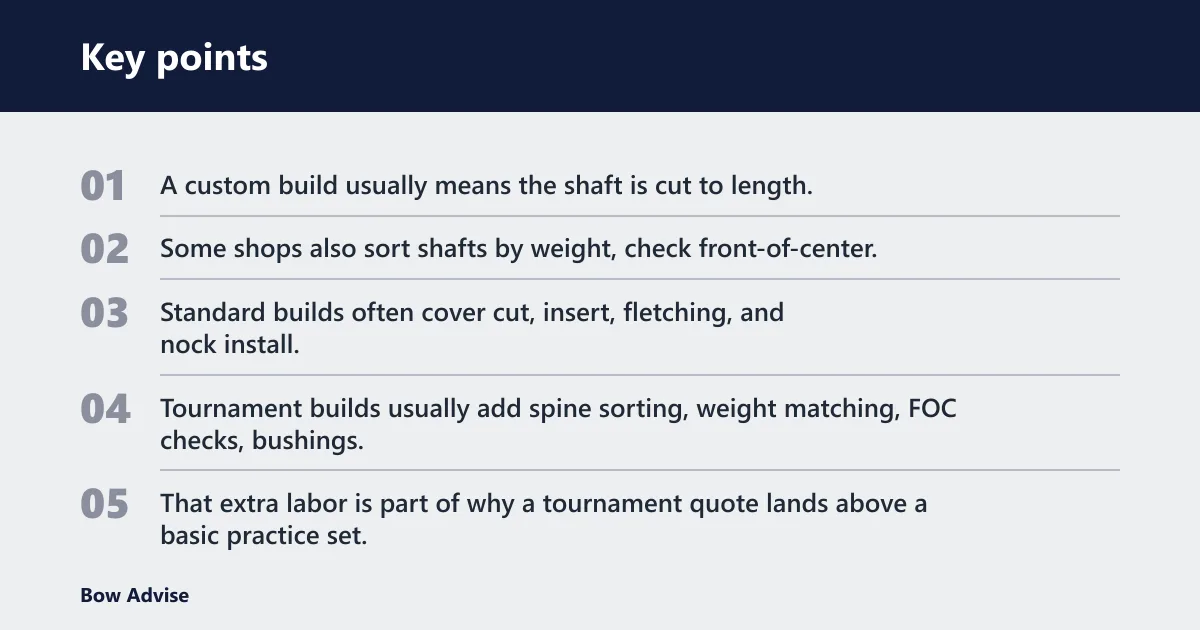


A custom build usually means the shaft is cut to length, then matched with the right spine, insert or outsert, nock, and vane pattern for a specific bow setup. Some shops also sort shafts by weight, check front-of-center, and install field points or broadheads only if the order calls for them.
Standard builds often cover cut, insert, fletching, and nock install. Tournament builds usually add spine sorting, weight matching, FOC checks, bushings, nocks, and a specific fletch pattern. That extra labor is part of why a tournament quote lands above a basic practice set.
Shaft selection and spine match
The shaft sets the floor for the whole build. Material, straightness tolerance, and spine all affect price and tuning. A shaft that is cheap on paper can cost more later if it groups poorly or forces a different insert weight just to tune.
Insert, outsert, nock, and vane choices
Inserts and outserts change both durability and arrow weight up front. Nocks are usually a small line item unless the build uses premium indexed or lighted nocks. Vanes are also a modest cost unless the order uses larger or more expensive options.
What may be extra: wraps, field points, broadheads?
Wraps are optional. They help visibility and make refletching easier, but they are not required for flight. Field points are often cheap enough to ignore in a build quote, while broadheads are a separate hunting cost and may not be included at all.
Custom arrow cost calculator
This calculator shows a real-world price map by setup type. The totals below are estimates for a dozen arrows and are meant to separate a bare-bones practice build from hunting and tournament builds that need more sorting, better components, or more labor.
| Build tier | Shaft cost | Insert/outsert cost | Nocks | Vanes | Wraps | Labor | Total per dozen | Total per arrow |
|---|---|---|---|---|---|---|---|---|
| Budget practice | $60–$100 | $12–$24 | $6–$12 | $10–$18 | $0 | $15–$30 | $103–$184 | $8.58–$15.33 |
| Mid-range hunting | $100–$160 | $18–$36 | $10–$18 | $12–$24 | $8–$20 | $24–$48 | $172–$306 | $14.33–$25.50 |
| Premium hunting | $170–$220+ | $24–$60 | $12–$30 | $18–$36 | $10–$24 | $36–$72 | $270–$442+ | $22.50–$36.83+ |
| Tournament and TAC | $120–$220+ | $18–$48 | $10–$24 | $12–$30 | $8–$20 | $30–$60 | $198–$402+ | $16.50–$33.50+ |
Budget practice builds stay cheaper because they use standard components and little sorting. Premium hunting builds rise fast because the shaft itself costs more, then the build adds stronger front-end hardware and tighter assembly. Tournament builds often cost more in labor than a plain practice set because weight matching and spine sorting take time.
DCA says the rough cost is about $375 for a custom build, with lead times currently at 3-5 weeks. That kind of quote usually sits in the middle-to-upper range once shaft quality, assembly, and setup matching are folded in.
How much do custom arrows cost per dozen?
For most buyers, a custom dozen lands somewhere between about $100 and $400, depending on the shaft class and the amount of hand fitting. Basic shop builds can sit near the low end. High-end hunting or tournament orders move higher when the shaft, insert system, and sorting become more exacting.
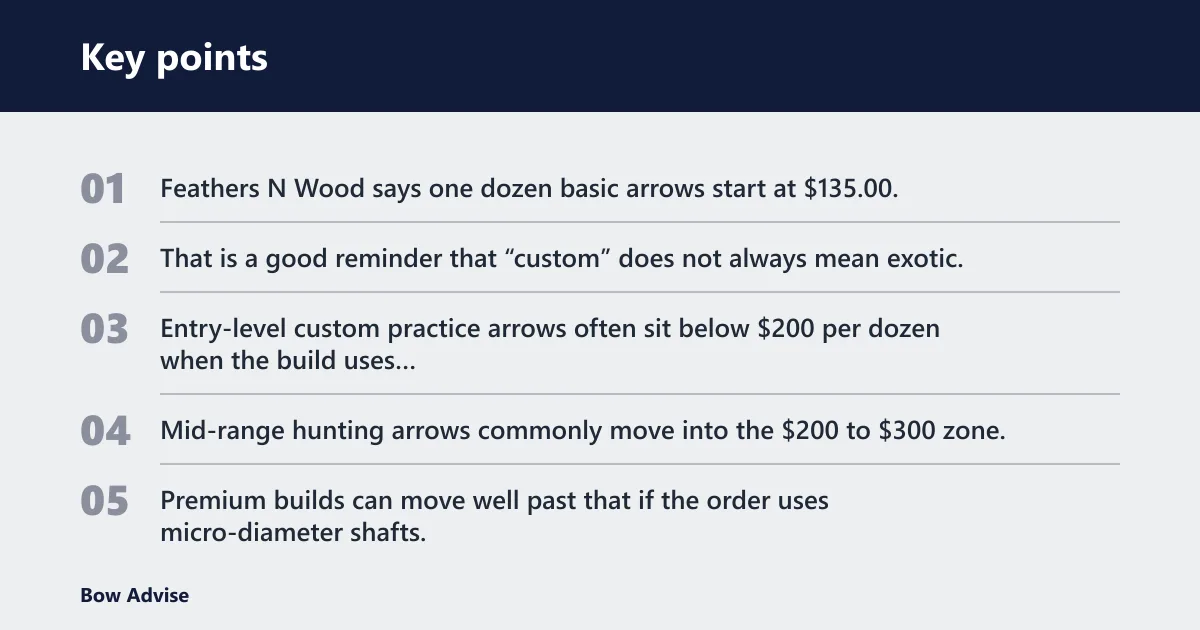
Feathers N Wood says one dozen basic arrows start at $135.00, and that starting price includes premium port orford cedar or Surewood douglas fir hunter grade shafts, plus Gateway feathers and Bohning Classic or snap nocks in the basic setup. That is a good reminder that “custom” does not always mean exotic.
Typical per-dozen price bands
Entry-level custom practice arrows often sit below $200 per dozen when the build uses budget shafts and standard hardware. Mid-range hunting arrows commonly move into the $200 to $300 zone. Premium builds can move well past that if the order uses micro-diameter shafts, heavier front ends, or matched components.
How material choice changes the total
Mod Archery estimates budget shafts at $60–$100 per dozen, mid-tier shafts at $100–$160 per dozen, and premium shafts at $170–$220+ per dozen. That shaft line usually drives the quote more than nocks or vanes do. Aluminum, carbon, and aluminum-carbon shafts also behave differently in weight, durability, and tuning tolerance.
Why component quality moves the quote
Higher-quality components cost more because they are built to tighter tolerances or more demanding use cases. Straightness grading, spine consistency, and premium insert systems all add cost before labor is counted. If the arrow has to group well at distance or carry a broadhead cleanly, those upgrades become more relevant.
What changes the price the most?
Shaft choice changes the price most often, followed by the front-end system and the amount of sorting or hand fitting. A premium shaft can add more than a fancy wrap ever will. Labor also matters, especially when the shop checks spine, weight, and FOC instead of just cutting and gluing.
Shaft material and straightness
Straightness and spine influence cost because they affect consistency. A tighter straightness spec usually costs more. A shaft with better spine uniformity is easier to tune, which can save time later. That is why a “cheap” dozen can become expensive if it needs replacement or repeated tweaking.
Insert and outsert system choice
Standard aluminum inserts are usually the low-cost option. Stainless inserts, heavier points, and premium outsert systems add weight and durability, but they also add cost. Hunters often pay more here because the front end has to survive harder impacts and pair well with fixed-blade heads.
Vane, wrap, and nock upgrades
Vanes in the 2-inch to 3-inch range are common. Standard vanes cost less, while premium vanes and bright colors cost more. Wraps are optional, usually a modest add-on, and they are most useful for visibility or making refletching faster. Premium or lighted nocks also raise the bill.
Labor, sorting, and assembly
Labor is easy to overlook. Archery Sarasota charges $6 per standard arrow for cut, insert, fletching, and nock install, and $8 per tournament arrow for precision spine sort and weight matching. Archery Sarasota also offers re-fletching for $5 per arrow. Those prices show how sorting and precision work add up.
Arrow shafts and spine pricing
The shaft category sets both performance and budget. Aluminum shafts can be economical and easy to cut. Carbon shafts are common for hunting and target use because they can balance weight, durability, and speed. Aluminum-carbon options sit in between and may cost more than plain aluminum without reaching the highest carbon price tier.
Brand matters, but the exact spine matters more. Manufacturer charts are a starting point, not a finish line. Draw length, draw weight, point weight, release type, and cam aggressiveness can all push the best spine away from what a chart suggests.
Suppose a 70-pound hunting bow is set up with a stiff shaft that looks right on a chart, but the point weight is heavy and the insert is stainless. That extra front-end mass may demand a different spine than expected. The cost of the wrong shaft is not just money spent once; it can mean more tuning time and replacement shafts.
Do custom hunting arrows cost more than target arrows?
Yes, hunting arrows often cost more because they usually need stronger front ends, heavier inserts or outserts, and a build aimed at stable broadhead flight. Target arrows can be cheaper when the goal is repeatable groups with lighter points and less front-end mass. The gap grows when premium hunting shafts are part of the order.
Hunting build drivers: FOC and durable inserts
Hunters often push for a higher front of center balance, which can mean heavier inserts, outserts, or point weights. That can raise total cost and shift the shaft choice. Broadheads are another cost layer, and they are not always included in the arrow quote itself.
Target build drivers: consistency and lighter components
Target arrows often aim for uniformity over impact strength. That can mean a simpler insert system, standard nocks, and a vane pattern that keeps the build lean. The quote is usually more about consistency and less about brute-force durability.
Where broadheads change the budget
Broadheads are separate from most build quotes. Field points are often inexpensive, but broadheads can change the total quickly because they are bought per pack and matched to the arrow’s front-end setup. If the build is for hunting, the front-end budget should include them.
What tools do you need to build arrows at home?
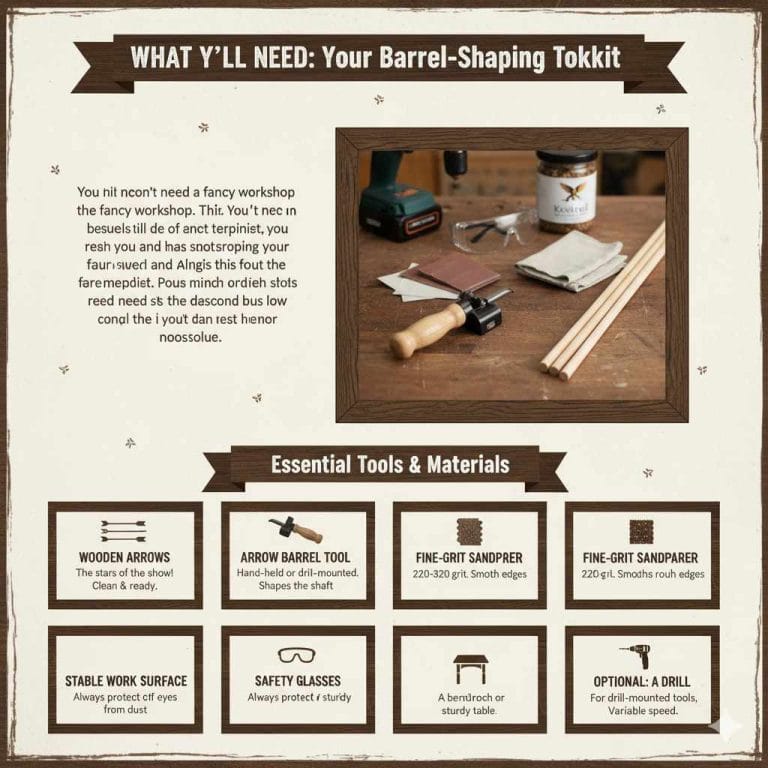
A basic DIY setup needs a saw, a fletching jig, a squaring device, a spinner, and a grain scale. Mod Archery estimates a basic DIY setup at $150–$250 one-time cost. After that first setup, the per-arrow cost can drop, but only if the builder avoids mistakes and waste.
- Cut shafts square and to the same length.
- Square the shaft ends before gluing inserts.
- Weigh components if consistency matters.
- Fletch with a jig that keeps vane spacing repeatable.
- Spin-check finished arrows before field use.
Arrow saw and squaring tool
The saw handles clean cuts, while the squaring tool keeps the ends flat for better insert adhesion. Bad cuts can cause alignment issues and weak glue joints. That is a small tool cost compared with the cost of replacing a shaft that failed at the front end.
Fletching jig and spinner
A fletching jig sets vane placement. A spinner helps confirm that the arrow runs true after assembly. These tools do not make the arrow itself better, but they reduce the chance that a crooked build or uneven vane placement causes tuning headaches later.
Grain scale and other setup costs
A grain scale helps match arrow weights, which matters for a hunting or tournament set where consistency matters. Other startup costs can include glue, blades, alcohol for cleanup, and replacement parts. The first dozen is the expensive one; later rebuilds are cheaper because the tools are already paid for.
Picture a new builder making one dozen arrows for a 60-pound hunting bow. If the first cut is off or the wrong spine is bought, the savings from DIY can disappear fast. A shop build can look expensive until the cost of wasted shafts and tools is counted honestly.
How long does a custom arrow order usually take?
Lead time is usually measured in days to weeks, not hours. DCA currently lists 3-5 weeks for custom build turnaround. That window can grow if the order needs special components, batch sorting, or a hard-to-find insert system. Shipping time and stock status can add more delay.
Some shops work by consult first, then build after the specs are confirmed. Others let the buyer order a standard build and choose upgrade options from a menu. Either way, the more exact the setup, the more likely the order needs a conversation before it ships.
How much do premium arrow components add to the total cost?
Premium components can add a little or a lot, depending on where they are used. A higher-end vane set or a nice wrap is a modest bump. A premium shaft, stainless or specialty outsert system, and sorted spine can add enough to move a dozen from budget range into premium territory.
The biggest premium costs usually sit in the shaft and front-end hardware. Cosmetic upgrades matter less than people think. A wrap may improve visibility and make refletching easier, but it does not fix a bad spine match or poor tuning.
Are custom arrows cheaper than buying prebuilt arrows?
Not always. A basic prebuilt arrow can be cheaper up front because the labor is already baked into a mass-produced setup. Custom arrows become better value when the bow needs a specific spine, a hunting front end, or repeated rebuilds over time. That is where repairability starts to matter.
Long-term value comes from being able to swap inserts, re-fletch, or rebuild without buying an entirely new set. If a shooter breaks shafts often or changes setups, custom arrows can pay back some of the difference. If the goal is just to shoot this weekend, prebuilt arrows may be the simpler buy.
Frequently asked questions
How much does a custom arrow build cost per arrow?
A reasonable per-arrow view is about $8.58 to $15.33 for budget practice, $14.33 to $25.50 for mid-range hunting, and $22.50 to $36.83+ for premium hunting based on the calculator above. Shop labor, shaft selection, and matched components drive the spread more than vanes or nocks do.
What changes the price of custom arrows the most?
The shaft is usually the biggest driver, followed by the insert or outsert system and the amount of labor needed to sort and assemble the arrows. Straightness, spine consistency, and premium front-end parts push the cost up faster than wraps, which are mostly optional and cosmetic.
What tools do I need to build custom arrows at home?
A home builder usually needs an arrow saw, a squaring tool, a fletching jig, a spinner, and a grain scale. Mod Archery estimates a basic DIY setup at $150–$250 one-time cost. That cost matters most on the first dozen, then drops as the tools get reused.
How much does custom art cost?
If this was meant to ask about custom arrows, the same pricing rules above apply. If it was meant literally, the answer is outside archery pricing. For arrows, the cost depends on shaft choice, front-end hardware, vanes, and labor, not on decoration alone.