Best Wood for Making Arrows (2026): Based on Specs and Reviews
Port Orford cedar is often considered a strong all-around wood for making arrows because it is straight-grained, fairly consistent in spine, and tends to tune well for many traditional bows; lighter or denser shafts may be preferred when speed or durability matters more. Bad shaft choice causes poor tune, weak flight, broken arrows, and wasted time sorting unusable shafts. This guide compares common arrow woods by spine behavior, durability, moisture response, and the bow setups each one suits best.
What makes good Arrow Wood perform
That answer is about shooting behavior, not nostalgia. A shaft that is straight, dry, and matched to bow weight will fly better than a prettier shaft that is warped or too soft for the bow.
For many traditional builds, Port Orford cedar is often one of the first woods to look at. It is known for excellent straightness and light weight, which helps with clean release recovery and makes it easier to get consistent groups when the rest of the setup is sound.
Quick comparison
| Product | Badge | Best for | Price | ||
|---|---|---|---|---|---|
 | 31 inch Carbon Hunting Arrows with 100 Grain Broadheads andKEAUP | Our pick | $40.99 Price as of 25 Oct 2026 | View | |
 | RUOERSISI Electronic Arrow Spine Tester Adjustable ArrowRUOERSISI | Also great | Electronic · Spine tester · Dial indicator | $156.09 Price as of 25 Oct 2026 | View |
 | HURRICANE 8pc Wood Lathe Turning Tool Set, Wood TurningHURRICANE | Also great | $28.99 Price as of 25 Oct 2026 | View |
Use the comparison table below as a sorting tool, not a tradition scorecard. Species matters, but shaft diameter, taper, finish, and actual straightness still decide the final spine and flight behavior.
A lighter wood is not automatically better. A stiffer, denser shaft can be the right answer when the bow is heavier, the point is heavier, or the archer wants more impact durability in the field.
How we chose these woods
The woods below were selected for how they behave as arrow shafts, not for name recognition. The main filters were straight grain, moisture sensitivity and sealing needs, and the balance between spine behavior, weight, and durability.
Straight grain matters because it keeps the fibers running in one line, which lowers run-out and reduces crack risk along the shaft. Moisture matters because wet or poorly sealed shafts absorb water, swell, lose straightness, and shift point of impact after the arrow is built.
Spine behavior matters most once the shaft is built to size. Two shafts from the same species can still behave differently if one is thicker, denser, or finished differently, so species is only the starting point.
Port Orford cedar: best for light, clean-shooting shafts
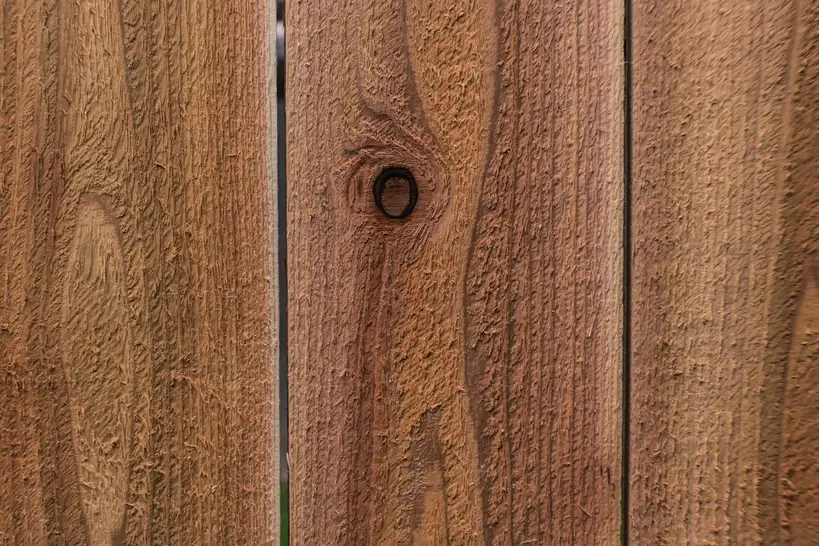
Port Orford cedar is the best general pick for archers who want a light shaft that tunes easily across many traditional setups. Its known straightness and light weight help with recovery after release, and it is a common choice for traditional arrow shafts when consistency matters more than brute impact resistance.
Its drawback is damage resistance. It can be prone to dings and compression marks if it is not protected well, so sealing and careful storage matter more than they do with tougher woods.
For target shooting and many moderate draw weights, it is hard to beat as an all-around starting point. For hard field use, it needs more care than denser woods.
Eastern red cedar: best for lighter draw weights
Eastern red cedar fits lighter draw weight bows well because it is lightweight and commonly used where a softer shaft is acceptable. Published guidance places it in a low spine range of about 400-500, and its natural oils are commonly noted for some moisture resistance, which can help in damp conditions.
That said, it is not the first pick for heavy bows or for archers who want a lot of point-weight tolerance. A shaft that is too soft for the bow can recover slowly and fly erratically, especially when the point is heavy.
For a lighter traditional bow, it can shoot very smoothly. For heavier setups, choose a stiffer wood before trying to force the tune.
Douglas fir: best for broader bow setups
Douglas fir is a practical middle-ground shaft wood. It is stiffer than cedar, with a density between 32-38 pounds per cubic foot, and it is often listed with a stiffer spine than cedar, commonly in the 300-450 range.
That mix gives it a useful balance of strength and weight for a broad range of traditional bows. It can handle more demanding setups than cedar without moving all the way into the heavier feel of very dense woods.
The tradeoff is that fir can feel less forgiving if the shaft selection is sloppy. Straightness and consistency need to be checked carefully, because a fir shaft that starts out marginal will not tune itself into a better arrow later.
Sitka spruce: best for traditional speed and stiffness
Sitka spruce is a traditional arrow shaft material with greater stiffness than cedar and more weight than the lightest cedar shafts. That makes it attractive when an archer wants a shaft that carries itself well and still fits the traditional look and feel many wood-arrow builders want.
Compared with cedar, spruce usually brings more durability in service, but that does not mean it is immune to bad grain or poor drying. A spruce shaft that is not straight or not properly sealed can still warp and lose its tune.
Spruce is a sensible choice when the bow is not especially light and the archer wants a shaft that has a firmer launch. It is less attractive if the setup demands the lightest possible arrow.
Ash: best for durable traditional builds
Ash is valued for strength and flexibility, which makes it a practical shaft choice when durability matters. It is favored today along with cedar and spruce for strength, straightness, and durability, especially in traditional archery where shafts may take more abuse than a target-only setup.
The tradeoff is weight. Ash can be heavier than cedar, so it is better suited to bows that can move a tougher shaft without making the arrow feel sluggish.
For hunting or rough use, ash earns its place by surviving more handling mistakes. For an archer chasing a very light arrow, it may be more wood than needed.
Hickory: best for heavy draw weights
Hickory is often a beginner-friendly choice when the bow is heavy and the shafts need to withstand a lot of abuse. Explained Archery lists hickory as the best wood for a first bow, and the same toughness makes it useful for arrow shafts where strength and flexibility matter more than low mass.
Its main advantage is durability under load. Hickory handles heavier draw weights well, so it can make sense when the bow is hard on shafts and the archer wants fewer broken arrows.
The drawback is mass and a less delicate feel in flight. If the bow is light or the point is already heavy, hickory can be more shaft than the setup needs.
Wood-arrow selection matrix
This matrix is meant to narrow the field quickly. Use it after you know the bow weight, the kind of shooting you want to do, and how much maintenance you are willing to accept.
| Species | Relative spine | Weight | Moisture sensitivity | Durability | Beginner fit | Hunting fit | Best bow weight range |
|---|---|---|---|---|---|---|---|
| Port Orford cedar | Moderate | Light | Moderate to high; seal well | Moderate | Very good | Good if well protected | Light to medium traditional bows |
| Eastern red cedar | Lower | Light | Lower than most cedars because of natural oils | Moderate | Good for lighter bows | Fair for lighter hunting setups | Light draw weight bows |
| Douglas fir | Stiffer | Medium | Moderate | Good | Good | Very good for broader setups | Medium to heavier traditional bows |
| Sitka spruce | Stiff | Medium | Moderate | Good | Good | Very good | Medium traditional bows |
| Ash | Moderate to stiff | Medium to heavy | Moderate | Very good | Very good | Very good | Medium to heavy bows |
| Hickory | Stiff | Heavy | Moderate | Excellent | Excellent for durability | Good for heavier hunting setups | Heavier draw weight bows |
How to read the matrix
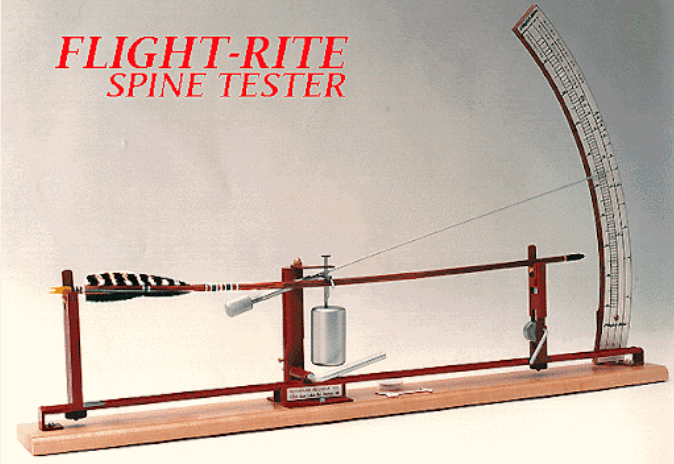
“Relative spine” tells you how the wood tends to behave before the final shaft dimensions are set. It does not replace actual shaft sizing, because diameter, taper, and finish still move the final number.
“Weight” matters because an arrow that is too light for the bow may recover too quickly and behave erratically, while an arrow that is too heavy can feel slow and give up flatter trajectory. “Durability” matters more in hunting, where shaft survival matters after the shot as much as before it.
Species-by-use tradeoffs
Port Orford cedar is the best all-around compromise for many traditional bows. Eastern red cedar is the better answer when the bow is lighter and the archer wants a softer, lighter shaft that still has some moisture resistance.
Douglas fir and Sitka spruce sit in the middle for many setups, with fir often appealing when the archer wants a firmer feel and spruce appealing when a traditional shaft needs a little more stiffness. Ash and hickory are the tougher choices, but they ask more from the bow and may add weight you do not need.
Say your bow is a 35 lb traditional recurve and you want a shaft that is forgiving while you learn tune. Port Orford cedar is usually the safer first choice. If the bow moves up in weight and the shaft starts showing weak reaction, moving to fir or ash can make more sense than forcing a cedar shaft to carry the load.
Red flags to reject before building
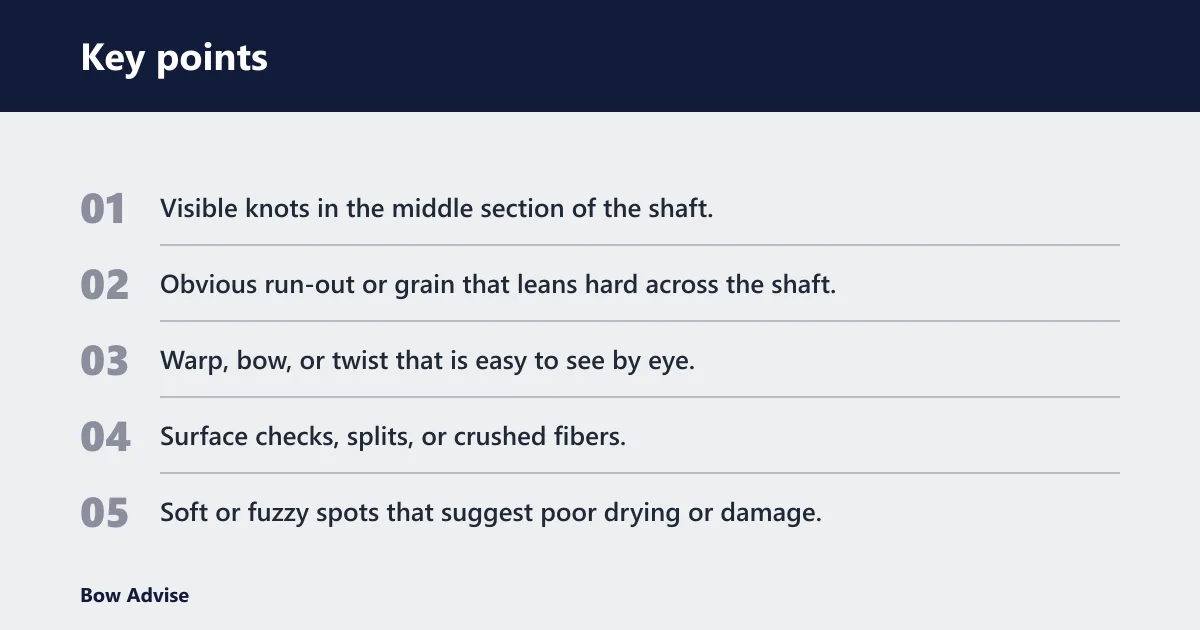
- Visible knots in the middle section of the shaft.
- Obvious run-out or grain that leans hard across the shaft.
- Warp, bow, or twist that is easy to see by eye.
- Surface checks, splits, or crushed fibers.
- Soft or fuzzy spots that suggest poor drying or damage.
- Heavy color change that suggests uneven moisture or storage problems.
- Shafts that feel unusually heavy or unusually light for the species and diameter.
A common first-timer mistake is buying the cheapest bundle and assuming a straight-looking photo means straight shafts. Picture a 28-inch shaft that is only slightly bowed at one end: that small bend can turn into a tuning headache once points and fletching are added.
Which one should you buy?
Choose Port Orford cedar if you want the best all-around shaft for most traditional bows and you value easy tuning, good flight, and light weight. Choose Eastern red cedar if the bow is lighter and you want a softer shaft with some built-in moisture resistance. Choose Douglas fir or Sitka spruce if you need more stiffness without jumping straight to very heavy woods.
Choose ash if durability matters and the bow is in a medium to heavier range. Choose hickory if the bow is hard on shafts, you are building for heavy draw weights, or you want a tougher first shaft that can take more abuse while you learn.
For hunting, prioritize survival after release as much as point flight. A shaft that survives contact with brush, handling, and field moisture is more useful than one that looks perfect on the rack but cracks or warps after a few outings.
If the goal is the easiest first build, start with Port Orford cedar or hickory depending on bow weight. If the goal is maximum lightness, cedar wins. If the goal is a tougher shaft with more margin, ash or hickory are the safer bets.
Frequently asked questions
What is the best wood for making arrows?
Port Orford cedar is the best all-around answer for many traditional builds because it combines light weight, straight grain, and easy tuning. It is not the only good option, but it is one of the most forgiving choices when the archer wants a shaft that flies well and is simple to sort into workable groups.
Why does wood choice matter for arrow flight?
Wood choice affects how the shaft bends on launch, how fast it recovers, and how stable it stays in changing humidity. A shaft that is too soft, too heavy, or too moisture-prone can leave the bow poorly, flex inconsistently, and drift out of tune faster than a better matched shaft.
Is cedar or spruce better for wooden arrows?
Cedar is usually better when light weight and easy tuning matter most. Spruce is often better when a stiffer, slightly heavier shaft is helpful. If the bow is lighter, cedar often feels better. If the setup needs a firmer launch, spruce can be the better match.
What wood is best for a beginner making arrows?
For a beginner, Port Orford cedar is a strong first choice because it is easy to tune and widely used for traditional shafts. Hickory can also be a good beginner option when the real priority is toughness, especially if the bow weight is higher and broken shafts would be a bigger problem than extra mass.
How dry should wood be for arrow shafts?
Dry wood is preferred, and one published guide recommends moisture content of 8 to 10 percent. That figure is best treated as a practical shop target, not a law for every climate or finish system. The key point is that wet wood can warp, swell, and change flight after it is built.
What grain should I look for in arrow wood?
Look for straight grain with minimal run-out. Grain that stays close to the shaft center helps reduce cracking and keeps shafts more consistent from one piece to the next. A published shop rule warns that run-out steeper than about 1 in 20 is risky, and knots in the middle are not acceptable.
Are pine arrow shafts any good?
Pine can make a usable shaft in some contexts, but it is usually not the first recommendation for traditional arrow builds. The bigger issue is consistency. Many pine pieces show more variation in grain, stiffness, and straightness than the better arrow woods, so sorting becomes harder and rejection rates rise.
What woods should I avoid for arrow making?
Avoid pieces with knots, obvious warp, heavy run-out, or signs of poor drying. Also avoid woods that are too brittle for the bow weight or too moisture-prone for the storage and hunting conditions you expect. A cheap shaft that fails in sorting or breaks quickly is more expensive than a better shaft bought once.
How does arrow wood affect spine and durability?
Wood species affects the general stiffness, weight, and toughness profile, but final spine also depends on shaft diameter, taper, and how the shaft is made. A softer shaft may tune easily on a light bow but become unstable on a heavier one. A tougher shaft may last longer, but it can add weight and slow the arrow.
Do wood arrows work for hunting?
Yes, wood arrows work for hunting when the shaft is matched to the bow and protected against moisture and impact damage. Ash and hickory are attractive for toughness, while cedar and spruce can also work well if they are straight, dry, and sealed properly. The best hunting shaft is the one that survives the field and still flies true.