How to Cut Wooden Arrows: Proven Clean, Accurate Methods
Cutting wooden arrows safely gives you custom lengths for better accuracy and flight. Beginners can achieve clean, square cuts using simple tools like a fine-tooth handsaw or mini cutoff saw. Always measure twice, cut slowly while rotating the shaft, and square the ends for perfect nock and point fit—building confidence one arrow at a time.
Getting your wooden arrows to the perfect length can feel tricky at first. Many new archers worry about splintering the shaft or ending up with uneven cuts that affect flight. It’s a common challenge, but don’t worry—it’s easier than it seems with the right steps.
I’ll walk you through safe, beginner-friendly methods to cut your wooden arrows cleanly and accurately. By the end, you’ll have arrows tailored to your draw length, ready for great shooting. Let’s get started on making this fun and straightforward!
Why Cutting Your Own Wooden Arrows Matters
Wooden arrows bring that classic feel to archery, but buying them pre-cut often means they’re too long or short for your setup. Cutting them yourself lets you customize the length for your draw, which improves accuracy and tune.
Shorter arrows act stiffer (higher spine), while longer ones flex more. Getting the length right helps your arrows fly straight and group tightly. Plus, it’s satisfying to build your own gear— you’ll feel more connected to every shot.

Safety comes first, though. A bad cut can splinter the wood or create weak spots. We’ll focus on methods that keep things safe and simple.
Determining the Correct Arrow Length
Before any cutting, figure out your ideal arrow length. This keeps you safe and ensures good performance.
Your arrow should extend at least 1 inch past the arrow rest at full draw for recurve or longbow shooting. This prevents the arrow from falling off if you overdraw slightly.
Step-by-Step: Measure Your Arrow Length
- Stand in your normal shooting stance.
- Nock an extra-long arrow (or use a draw arrow tool) on your string.
- Draw back to your anchor point.
- Have a friend mark the shaft about 1 inch in front of the rest (or plunger).
- Measure from the nock throat (bottom of the groove) to that mark—that’s your arrow length.
Add a little extra if you’re new; you can always cut more later, but you can’t add it back!
For reference, check spine charts from trusted sources like 3Rivers Archery or Rose City Archery. They help match length to your bow’s draw weight.
Safety First: Essential Precautions
Wood dust and sharp tools need respect. Always:
- Wear safety glasses to protect your eyes from flying bits.
- Use a dust mask—fine wood dust isn’t great to breathe.
- Work in a well-ventilated area.
- Secure your workpiece so it doesn’t slip.
- Keep fingers clear of blades.
- Cut away from your body.
If using power tools, unplug when changing blades. Start slow—you’ll get cleaner results and stay safe.

Tools You’ll Need for Cutting Wooden Arrows
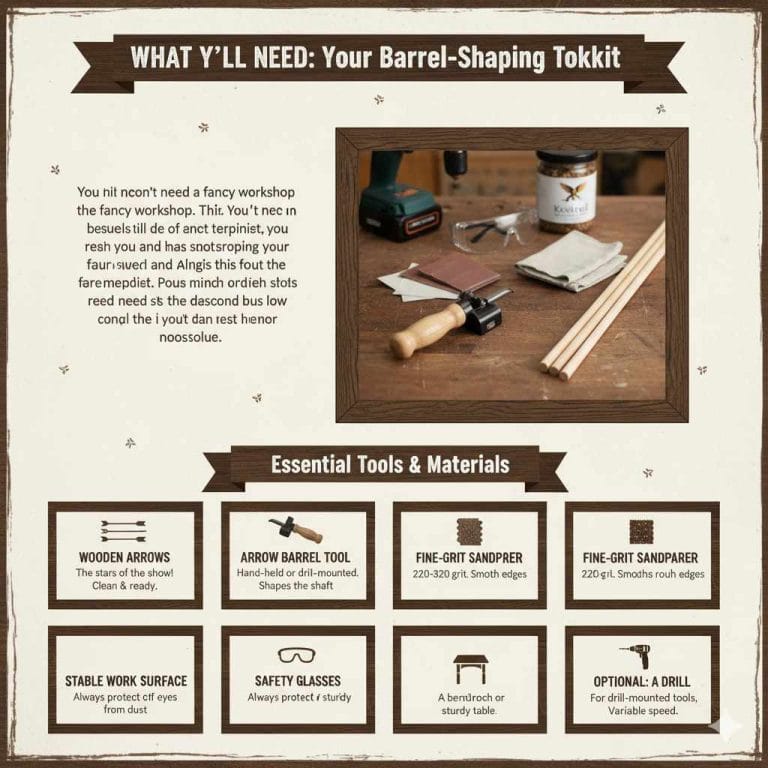
Beginners don’t need fancy equipment. Here’s what works well:
| Tool | Best For | Pros | Cons |
|---|---|---|---|
| Fine-tooth handsaw (like a dovetail or pull saw) | Manual cutting | Cheap, safe, clean cuts with rotation | Slower |
| Mini cutoff saw (e.g., Harbor Freight with abrasive disk) | Power cutting | Fast, square cuts | More dust, costs more |
| Dremel with cutoff wheel | DIY setups | Precise, portable | Needs jig for straightness |
| Arrow squaring tool | Finishing ends | Makes ends perfectly flat | Essential add-on |
Step-by-Step: Clean Methods to Cut Wooden Arrows
Method 1: Simple Handsaw (Best for Beginners)
- Mark your cut line with a pencil—measure twice!
- Wrap masking tape around the mark to prevent splintering.
- Secure the shaft in a vise or jig (pad with cloth to avoid dents).
- Saw slowly on the pull stroke if using a pull saw.
- Rotate the shaft as you cut for an even, square end.
- Sand lightly if needed, then square with a tool.
Method 2: Power Cutoff Saw
- Set up your saw with a fine abrasive disk for wood.
- Adjust the stop for exact length.
- Hold or clamp the shaft securely.
- Cut slowly, rotating the arrow for cleanliness.
- Always vacuum dust and wear protection.
Cut from the front end first if adjusting spine—shortening stiffens the arrow (about 5 lbs per inch).
Common Mistakes to Avoid
- Cutting too short at once—go gradual.
- Not rotating the shaft—leads to angled cuts.
- Forgetting to square ends—poor nock/point fit.
- Ignoring grain—cut perpendicular for strength.
- Rushing—patience gives pro results.
Once cut, taper the ends with a taper tool (11° for points, 5° for nocks). Stain and seal to protect from moisture. Then add nocks, points, and fletching.
After Cutting: Next Steps for Your Arrows
Straighten shafts if needed by gentle heating and bending. Your custom arrows will fly beautifully!
| Bow Draw Weight | Typical Wood Spine (28″ arrow, 125gr point) | Adjust for Length |
|---|---|---|
| 30-40 lbs | 40-50 lbs spine | +5 lbs per inch over 28″ |
| 40-50 lbs | 50-60 lbs spine | -5 lbs per inch under 28″ |
| 50-60 lbs | 60-70 lbs spine | Test kits recommended |
See full charts at 3Rivers Archery for precise matching.

Conclusion
Cutting your own wooden arrows is a rewarding skill that makes archery even more enjoyable. With these clean, accurate methods, you’ll create custom shafts that fit your bow perfectly and shoot straight every time.
Start slow, stay safe, and practice on extras first. Soon, you’ll have a quiver full of arrows you built yourself—boosting your confidence and fun on the range or in the woods. Keep shooting, keep learning, and enjoy the journey. You’ve got this!
Frequently Asked Questions
Can beginners safely cut wooden arrows at home?
Yes! Use a fine handsaw, rotate while cutting, and wear safety gear. It’s simple and safe with care.
What tool is best for clean cuts on wood arrows?
A fine-tooth pull saw or mini cutoff saw with rotation gives square, splinter-free ends.
How much should I add to my draw length for arrow length?
Add at least 1-2 inches for safety and clearance—measure at full draw for accuracy.
Does cutting arrows change the spine?
Yes, shorter arrows stiffen (about 5 lbs per inch shorter), so test flight after cuts.
Do I need to square the ends after cutting?
Absolutely—use an arrow squaring tool for flat ends and secure nock/point fit.
Can I cut tapered wooden shafts?
Yes, but cut from the thick end carefully to maintain balance.
What if my cut splinters the wood?
Wrap with tape before marking, cut slowly while rotating, and sand gently afterward.
Related pick: Check today's price on Amazon