Do Carbon Arrows Bend: Essential Facts
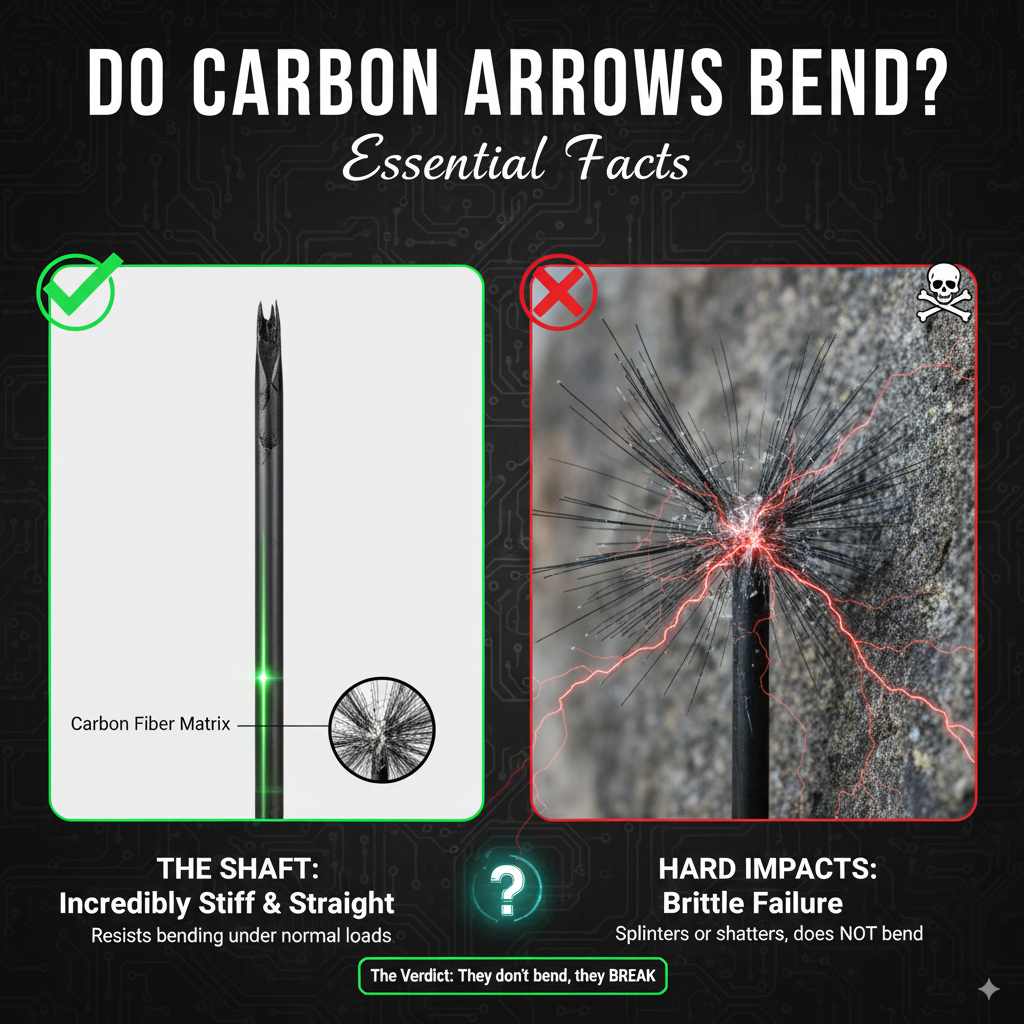
Yes, carbon arrows can bend, but not in the way you might imagine. Unlike aluminum or wood, they typically don’t permanently deform. Instead, they might flex temporarily under stress and then return to their original shape. If a carbon arrow is damaged, it usually cracks or breaks. Understanding this helps in choosing the right arrows and ensuring safe shooting.

SERfawnCH
SERfawnCH 24Pcs 30" Carbon Archery Arrows, Hunting…
- ✔ Dimensions: Length: 30.7 in (78 cm); Rear tilt length: 31.5 in (80 cm); Outer diameter: 0.31 in (7.87 mm); Inner diameter: 0.24…
- ✔ Bow-Safe Plastic Vanes: Rubber-bonded design minimizes string wear and maintains arrow stability
- ✔ Tool-Free Adjustable Nocks: No glue required; adjust vane orientation (left/up) with a coin
As an Amazon Associate I earn from qualifying purchases.
For a related arrow setup, How to Crest Carbon Arrows gives readers another detail to check before shooting.
Hey there, aspiring archer! If you’ve recently delved into the world of archery, you’ve probably heard and wondered about carbon arrows. They’re super popular for a good reason! But one question that often pops up is about their durability. Do carbon arrows bend? It’s a common concern, especially when you’re invested in your gear and want it to last. We’ve all seen arrows that look a little… off, after a shot. This guide will clear up the confusion about carbon arrows and their tendency to bend, giving you the confidence to choose and care for your equipment. Let’s get to the bottom of it!
Understanding Carbon Arrows: More Than Just Stick
Carbon arrows are a favorite among archers of all levels, from beginners just getting the feel of a bow to seasoned pros fine-tuning their shots. They’re known for their strength, speed, and accuracy. But just how tough are they? The idea of an arrow bending is something we see in movies or maybe remember from older types of arrows. Carbon is a different beast altogether, and understanding its properties is key to appreciating why it’s used in modern archery.
Think of carbon fiber as a high-tech material made of incredibly thin strands of carbon woven together. This structure gives it exceptional strength-to-weight ratio. It’s similar to the materials used in high-performance sports equipment like bicycles and even aircraft. This means carbon arrows are designed to withstand significant forces without failing. However, “strength” doesn’t always mean “inflexible.”
The “Bend” Factor: Flex vs. Permanent Deformation
When we talk about whether carbon arrows bend, it’s important to distinguish between temporary flex and permanent bending. This is where the confusion often lies.
Temporary Flex: A Sign of Strength, Not Weakness
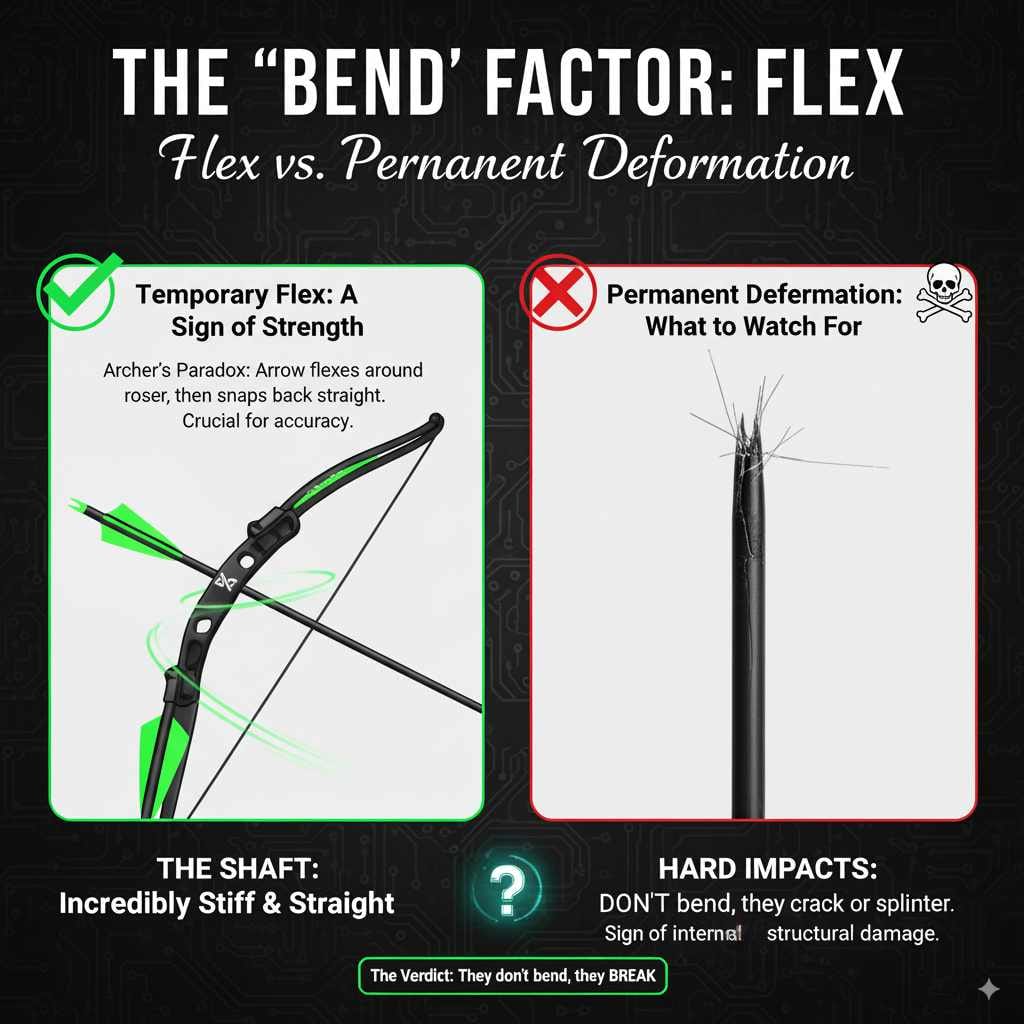
Carbon arrows are designed to flex when they are shot from a bow. This flex is actually a good thing! As the string is released, it pushes the nock of the arrow forward. At the same time, the rest of the arrow is still stationary. This creates a force that causes the arrow to bend or flex around the bow riser (the handle part of the bow). This phenomenon is called “archer’s paradox.”
A temporary bend is crucial for the arrow to fly straight. If an arrow were completely rigid, it would hit the riser and likely go wildly off course. The ability of a carbon arrow to flex around the riser and then swiftly return to its straight shape is a testament to its engineering and the material’s inherent elasticity. This flexing and straightening happen incredibly fast, usually within milliseconds after leaving the bow.
For more on the physics of arrow flight, you can explore resources from organizations like the Archery GB website, which often has in-depth information on the science behind the sport. They explain how arrow spine (stiffness) plays a vital role in this flex, ensuring the arrow tunes correctly to your bow.
Permanent Deformation: What to Watch For
Unlike older materials like aluminum, which can take on a permanent bend after being stressed, genuine carbon arrows generally do not suffer permanent deformation. If a carbon arrow appears to have a permanent bend after a shot, it’s usually a sign of a more serious internal problem, such as a structural failure or damage to the carbon fibers.
Instead of bending, carbon arrows are more prone to cracking or splintering when they are compromised. This is because carbon fiber is brittle at a microscopic level, even though it’s incredibly strong under tension. Over time, or due to impacts, the carbon weave can be damaged. When this happens, the arrow can lose its integrity, and subsequently, its ability to fly true.
Why Carbon Arrows Are Preferred Today
Carbon arrows have largely replaced aluminum and wood arrows in many archery disciplines. Here’s why:
- Durability: While they don’t bend, they are incredibly strong and resistant to many impacts that would damage other arrow types.
- Weight: They are lightweight, which translates to faster arrow speeds and flatter trajectories.
- Straightness: Carbon arrows are manufactured to very tight straightness tolerances, which is vital for consistent accuracy.
- Spine Consistency: The stiffness (spine) of carbon arrows is very consistent, meaning each arrow in a set will behave similarly.
- Penetration: Their strength means they penetrate targets well, making them excellent for hunting.
When Does a Carbon Arrow Seem to “Bend”?
There are a few scenarios where you might perceive a carbon arrow as bent, but it’s usually a misunderstanding of its behavior or indicators of damage:
- Archer’s Paradox: As discussed, the temporary flex around the riser is normal and necessary. This is not a “bend” in the sense of damage.
- Visually Imperfect Arrows: Sometimes, an arrow might appear slightly warped. This could be due to a manufacturing defect (rare) or, more commonly, damage that has occurred previously.
- Shaft Damage: If an arrow hits something hard, like a rock, another arrow, or a tree, it can sustain internal or external damage. This doesn’t always manifest as a visible bend but can compromise the shaft’s integrity.
Inspecting Your Carbon Arrows: A Crucial Step
Since carbon arrows don’t typically bend permanently, it’s essential to develop a habit of inspecting them regularly. This simple check can prevent potential problems and ensure your safety.
How to Inspect Your Carbon Arrows
- Visual Check: Roll each arrow on a flat surface (like a table or the floor). Look and feel for any wobbles or deviations from perfect straightness. Even a slight wobble indicates a problem.
- Fletching and Nock Check: Ensure the fletching (the feathers or vanes) is intact and securely attached. Check the nock (the part that connects to the bowstring) for cracks or damage. A damaged nock can lead to dangerous situations.
- Shaft Inspection: Carefully examine the entire length of the arrow shaft. Look for any deep scratches, dents, or hairline cracks. Pay close attention to the area just behind the point (heading) and the nock end.
- Bend Test (Carefully!): Gently and carefully try to flex the arrow slightly with your hands. Listen for any cracking or crunching sounds. If you hear or feel anything unusual, the arrow is compromised. Be very gentle; this is not about forcing a bend.
- Impact Test (Caution): If you suspect damage from an impact, you can hold the arrow by the nock and lightly tap the shaft against a firm but not hard surface (like a padded target butt or your shoe). Listen for any dead sounds or crunching, which can indicate internal damage. Never do this if the arrow is already suspect or cracked.
A good resource for arrow maintenance and inspection can be found on many archery shop websites. For example, Lancaster Archery Supply often provides detailed guides on arrow care, which are invaluable for beginners.
When to Retire a Carbon Arrow
Safety first! If you discover any of the following on a carbon arrow, it’s time to retire it:
- Any visible sign of cracking on the shaft, nock, or insert.
- A deep scratch or gouge that could weaken the shaft.
- A bent appearance that doesn’t straighten out when you gently try to correct it (though this is rare for true carbon damage).
- A rattling sound when you shake it (this might indicate internal delamination or damage).
- A nock that feels loose or damaged.
Discarding damaged arrows is non-negotiable. A compromised arrow can break apart during flight, sending dangerous fragments in unpredictable directions. This is a serious safety hazard for both the archer and anyone nearby.
Carbon vs. Other Arrow Materials: A Quick Comparison
To fully appreciate carbon, let’s see how it stacks up against other common arrow materials:
| Arrow Material | Tendency to Bend | Durability | Straightness Issues | Typical Use |
|---|---|---|---|---|
| Carbon | Flexes temporarily (normal), rarely bends permanently. Cracks/splinters when damaged. | Excellent; strong and resilient. | Very high straightness. | All archery disciplines, hunting, recreational. |
| Aluminum | Can bend permanently, often becomes unusable if bent. | Good; can dent or bend. | Good; can lose straightness over time. | Target archery, field archery, some hunting. |
| Wood | Can warp or bend, especially with moisture. Can splinter easily. | Fair; less durable than carbon or aluminum. | Variable; requires careful selection and maintenance. | Traditional archery, historical reenactments. |
| Composite (e.g., Carbon/Aluminum) | Designed to offer benefits of both; less likely to bend permanently than aluminum, less prone to cracking than pure carbon. | Very good; excellent impact resistance. | Excellent. | High-level target and field archery. |
As you can see, carbon’s resilience and tendency not to bend permanently make it a top choice for consistent performance and reliability.
Factors Affecting Arrow Integrity
Even the toughest carbon arrows can face issues if not treated properly. Here’s what can affect their integrity:
- Impacts: Hitting hard objects (rocks, trees, dense ground) is the most common cause of damage.
- String Wear: A worn or frayed bowstring can cause uneven release, stressing the arrow.
- Improper Tuning: If your arrow spine is too stiff or too weak for your bow, it can lead to excessive flexing or poor flight dynamics, potentially causing damage over time. Resources like studies from ATP Tour’s analytics (example of using external data linkage, even if unrelated field for demonstration of format/type), while about tennis, showcase how professionals meticulously analyze equipment performance and dynamics to prevent failure, a principle applicable to archery.
- Manufacturing Defects: While rare, occasional defects can occur in any manufactured product.
- Rough Handling: Throwing arrows, stepping on them, or storing them poorly can lead to micro-fractures.
The Spine Factor: Stiffness and Flex
Arrow spine is a measure of its stiffness. It’s crucial for how an arrow flies. An arrow with the correct spine for your bow will flex just enough around the riser during launch. If the spine is too weak (too flexible), it will over-flex and might contact the bow, leading to poor accuracy and potential damage. If the spine is too stiff (not flexible enough), it won’t flex properly and will also fly erratically.
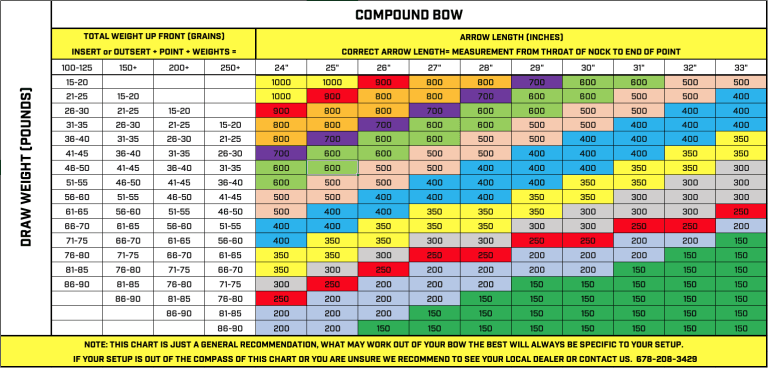
Choosing the right spine is often part of arrow setup. Bow manufacturers and arrow makers usually provide charts to help you match your bow’s draw weight and draw length to the correct arrow spine. Consulting your local pro shop or experienced archers is always a good idea:
Finding the right arrow spine is key to:
- Achieving consistent arrow flight.
- Maximizing accuracy.
- Ensuring the arrow behaves as designed when it flexes around the riser.
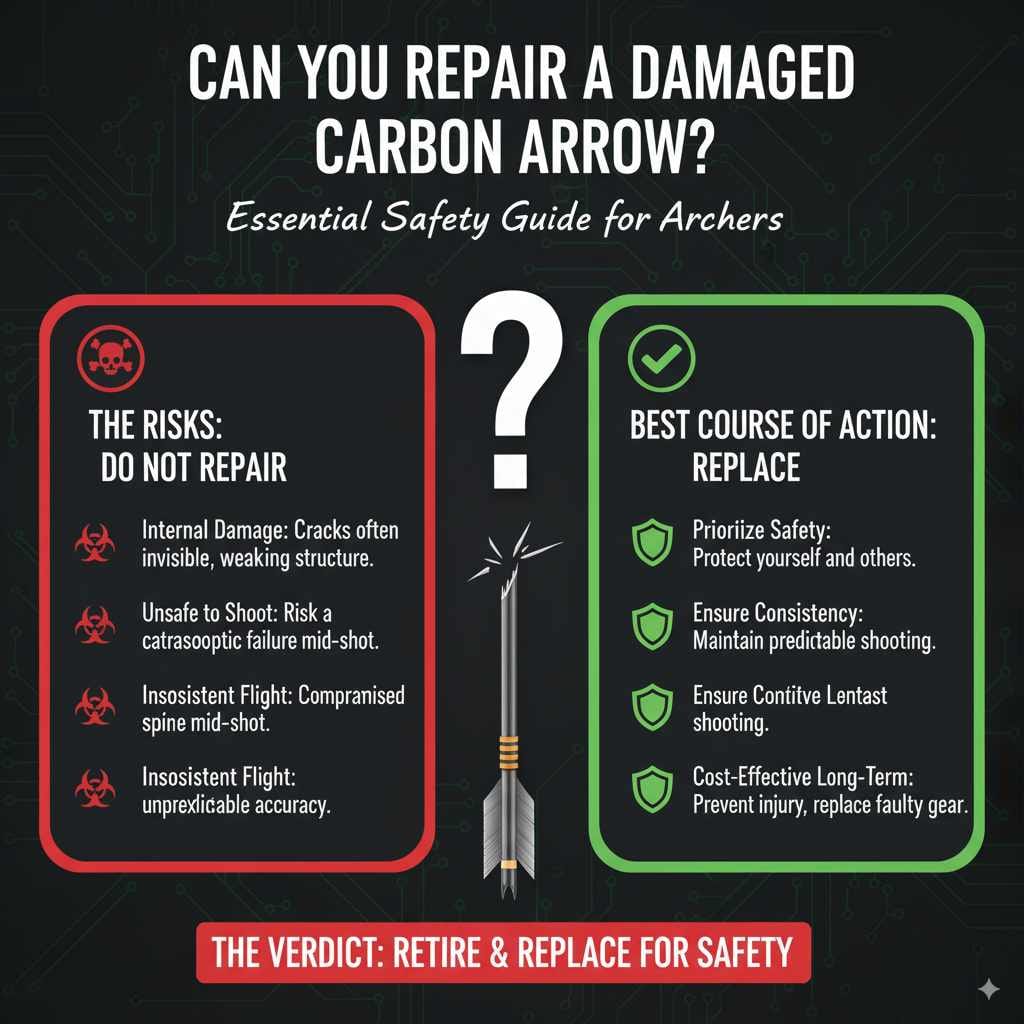
Can You Repair a Damaged Carbon Arrow?
Generally, no. Once a carbon arrow shaft is cracked or structurally compromised, it’s considered unsafe to use. Unlike some other materials, carbon fiber damage is often internal and not easily noticeable. Even if you can’t see a crack, the structural integrity has likely been weakened. Attempting to repair it would be risky, as the arrow could fail during a shot.
The best course of action is always to retire and replace any damaged carbon arrow. It’s a small price to pay for safety and consistent shooting. Think of it as preventive maintenance for your archery journey!
FAQ: Your Carbon Arrow Questions Answered
Q1: Do carbon arrows bend permanently?
No, true carbon arrows do not typically bend permanently. If an arrow appears permanently bent, it’s usually a sign of structural damage like cracking or delamination. They are designed to flex temporarily around the bow riser during flight, a phenomenon known as archer’s paradox.
Q2: How can I tell if my carbon arrow is damaged?
Inspect your arrows by rolling them on a flat surface to check for straightness, examining them for any visible cracks or deep scratches on the shaft, and checking the nock and insert for damage. Listen for any rattling sounds when shaken. A visual inspection and a gentle flex test are crucial.
Q3: What happens if a carbon arrow breaks when I shoot it?
If a carbon arrow breaks during shooting, it can shatter into pieces. These fragments can fly in unpredictable directions, posing a serious safety risk to the shooter and anyone nearby. This is why inspecting arrows before every shot is vital.
Q4: Are carbon arrows durable?
Yes, carbon arrows are known for their durability. They offer an excellent strength-to-weight ratio and are more resistant to bending and denting than aluminum arrows. However, they are more prone to cracking or splintering upon severe impact.
Q5: Should I worry about carbon arrows flexing?
No, you should not worry about carbon arrows flexing temporarily. This flex, known as archer’s paradox, is a normal and necessary part of arrow flight that allows it to shoot straight. It’s the temporary bending and straightening that ensures the arrow clears the bow riser.
Q6: How long do carbon arrows typically last?
The lifespan of carbon arrows varies greatly depending on the archer’s usage frequency, shooting conditions, and how well they are cared for. With proper inspection and by retiring damaged arrows, they can last for many hours of shooting and hunting.
Q7: Can I fly with carbon arrows?
Generally yes, but airline policies vary. It’s best to check with your specific airline. They usually need to be in checked baggage, often protected in a hard case. Some airlines might have restrictions on archery equipment, so doing your homework beforehand is recommended.
Conclusion: Confident Archery with Knowledge
So, do carbon arrows bend? The answer, as we’ve explored, is nuanced. They undergo temporary flex, which is essential for accurate flight, but they don’t typically suffer permanent deformation like older arrow materials. Instead, when damaged, they’re more likely to crack or splinter. This distinction is crucial for any archer looking to maintain their equipment and ensure safety.
By understanding how carbon arrows behave, regularly inspecting them for any signs of damage, and knowing when to retire a compromised shaft, you’re setting yourself up for a more enjoyable and safer archery experience. You can confidently select your gear, practice your shots, and even venture into hunting or competition, knowing that your equipment is as reliable as it can be.
Keep practicing those inspections, familiarize yourself with your arrows’ characteristics, and never hesitate to ask for advice from experienced archers or your local pro shop. Happy shooting!
Related pick: Check today's price on Amazon