Are Carbon Arrows Good: Proven Performance
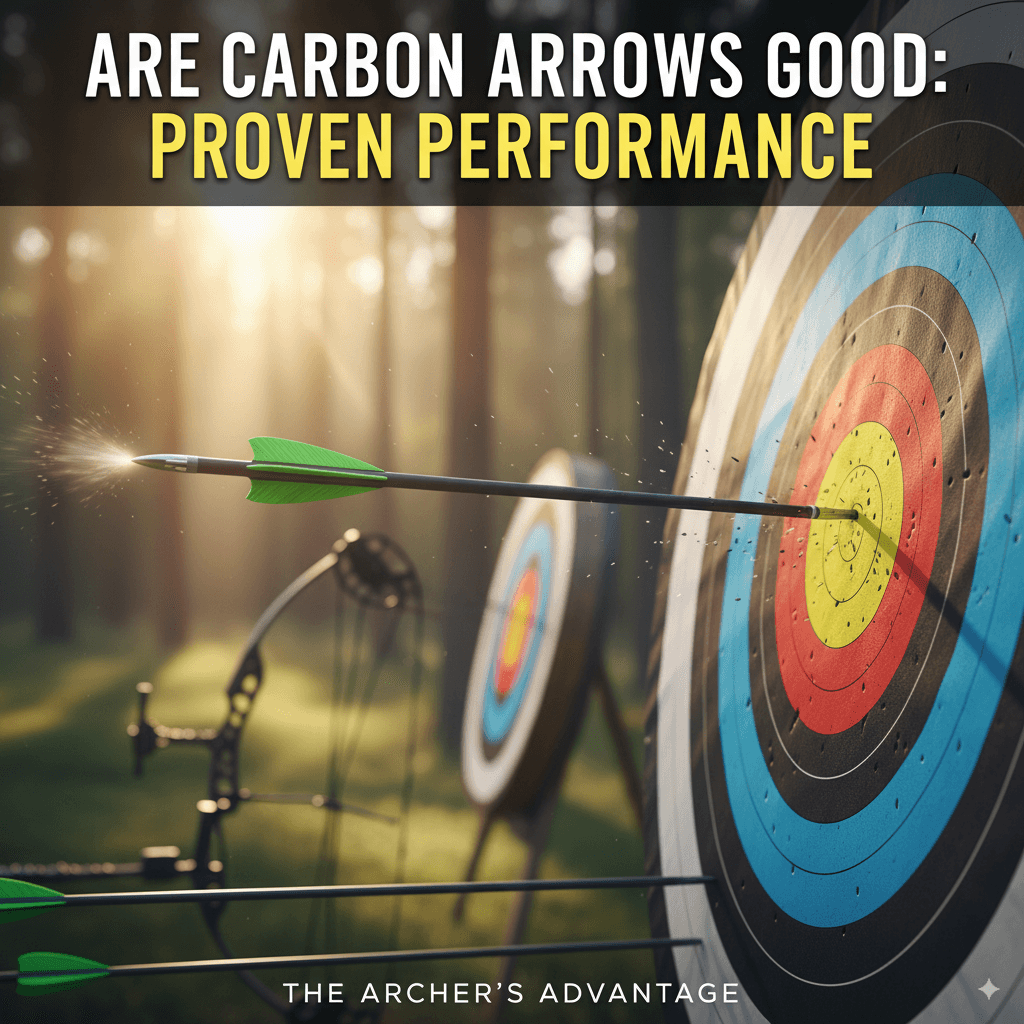
Are Carbon Arrows Good? Yes, they offer exceptional accuracy, durability, and speed, making them a top choice for archers of all levels seeking proven performance for hunting, target shooting, and general archery enjoyment.
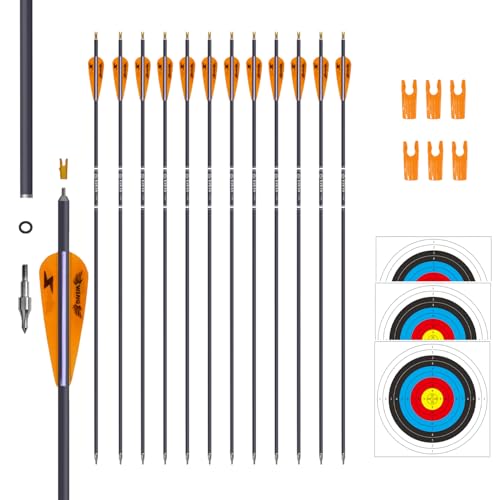
e5e10
e5e10 31inch Carbon Arrow Archery Targeting Practice…
- Archery arrows:Length:31", Outer diameter: 0.31 inch/7.8 mm. Fletched with 2 Orange and 1 white vanes. For draw weight 20-60 pound…
- Hunting arrows are solid & well made. Precision carbon targeting arrows made for extended durability and long lasting target pract…
- Colored plastic fletching make flight always pointed the right way. The tips are nickel plated stainless steel which is perfect fo…
As an Amazon Associate I earn from qualifying purchases.
Are you new to archery and wondering about the best arrows to use? You’ve probably heard a lot about different arrow materials, and carbon arrows often come up. It can feel a bit overwhelming trying to pick the right gear when you’re just starting out. But don’t worry, we’re here to break it all down in a way that makes sense. Carbon arrows are a fantastic option, and understanding why will help you feel confident in your archery journey. Let’s explore what makes them so great and why so many archers rely on them for success and enjoyment.
Why Are We Talking About Carbon Arrows?
When you first step into an archery shop or browse online, arrow options can seem endless. You’ll see wood, aluminum, and carbon. Each has its own story and purpose. But carbon arrows have really become the go-to standard for a lot of enthusiastic archers, from beginners to seasoned pros. This isn’t by accident. They offer a blend of features that are hard to beat, making them a wise choice for anyone serious about improving their shot. If you’ve been asking yourself, “Are carbon arrows good?”, the answer is a resounding yes, and in this guide, we’ll show you exactly why they stand out.
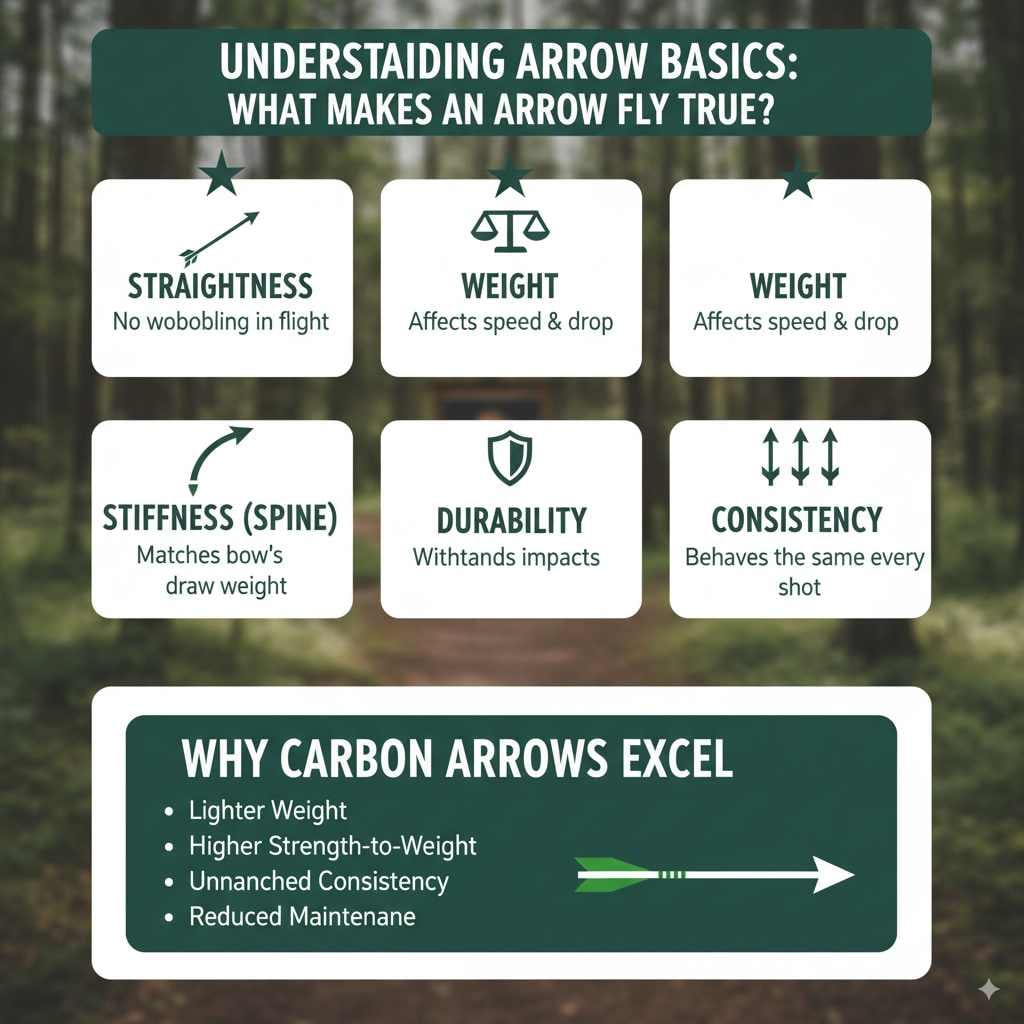
Understanding Arrow Basics: What Makes an Arrow Fly True?
Before we dive deep into carbon arrows, it’s helpful to understand what we’re looking for in any arrow. A good arrow needs to fly straight, hit where you aim, and hold up to the forces of being shot from a bow. Several factors contribute to this:
- Straightness: An arrow that isn’t perfectly straight will wobble as it flies, throwing off your shot.
- Weight: The weight of an arrow affects its speed and how much it will drop over distance.
- Stiffness (or Spine): This refers to how much an arrow bends. If it’s too stiff or not stiff enough for your bow’s draw weight, it won’t fly straight.
- Durability: Arrows take a beating. They need to be tough enough to withstand impacts without breaking or deforming.
- Consistency: Archers need arrows that are as identical as possible so that when you shoot one, the next one behaves the same way.
These are the qualities we look for, and as we’ll see, carbon arrows excel in many of these areas.
What Exactly Are Carbon Arrows?
Carbon arrows are shafts made primarily from carbon fiber. This is the same high-tech material used in many advanced applications, like airplanes, race cars, and high-performance sports equipment. Carbon fiber is created by weaving together very fine fibers of carbon and then binding them together with a resin. This process creates a material that is incredibly strong yet remarkably lightweight.
For archery, this translates into a shaft that is:
- Lightweight: Lighter arrows generally fly faster.
- Strong: Carbon is exceptionally resistant to breaking and cracking.
- Stiff: Carbon shafts resist bending very well, which is crucial for straight flight.
- Durable: They can withstand impacts that often damage arrows made from other materials.
These inherent properties are why carbon has become so popular in arrow manufacturing and why they perform so well.
The Pros: Why Are Carbon Arrows So Good?
Let’s get down to the nitty-gritty. What makes carbon arrows a standout choice for so many archers? Here are the key advantages:
1. Superior Accuracy and Consistency
One of the biggest reasons “are carbon arrows good?” gets a big “yes” is their incredible accuracy. Carbon shafts are manufactured with very tight tolerances. This means that each arrow in a dozen will be almost identical in terms of weight, straightness, and spine. This consistency is vital for repeatable shot placement.
- Exceptional Straightness: Carbon arrows are typically manufactured to be incredibly straight, often within .001 to .003 inches of straightness. This minimizes any wobbling in flight, leading to more predictable arrow paths.
- Precisely Matched Spines: Manufacturers meticulously match the stiffness (spine) of carbon arrows. This ensures that when the arrow leaves your bow, it does so with the proper flex and recovery, leading to a straight launch.
- Reduced Influence of Atmospheric Conditions: While all arrows are affected by wind, many archers find carbon arrows to be less susceptible to minor aerodynamic inconsistencies compared to some other materials, contributing to tighter groups.
For beginners, this consistency means you’re more likely to see improvements in your shooting sooner. When the arrow itself isn’t the variable causing your shots to go astray, you can focus on refining your shooting form.
2. Unmatched Durability and Strength
Archery can be tough on equipment. Arrows can hit targets, fall, or even impact closely spaced targets. Carbon fiber’s inherent strength makes these arrows remarkably resilient.
- Resistance to Cracking and Breaking: Unlike aluminum arrows which can bend or dent easily, or wood which can splinter, carbon arrows are designed to withstand significant impact. While they can break under extreme stress, they are far more resistant to everyday wear and tear.
- “Spine” Resistance: Carbon shafts “spring back” very well from bending forces. This means they are less likely to develop permanent bends or kinks after being struck.
- Longevity: Because they are so durable, a good set of carbon arrows can last a very long time with proper care, making them a smart long-term investment despite a potentially higher initial cost.
This durability means you’ll spend less time and money replacing damaged arrows, allowing you to focus more on practicing and enjoying your archery.
3. Lightweight and Fast Trajectory
Carbon fiber is a very light material for its strength. This lightness translates into faster arrow speeds.
- Increased Arrow Velocity: Lighter arrows accelerate more quickly when shot from a bow. Higher velocity means the arrow spends less time in the air.
- Flatter Trajectory: Less time in the air means less time for gravity to pull the arrow down. This results in a flatter shooting trajectory, which is more forgiving of minor range estimation errors, especially for beginners.
- Less Forward Momentum: While speed is good, it’s worth noting that very light arrows can carry less kinetic energy downrange compared to heavier arrows of the same spine. This is a consideration for serious big-game hunting, but for target practice and smaller game, it’s usually not an issue.
The speed and flatter trajectory offered by carbon arrows make shooting feel more responsive and can significantly improve accuracy once you learn how to compensate for the relatively minor drop over distance.
4. Versatility for Different Archery Disciplines
Carbon arrows are not limited to just one type of archery. Their performance characteristics make them suitable for a wide range of applications:
- Target Archery: For precision shooting at static targets, the consistency and accuracy of carbon arrows are paramount.
- 3D Archery: The speed and flatter trajectory help archers judge distances and execute accurate shots on animal-shaped targets.
- Bowhunting: While some hunters prefer heavier arrows for maximum kinetic energy, many successful bowhunters rely on carbon arrows for their speed, accuracy, and ability to withstand the rigors of the field. Properly spined and weighted carbon arrows with appropriate broadheads can be extremely effective.
- Recreation and Backyard Archery: For casual shooting, the durability and ease of use make carbon arrows an excellent choice for beginners and hobbyists.
Whether you’re aiming for the bullseye, chasing a deer, or just having fun in the backyard, carbon arrows can reliably perform.
5. Resistance to Environmental Factors
While not completely immune, carbon arrows hold up better to certain environmental conditions than other materials.
- Water Resistance: Carbon shafts do not absorb moisture like wood arrows, which can swell, warp, and lose their straightness.
- Temperature Stability: They are generally less affected by temperature fluctuations than aluminum arrows, which can change spine slightly with extreme cold or heat.
This means you can be more confident that your carbon arrows will perform consistently, whether you’re shooting on a damp morning or a hot summer afternoon.
The Cons: What to Consider with Carbon Arrows
No archery equipment is perfect, and carbon arrows do have a couple of points that might be worth considering, especially for beginners.
1. Cost
Generally, carbon arrows are more expensive upfront than wood or even some basic aluminum arrows. The advanced manufacturing process and materials contribute to this higher price point. However, as we discussed, their durability often makes them more cost-effective in the long run because you don’t replace them as often.
2. Potential for Micro-Fractures
While very strong, carbon arrows can develop micro-fractures if they undergo significant impact, such as hitting a hard surface or a poorly placed shot hitting another arrow. These micro-fractures can weaken the shaft and, in rare cases, lead to catastrophic failure upon firing. It’s crucial to inspect your carbon arrows regularly for any signs of damage, such as cracks or splintering, and to replace any arrows that appear compromised.
A common way to inspect for this is to gently flex the arrow shaft while holding the nock and point and listen for any “cracking” sounds. You can also visually inspect for any visible damage. Many archers use archery shops or experienced shooters to help them identify potential issues.
3. Repairability
Unlike wood arrows, which can sometimes be repaired, or aluminum arrows, which can be straightened (though imperfectly), carbon arrows are generally not repairable once they’ve been significantly damaged or fractured. If a carbon shaft is compromised, it needs to be replaced.
Carbon vs. Other Arrow Materials: A Quick Comparison
To better understand why carbon arrows are so popular, let’s compare them to the other common arrow materials:
| Feature | Carbon Arrows | Aluminum Arrows | Wood Arrows |
|---|---|---|---|
| Durability | Very High (resists bending, strong) | Moderate (dents and bends easily) | Low (splinters, warps easily) |
| Straightness & Consistency | Excellent (tight manufacturing tolerances) | Good (can be manufactured quite straight) | Variable (highly dependent on wood quality and grain) |
| Weight | Light | Moderate | Can vary, often heavier than aluminum or carbon |
| Speed | Fast | Moderate | Slower |
| Cost (per arrow) | Moderate to High | Low to Moderate | Low |
| Repairability | None (must replace if damaged) | Can be straightened (but often not perfectly) | Some minor repairs possible |
| Best For | Most disciplines: hunting, target, 3D, recreation | Target archery (historically), some recreational use | Traditional archery, cost-conscious beginners |
This table highlights how carbon arrows offer a compelling balance of performance characteristics that make them suitable for almost any archery application.
Choosing the Right Carbon Arrow Spine for Your Bow
This is a crucial step for ensuring your carbon arrows fly accurately. The “spine” of an arrow refers to its stiffness – how much it bends. If an arrow’s spine is too stiff or too weak for the draw weight of your bow, it will not fly true, regardless of its material. Fortunately, manufacturers provide spine charts and calculators to help you find the right match.
How Spine Works
When an arrow is released from the bowstring, it momentarily flexes around the bow riser. This dynamic flex is called “arrow paradox.” A correctly spined arrow will flex just the right amount to clear the riser and then stiffen up to fly straight. An under-spined (too weak) arrow will over-flex and potentially fishtail, while an over-spined (too stiff) arrow will not flex enough and could fly erratically.
How to Find Your Arrow Spine
- Know Your Bow’s Draw Weight: This is the peak force required to draw your bowstring to its full length. It’s usually marked on the limbs of your bow.
- Measure Your Draw Length: This is the distance from the bow’s grip to the string at full draw.
- Consider Arrow Length: The length you cut your arrows will affect the required spine. Longer arrows tend to act weaker, while shorter arrows act stiffer.
- Consult a Spine Chart: Most arrow manufacturers provide detailed spine charts on their websites or in their catalogs. These charts list the recommended arrow spine based on draw weight, draw length, and sometimes arrow length and point weight.
- Use an Online Calculator: Many archery retailers and manufacturers offer online arrow spine calculators. You input your bow’s specifications, and the calculator suggests the appropriate spine.
- Visit an Archery Pro Shop: The best way to ensure you get the correct spine is to visit a reputable archery pro shop. They have experienced staff who can measure you and your bow and help you select the perfect arrows.
Getting the spine right is one of the most significant factors in achieving good accuracy with any arrow, including carbon ones. A properly spined arrow, regardless of material, will fly better than an improperly spined one. However, carbon’s inherent consistency makes achieving that perfect flight easier once you plug in the right numbers.
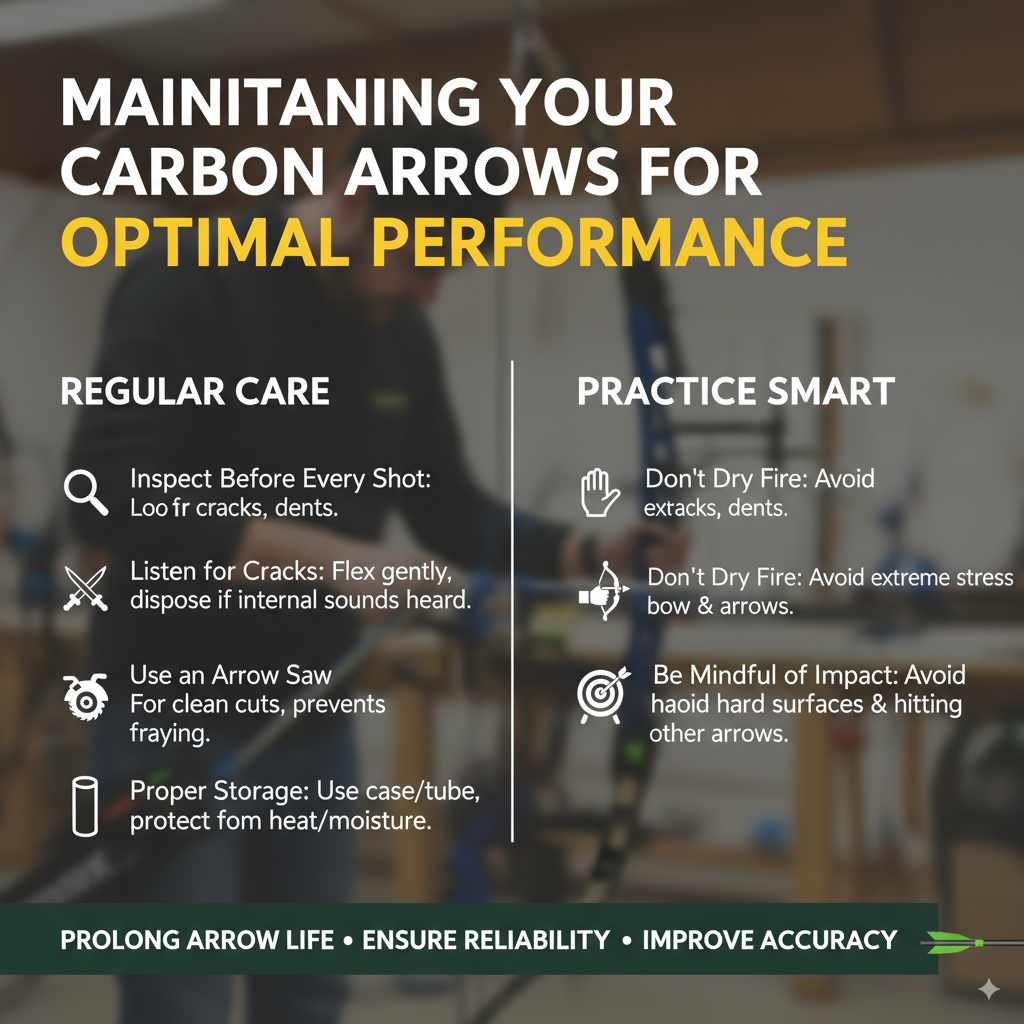
Maintaining Your Carbon Arrows for Optimal Performance
Even the best equipment needs care. Here’s how to keep your carbon arrows in top shape:
- Regular Inspection: Before and after each shooting session, inspect your arrows closely. Look for any cracks, dents, splintering, or deformation. Pay special attention to the shaft, nock area, and the fletchings.
- Listen for Cracks: Gently flex each arrow, holding it by the tip and nock. If you hear any “cracking” sounds, the arrow may have internal micro-fractures and should be retired.
- Use an Arrow Saw for Cutting: If you need to cut your carbon arrows to length, always use a specialized arrow saw that cuts cleanly and doesn’t fray the carbon fibers. A ragged cut can weaken the shaft.
- Proper Storage: Store your arrows in an arrow tube or a case. This protects them from accidental damage, keeps them straight, and shields them from excessive moisture or heat.
- Don’t Dry Fire: Never “dry fire” your bow (shoot an arrow without an arrow nocked). This can cause extreme stress on your bow and potentially damage your arrows.
- Be Mindful of Impact: Avoid shooting at hard surfaces or very close to other arrows, as this is where damage is most likely to occur.
By following these simple maintenance tips, you’ll extend the life of your carbon arrows and ensure they continue to perform reliably shot after shot.
When to Retire a Carbon Arrow
It’s crucial to know when an arrow is no longer safe or accurate to shoot. Here are the key signs:
- Visible Cracks or Splinters: If you can see any damage on the shaft, it’s time for replacement.
- Audible Cracking When Flexed: As mentioned, a cracking sound indicates internal damage.
- Bent Shaft: While carbon is stiff, if it develops a noticeable bend, it won’t fly true.
- Damaged Nock or Insert: A loose or cracked nock, or a damaged point-insert, can lead to inconsistent arrow flight or failure.
- Fletching Damage: While fletchings can sometimes be repaired or replaced, severe damage that compromises their ability to stabilize the arrow is a reason to consider retiring the arrow or at least replacing parts.
Safety is paramount in archery. A damaged arrow can fail at the point of release, which is dangerous for you and anyone nearby. Always err on the side of caution and replace any arrow that shows signs of damage.
Frequently Asked Questions About Carbon Arrows
Are carbon arrows good for beginners?
Yes, absolutely! Carbon arrows are excellent for beginners due to their consistency, durability, and forgiving trajectory. Their predictable flight helps new archers learn and improve their form faster, and their toughness means they can withstand minor beginner mistakes without breaking easily.
Related pick: Check today's price on Amazon