Carbon Arrow 400 vs 500 Spine: Which Is Stiffer & Why
Hey there, fellow archer! If you’re diving into the world of archery or looking to fine-tune your setup, you’ve likely stumbled across the debate between carbon arrow 400 and 500 spines. It’s a topic that sparks a lot of questions, especially for those of us trying to find the perfect arrow for our bow. I’ve spent countless hours at the range, experimenting with both 400 and 500 spine arrows, and I’m excited to share what I’ve learned. Whether you’re a beginner, a seasoned bowhunter, or a target shooter, this guide will break down everything you need to know about carbon arrow 400 vs 500 in a way that’s easy to understand and engaging. Let’s get started!

Pinals
Pinals Traditional Archery 300 340 400 500…
- Arrow shaft made by 100% carbon,4 inch right wing turkey feather,suit for 20-65 lbs compound recurve bow, traditional & Longbows k…
- Removable 100 Grain field points with rubber ring,improve the precision between insert and points,prevent looseness when shooting,…
- Include extra 12pcs arrows insert,convenient for you to use it after cutting the shaft length
As an Amazon Associate I earn from qualifying purchases.
For a related arrow setup, Arrow Spine 400 vs 500: Selecting the Right Arrows gives readers another detail to check before shooting.
What Does Arrow Spine Mean?
Let’s kick things off with the basics. Arrow spine is a term that describes how stiff or flexible an arrow shaft is. Think of it like the backbone of your arrow—it determines how much the arrow bends when you shoot it. The spine rating, like 400 or 500, tells you how stiff the arrow is. A lower number means a stiffer arrow, while a higher number means a more flexible one.
When starting archery, spine ratings often receive little attention. I thought an arrow was just an arrow! But I quickly learned that choosing the wrong spine can mess up your accuracy. If the arrow is too stiff or too flexible for your bow, it won’t fly straight. The 400 and 500 spine ratings are common for carbon arrows, and they’re designed for different bow setups and shooting styles. Let’s dive deeper into what these numbers mean.
Understanding the Numbers: 400 vs 500 Spine
The numbers 400 and 500 refer to the arrow’s spine deflection. This is a measure of how much the arrow bends under a specific weight. For example, a 400-spine arrow deflects 0.400 inches when a 1.94-pound weight is hung from its center, while a 500-spine arrow deflects 0.500 inches under the same weight. In simple terms, the 500-spine arrow is more flexible than the 400-spine arrow.
When choosing arrows for a 60-pound compound bow, I was torn between a 400 and a 500 spine. The guy at the archery shop explained it like this: the 400-spine is stiffer, so it’s better for heavier draw weights or longer arrows, while the 500-spine is more flexible, ideal for lighter draw weights or shorter arrows. That conversation stuck with me, and it’s helped me make better choices ever since.
Here’s a quick comparison to make things clear:
| Feature | 400 Spine | 500 Spine |
|---|---|---|
| Deflection | 0.400 inches | 0.500 inches |
| Stiffness | Stiffer | More flexible |
| Typical Draw Weight | 50–70 lbs | 40–60 lbs |
| Arrow Length | 28–31 inches | 26–29 inches |
| Best For | Heavier bows, longer arrows | Lighter bows, shorter arrows |
This table gives you a snapshot, but there’s more to consider when picking the right arrow. Let’s explore the key factors that influence your choice.
Why Spine Matters for Your Shooting
When you release an arrow, it doesn’t just fly straight out of the bow. It flexes as it leaves the string, bending side to side in what’s called the “archer’s paradox.” The right spine ensures the arrow flexes just enough to clear the bow and fly true to the target. Too stiff, and the arrow might veer off course. Too flexible, and it could wobble or even break.
This lesson becomes clear during the first hunting season. I was using a 500-spine arrow with a bow that was a bit too powerful for it. My shots were all over the place, and I couldn’t figure out why. After some research and a chat with a pro archer, I switched to a 400-spine arrow, and my groups tightened up. The spine made all the difference!
The 400-spine arrow is typically better for bows with higher draw weights, like 50 to 70 pounds, because it can handle the extra force without over-flexing. The 500-spine arrow, being more flexible, works well with lighter bows, around 40 to 60 pounds. Your draw length and arrow length also play a role, so let’s look at how those factor in.

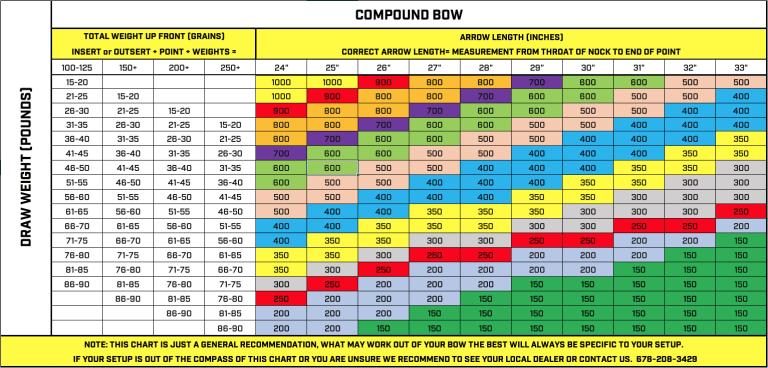
Matching Spine to Your Bow Setup
Your bow setup is unique, and so is your choice of arrow spine. Here’s what you need to consider:
- Draw Weight: This is the force required to pull your bowstring back. Higher draw weights need stiffer arrows (like 400 spine) to handle the power. Lighter draw weights pair better with more flexible arrows (like 500 spine).
- Draw Length: This is how far you pull the string back. Longer draw lengths increase the force on the arrow, so you might need a stiffer spine. For example, my 29-inch draw length works well with a 400-spine arrow on my 60-pound bow.
- Arrow Length: Longer arrows are more flexible, so you might need a stiffer spine for a longer arrow. Shorter arrows can often use a more flexible spine.
- Point Weight: The weight of your arrow tip (field point or broadhead) affects spine. Heavier tips (100–125 grains) make the arrow act more flexible, so you might need a stiffer spine. Lighter tips (75–100 grains) work better with a more flexible spine.
When I was setting up my recurve bow, I used a spine chart from the arrow manufacturer. It was a lifesaver! Most brands, like Easton or Gold Tip, have charts that match spine ratings to your bow’s draw weight and arrow length. If you’re unsure, check the manufacturer’s website or talk to someone at your local archery shop.
Carbon Arrows: Why They’re the Go-To Choice
Carbon arrows, like the 400 and 500 spine models, are popular for a reason. They’re lightweight, durable, and consistent. Unlike aluminum or wood arrows, carbon arrows don’t bend or warp easily. They also recover quickly from flexing, which means better accuracy.
I’ve shot both aluminum and carbon arrows, and I can tell you carbon feels like a dream. My carbon arrows have taken a beating—hitting targets, bouncing off rocks during hunts—and they still shoot straight. Plus, carbon arrows come in a variety of spine ratings, making it easier to find the perfect match for your bow.
Both 400 and 500 spine carbon arrows are great, but they serve different purposes. The 400-spine is a bit heavier and stiffer, ideal for hunting big game where you need penetration. The 500-spine is lighter and more flexible, perfect for target shooting or smaller game.
Hunting with 400 vs 500 Spine Arrows
If you’re a bowhunter like me, choosing the right arrow spine is critical. The 400-spine arrow is my go-to for hunting deer or elk. Its stiffness handles the power of my compound bow and drives broadheads deep into the target. I’ve found that 400-spine arrows, especially with a 100-grain broadhead, give me the penetration I need for ethical kills.
The 500-spine arrow, on the other hand, shines for smaller game or lighter bows. A 500-spine arrow paired with a 45-pound recurve works for turkey hunting. The lighter arrow flew fast and flat, making it easier to hit those small, quick targets. However, the same arrow lacks sufficient punch for deer.
Here’s a quick breakdown for hunters:
- 400 Spine: Best for big game (deer, elk, bear). Works with heavier broadheads (100–125 grains). Ideal for 50–70-pound bows.
- 500 Spine: Great for small game (turkey, rabbit). Pairs well with lighter broadheads (75–100 grains). Suited for 40–60-pound bows.
If you’re hunting, also consider your arrow’s total weight. Heavier arrows (often 400 spine) carry more kinetic energy, which means better penetration. Lighter arrows (often 500 spine) are faster but may lack the momentum for larger animals.
Target Shooting with 400 vs 500 Spine Arrows
For target shooters, accuracy is everything. Both 400 and 500 spine arrows can work, but it depends on your setup and goals. The 400-spine arrow is stiffer, so it’s less forgiving if your form isn’t perfect. This becomes apparent when practicing for a local 3D shoot. 400-spine arrows remain consistent, though focus on release produces tight groups.
The 500-spine arrow, being more flexible, is a bit more forgiving for lighter bows or shorter draw lengths. I let a friend try my 500-spine arrows with her 40-pound compound, and she was amazed at how easy it was to group her shots. For indoor target shooting or beginners, the 500-spine can be a great starting point.
If you’re shooting targets, also think about arrow diameter. Smaller-diameter arrows (like many 400-spine models) are less affected by wind, making them great for outdoor ranges. Larger-diameter 500-spine arrows can be easier to see on the target, which is nice for indoor shooting.
Tuning Your Bow for 400 or 500 Spine Arrows
Tuning your bow is like dialing in a radio station—you want everything to be crystal clear. The right spine helps, but you’ll still need to tune your bow to match your arrows. Here’s what I do when I switch between 400 and 500 spine arrows:
- Paper Tuning: Shoot through paper to check for tears. A bullet-hole tear means your arrow is flying straight. If the tear is off, adjust your rest or nocking point.
- Bare Shaft Tuning: Shoot an unfletched arrow and a fletched arrow. They should hit close together. If not, your spine might be off, or your bow needs tweaking.
- Broadhead Tuning: For hunting, shoot broadheads and field points. They should hit the same spot. If not, you might need a different spine or more tuning.
When switching to 400-spine arrows, adjust the rest slightly for perfect flight. It took a couple of hours at the range, but it was worth it. If you’re new to tuning, don’t be afraid to ask for help at your archery shop. They’ve seen it all!
Durability and Maintenance
Carbon arrows are tough, but they’re not indestructible. I’ve had both 400 and 500 spine arrows survive some rough shots, but they do need care. The 400-spine arrows, being stiffer, tend to handle impacts better, especially for hunting. I’ve pulled 400-spine arrows out of hard targets without a scratch.
The 500-spine arrows are a bit more flexible, so they can crack if you hit something solid at an odd angle. Missing a target and striking a tree stump shows a 500-spine arrow may fall short. Check your arrows regularly for cracks or dents, especially near the nock or insert.
To keep your arrows in top shape:
- Inspect After Every Shoot: Look for cracks, splinters, or bent nocks.
- Clean Them: Wipe off dirt or blood with a damp cloth.
- Store Properly: Use an arrow tube or case to prevent bending.
Cost Considerations
Let’s talk money. Carbon arrows aren’t cheap, but they’re worth it for the performance. A dozen 400-spine arrows typically cost $80–$150, depending on the brand and features (like pre-fletched vanes or premium inserts). The 500-spine arrows are often slightly cheaper, ranging from $70–$130, since they’re lighter and use less material.
I’ve tried budget arrows and high-end ones, and here’s my take: spend a little more for quality. Brands like Easton, Gold Tip, and Carbon Express make reliable 400 and 500 spine arrows that last. If you’re on a budget, look for sales or buy bare shafts and fletch them yourself to save some cash.
Choosing the Right Arrow for You
So, which arrow should you pick? It depends on your bow, your shooting style, and your goals. Here’s how I break it down:
- Choose 400 Spine If: You have a higher draw weight (50–70 lbs), hunt big game, or shoot longer arrows. It’s stiffer and handles more power.
- Choose 500 Spine If: You have a lighter draw weight (40–60 lbs), shoot targets, or hunt small game. It’s more flexible and forgiving.
When deciding between spines, test both at the range. Borrow a few 400 and 500 spine arrows and shoot them with the bow. The 400-spine grouped tighter for me, so that’s what I stuck with for hunting. If you can, test both spines before buying a dozen. Most archery shops have demo arrows you can try.

My Personal Experience
Over the years, I’ve shot both 400 and 500 spine arrows for different purposes. For my 60-pound compound bow, the 400-spine arrows are my go-to for hunting. They’re reliable, tough, and punch through tough hides. For target practice with my 45-pound recurve, I love the 500-spine arrows. They’re fast, forgiving, and perfect for honing my form.
One of my favorite moments was during a 3D shoot last summer. I was using 400-spine arrows, and I nailed a 40-yard shot on a moving deer target. The arrow flew true, and I could feel the confidence that comes with having the right equipment. It’s moments like that that make all the research and tuning worth it.
Conclusion
Choosing between a 400 and 500 spine carbon arrow doesn’t have to be overwhelming. It’s all about matching the arrow to your bow and your shooting goals. The 400-spine is your best bet for heavier bows and big game hunting, offering the stiffness and power you need. The 500-spine is ideal for lighter bows, target shooting, or smaller game, giving you speed and forgiveness. Take the time to understand your setup, test both spines if you can, and tune your bow for the best results. Archery is a journey, and finding the right arrow is a big step toward hitting the bullseye—whether it’s on a target or in the field. So grab your bow, pick your arrows, and let’s keep shooting!
FAQs
What’s the main difference between 400 and 500 spine arrows?
The main difference is stiffness. A 400-spine arrow is stiffer, designed for heavier draw weights (50–70 lbs) and longer arrows. A 500-spine arrow is more flexible, better for lighter draw weights (40–60 lbs) and shorter arrows. The right choice depends on your bow setup and shooting style.
Can I use a 400-spine arrow with a 40-pound bow?
It’s not ideal. A 400-spine arrow is too stiff for a 40-pound bow, which could lead to poor arrow flight and accuracy. A 500-spine arrow is usually a better match for lighter bows like that. Check the manufacturer’s spine chart to be sure.
Are 500-spine arrows good for hunting?
Yes, but they’re best for smaller game like turkey or rabbit, especially with lighter bows (40–60 lbs). For bigger game like deer or elk, a 400-spine arrow is often better because it’s stiffer and delivers more penetration.
How do I know if my arrow spine is correct?
Shoot through paper to check for a bullet-hole tear, or try bare shaft tuning. If your arrows are veering off or wobbling, the spine might be too stiff or too flexible. Adjust your setup or try a different spine.
Are carbon arrows worth the cost?
Absolutely! Carbon arrows are lightweight, durable, and consistent. They’re more expensive than aluminum or wood, but they last longer and perform better. Invest in quality arrows from trusted brands for the best results.
Related pick: Check today's price on Amazon