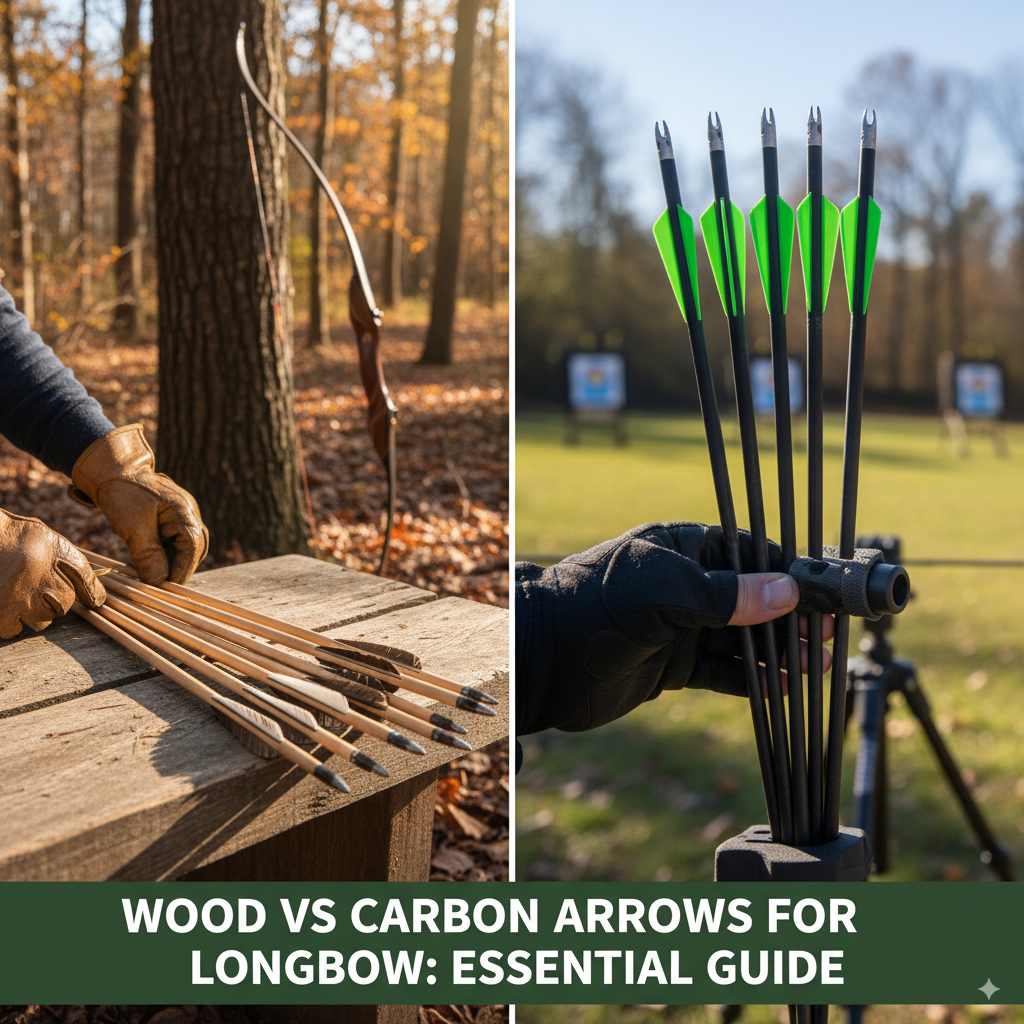
Wood vs Carbon Arrows for Longbow: Essential Guide
Need to choose between wood and carbon arrows for your longbow? Wood arrows are classic, forgiving, and affordable, perfect for traditional shooting and learning. Carbon arrows are faster, straighter, and more durable, offering top performance but costing more. Your best choice depends on your budget, shooting style, and what feels right for you!
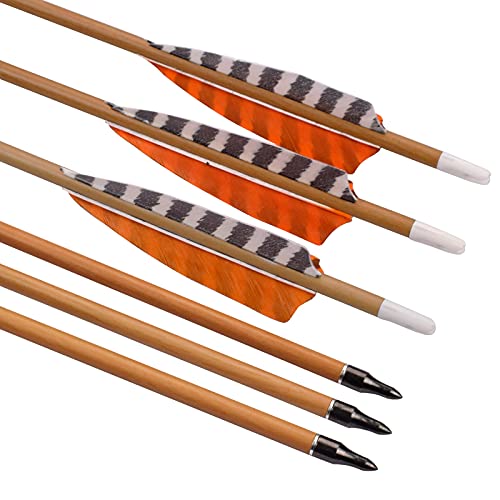
ELONG OUTDOOR
Elong 6pk 30" Archery Carbon Arrows Wood…
- Shaft length: 30 inch/76cm, spine: 600, carbon standard arrows for recurve, compound bow
- Inner diameter: 6.2mm, outer diameter: 7.1mm, GPI: 5.54 grain/inch, Straightness: +/-0.006", high quality pure carbon shaft, durab…
- 100 Grains screw on field points with aluminum insert, 4" turkey feather (real turkey feather) light weight and help the arrow sho…
As an Amazon Associate I earn from qualifying purchases.
Embarking on your longbow journey is exciting! One of the first big decisions you’ll face is choosing your arrows. It might seem a little confusing at first, with so many options out there. Two popular choices are wood and carbon arrows. Both can work well, but they behave differently and suit different archers. Understanding these differences will help you pick the right arrows to make your shooting experience enjoyable and successful right from the start. Let’s break it down, nice and simple!
Wood Arrows vs. Carbon Arrows for Longbow: An Essential Guide
Choosing the right arrows is crucial for a happy and accurate archery experience, especially when you’re just starting with a longbow. You’ll see traditionalists reaching for wood arrows, and modern archers often preferring carbon. Both have their own charm and purpose. Think of it like choosing between a vintage wooden spoon and a modern silicone one – each has its strengths! We’ll explore what makes each type special, so you can feel confident in your choice.
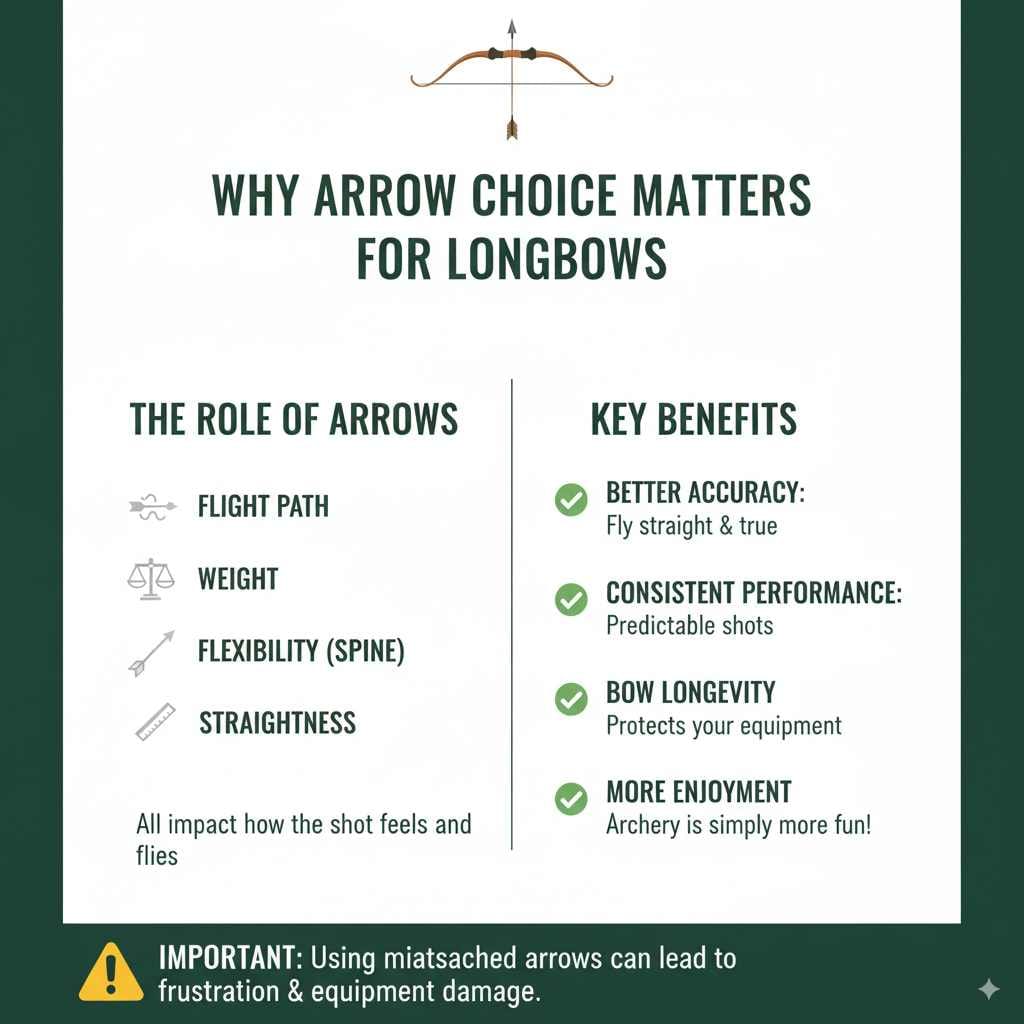
Why Arrow Choice Matters for Longbows
Your arrows are the bridge between your bow and the target. For a longbow, which typically doesn’t have the same advanced features as a compound bow, your arrows play an even more vital role in how the shot feels and flies. The weight, flexibility, and straightness of an arrow all impact its flight path. Using arrows that are not well-suited to your particular longbow and shooting style can lead to frustration, poor accuracy, and even damage to your equipment. Selecting the right arrows helps ensure:
- Better Accuracy: Arrows that fly straight and true make hitting your target easier.
- Consistent Performance: You’ll get more predictable shots, which helps build confidence.
- Bow Longevity: Using appropriately spined and weighted arrows protects your longbow.
- Enjoyment: When your arrows fly well, archery is simply more fun!
A Look at Wood Arrows
Wood arrows are the classic choice for traditional archery and have been used for centuries. They offer a beautiful, natural aesthetic that many longbow enthusiasts love. When you pick up a wooden arrow, you feel a connection to archery’s history.
The Charm of Wood: Pros and Cons
Wood arrows are fantastic for many reasons, but they also have a few drawbacks to consider.
| Pros of Wood Arrows | Cons of Wood Arrows |
|---|---|
| Affordable: Generally less expensive than carbon arrows, making them great for beginners or those on a budget. | Less Durable: Prone to breaking or splintering on impact with hard targets or if they hit other arrows. They can also warp if not stored properly. |
| Forgiving Flight: Their slight flex can make them more forgiving of minor tuning imperfections. They often fly well out of a variety of bows. | Inconsistent: Natural variations in wood grain can lead to slight differences in weight and straightness between arrows, even within the same dozen. |
| Traditional Aesthetics: Many archers appreciate the classic, natural beauty and feel of wood arrows. | Susceptible to Weather: Can be affected by humidity and moisture, potentially causing them to warp or weaken. |
| Easier to Repair: Minor damage, like a chipped nock or bent fletching, can sometimes be repaired or adjusted. | Heavier: Generally weigh more than comparable carbon arrows, which can affect arrow speed. |
| Good for Beginners: Their forgiving nature and lower cost make them an excellent choice for learning the fundamentals. | Limited Spine Options: While available in various spiffnesses, the range might be narrower compared to the precision offered by carbon shafts. |
When to Choose Wood Arrows
Wood arrows are an excellent choice if you:
- Are new to archery: Their forgiving nature helps you learn without getting too caught up in precise tuning.
- Shoot a traditional longbow: They match the historical and aesthetic feel of these bows perfectly.
- Have a limited budget: They are more economical than carbon arrows.
- Practice at a dedicated archery range: Shooting at foam targets minimizes the risk of breakage.
- Want to experience classic archery: There’s a unique satisfaction that comes with shooting wood.
For beginners, wood arrows provide a fantastic entry point. They allow you to focus on your form and shooting technique without the added complexity of highly precise equipment requirements. Their forgiving flight path means that small inconsistencies in your release are less likely to result in wild shots, helping you build confidence faster.
Exploring Carbon Arrows
Carbon arrows have become incredibly popular in modern archery due to their performance and durability. They are made from layers of carbon fiber bonded together, creating a strong, lightweight, and remarkably straight shaft. For longbow archers looking for speed and accuracy, carbon offers a compelling alternative to wood.
The Advantage of Carbon: Pros and Cons
Carbon arrows bring a lot to the table, but they come with their own set of considerations:
| Pros of Carbon Arrows | Cons of Carbon Arrows |
|---|---|
| Exceptional Durability: Much stronger and more resistant to breakage than wood. They can withstand impacts that would shatter a wooden arrow. | Higher Cost: Typically more expensive than wood arrows, which can be a factor for beginners buying in bulk. |
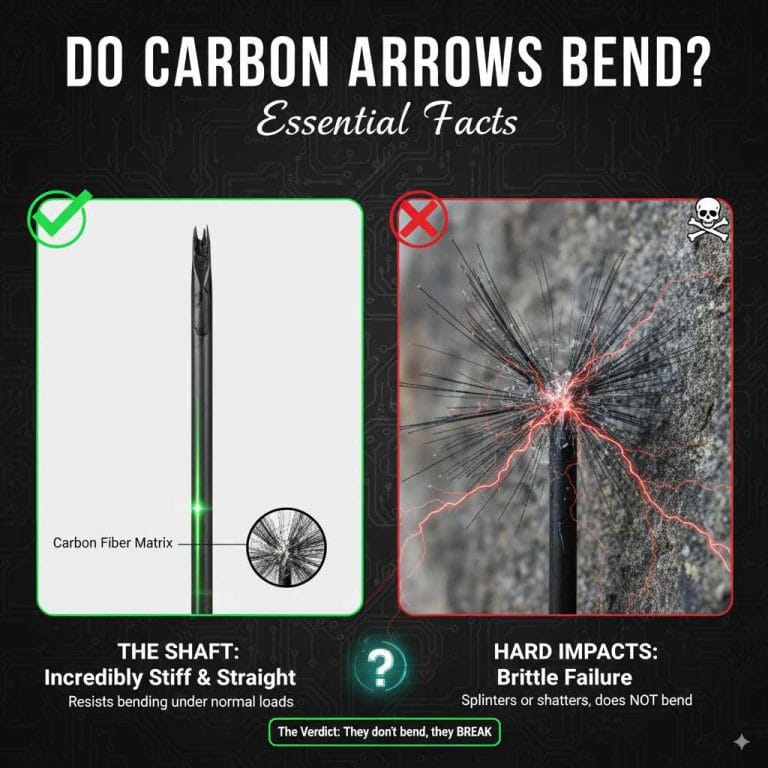
| Excellent Straightness and Consistency: Manufactured to very precise tolerances, ensuring each arrow is nearly identical in weight and straightness. This leads to very predictable flight. | Can Shatter: While durable, a catastrophic failure can cause a carbon arrow to shatter into sharp pieces, posing a safety risk. Inspect regularly for cracks or damage. |
| Lightweight for their Strength: Allows for higher arrow speeds, meaning flatter trajectory and less holdover required at longer distances. | Less Forgiving for Tuning: Their stiffness requires more precise matching to your bow’s draw weight and your shooting style. Minor imperfections in form can be more noticeable. |
| Weather Resistant: Not affected by humidity or moisture, so they maintain their performance in various conditions. | Difficult to Repair: Once a carbon shaft is significantly damaged, it’s usually unrepairable and needs to be replaced. |
| Wide Range of Spines and Options: Available in a vast array of flexibilities (spines), weights, and lengths, allowing for very specific tuning to your bow. | Can be too stiff for some setups: While flexibility is a pro, if a carbon arrow is too stiff for your bow’s draw weight or your shooting style, it can lead to arrow “kick” or poor launching dynamics. |
When to Choose Carbon Arrows
Carbon arrows are a great choice if you:
- Prioritize speed and accuracy: Their straightness and consistency contribute to a more precise shot.
- Shoot in various conditions: They perform reliably regardless of weather.
- Want durability: They can survive impacts that would destroy wood arrows, potentially saving you money in the long run despite the higher upfront cost.
- Are comfortable with precise tuning: You’re willing to learn about arrow spine and ensure your arrows are matched to your bow.
- Shoot at longer distances: Their lighter weight and flatter trajectory are beneficial.
For those who enjoy the precision offered by modern equipment, carbon arrows are hard to beat. Many longbow archers who are beyond the beginner stages will find that the consistent flight and durability of carbon arrows significantly enhance their shooting experience. They are popular in target archery and field archery, where consistency is key.
Key Factors for Choosing Your Arrows
When you’re deciding between wood and carbon for your longbow, consider these important factors. They’ll help you narrow down the best fit for your situation:
1. Your Budget
This is often the first consideration. Wood arrows are a more budget-friendly option, particularly for building a large set of arrows. Carbon arrows have a higher upfront cost. However, consider long-term costs: if you frequently break arrows, the durability of carbon might make them more cost-effective over time, especially if you shoot at targets that can damage wood.
2. Your Bow’s Draw Weight and Arrow Spine
This is a critical technical aspect. Every bow has a specific draw weight, and arrows have a “spine” – a measure of their stiffness. For accurate shooting, your arrow’s spine needs to match your bow’s draw weight and the length of your draw. Your local archery shop or an experienced archer can help you determine the correct spine. A too-weak or too-stiff arrow will fly erratically. Both wood and carbon arrows are available in varying spiffnesses, but the precise manufacturing of carbon often means more exacting options are available.
The practice of “spining” arrows to your bow ensures that the arrow is stiff enough to fly straight but flexible enough to flex around the riser (the main part of the bow) as it leaves the bow. This is known as paradox. As outlined by the USA Archery Safe Sport Program, correct equipment selection, including properly spined arrows, is a fundamental aspect of archery safety.
3. Your Shooting Style and Skill Level
As we’ve discussed, wood arrows are generally more forgiving for beginners. Their natural flex can mask minor inconsistencies in your release. Carbon arrows, while offering incredible performance, demand more precision from the archer. If your form is still developing, you might find carbon arrows highlight those imperfections more.
4. Your Shooting Environment
Where will you be shooting most often? If you’re shooting at traditional straw bales or foam targets at a dedicated range, wood arrows are a good fit. If you’re shooting in challenging terrain, at 3D targets, or in situations where your arrows might hit rocks or trees, carbon arrows’ durability will be a significant advantage.
5. Personal Preference and Feel
Sometimes, it simply comes down to what feels right in your hands. Many longbow archers have a deep appreciation for the traditional feel and look of wood. Others prefer the sleek, modern performance of carbon. Don’t underestimate the psychological impact of shooting equipment you enjoy aesthetically and tactilely. It can boost your confidence and make your practice sessions more rewarding.
Understanding Arrow Components
No matter if you choose wood or carbon, arrows consist of several key parts, and knowing them helps in selection and maintenance:
- Shaft: This is the main body of the arrow. It can be made of wood, carbon, aluminum, or a combination.
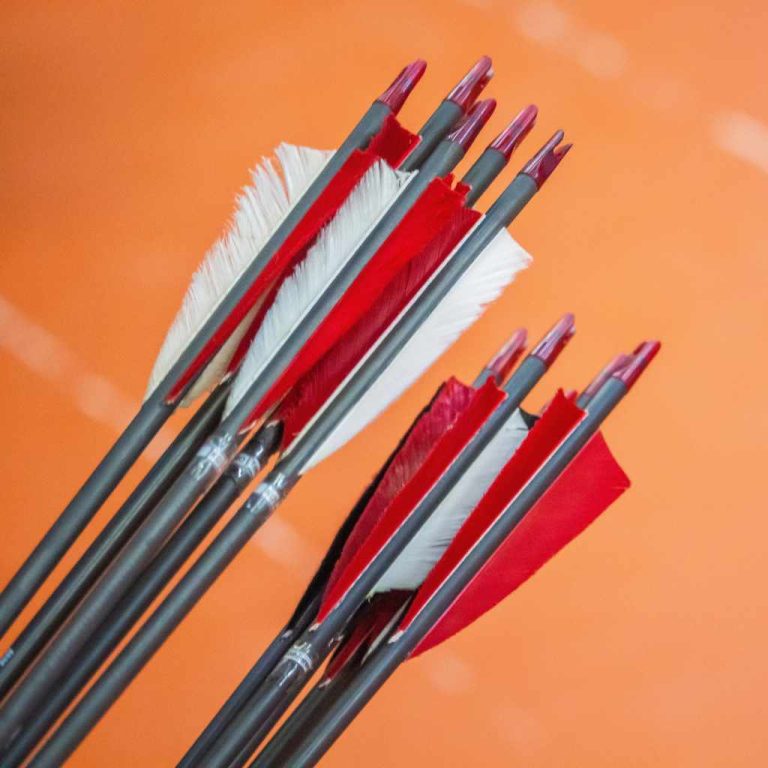
- Fletching: These are the “feathers” or vanes attached to the back of the shaft. They stabilize the arrow in flight. Traditional longbows often use feathers, while modern designs might use plastic vanes.
- Nock: The small piece at the very back of the arrow that attaches to the bowstring.
- Point (or Head): The tip of the arrow. For target archery, these are usually field points. For hunting, broadheads are used.
Wood Arrow Components
Wood shafts are typically made from woods like cedar, pine, or fir. They are often varnished and may have a reinforced nock-end (like a plastic nock collar) and a metal point. Feathers are the traditional choice for fletching wood arrows.
Carbon Arrow Components
Carbon shafts are engineered and very consistent. They can be pre-fletched or bought as bare shafts for custom fletching. Most carbon arrows use plastic vanes for fletching, as they are durable and perform well. Inserts are often bonded into the shaft to hold the point and nock, allowing for better tuning and repair options compared to directly gluing them.
Proper Care and Maintenance for Longevity
Giving your arrows proper care will ensure they perform their best and last longer, saving you money and frustration.
Caring for Wood Arrows
- Store them straight: Always store wood arrows horizontally or in an arrow tube/case to prevent warping.
- Keep them dry: Avoid prolonged exposure to moisture. If they get wet, dry them thoroughly.
- Inspect regularly: Check for splinters, cracks, or signs of weakness, especially after impact.
- Keep fletching clean: Gently clean pine tar or dirt off fletching.
Caring for Carbon Arrows
- Inspect for damage: This is crucial for safety. Look for cracks, deep scratches, or any signs of delamination (layers separating), especially near the nock and shaft. A thorough inspection can prevent dangerous breakages. Use a light and a careful touch; a damaged carbon arrow can shatter.
- Clean them: Wipe down shafts and fletchings to remove dirt and debris.
- Protect them: Store them in an arrow tube or quiver to prevent accidental damage.
- Avoid extreme heat: Prolonged exposure to very high temperatures can potentially damage the bonding agents.
For more detailed safety guidelines, always refer to manufacturer instructions and consult with experienced archers or professionals. Resources like the HuntingLife.com Arrow Guide can offer additional insights into arrow selection and care.
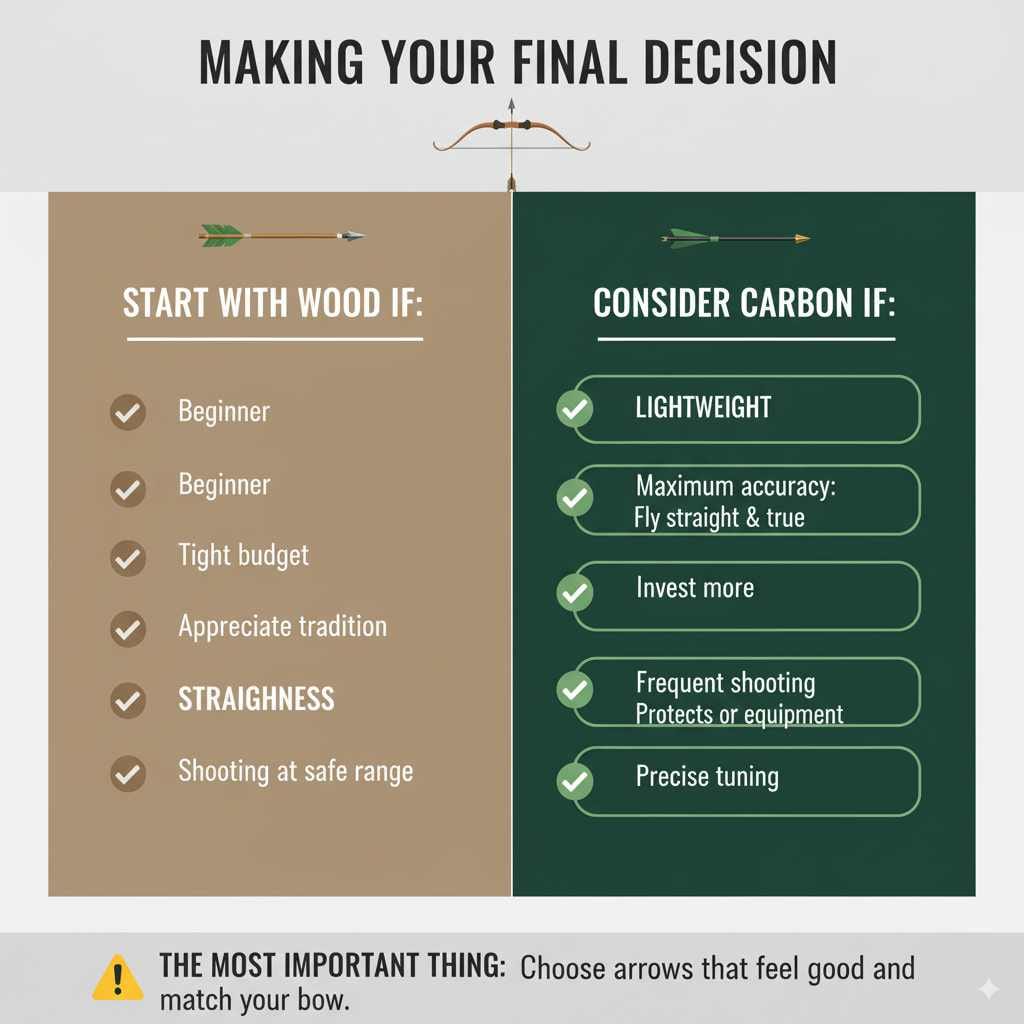
Making Your Final Decision
So, wood or carbon for your longbow? There’s no single “right” answer, but there’s a best answer for you.
- Start with wood if: You’re a beginner, on a tight budget, appreciate tradition, and are shooting at a safe range.
- Consider carbon if: You want maximum accuracy and consistency, are willing to invest more, shoot frequently in varying conditions, and are comfortable with precise equipment tuning.
Many archers find they enjoy shooting both types over time. You might start with wood to get a feel for traditional archery and then transition to carbon as your skills and equipment demands evolve. The most important thing is to choose arrows that feel good to you, match your bow, and help you enjoy the process of learning and improving.
Frequently Asked Questions (FAQ)
Q1: Can I use carbon arrows with any longbow?
Yes, you can use carbon arrows with most modern longbows, provided the arrow spine is correctly matched to your bow’s draw weight and your draw length. Traditional longbows can often shoot carbon quite well, but it’s always best to check with the bow manufacturer or an experienced archer.
Q2: How do I know what “spine” of arrow I need?
Arrow spine refers to the stiffness of the arrow shaft. The correct spine depends on your bow’s draw weight, your draw length, and the arrow’s length and weight. A good way to find out is to consult an arrow spine chart, use an online spine calculator, or ask for help at a local archery shop. They can guide you to the right choice to ensure your arrows fly straight.
Q3: Which type of arrow is faster?
Generally, carbon arrows are faster than wood arrows of comparable stiffness and length. This is because carbon is lighter and stronger, allowing for a higher arrow velocity, which results in a flatter trajectory.
Q4: Are wood arrows really that fragile?
Wood arrows are less durable than carbon. They can splinter or break upon impact with hard surfaces or other arrows. However, they are forgiving on a release and can handle impacts with soft targets like straw or foam quite well. With careful handling and proper storage, they can last a long time.
Q5: What happens if my carbon arrow breaks?
If a carbon arrow breaks or is damaged (look for cracks or splintering), it should be discarded immediately. A damaged carbon shaft can shatter upon release, sending sharp fragments in unpredictable directions, which is a significant safety hazard. Always inspect your arrows before each use.
Q6: Can I mix wood and carbon arrows in my quiver?
While you technically can, it’s generally not recommended for serious shooting or competition. Mixing arrow types can lead to inconsistent arrow flight if they have different flight characteristics. For practice, it’s okay, but for target acquisition and consistency, it’s best to shoot a matched set of either wood or carbon.
Related pick: Check today's price on Amazon