Are Carbon Arrows Dangerous: Essential Safety
Carbon arrows are generally not dangerous when used correctly and with proper safety precautions. They are a durable and high-performing archery tool. Understanding potential risks and implementing essential safety measures ensures a safe and enjoyable archery experience for beginners and experienced archers alike.

SERfawnCH
SERfawnCH 24Pcs 30" Carbon Archery Arrows, Hunting…
- ✔ Dimensions: Length: 30.7 in (78 cm); Rear tilt length: 31.5 in (80 cm); Outer diameter: 0.31 in (7.87 mm); Inner diameter: 0.24…
- ✔ Bow-Safe Plastic Vanes: Rubber-bonded design minimizes string wear and maintains arrow stability
- ✔ Tool-Free Adjustable Nocks: No glue required; adjust vane orientation (left/up) with a coin
As an Amazon Associate I earn from qualifying purchases.
For a related arrow setup, How to Add Arrows to a PDF: Essential gives readers another detail to check before shooting.
For a related arrow setup, How It’s Made Carbon Arrows: Essential gives readers another detail to check before shooting.
For a closely related bow or archery topic, Do You Take Motocross Chest Protectors Off EMS? Essential Safety Tips gives readers a useful next step.
For a closely related bow or archery topic, Do Pro Riders Wear Chest Protectors? Essential Safety gives readers a useful next step.
Embarking on your archery journey is incredibly exciting! As you get more into the sport, you might start hearing about different types of arrows, like carbon arrows. They’re popular for a good reason – they fly fast and true! But sometimes, new archers wonder, “Are carbon arrows dangerous?” It’s a fair question when you’re handling any equipment that shoots. You’re probably eager to improve your aim and have fun, and you want to make sure you’re doing it safely. This guide is here to clear up any worries and give you simple, step-by-step tips to make sure your carbon arrows are always a source of enjoyment, not concern.
Understanding Carbon Arrows: The Basics
Carbon arrows have become the go-to choice for many archers, from beginners to professionals. They are made from tightly wound carbon fibers embedded in a resin. This construction gives them some fantastic advantages over older materials like aluminum or wood.
Why Carbon Arrows are Popular
- Lightweight: Carbon arrows are significantly lighter than aluminum arrows of the same stiffness. This means they will fly faster and with a flatter trajectory, making it easier for you to hit your target if you learn to shoot them consistently.
- Durability: They are incredibly strong and resistant to bending or breaking upon impact, especially compared to aluminum arrows which can bend and become unusable after hitting a hard surface.
- Straightness: Carbon arrows maintain their straightness very well, which is crucial for accuracy. A bent arrow will fly erratically and lead to missed shots.
- Penetration: Their strength and lighter weight can lead to better penetration on game, making them a preferred choice for hunters.
However, like any tool, understanding how to use them safely is key. Knowing what to look for and how to handle them will put your mind at ease and keep you focused on improving your shooting.

Are Carbon Arrows Dangerous? Addressing the Concerns
The short answer is: No, carbon arrows are not inherently dangerous when used properly and with the right safety awareness. The perceived danger often comes from misunderstandings or potential issues that can be easily managed with basic care and knowledge. Let’s break down the common concerns and how to address them.
Potential Issues and How to Prevent Them
While carbon arrows are generally robust, there are a few things to be aware of:
- Breakage: The most significant concern with carbon arrows is spine breakage. If a carbon arrow is damaged (e.g., from a glancing shot off a hard object, a hard impact on the ground upon missing, or improper handling), it can develop micro-fractures or cracks. When shot in this weakened state, the arrow can shatter upon release. This sudden disintegration is called a “blow-up” and can send small fragments flying, posing a risk to the archer and anyone nearby.
- Fletching Damage: The vanes (feathers or plastic fins) on the back of the arrow are essential for stabilization. If these are damaged, the arrow might not fly straight, affecting accuracy. While not directly dangerous, it impacts performance and can be frustrating.
- Arrow Rest Issues: Improperly fletched or damaged arrows can sometimes cause problems with your arrow rest, potentially leading to a less-than-ideal release. Again, this primarily impacts accuracy but is worth noting.
The good news is that preventing these issues is straightforward and falls under standard archery safety practices.
Essential Safety Practices for Carbon Arrows
Safety in archery is paramount, and it’s built on consistent habits and careful observation. Using carbon arrows safely involves a few key practices that ensure your equipment is always in top condition and your shooting environment is secure.
Before You Shoot: Inspection is Key
This is the most critical step in preventing any arrow-related incidents. Before you draw your bow with a carbon arrow nocked, you must inspect it.
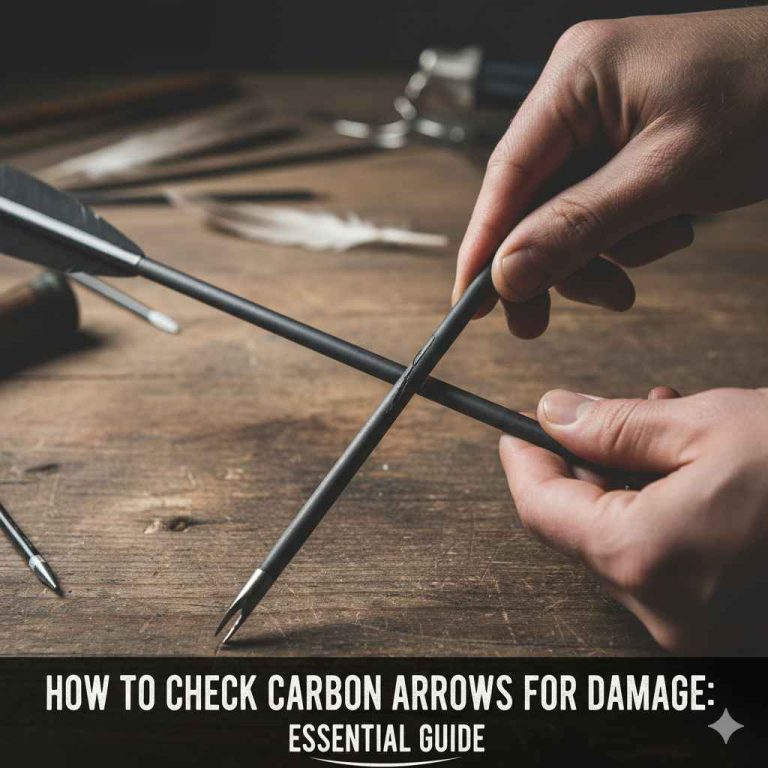
- Visual Inspection: Look closely at the entire shaft of the arrow. Check for any signs of cracking, splintering, or delamination (where the carbon layers are separating). Pay special attention to the area where the arrow bends against the bowstring at full draw.
- The “Roll Test”: Gently roll the arrow on a flat surface. Listen for any grating or bumping sounds, which can indicate internal damage or a bent shaft. While this isn’t foolproof for micro-fractures, it helps identify larger issues.
- Shaft Flex Test (Use Caution): This method should be performed carefully to avoid causing damage yourself. Hold the arrow by the nock and gently apply pressure to the shaft with your thumb and forefinger, about a third of the way from the tip. Then, repeat this on the other side of the arrow. Listen for any cracking or popping sounds. If you hear any, the arrow is compromised and should not be used. Important: If an arrow fails any of these checks, it should be retired immediately. Do not attempt to shoot it.
- Check the Nock: Ensure the nock (the part that clips onto the bowstring) is intact and not cracked or damaged. A broken nock can cause the arrow to fall off the string prematurely or misfire.
- Inspect the Fletching: Make sure your vanes or feathers are securely attached and not torn or bent. Damaged fletching affects arrow flight.
- Examine the Insert and Broadhead/Field Point: If you’re using screw-in points, ensure they are tightly secured and that the insert (the part the point screws into) is not cracked or loose within the carbon shaft.
During Your Shooting Session
- Always Shoot at Appropriate Targets: Never shoot arrows at hard surfaces like rocks, trees, fences, or buildings. This is the quickest way to damage your arrows and can cause them to fly unpredictably. Use targets specifically designed for archery. Good archery targets are absorbent enough to stop an arrow safely without causing excessive damage. Online retailers like Archery Supplies often have a wide selection of targets suitable for various bow weights.
- Never Shoot at Damaged Arrows: As highlighted above, a damaged arrow is a dangerous arrow. If you suspect an arrow is compromised, retire it.
- Maintain Proper Bow Draw and Release: Ensure you are drawing the bow smoothly and releasing the string cleanly. Jerky movements or improper form can stress the arrow.
- Be Aware of Your Surroundings: Always ensure your shooting lane is clear. Know where your arrow is likely to go, especially if you miss the target. Never point a nocked arrow at anyone, even if you don’t intend to shoot.
- Shot Placement Matters for Hunters: For hunting, precise shot placement is crucial not only for a humane kill but also to avoid hitting bone, which can damage your arrows and lead to lost game.
After Shooting
- Regular Inspection: Even if an arrow appears fine after a shooting session, it’s good practice to give it another quick inspection before storing it.
- Proper Storage: Store your arrows in an arrow case or quiver. This protects them from damage, keeps them organized, and prevents them from getting bent or crushed.
Understanding Arrow Spine and Its Importance
The “spine” of an arrow refers to its stiffness. For optimal flight, the arrow’s spine needs to be correctly matched to the draw weight of your bow. If an arrow is too stiff (over-spined) or too flexible (under-spined) for your bow, it can affect its trajectory and, in extreme cases, contribute to instability during flight. While this doesn’t directly make the arrow dangerous in the way a shattered arrow is, it’s a crucial aspect of performance and safe shooting.
What is Arrow Spine?
Arrow spine is typically measured by how much an arrow deflects when 28 pounds of weight is applied to its center while the arrow is supported at two points 28 inches apart. A common spine rating might be “500,” meaning the arrow deflects 0.500 inches under this test. Lower numbers indicate stiffer arrows (less deflection), while higher numbers indicate more flexible arrows (greater deflection).
Matching Arrow Spine to Your Bow
Factors that influence the correct spine:
- Bow’s Draw Weight: Higher draw weight bows generally require stiffer arrows (lower spine number).
- Draw Length: A longer draw length means the arrow is being shot with more force, which can affect the required spine. Longer draw lengths might require slightly more flexible arrows (higher spine number) or heavier arrows.
- Arrow Length: Longer arrows are more flexible than shorter arrows of the same material and stiffness. This is why cutting your arrows to the correct length is vital.
- Arrow Weight: Heavier arrows (e.g., with heavier points or thicker shafts) can sometimes fly better with slightly stiffer spines.
Manufacturers provide spine charts to help you select the correct arrow spine for your bow’s specifications. Consulting your local archery shop or using online resources is highly recommended. For example, Easton, a leading arrow manufacturer, provides extensive technical datasheets and selection guides on their technical resources page, which can be invaluable for matching components. Using an incorrectly spined arrow, especially one that is too flexible (under-spined), can lead to the arrow “porpoising” (wobbling up and down in flight) or even dramatically improper flight paths.
Choosing the Right Arrows: A Beginner’s Guide
As a beginner, navigating the world of arrows can seem overwhelming. The goal is to find arrows that match your bow, your intended use (target shooting, hunting), and your budget. Here’s a simple breakdown:
Key Factors to Consider
- Spine: As discussed, this must match your bow.
- Straightness Tolerance: This measures how perfectly straight the arrow shaft is. For beginners, a straightness of +/- 0.006 inches is usually sufficient and cost-effective. More expensive arrows might have tolerances of +/- 0.003 inches or even +/- 0.001 inches for enhanced accuracy.
- Weight: Lighter arrows fly faster, while heavier arrows offer more kinetic energy and potentially better penetration. For general target practice, a medium-weight arrow is a good starting point.
- Fletching: Vanes (plastic) are durable and weather-resistant, making them ideal for beginners. Feathers are traditional and can straighten out minor fletching damage, but they can be affected by wind and moisture.
- Nocks: Most modern arrows use plastic nocks that are typically supplied matched to the arrow shaft.
- Points (Field Points vs. Broadheads): Field points are blunt tips used for target practice. Broadheads are sharp, multi-bladed points used for hunting. You’ll need to ensure your arrows can accept the type of point you intend to use.
Recommended Arrow Types for Beginners
For most new archers shooting a compound or recurve bow with a draw weight between 30-50 lbs, a pre-assembled carbon arrow with a straightness tolerance of +/- 0.006 inches and a spine matched to your bow is an excellent choice. Many archery shops sell beginner packages that include these types of arrows.
Table: Comparing Arrow Materials for Beginners
To help you understand why carbon is so popular, here’s a quick comparison:
| Feature | Carbon Arrows | Aluminum Arrows | Wood Arrows |
|---|---|---|---|
| Weight | Lightest relative to stiffness | Heavier than carbon | Heaviest |
| Durability | Very good, but can shatter if damaged | Can bend easily, often unusable after bending | Prone to warping, breaking, and needing frequent replacement |
| Straightness | Excellent, maintains straightness well | Can lose straightness if bent | Difficult to keep perfectly straight |
| Cost | Mid-range to high | Lower to mid-range | Lowest initial cost, but higher replacement cost |
| Performance | Fast, flat trajectory, consistent flight | Good flight, but can be affected by bending | Variable flight, can be inconsistent |
| Beginner Friendliness | Excellent, once safety checks are learned | Good, simpler inspection but easily damaged | Challenging for consistent performance and durability |
Learning to inspect your carbon arrows will serve you well in the long run. The initial investment in good quality carbon arrows is usually worth it for their performance and longevity when cared for.
Beyond the Arrow: Broader Archery Safety
While this guide focuses on carbon arrows, remember that archery safety is a holistic practice. Ensuring your bow itself is in good condition and that you understand fundamental shooting etiquette are just as important.
Bow Safety Checklist
- Bowstring and Cables: Inspect for fraying, nicks, or wear. Ensure cables are properly aligned.
- Limbs: Check for any cracks, splinters, or signs of delamination. Never dry-fire a bow (shoot it without an arrow nocked), as this can severely damage the limbs.
- Riser: Ensure the main body of the bow is solid and free of cracks.
- Arrow Rest: Make sure it’s securely attached and functioning correctly.
- Peep Sight (if applicable): Ensure it’s securely in place.
Range Etiquette and Awareness
Following basic range rules protects everyone involved.
- Always know your target and what’s beyond it.
- Unload your bow and place it safely when not actively shooting.
- Never walk forward to retrieve arrows until everyone has finished shooting and the range is declared clear.
- Be mindful of other archers.
- If you’re unsure about anything, ask! Most experienced archers and range officers are happy to help beginners. The USA Archery website offers a wealth of resources on safe archery practices and rules.
By integrating these broader safety checks with specific arrow inspection routines, you create a comprehensive safety net for your archery activities.

Frequently Asked Questions (FAQ) about Carbon Arrows
Q1: Can a damaged carbon arrow really explode?
Yes, a significantly damaged carbon arrow can shatter or “blow up” upon release. This happens because the structural integrity is compromised, and the forces exerted during the shot can cause it to break apart violently. This is why thorough inspection before every shot is crucial.
Q2: How do I know if my carbon arrow is damaged?
Look for visible cracks, splintering, or delamination. Also, listen for any cracking or crunching sounds when performing careful flex tests or rolling it. If in doubt, it’s best to assume it’s damaged and retire it.
Q3: What should I do with a damaged carbon arrow?
Never shoot a damaged carbon arrow. The safest action is to break it in half or otherwise render it unusable to prevent it from being accidentally shot. You can then dispose of it properly.
Q4: Are broadheads more dangerous than field points on carbon arrows?
Both broadheads and field points are designed to impact targets. The inherent danger comes from the arrow itself and mishitting. Broadheads are sharper and require extra care when handling and attaching them to arrows, but a well-maintained arrow with either type is safe to shoot at a proper target.
Q5: How long do carbon arrows typically last?
With proper care and avoiding damaging impacts, carbon arrows can last for a very long time, often hundreds or even thousands of shots. However, if an arrow suffers a significant impact or develops damage, its lifespan is immediately over.
Q6: Is it okay to shoot carbon arrows from a beginner-level bow?
Absolutely! Carbon arrows are an excellent choice for beginners. The key is ensuring the arrow’s spine and length are correctly matched to your specific bow’s draw weight and your draw length. Most beginner or intermediate bows pair well with common carbon arrow specifications.
Related pick: Check today's price on Amazon