Right vs Left Hand Draw: How to Tell Which Bow You Need
The determining factor is your dominant eye, not your writing hand. Hold the bow in the hand opposite your dominant eye so that eye stays in the aiming position — a right-eye-dominant archer shoots a right-hand-draw bow (bow in the left hand, string pulled with the right), and vice versa. Below, a quick eye-dominance test tells you which one you are. For a walkthrough specifically for right-handed archers, see how right-handed people shoot bows. See also: how to determine left or right hand bow, including what to do if you’re cross-dominant.
Understanding Archery Draw Hand: Right vs. Left
When you’re learning archery, one of the first things you’ll need to figure out is whether you need a right-handed or left-handed bow. This isn’t about whether you write with your right or left hand; it’s about which side of your body you naturally anchor the bow on and which hand you use to pull the string back. Getting this right from the start is key to developing good form, accuracy, and avoiding frustration.
Think of it like throwing a ball. Most people naturally throw with their dominant hand. Archery is similar. You’ll hold the bow with one hand and draw the string with the other. The terms “right-hand draw” and “left-hand draw” refer to the hand you use to draw the bowstring.
Why Does It Matter for Beginners?
Choosing the correct draw hand is fundamental for several reasons:
- Comfort: Holding and drawing a bow that doesn’t match your natural inclination will feel awkward and can lead to strain.
- Accuracy: Proper form, which is built on a comfortable stance and draw, directly impacts your accuracy. An incorrect bow will fight your natural body mechanics.
- Consistency: Archery is all about repeatability. Using the right equipment helps you build consistent muscle memory.
- Safety: While less direct, incorrect setup can sometimes lead to poor control or unexpected bow behavior if your body is fighting the equipment.
How to Determine Your Dominant Eye
Often, your dominant eye aligns with your dominant hand, but not always! This is why checking your dominant eye is super important in archery. Your dominant eye is the one that provides most of the visual input to your brain, and it’s the eye you’ll naturally use to aim.
The “Hole in the Hand” Test
This is a classic and super easy way to find your dominant eye:
- Extend your arms straight out in front of you.
- Bring your hands together, creating a small triangle or “hole” with your thumbs and forefingers.
- Focus on an object across the room through this hole.
- Now, close your left eye. If the object stays centered and in focus, your right eye is dominant.
- If you closed your left eye and the object moved out of the hole, open your left eye and close your right eye. If the object stays centered now, your left eye is dominant.
- The eye that stays focused on the object when the other is closed is your dominant eye.
The “Pointing” Test
This is another simple method:
- Extend your arms straight out in front of you.
- Point directly at a fixed object across the room with both eyes open, keeping your arms straight.
- Carefully close your left eye. If your finger stays perfectly aligned with the object, your right eye is dominant.
- If your finger seems to drift away from the object, open your left eye and close your right eye. If your finger now aligns with the object, your left eye is dominant.
Don’t be surprised if your dominant eye isn’t the same as your dominant hand! This is called “cross-dominance,” and it’s very common. For example, someone who writes with their right hand might have a dominant left eye.
Best Pick Once You Know Your Handedness
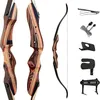
Deerseeker Takedown Recurve Bow, RH & LH Riser Options
Sold with a choice of right-hand or left-hand riser at checkout, so once your eye-dominance test tells you which side you are, you order the matching version directly.
- Best for: buying once you already know your dominant-eye result
- Why we picked it: same bow line offered in both RH and LH, no guessing needed
- Main drawback: double-check the riser handedness in the listing before ordering
Compare more options
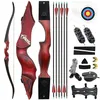
 Option 1 CVLIFE Right Hand Recurve Bow and Arrow Set
|  Option 2 HANDBAIGE Left Hand Recurve Bow and Arrow Set
|  Option 3 TOPARCHERY Youth Takedown Recurve Bow, RH/LH
|
As an Amazon Associate we earn from qualifying purchases.
Determining Your Bow Hand
Your bow hand is the hand that holds the bow. The drawing hand is the hand that pulls the string back. The general rule in archery is that you hold the bow with the hand opposite your dominant eye.
So, if you discover your right eye is dominant, you will be a right-hand archer. This means you will hold the bow in your left hand and draw the string with your right hand.
If your left eye is dominant, you will be a left-hand archer. This means you will hold the bow in your right hand and draw the string with your left hand.
This setup allows your dominant eye to be in the aiming position, looking down the arrow and sight, while your non-dominant hand comfortably supports and steadies the bow.
What About Cross-Dominance?
If you are cross-dominant (e.g., right-handed but left-eyed), the rule still generally applies: your bow hand is opposite your dominant eye. This means a right-handed, left-eyed person is typically a left-hand archer. While it might feel counterintuitive at first to shoot with your non-dominant hand, it’s crucial for accuracy. Your aiming eye needs to be in the prime position.
Some people try to shoot “opposite” their dominant eye, but this usually leads to inconsistency and difficulty aiming. Trusting your dominant eye and setting up your bow accordingly will make learning much smoother.
Right-Hand Draw vs. Left-Hand Draw: The Technical Differences
The “draw” in “right-hand draw” or “left-hand draw” refers to the hand that pulls the bowstring back.
Right-Hand Draw (RH)
- Bow Hand: Left Hand (holds the bow).
- Drawing Hand: Right Hand (pulls the string).
- Dominant Eye: Typically Right Eye.
- Stance: For a right-handed shooter, their left side is usually forwards, with their feet shoulder-width apart and angled slightly towards the target.
- Bow Type: You would purchase a “Right Hand” or “RH” bow.
When you see an archer shooting a right-hand draw bow, they will be standing with their left shoulder generally facing the target, holding the bow in their left hand, and drawing the string back with their right hand.
Left-Hand Draw (LH)
- Bow Hand: Right Hand (holds the bow).
- Drawing Hand: Left Hand (pulls the string).
- Dominant Eye: Typically Left Eye.
- Stance: For a left-handed shooter, their right side is usually forwards, with their feet shoulder-width apart and angled slightly towards the target.
- Bow Type: You would purchase a “Left Hand” or “LH” bow.
A left-hand draw archer stands with their right shoulder generally facing the target, holding the bow in their right hand and drawing the string back with their left hand.
It’s important to note that the terms “right-handed bow” and “left-handed bow” refer to the bow’s orientation for draw hand. So, a “right-handed bow” is for someone who performs a right-hand draw.
Choosing Your First Bow: RH vs. LH
When you walk into an archery shop or browse online, you’ll see bows labeled “RH” and “LH.” This is where your understanding of draw hand comes into play.
If you determined you are a right-hand draw archer: You need to buy a bow labeled “RH” or “Right Hand.” This bow is designed to be held in the left hand and drawn with the right.
If you determined you are a left-hand draw archer: You need to buy a bow labeled “LH” or “Left Hand.” This bow is designed to be held in the right hand and drawn with the left.
Most archery equipment is made for right-handed shooters, so you might find a slightly smaller selection of left-handed gear. However, reputable archery stores will have a good range of both RH and LH bows, arrows, and accessories.
Important Considerations for Beginners
- Don’t Guess: Always perform the eye dominance test. It’s the most reliable way to start.
- Try Before You Buy if Possible: If you have access to a local range or club, see if you can try holding a bow or even shooting a few arrows with both a RH and LH setup. Sometimes, a minor feeling can feel more “right.”
- Talk to Experts: Archery shop staff or experienced instructors are invaluable resources. Explain your findings from the eye dominance test and ask for their recommendation.
- Avoid “Just Trying” the Opposite: It’s tempting to try shooting with the “wrong” hand because it feels familiar (if you’re right-hand dominant, for example). However, for archery, aligning with your dominant eye is almost always the best path to accuracy and good form.
Bow Types and Draw Hand Designation
The distinction between RH and LH applies across most types of bows, whether you’re looking at traditional recurve bows, modern compound bows, or even youth bows. The fundamental principle of matching your draw hand to your dominant eye remains the same.
Recurve Bows
Recurve bows are often what beginners start with. They are simpler in design. For a right-hand draw recurve bow, you hold the riser (the grip part) in your left hand. For a left-hand draw recurve bow, you hold the riser in your right hand.
A good resource for understanding different bow types and their components can be found on the Tunics Archery Guide, which often provides clear explanations for newcomers.
Compound Bows
Compound bows use a system of cams and pulleys to make drawing the bow easier and to hold the weight at full draw. Regardless of this mechanism, the principle of the draw hand still applies.
- RH Compound Bow: Held in the left hand, drawn with the right.
- LH Compound Bow: Held in the right hand, drawn with the left.
The “hand” designation for compound bows is crucial because the cams are specifically oriented for a particular draw direction. You cannot simply flip a compound bow around.
Arrows and Draw Hand
Arrows also have a specific orientation on the bow. The “fletching” (the fins at the back of the arrow) will naturally orient themselves correctly on the arrow rest when nocked onto the string. However, the way you nock the arrow and the vane colors are often positioned to avoid hitting the bow riser.
For a right-hand shooter (RH bow), the arrow is placed on the arrow rest with a specific vane (often a different color) facing outwards, away from the bow’s riser. For a left-hand shooter (LH bow), the opposite vane will be facing outwards. This ensures the arrow clears the bow cleanly as it flies.
Common Beginner Mistakes Related to Draw Hand
It’s completely normal to make mistakes when you’re starting out. Understanding these common pitfalls can help you avoid them:
| Mistake | Why It Happens | How to Fix / Avoid |
|---|---|---|
| Using an RH bow when you’re LH (or vice versa). | Not properly identifying dominant eye; guessing based on writing hand; assuming a bow is ambidextrous. | Perform the eye dominance test. Buy equipment specifically marked RH for right draw or LH for left draw. |
| Shooting with the “wrong” hand out of habit. | Trying to stick to a writing hand preference rather than an aiming eye preference. | Focus on consistency with your dominant eye. It might feel unnatural initially, but it’s better for accuracy. |
| Not getting help from experienced archers. | Shyness, thinking it’s too simple to ask. | Don’t be afraid to ask coaches or experienced archers for help. They were all beginners once! |
| Incorrectly nocking arrows. | Not understanding which vane should face outwards. | Ask your instructor or shop staff to demonstrate correct arrow nocking for your specific bow type. Most arrow packaging shows the correct orientation. |
A great place to learn about fundamental archery techniques, including stance and proper nocking, is the USA Archery website, which often lists certified coaches and clubs.
FAQ: Your Archery Draw Hand Questions Answered
Here are some frequently asked questions from beginner archers:
Q1: Can I switch between right and left hand shooting with the same bow?
A: Generally, no. While recurve bows are somewhat more adaptable, most archery equipment, especially compound bows, is specifically designed for either right-handed or left-handed shooters. The way the riser, cams, and arrow rests are configured means switching is either impossible or would severely compromise accuracy and stability.
Q2: I write with my right hand and shoot right-handed. Is there a problem?
A: Not necessarily! If your right eye is dominant and you feel comfortable shooting right-handed, that’s perfect. The key is that your dominant eye should be looking down the arrow. Usually, your dominant eye and hand match, but if they don’t, prioritize your dominant eye for aiming.
Q3: I’m left-handed. Does this automatically mean I need a left-hand bow?
A: It’s a strong indicator, but not the absolute rule. The most important factor is your dominant eye. If your left eye is dominant and you’re left-handed, you’ll almost certainly be a left-hand draw archer. If you’re left-handed but your right eye is dominant, you will likely be a right-hand draw archer.
Q4: What happens if I try to shoot with the “wrong” bow?
A: It will feel awkward, uncomfortable, and likely lead to poor accuracy. Your body will have to work against its natural instincts for aiming and drawing, making it harder to develop good form and consistent shots.
Q5: Are there any ambidextrous bows?
A: Some very basic, inexpensive youth recurve bows might be marketed as ambidextrous. However, for serious archery or for anyone who wants to develop good technique, dedicated RH or LH bows are essential. Even “ambidextrous” designs often aren’t as comfortable or accurate as a dedicated model.
Q6: How do I know if my bow is RH or LH?
A: Most bows are clearly marked with “RH” for right-hand draw or “LH” for left-hand draw, usually on the riser or the limbs. If you’re unsure, ask the person who sold you the bow or check the manufacturer’s specifications.
Conclusion
Choosing between a right-hand draw and a left-hand draw bow is one of the first, and most important, decisions you’ll make as a new archer. It’s all about aligning your equipment with your body’s natural strengths, especially your dominant eye. By performing simple tests to determine your dominant eye and understanding which hand holds the bow and which hand draws the string, you set yourself up for a much smoother and more rewarding archery journey.
Remember, most people are right-hand draw archers, but that doesn’t mean left-hand draw archers can’t enjoy this fantastic sport. The key is accuracy and comfort, and that comes from using the right gear for you. Don’t hesitate to ask for help from experienced archers or instructors at your local range. They can confirm your draw hand and offer valuable advice on form and technique. With the right setup and a little practice, you’ll be hitting your targets with confidence and enjoying every moment of your archery adventure!