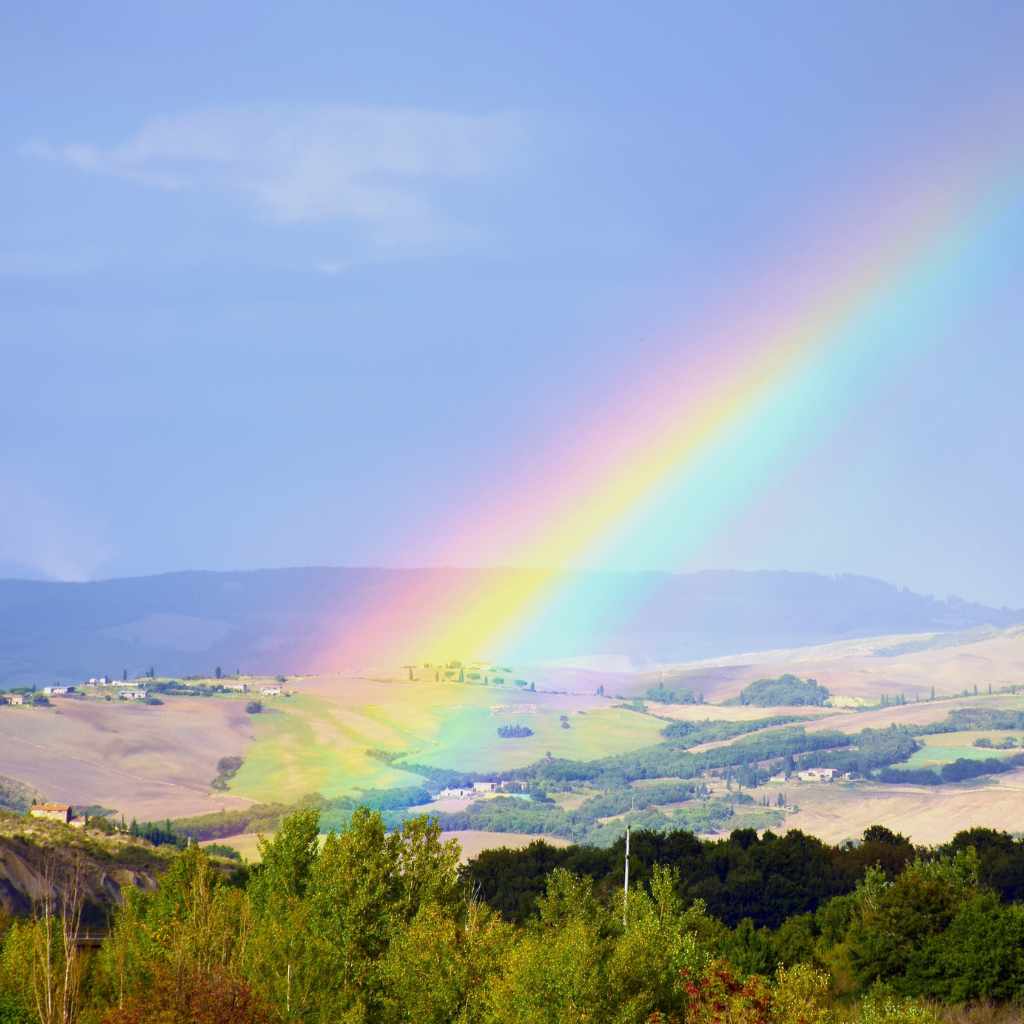
9 Types of Rainbows: Primary, Secondary & More
The main types of rainbows beginners should know are the Primary Rainbow (brightest, one arc of colors) and the Secondary Rainbow (fainter, colors reversed, appearing outside the primary one). Other fascinating types include double rainbows, fogbows, and supernumerary bows.
For a closely related bow or archery topic, Different Kinds of Crossbows: Essential gives readers a useful next step.
Hello there, budding archer! Welcome to the range. While we often talk about the perfect draw weight or the right arrow spine, sometimes nature throws a curveball—or in this case, an arc! Seeing a rainbow after a great practice session can be amazing, but have you ever noticed they don’t always look the same? Sometimes there’s a second, fainter one above it! Understanding the different kinds of rainbows is a fun way to relax your eyes and appreciate the physics happening around us. Don’t worry about complicated science; we’ll break down these beautiful atmospheric sights simply, just like tuning your bow. Ready to learn what makes those colors appear? Let’s look beyond the single arc.
Why Do Rainbows Appear? A Quick Primer
Before diving into the varieties, a quick refresher helps. Rainbows are all about light and water working together. They are optical illusions, meaning they aren’t actually in a fixed spot; they move as you move!
The essential ingredients for any rainbow are:
- Sunlight shining from behind you.
- Water droplets (like rain or mist) in front of you.
Each tiny water droplet acts like a miniature prism, splitting the white sunlight into its visible spectral colors: Red, Orange, Yellow, Green, Blue, Indigo, and Violet (ROYGBIV). This splitting is called refraction and reflection.
The Essential Rainbow Types Every Beginner Should Recognize
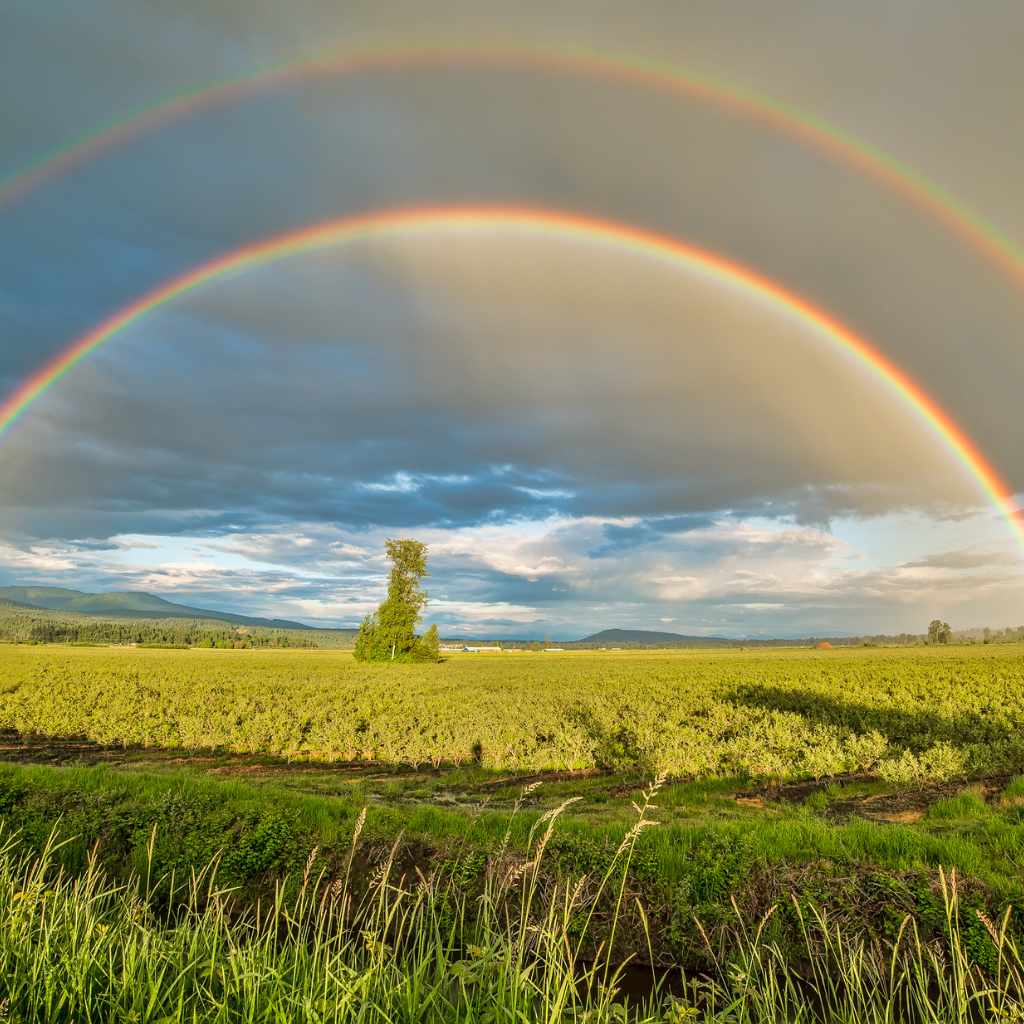
When you look up after the rain stops, you will most often see one of two main types: the Primary Rainbow or the Secondary Rainbow. Recognizing these two is the foundation of rainbow observation!
1. The Primary Rainbow: The Star of the Show
The primary rainbow is the one you see most often. It is brighter and more distinct because the sunlight only needs to bounce once inside the raindrop to reach your eyes.
Key Characteristics of the Primary Rainbow:
- Brightness: It is significantly brighter than any other bow.
- Color Order: The color sequence is fixed and always goes from Red on the outside (top of the arc) to Violet on the inside (bottom of the arc).
- Angular Size: It appears at an angle of about 42 degrees from the shadow of your head (the antisolar point).
Think of the primary bow like your favorite, well-tuned recurve—reliable and clear!
2. The Secondary Rainbow: The Companion Arc
If you are very lucky, or if the rain shower is heavy enough, you might spot a second, fainter rainbow appearing above the primary one. This is the secondary rainbow.
Why it’s Fainter:
The secondary rainbow is fainter because the light rays actually have to bounce twice inside the water droplet before returning to your eye. Each bounce means losing some light energy.
Key Characteristics of the Secondary Rainbow:
- Color Order: This is the crucial difference! The colors are inverted compared to the primary bow. Violet is on the outside (top) and Red is on the inside (bottom).
- Position: It always appears outside (higher up) the primary rainbow.
- Angular Size: It forms at a wider angle, around 50 to 53 degrees from the antisolar point.
Seeing a double rainbow—with the primary and secondary arcs together—is a fantastic sight. It proves that nature loves symmetry, even if it flips the script halfway through!
Advanced Rainbow Varieties: Beyond the Double Arc
Once you master spotting the primary and secondary arcs, you can start looking for these rarer, more specialized types of rainbows. These require specific conditions, much like hitting a tight grouping at 50 yards takes specific conditions (practice and focus!).
3. The Double Rainbow (Primary and Secondary Combined)
When both the primary and secondary arcs are visible at the same time, you have a double rainbow. This is a stunning display because of the unique contrast between the bright inner bow and the fainter, reversed outer bow.
As noted before, the key feature is the space between the two bows. This darker band has a specific name.
Alexander’s Dark Band
This is the area of sky situated between the primary and secondary rainbows. It appears darker than the sky outside the secondary bow or inside the primary bow. This darkness happens because light is reflected away from the observer’s eye in this specific angular region due to the physics of the double reflection in the water droplets.
4. The Fogbow (White Rainbow)
A fogbow is what you see when the water droplets involved are much smaller than typical raindrops—think of the dense mist or fog often found near waterfalls or during heavy morning fog.
What Makes it Unique?
Because the water droplets in fog are so tiny (less than 0.05 mm in diameter), the light wavelengths are not separated clearly enough to form distinct colors.
Instead, a fogbow often appears almost entirely white, though you might detect a faint reddish hue on the outer edge and a bluish hue on the inner edge if you look very closely. They are much wider and less defined than rain-induced rainbows.
5. The Supernumerary Bows
Sometimes, especially on a very bright primary rainbow, you might see faint, narrow bands of color running parallel inside the primary rainbow (close to the violet edge). These are called supernumerary bows.
The Science Behind Them
These bows are caused by wave interference—a phenomenon where light waves interact with each other. This is slightly more complex physics than simple reflection, relating to the precise size and uniformity of the raindrops. They are often easiest to see when the raindrops are all nearly the same size.
6. The Circumhorizontal Arc (“Fire Rainbow”)
This type is often mistakenly called a rainbow, but it is actually a different phenomenon altogether involving ice crystals, not liquid water droplets!
Key Facts:
- Formation: It forms when sunlight passes through plate-shaped ice crystals suspended high in cirrus clouds.
- Position: It only appears when the sun is very high in the sky (usually 58 degrees or higher above the horizon). This means it’s only visible near midday in the summer months in temperate zones.
- Appearance: It looks like a bright, horizontal band of pure spectrum colors running parallel to the horizon, cutting through the sky. Hence the nickname “Fire Rainbow” (though it has nothing to do with fire!).
If you see one, you’re looking at very high-altitude atmospheric optics! For more detailed atmospheric science, NASA provides excellent educational resources on these phenomena.
Other Less Common but Amazing Rainbow Forms
Nature never stops showing off. Here are a few more specialized optical displays you might be lucky enough to witness.
7. The Lunar Rainbow (Moonbow)
Just as the moon reflects sunlight, it can also create a rainbow! These are rare because you need three things to align perfectly:
- A full or nearly-full moon (to provide enough light).
- A dark night sky (for contrast).
- Water droplets in the air.
Moonbows are usually very faint. Because the light reflecting off the moon is much dimmer than direct sunlight, the colors are often too subtle for the human eye to register clearly, making them appear white or grayish to the naked eye. However, if you capture one with a long-exposure camera—much like capturing a clear picture of a distant target—the colors reveal themselves beautifully.
8. The Twinned Rainbow (The Bifringent Rainbow)
This is extremely rare and occurs when sunlight passes through hexagonal ice crystals that are oriented specifically, causing double refraction. Instead of a simple, single arc, you might see two arcs branching off each other, creating a “twinned” effect.
9. The Vertical Rainbow (The Sun Pillar/Halo Phenomenon)
While not a true arc, vertical rainbows are related atmospheric optical displays. A sun pillar is a brilliant shaft of light seen extending directly above or below the sun, caused by light reflecting off millions of tiny, perfectly flat ice crystals. These aren’t colored arcs, but they demonstrate that light manipulation in the atmosphere goes far beyond simple rainbows.
Comparing the Main Rainbow Types
To help you quickly identify what you are seeing in the sky, here is a comparison table summarizing the key features of the most common arcs. This is like quickly checking your broadhead vs. field point before heading out—knowing the expected result helps you analyze what you see.
| Rainbow Type | Light Reflection Inside Droplet | Color Order (Top to Bottom) | Brightness |
|---|---|---|---|
| Primary Rainbow | One reflection | Red (Out) to Violet (In) | Brightest |
| Secondary Rainbow | Two reflections | Violet (Out) to Red (In) | Fainter |
| Fogbow | Multiple small droplets | Mostly White (Faint edges) | Low Contrast |
| Circumhorizontal Arc | Refraction through ice crystals | Red (Bottom) to Violet (Top) | Bright, Horizontal |
Practical Tips for Rainbow Spotting (Your Observation Checklist)
Just like preparing your gear for an ideal shot, observing rainbows requires setting the right scene. Here are simple steps to maximize your chances of seeing more than just the standard primary bow.
Step 1: Know the Sun’s Position
Your shadow is your guide. For any rainbow to form, the sun must be behind you, and the rain/mist must be in front of you. The center of the rainbow arc is always directly opposite the sun (the antisolar point).
Step 2: Check the Angle
If the sun is too high—above 42 degrees in the sky—the primary rainbow will form below the horizon, and you won’t see it unless you are viewing from a high vantage point, like a tall hill or an airplane.
Step 3: Assess the Droplet Size
For bright, vivid colors (Primary/Secondary), you need larger, falling raindrops. For fainter, white bows (Fogbows), you need very small droplets suspended in the air.
Step 4: Look for the Contrast
The key to seeing the fainter secondary bow or Alexander’s Dark Band is contrast. Look for a dark, rainy sky opposite the sun and a relatively clear sky near the horizon where the sun is shining through.
Step 5: Use Your Camera (The Secret Assistant)
Your eyes are amazing, but digital cameras capture light differently. If you suspect you are seeing a moonbow or a very faint fogbow, take a picture using a long shutter speed (if your phone allows night mode or manual settings). The camera sensor often registers the subtle color variations that your eye might miss in low light.
Understanding the Colors: The Spectrum Sequence
No matter the type of rainbow (unless it’s a pure white fogbow), the colors are always separated by specific wavelengths of light. When we talk about the order, it’s helpful to visualize it based on how much the light bends.
Violet light bends the most when passing through water, and red light bends the least.
Here is the order from highest angle (outer edge of the primary bow) to lowest angle (inner edge of the primary bow):
- Red (Least bent)
- Orange
- Yellow
- Green
- Blue
- Indigo
- Violet (Most bent)
When you see a secondary bow, this order is perfectly reversed, which is a reliable identifier. This predictable ordering is a wonderful reminder that even in nature’s beautiful chaos, there is underlying order—much like following range commands leads to consistent accuracy in archery. For more official meteorological definitions of atmospheric optics, the National Weather Service frequently publishes educational guides.

FAQ Section for Emerging Rainbow Observers
Here are some quick answers to questions beginners often have about these colorful sights.
Q1: Can I ever see the bottom of a rainbow?
A: Technically, no. A rainbow is a full circle. However, because the Earth blocks the lower half, we usually only see an arc. If you are high up, like in an airplane, you can see a full circular rainbow!
Q2: Why is the sky inside the primary rainbow brighter?
A: The sky inside the primary bow is brighter because light is reflected toward your eyes from water droplets in that section. The sky outside the arc gets less direct reflected light, making it appear slightly darker.
Q3: If I walk toward a rainbow, can I reach it?
A: No. A rainbow is an optical phenomenon based on the precise angle between you, the water droplets, and the sun. As you move, the angle changes, and the location of the rainbow moves with you.
Q4: What causes the bright gap between a double rainbow?
A: This gap is called Alexander’s Dark Band. It is dark because no reflected light from the raindrops reaches your eye from that specific angle between the primary (42°) and secondary (50°) bows.
Q5: Are fire rainbows real?
A: Yes, but they aren’t technically rainbows! The scientific term for the brightly colored horizontal band often called a “fire rainbow” is the Circumhorizontal Arc. It requires high ice crystals, not rain.
Q6: Do the colors change depending on where I live?
A: The fundamental color order (ROYGBIV) does not change. However, whether you see the full spectrum depends on local air clarity and the size of the water droplets creating the bow.
Conclusion: Appreciating the Physics of Light
Watching the sky put on a demonstration of light and water is one of the great joys of taking time outdoors, whether you are waiting between arrows or just heading home from practice. We’ve covered the bright, dependable Primary Rainbow, its fainter, reversed partner, the Secondary Rainbow, and even spotted rare cousins like the nearly-white Fogbow and the high-flying Circumhorizontal Arc. Every kind of rainbow tells a story about how light interacts with water or ice crystals.
Remember, the next time you see a brilliant arc, take a moment to check for that fainter one above it. If you spot both, you’re witnessing high-level atmospheric optics! Keep your head up, enjoy the view, and know that understanding how these natural phenomena work is just as rewarding as mastering a consistent anchor point in your archery form. Happy spotting, and may your skies be filled with color!