How Many Grains Is a Peep Sight and D Loop? Must-Have Info
If you’re an archer or bowhunter, understanding the finer details of your equipment is crucial for accuracy and consistency. One question that often comes up is how many grains is a Peep Sight and D Loop. While this might seem like a small technical detail, knowing the weight these components add to your bow setup can influence your shooting performance and tuning decisions. In this article, we’ll dive into what the grain weight means in archery, how much a Peep Sight and D Loop typically weigh, and why this information is important for archers of all levels.
What Does Grain Weight Mean in Archery?
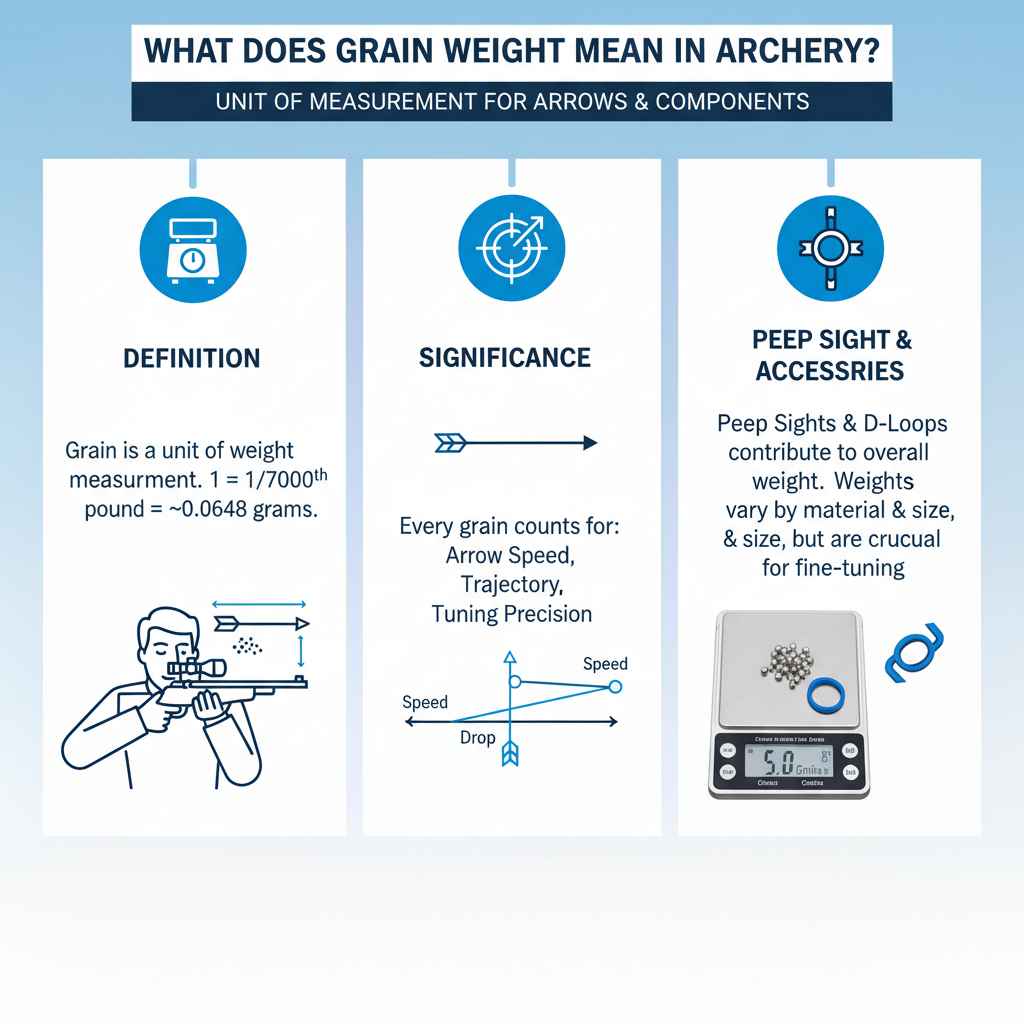
Before addressing how many grains is a Peep Sight and D Loop, it’s important to clarify what “grains” refer to. In archery, grain is a unit of weight measurement most commonly used to describe the weight of arrows and related small components. One grain is equal to 1/7000th of a pound, or approximately 0.0648 grams. When tuning your bow, every grain counts because the total arrow weight and accessory weight contribute to arrow speed, trajectory, and tuning precision.
While arrows are typically measured in grains per inch (GPI) to indicate the weight per length of the arrow shaft, accessories like Peep Sights and D Loops contribute to the overall weight carried on your bowstring. There isn’t as much standardization for peep sights and d loops because they come in various materials and sizes, but knowing their approximate grain weights is helpful for fine-tuning your setup.
How Many Grains Is a Peep Sight?
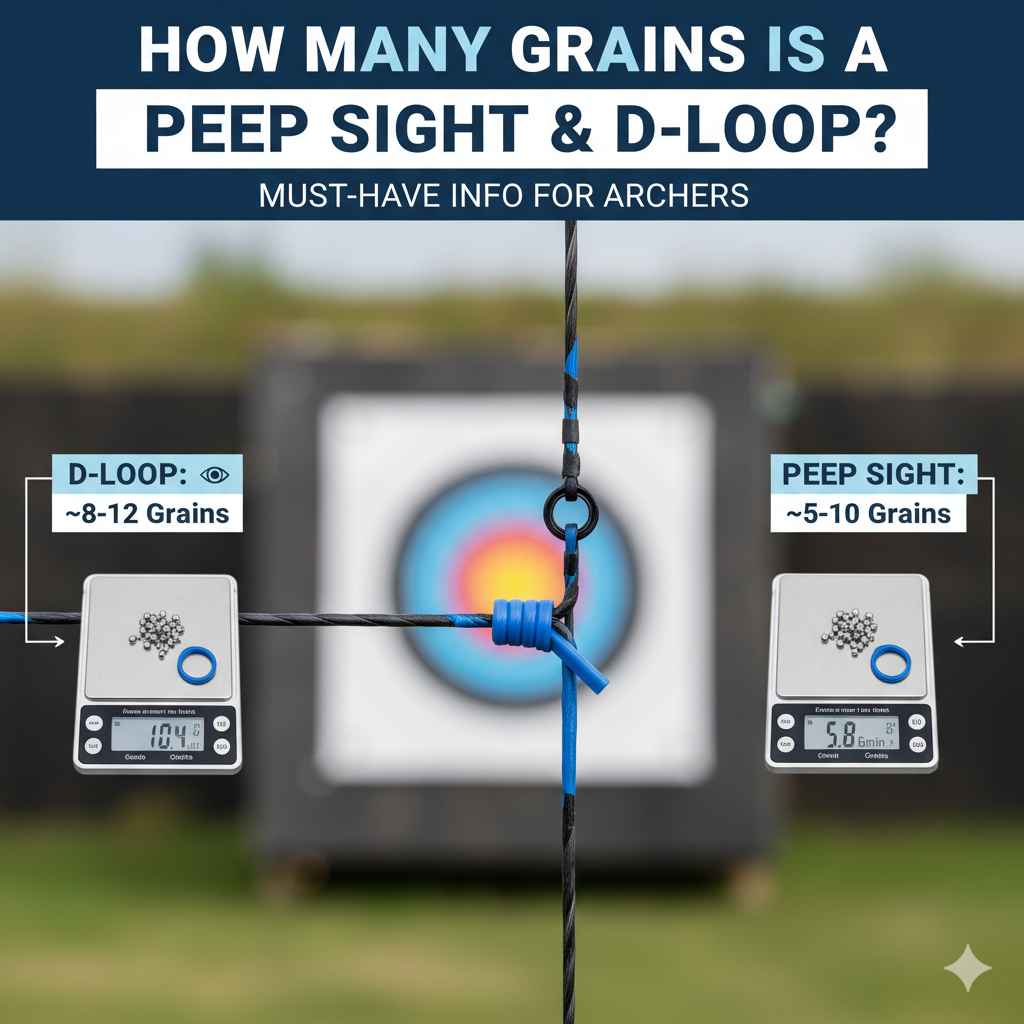
Peep sights are small ring devices installed on the bowstring to improve aiming accuracy by helping archers align their sight pin more easily. Despite their small size, peep sights can vary in weight depending on the model and material. Typically, a standard aluminum or plastic Peep Sight weighs between 10 to 35 grains.
– Aluminum Peep Sights: Usually heavier, ranging around 25-35 grains.
– Plastic/Composite Peep Sights: Lighter models generally fall between 10-20 grains.
While these numbers may seem negligible, adding a Peep Sight changes the dynamics of the bowstring’s draw weight and the arrow’s release characteristics. Archers who use high-performance setups often consider these weights when working on their string tuning or selecting arrows based on macro-adjustments.
How Many Grains Is a D Loop?
A D Loop is a small angled loop of string attached to the bowstring that allows the release aid to hook securely. It improves the consistency and safety of the release without significantly affecting the bowstring’s integrity. Much like Peep Sights, D Loops come in different materials and thicknesses but are generally very lightweight.
A typical archery D Loop weighs approximately 15 to 30 grains. The variation depends mainly on:
– The thickness of the serving thread
– The material composition (braided nylon, Dyneema, etc.)
– The length of the D Loop
Because the D Loop is often under tension and connected directly to the string, its weight can cause subtle changes in the bow’s feel during the draw and release. Archers striving for precision will often include the D Loop’s exact weight when calculating the bowstring and arrow setup.
Why Knowing the Grain Weight of These Accessories Matters
For beginners, the added weight of a Peep Sight and D Loop may seem trivial, but for competitive archers or bowhunters working with finely tuned equipment, even a few grains can influence outcomes.
Impact on Arrow Flight
Together, the combined grain weight of the Peep Sight and D Loop affects the bowstring’s overall weight at full draw. This can slightly influence the arrow’s initial velocity and even the point of impact downrange. Archers who calculate the total arrow weight often factor this in to get the most consistent grouping.
Bowstring Tuning and Nocking Point Placement
The additional weight changes the string’s dynamics, which can alter the position of the nocking point under tension. Fine-tuning your bow for optimum arrow flight involves precise nocking point placement; knowing accessory weights such as those of the Peep Sight and D Loop helps ensure accurate setup.
Compliance with Regulations
In some archery competitions or hunting regulations, equipment specifications might require the disclosure or limitation of total grain weights. Understanding accessory weights helps ensure compliance and avoids unexpected disqualification.
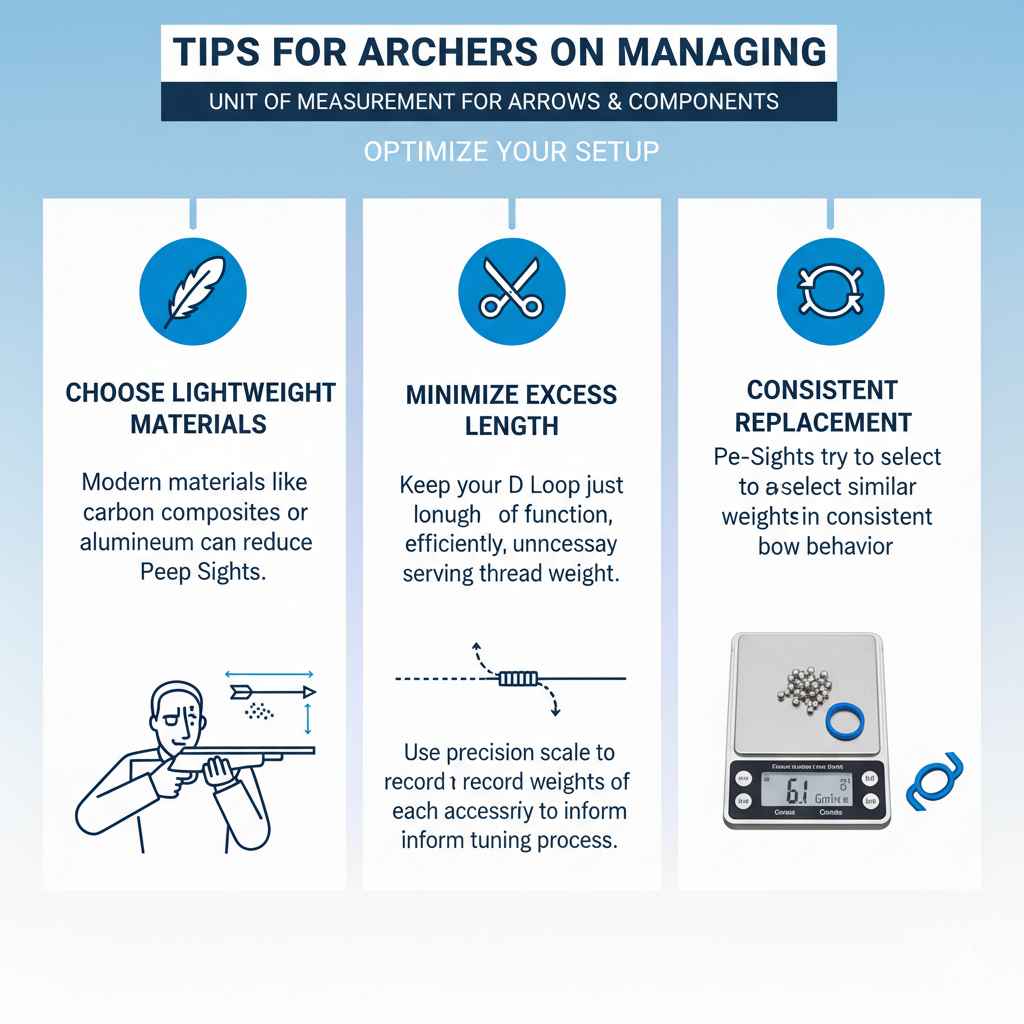
Tips for Archers on Managing Accessory Grain Weight
– Choose lightweight materials: Modern materials like carbon composites or lightweight aluminum can reduce the grain weight of Peep Sights.
– Minimize excess length of the D Loop: Keep your D Loop just long enough to function efficiently, reducing unnecessary serving thread weight.
– Weigh your components: Use a precision scale to record the grain weights of each accessory to inform your tuning process.
– Consistent replacement: When replacing Peep Sights or D Loops, try to select accessories with similar weights to maintain consistent bow behavior.
Final Thoughts
Understanding how many grains is a Peep Sight and D Loop allows you to make informed decisions about your archery setup. While these components may add only 10 to 35 grains each, factoring their weights into your overall tuning process can enhance shot consistency and accuracy. Whether you’re a competitive shooter or a dedicated bowhunter, paying attention to these details is a must-have info that elevates your archery skills and shooting experience.
By combining knowledge with quality equipment and practice, you can achieve greater precision and confidence in every shot.