How Human Eyes Line Up Peep Sights: Must-Have Accurate Guide
When it comes to precision shooting, understanding how human eyes line up peep sights is crucial for beginners and experienced marksmen alike. Peep sights, also known as aperture sights, are widely used in archery, rifles, and air guns to improve aiming accuracy by allowing the shooter to look through a small aperture. To make the most of this sighting system, shooters need to master the visual alignment process between their eyes, the peep sight, and the target. This guide provides an accurate, step-by-step approach to understanding this alignment, ensuring a more consistent and effective aiming technique.
What Are Peep Sights?
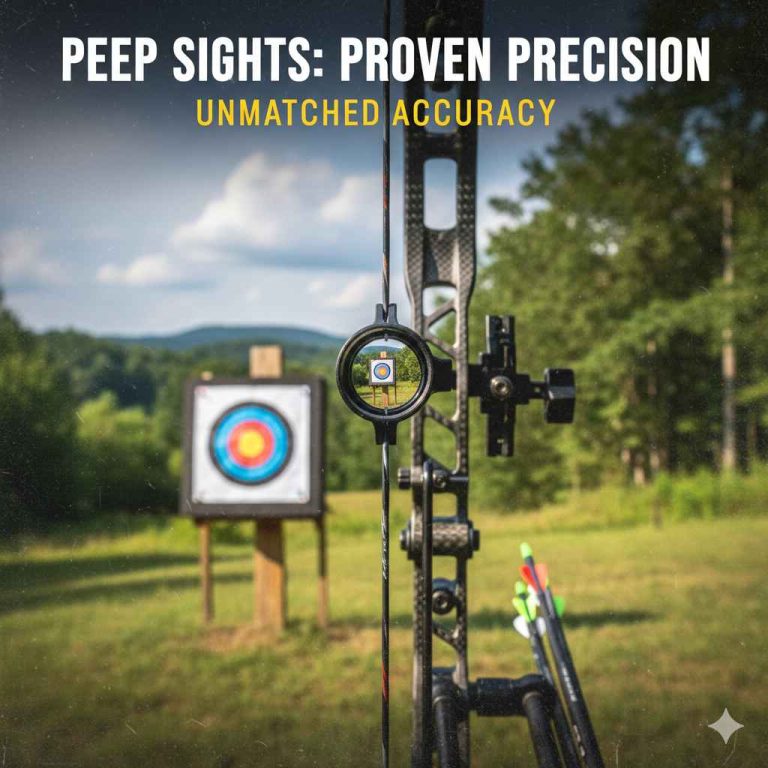
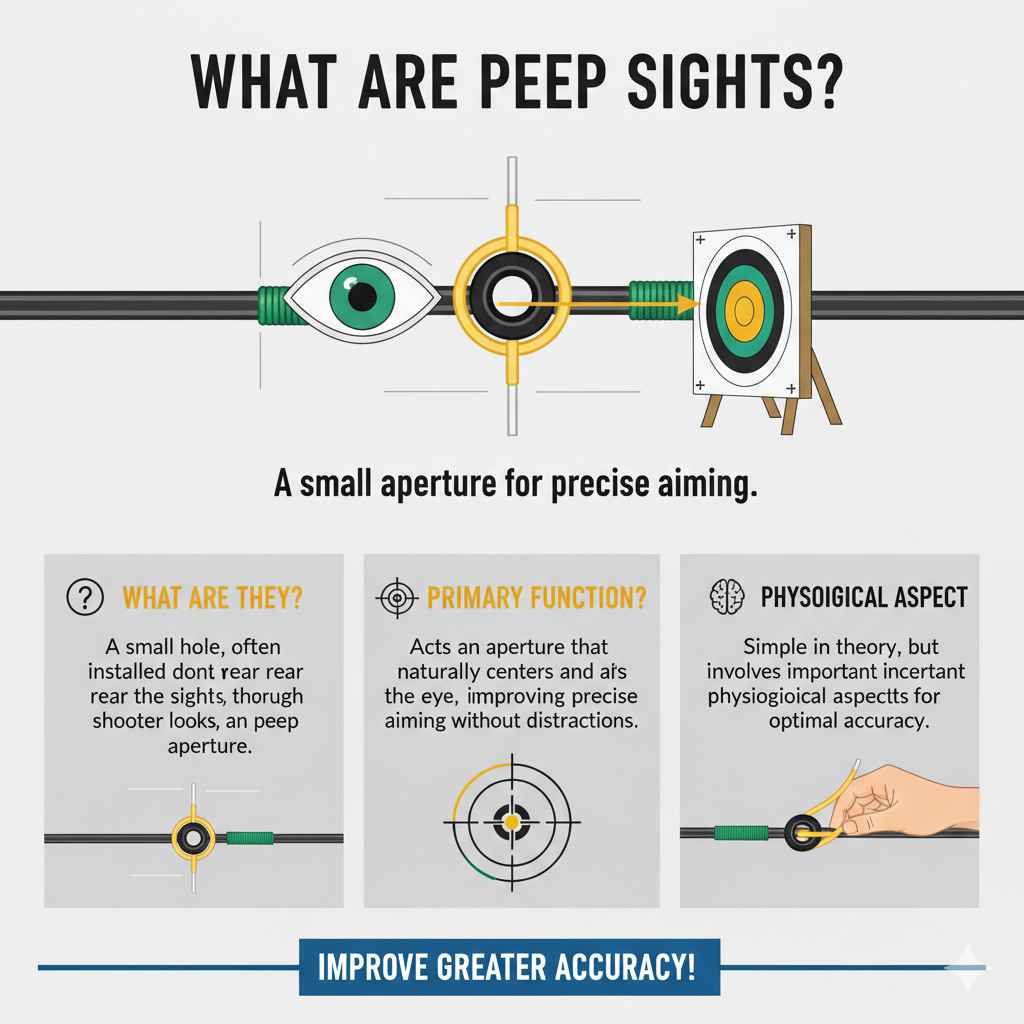
Before diving into the specifics of how human eyes interact with peep sights, it’s important to understand what peep sights are and why they are effective. A peep sight is a small hole, often installed near the rear of a bow or firearm, through which the shooter looks to line up with the front sight and target. It essentially acts as an aperture that naturally centers the eye, improving the shooter’s ability to aim precisely without distractions.
The interaction between the eye and the peep sight is simple in theory but involves some important physiological aspects to achieve optimal accuracy.
Understanding How Human Eyes Line Up Peep Sights
The key to successful aiming with peep sights lies in the unique way the human visual system works. When you look through the small aperture of a peep sight, your eye naturally centers on the hole, helping you align the front sight and target with minimal parallax error.
Step 1: Positioning Your Dominant Eye
Since peep sights rely on your eye’s direct line of sight, it is vital to use your dominant eye when aiming. This is because the dominant eye provides the most accurate spatial information about the target and front sight alignment. The same dominant-eye test also determines whether you should shoot a right-hand or left-hand bow in the first place — see our right-hand vs. left-hand bow guide.
To find your dominant eye, you can do a simple test:
– Extend your arms and create a small triangular opening between your thumbs and forefingers.
– Focus on a distant object through this opening with both eyes open.
– Slowly bring your hands toward your face.
– The eye that keeps the object centered is your dominant eye.
Always line up the peep sight using this eye, as it will allow for the most natural and precise alignment.
Step 2: Aligning the Peep Sight with Your Eye
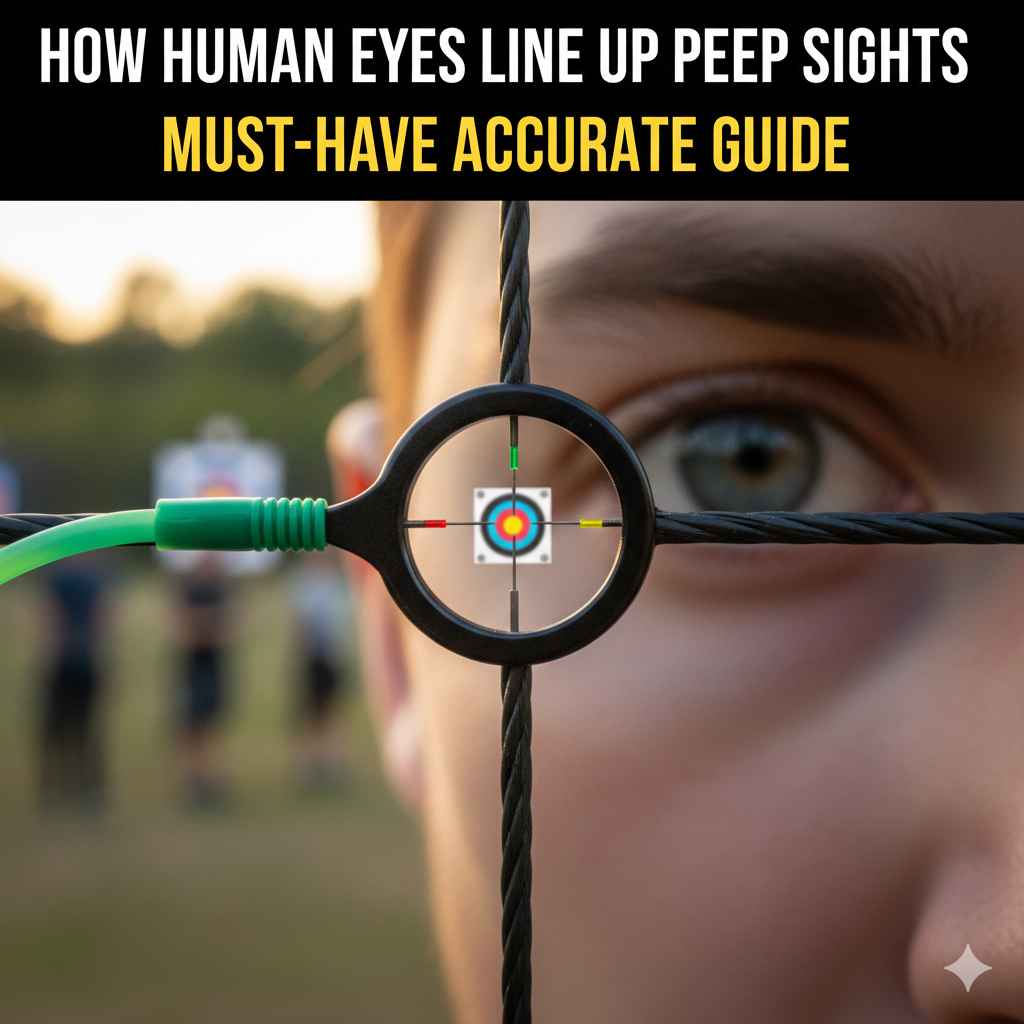
When you look through a peep sight, your eye should be positioned so that the aperture appears perfectly centered and round. If the sight looks oval or partially blocked, it means your eye isn’t correctly aligned. Small shifts in your head position or eye placement can affect sight alignment and ultimately your shot accuracy.
The peep sight should sit close enough to your eye to eliminate any shifting but far enough to allow a full field of view. Adjust the position of the sight or your posture until the aperture looks symmetrical and your sight picture is steady.
Step 3: Creating the Sight Picture
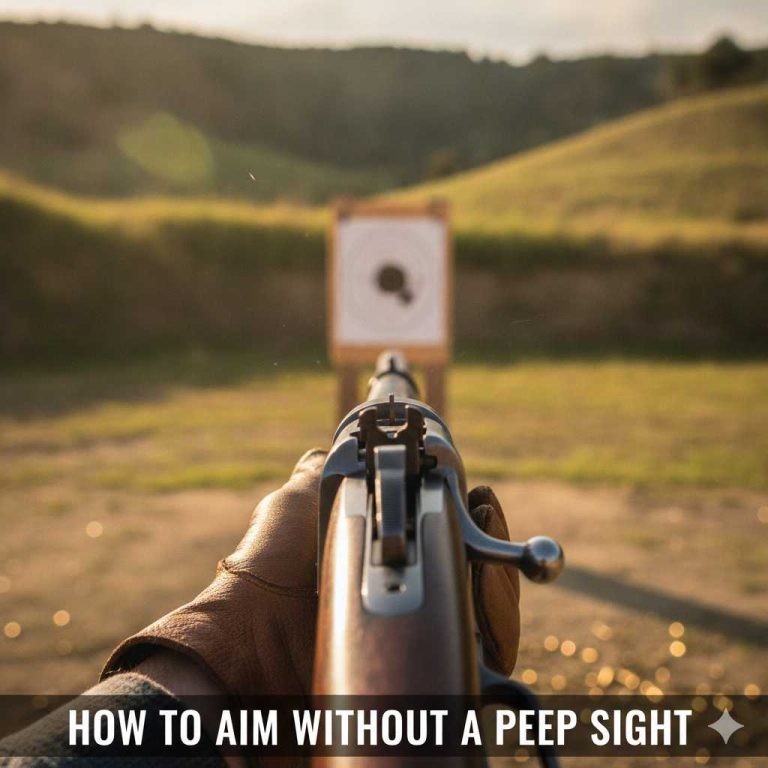
The sight picture is the visual of the front sight aligned centrally within the peep sight’s aperture, superimposed on the target. The human eye, when focused properly, will make the rear aperture (peep sight) appear slightly blurred while keeping the front sight pin sharp. This phenomenon is due to the eye’s depth of field, and it is crucial for accurate aiming.
To achieve this:
– Fixate your dominant eye on the front sight post or pin.
– The peep sight hole should be visible but slightly out of focus.
– The target should appear beyond the front sight; its exact placement depends on bullet trajectory and shooting distance.
By mastering this visual layering, shooters can ensure consistent aiming without parallax shift or sight misalignment.
Tips to Improve Alignment and Accuracy
Use Consistent Head Positioning
Your eye’s alignment with the peep sight can be thrown off by inconsistent head placement. Create a consistent cheek weld on your stock (for rifles) or consistent anchor point (for bows). This consistency ensures your eye lines up perfectly with the peep sight every time.
Adjust Peep Sight Height
Sometimes, it helps to move the peep sight up or down slightly to accommodate the natural eye position of different shooters. This adjustment can reduce eye strain and improve alignment.
Practice Eye Focusing
Since the peep sight should appear slightly blurred, practicing eye focus can help. Try focusing alternately on the rear aperture, front sight, and target to train your eye to maintain the right focus during aiming.
Common Mistakes to Avoid
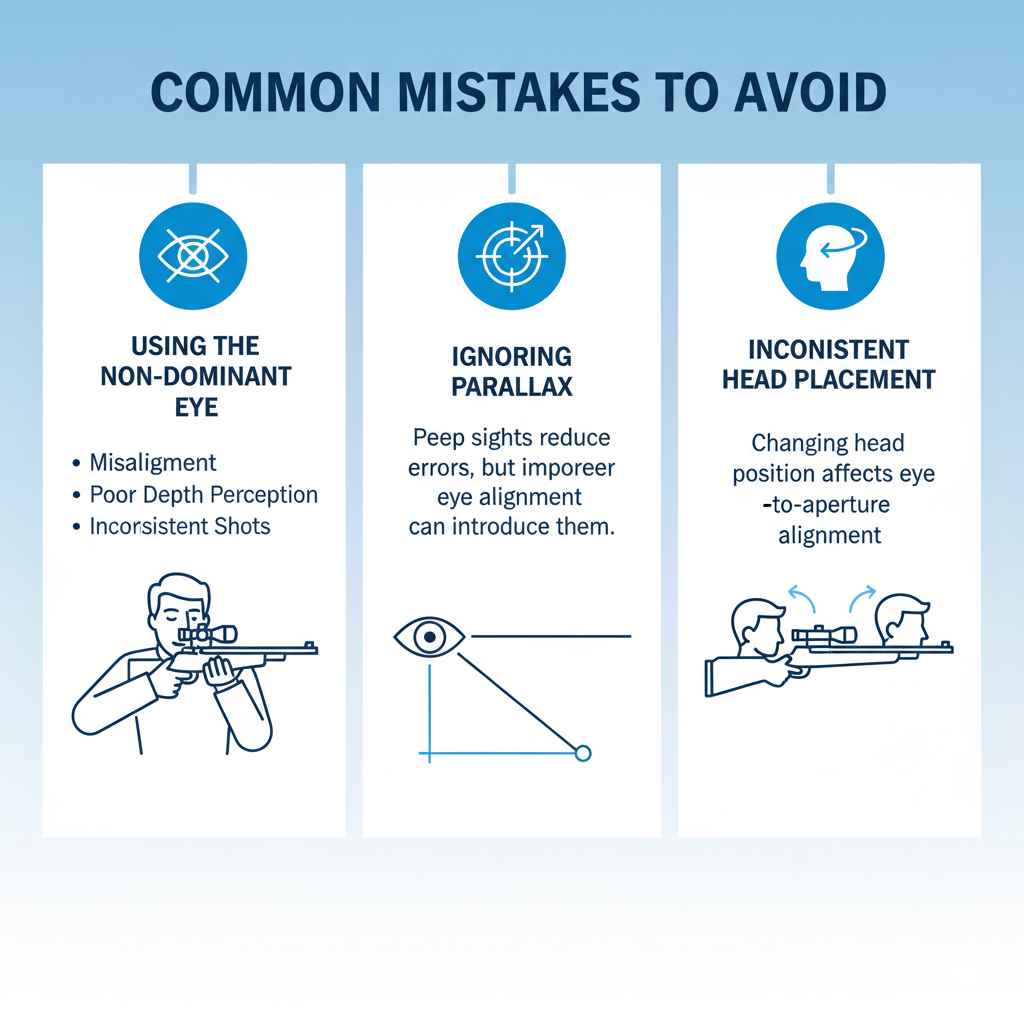
– Using the non-dominant eye: This can cause misalignment, poor depth perception, and inconsistent shots.
– Ignoring parallax: Although peep sights reduce parallax errors, improper eye alignment might introduce errors.
– Inconsistent head placement: Changing your head position affects the way your eye lines up with the aperture.
Conclusion
Mastering how human eyes line up peep sights is essential for any shooter aiming to improve precision and consistency. By understanding the role of the dominant eye, maintaining proper head and eye positioning, and practicing the correct sight picture, shooters can harness the true power of peep sights. This methodical approach reduces the guesswork in aiming and leads to better shot groupings, whether you’re in a competitive environment or simply enjoying target practice.
Invest the time to learn this alignment technique thoroughly, and you’ll notice a significant improvement in your shooting accuracy. Remember, precision is as much about understanding your own visual mechanics as it is about the equipment you use.