Are Dead Standing Trees Seasoned Wood? What to Check First
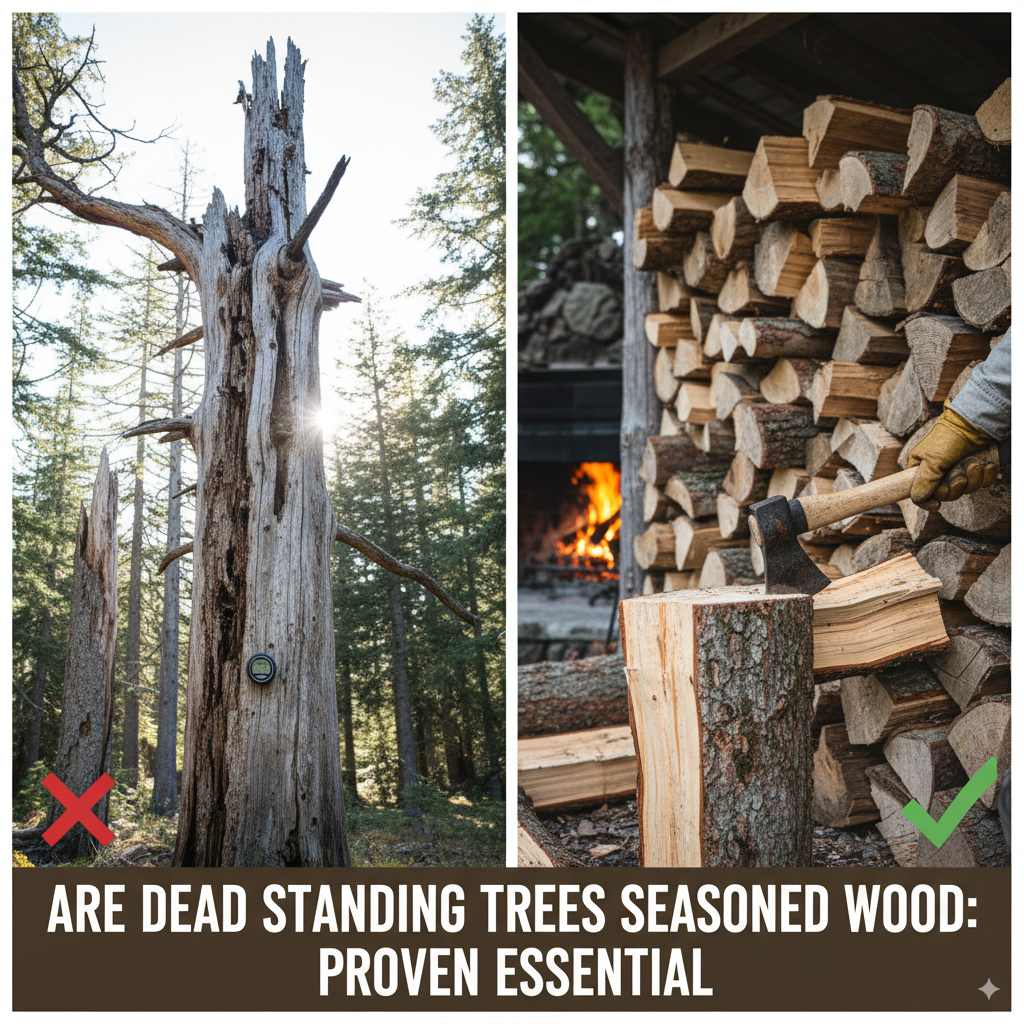
Yes, dead standing trees are often seasoned wood, and understanding this is essential for anyone using wood for fuel or construction. Seasoned wood has had most of its moisture content removed, making it burn hotter, cleaner, and with less smoke. Dead standing trees, when harvested correctly, can provide this valuable, dry wood.
If you’re weighing whether to remove a dead standing tree instead of just harvesting it for firewood, it may be worth more standing than cut — see how to get paid for standing trees on your property before you break out the chainsaw.
Have you ever wondered if that old tree still standing but long dead is good for anything useful, especially as firewood? It’s a common question, and the answer can save you frustration and improve your fire. Wet wood, or “green” wood, smolders, creates a lot of smoke, and can even damage your chimney. Finding out if a dead standing tree is ready to be used is key to a good burn. Let’s explore what makes wood “seasoned” and how dead standing trees fit into the picture. We’ll break down exactly what you need to know to make smart choices about your wood supply.
What Does “Seasoned Wood” Really Mean?
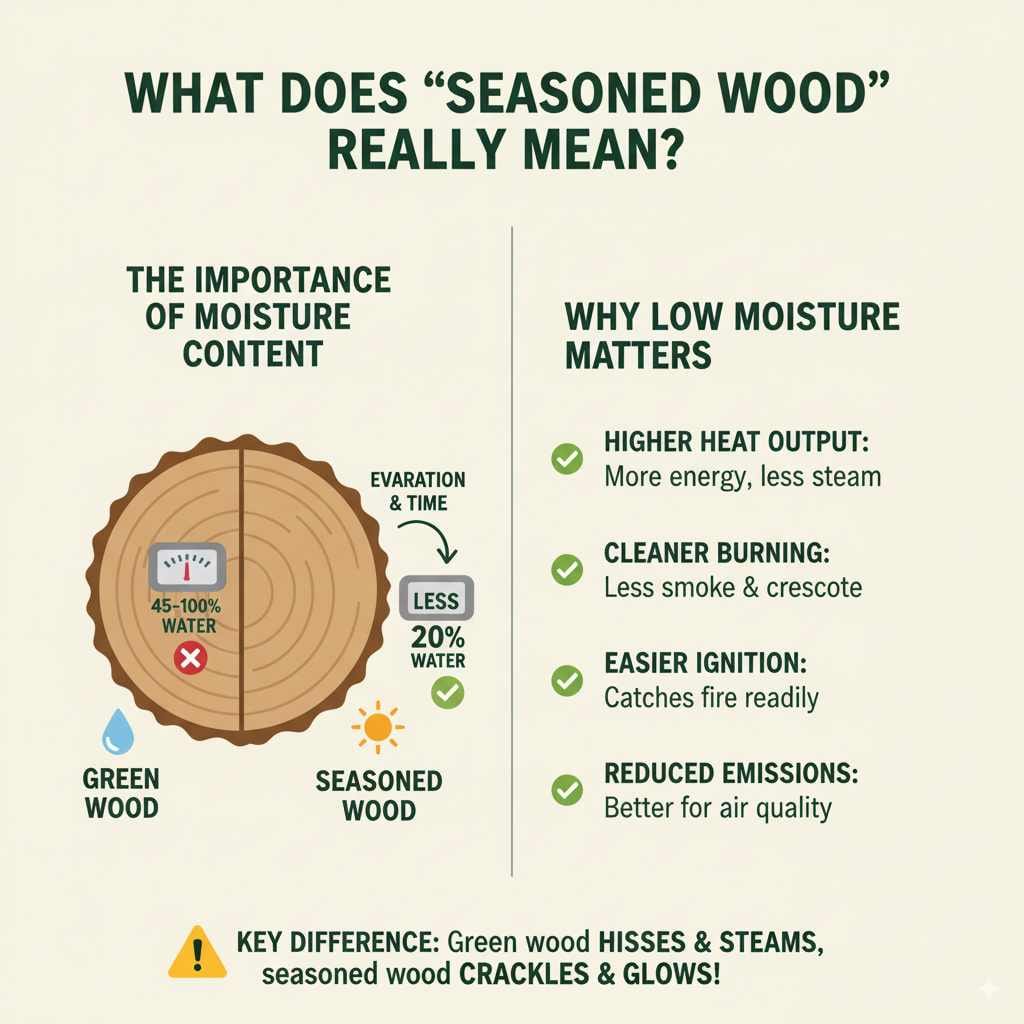
When we talk about wood seasoning, we’re essentially talking about drying it out. Freshly cut wood, often called “green” wood, is full of sap and water. This moisture needs to be removed before the wood is ideal for burning or building. Seasoned wood has had a significant amount of this water evaporate, usually through a natural drying process over time. This drying makes the wood lighter, easier to split, and most importantly, burn much better.
Think of it like this: trying to light a sponge soaked in water versus a dry sponge. The dry sponge catches fire easily and burns brightly. The wet sponge just hisses and steams, taking ages to produce any real heat. Wood is very similar. The less water it holds, the more efficiently it can turn into heat when burned.
The Importance of Moisture Content
The key difference between green wood and seasoned wood is its moisture content. Green wood can have anywhere from 45% to over 100% moisture content, measured relative to the oven-dry weight of the wood. Seasoned wood, on the other hand, typically has a moisture content of 20% or less. This significantly lower moisture level is what makes it “seasoned.”
Why is low moisture content so important for firewood?
- Higher Heat Output: Less water means more of the wood’s energy goes into producing heat, not boiling off water.
- Cleaner Burning: Lower moisture leads to more complete combustion, resulting in less smoke and fewer creosote deposits in chimneys.
- Easier Ignition: Dry wood catches fire more readily and stays lit with less effort.
- Reduced Emissions: Burning seasoned wood contributes less to air pollution compared to burning green or wet wood.
Are Dead Standing Trees “Seasoned Wood”?
The short answer is: often, yes. A dead tree that has been standing for a significant amount of time can be considered seasoned wood. The key factors are how long it’s been dead and its exposure to the elements. When a tree dies but remains upright, gravity helps drain some of the water. The wind and sun can then work to dry out the wood.
However, it’s not a universal guarantee. Factors like the type of tree, its condition, and the local climate play a big role. A tree that has been dead for only a few months might still be quite wet inside, while one that has been standing for several years is much more likely to be dry and seasoned.
The Natural Drying Process
When a tree dies standing, it begins a natural drying process. This is often referred to as “air seasoning” or “natural seasoning.” The wood’s internal moisture content will gradually decrease as it’s exposed to air, wind, and sunlight. This process can take anywhere from several months to several years, depending on:
- Tree Species: Denser hardwoods will dry slower than softer woods.
- Diameter of the Logs: Larger logs take longer to season than smaller ones.
- Climate: Dry, warm climates accelerate the drying process compared to humid or cold regions.
- Bark: Intact bark can slow down the drying process, as it acts as a protective layer.
When the tree is still standing, the “end grain” (the top and bottom cuts) is exposed to the air, allowing moisture to escape. The bark also plays a role; while it can slow down drying initially, once it starts to peel or crack, it allows more airflow. This is why often, a dead standing tree that has lost its bark has had more consistent drying than one still covered.
Potential Drawbacks of Dead Standing Trees
While dead standing trees can be a great source of seasoned wood, there are important considerations and potential risks:
- Safety First: Felling a dead standing tree can be dangerous. These trees can be brittle, and their wood might be weaker than expected, making them unpredictable to cut. It’s crucial to have proper safety gear and knowledge, or to hire a professional.
- Insect Infestation: Dead trees can be a haven for insects like termites, carpenter ants, or wood-boring beetles. While this usually doesn’t affect firewood quality significantly (the heat of the fire takes care of them), it can be a concern for lumber.
- Rot and Decay: Depending on how long the tree has been dead and its exposure to moisture, internal rot might have set in. This can reduce the usable wood and its overall quality.
- Hardness to Determine Seasoning: While a standing dead tree is often seasoned, it’s not always the case. Estimating seasoning without testing can be hit or miss.
So, while it’s promising, simply being “dead and standing” isn’t a foolproof indicator of perfectly seasoned wood ready for immediate use. Further checks are always recommended.
How to Tell if Wood is Seasoned (Even from a Standing Tree)
Knowing when wood is ready to burn is an art, but there are some reliable signs you can look for, independent of whether the tree was standing or had fallen.
Visual and Physical Cues
Experienced woodcutters and homeowners develop an eye for seasoned wood. Here’s what to look for:
- Color: Seasoned wood often appears duller and faded compared to the vibrant color of green wood. The bark might also be faded or starting to peel.
- Cracks (Checking): Look at the ends of the logs. Seasoned wood frequently develops cracks, known as “checking,” radiating from the center outwards. This is a sign that the wood is shrinking as it dries.
- Weight: Seasoned wood is significantly lighter than green wood of the same species and size. Pick up a piece and compare it to what you know green wood feels like. If it feels surprisingly light, it’s likely well-seasoned.
- Sound: When you knock two pieces of seasoned wood together, they should make a clear, ringing sound. Green wood will produce a dull thud.
- Bark: As mentioned, bark that is loose, peeling, or cracked indicates that moisture has been escaping, and the wood is likely drying.
Using a Moisture Meter
For the most accurate assessment, a wood moisture meter is an invaluable tool. These inexpensive devices measure the electrical resistance of the wood, which directly correlates to its moisture content.
How to use a moisture meter:
- Insert the Probes: Gently push the metal prongs of the meter into the wood. For logs, it’s best to insert them into a freshly cut surface to get an accurate reading of the interior moisture.
- Read the Display: The meter will display a percentage, indicating the moisture content.
- Interpret the Reading: A reading of 20% or less is generally considered seasoned and suitable for burning. A reading above 20% means the wood still has quite a bit of moisture and will burn less efficiently.
A moisture meter removes the guesswork and gives you a definitive answer. You can find reputable moisture meters from various outdoor and tool suppliers, such as Lee Valley Tools or even Amazon retailers specializing in woodworking tools.
Harvesting and Preparing Wood from Dead Standing Trees
If you decide to harvest wood from a dead standing tree, using it for firewood or other purposes requires careful handling.
Safety Precautions for Felling
This is the most critical phase. Dead standing trees can be unpredictable. Their wood can be brittle, and they might lean or sway in ways you don’t expect. Always prioritize safety:
- Assess the Tree: Look for signs of rot, cracks, or loose limbs. Check how the tree is leaning and the surrounding area for potential hazards.
- Personal Protective Equipment (PPE): Always wear a hard hat, safety glasses or a face shield, hearing protection, gloves, and sturdy work boots. A chainsaw-resistant leg covering (chaps) is highly recommended.
- Clear the Area: Ensure your escape route is clear. Remove any bushes, branches, or debris that could trip you.
- Use Proper Techniques: If you are new to felling trees, do not attempt this alone or without proper training. Many resources, including local forestry services or experienced arborists, can provide guidance. Consider taking a chainsaw safety course. The OSHA logging safety eTool covers felling hazards in detail — more loggers are killed felling trees than in any other logging activity, so this step is worth taking seriously.
- Consider Professionals: For large or risky trees, it’s always best to hire a certified arborist or professional logger.
Cutting and Splitting
Once the tree is safely on the ground, you can begin cutting it into manageable logs. Dead standing wood can sometimes be easier to cut because it’s dry and less fibrous, but its brittleness can also cause it to break unexpectedly.
Cutting to length: Cut the trunk into desired lengths for splitting. Typically, this is around 16-18 inches for firewood, depending on your stove or fireplace. Use a chainsaw with a sharp chain for the best results.
Splitting: Split the logs into smaller pieces. The ease of splitting will depend on the tree species and how well-seasoned it is. Some dry wood splits cleanly, while others might be prone to “springing” apart unpredictably if they have internal stresses from drying or decay.
Drying and Storage (Even if “Seasoned on the Stump”)
Even if the wood from a dead standing tree appears seasoned, it’s often beneficial to let it dry further after cutting and splitting. This is especially true if you live in a humid climate or if the tree wasn’t as dry as you initially thought.
Stacking for air flow: Stack your wood neatly off the ground. Use a simple wood rack or create a base with pallets or old lumber. This allows air to circulate underneath and around the wood, preventing ground moisture from re-entering.
Covering: While the wood needs to breathe, keeping the top of the stack covered with a tarp or purpose-built wood shelter will protect it from direct rain and snow, preventing it from reabsorbing moisture. Ensure the sides are open for ventilation.
Duration: For firewood, aim for at least 4-6 months of drying time after splitting, ideally longer for hardwoods. Even if the tree was dead and standing for years, the additional drying after processing ensures optimal moisture content for burning.
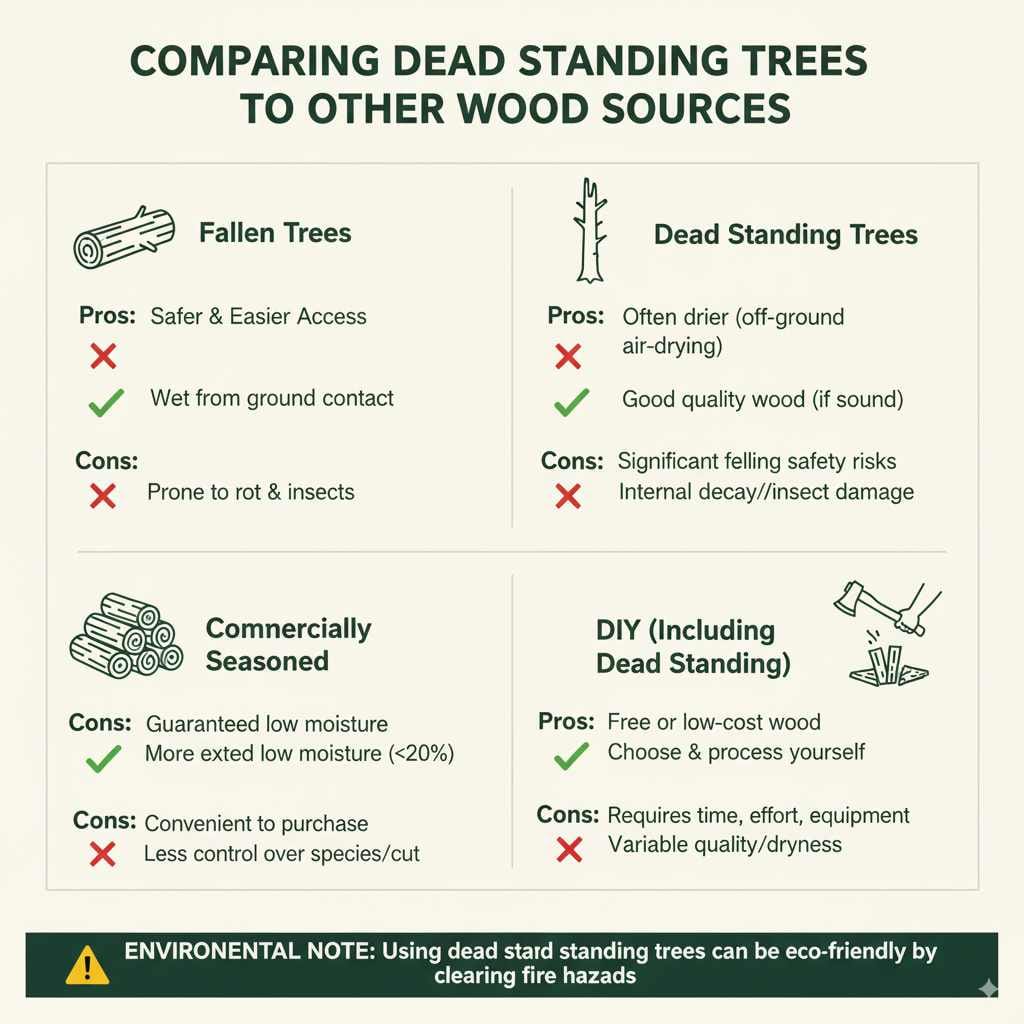
Comparing Dead Standing Trees to Other Wood Sources
It’s helpful to understand how wood from dead standing trees stacks up against other common sources of firewood or lumber.
Fallen Trees vs. Standing Dead Trees
Fallen Trees:
- Pros: Safer and easier to access and cut.
- Cons: More likely to be wet from ground contact, prone to rot and insect damage from being in contact with soil and leaf litter. They may take longer to season or might never achieve optimal dryness.
Dead Standing Trees:
- Pros: Often drier due to being off the ground and exposed to air. Can provide good quality wood if harvested correctly.
- Cons: Significant safety risks during felling. May have internal decay or insect damage that isn’t immediately obvious.
Commercially Seasoned vs. DIY
Commercially Seasoned Wood:
- Pros: Guaranteed low moisture content (usually 20% or less). Convenient to purchase.
- Cons: Can be more expensive. You don’t control the species or cut.
DIY (including dead standing trees):
- Pros: Potentially free or low-cost. You get to choose the wood and process it yourself.
- Cons: Requires time, effort, equipment, and knowledge. The quality and dryness can be variable without proper testing. Safety is a significant concern if not handled correctly.
Table: Wood Source Comparison
| Wood Source | Seasoning Likelihood | Safety Concerns | Effort/Cost | Typical Quality |
|---|---|---|---|---|
| Dead Standing Tree | High (often) | Very High (felling) | Moderate to High (harvesting, processing) | Good to Excellent (if dry and sound) |
| Fallen Tree | Moderate (prone to ground moisture/rot) | Moderate (handling logs) | Moderate (cutting, moving) | Variable (can be good, but often damp) |
| Green Wood (freshly cut) | Low | Low (handling logs) | Moderate (cutting, processing) | Poor (until seasoned) |
| Commercially Purchased Seasoned Wood | High (guaranteed) | Low (delivery) | Low (purchase price) | Good to Excellent |
Environmental Considerations
Using dead standing trees can be an environmentally friendly practice. It clears out dead biomass that could otherwise fall and become a fire hazard or harbor disease. By processing this wood, you’re recycling a natural resource, reducing waste, and potentially avoiding the need to cut down live trees for your needs. Think of it as a natural part of the forest’s cycle.
Frequently Asked Questions (FAQ)
Are all “dead standing trees” perfectly seasoned?
No, not all dead standing trees are perfectly seasoned. While many are drier than fallen logs due to air exposure, the degree of seasoning depends on how long the tree has been dead, its species, local climate, and exposure to the elements. It’s always best to test the moisture content with a meter or use visual and physical cues.
How long does a dead standing tree typically take to season?
The seasoning process for a dead standing tree can range from several months to several years. Factors like the tree’s species, diameter, bark condition, and the prevailing weather conditions significantly influence the drying time. Hardwoods typically take longer than softwoods.
Is it safe to cut down dead standing trees myself?
Cutting down dead standing trees can be very dangerous due to their potential brittleness and unpredictable nature. If you don’t have significant experience, proper training, and all the necessary safety equipment (including a chainsaw and safety gear), it’s highly recommended to hire a professional arborist or logger.
What are the risks of using wood from a dead standing tree that isn’t fully seasoned?
Burning unseasoned wood leads to several problems: it burns inefficiently, produces a lot of smoke and steam, can cause creosote buildup in your chimney (increasing fire risk), is harder to ignite, and provides less heat. For construction, unseasoned wood can shrink unevenly, leading to structural issues.
How can I tell if the wood from a dead standing tree has rot?
Look for soft, crumbly wood, especially at the base or in larger cracks. A musty, damp smell can also indicate rot. If wood crumbles easily in your hand or shows signs of fungus growth, it might be too far gone to be useful, though some surface rot might not significantly impact firewood quality.
What tools do I need to process a dead standing tree into usable wood?
Essential tools include a chainsaw (with sharp chains and proper maintenance), a splitting maul or axe, wedges, and a method for safely felling the tree if necessary. Personal protective equipment (PPE) like a helmet, eye protection, gloves, and sturdy boots are non-negotiable. A wood moisture meter is also highly recommended for verifying dryness.