Are Longer Axle To Axle Bows Easier To Draw? Proven Best
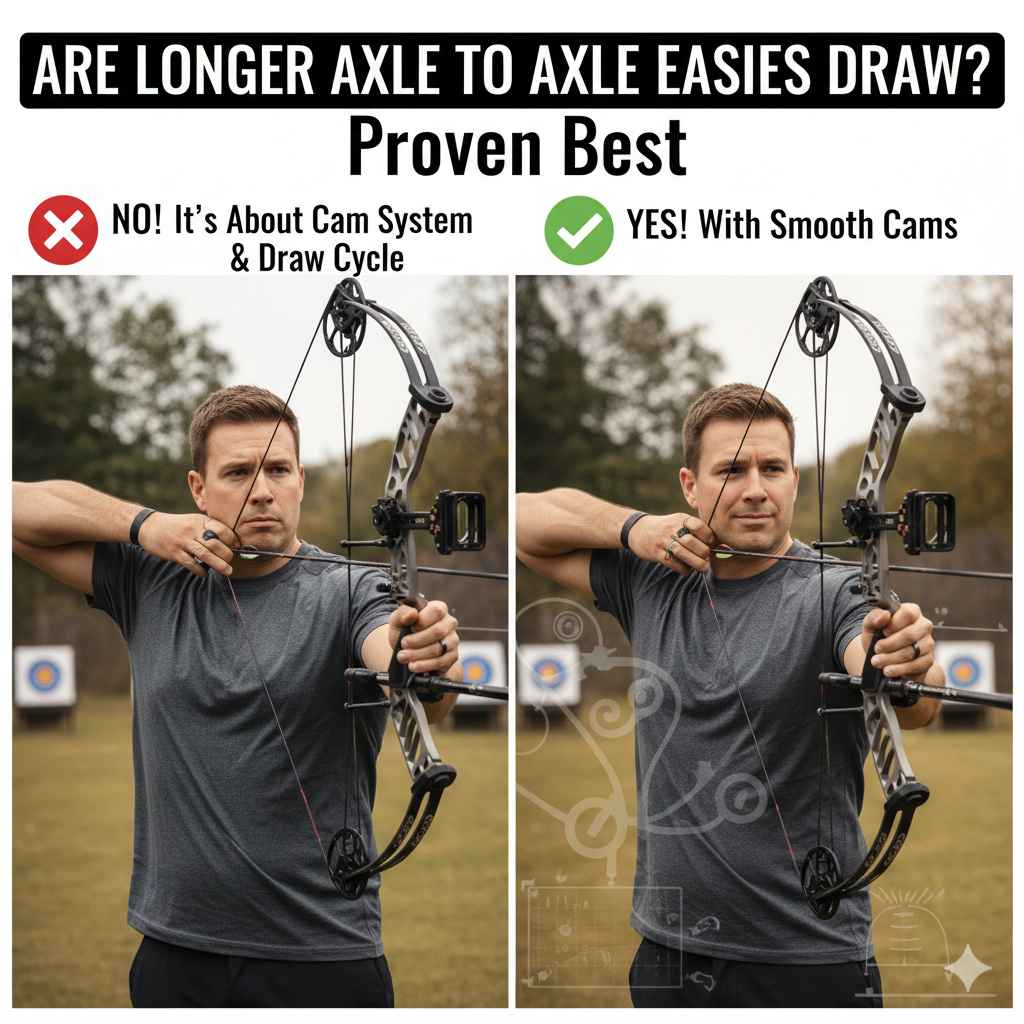
Yes, longer axle-to-axle bows are generally considered easier and smoother to draw. This is because they create a wider string angle at full draw, which feels more comfortable and stable. For beginners, this forgiveness makes it easier to learn proper form and build confidence, making longer bows a proven best choice for starting out. For more on this, see our guide on Don’T Stand under a Tree When It Rains Timeline.
Hello, fellow archers! Salman Arfeen here. When you’re new to archery, choosing your first compound bow can feel overwhelming. You hear terms like “axle-to-axle,” “brace height,” and “let-off,” and it’s easy to get lost. One of the most common questions I get is about the bow’s length. Does a longer bow make it easier to pull back the string?
It’s a great question, and the answer can make a huge difference in your shooting experience. Many beginners struggle with a draw cycle that feels jerky or uncomfortable, which can hurt accuracy and confidence. Don’t worry, we’re going to clear this up. In this guide, I’ll walk you through what axle-to-axle length means and how it affects your draw, helping you find the perfect bow for a smooth, enjoyable shot.
What Exactly is Axle-to-Axle Length?


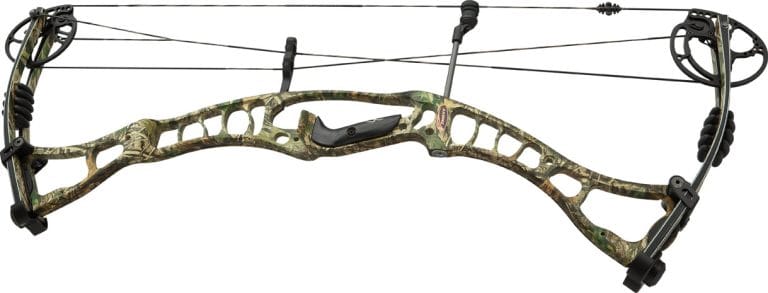
Before we dive in, let’s get clear on the basics. The Axle-to-Axle (ATA) length is simply the distance between the two axles that hold the cams (the wheels) at the top and bottom of your compound bow’s limbs.
Think of it like measuring a person’s height. Instead of measuring from head to toe, we measure from the center of the top wheel to the center of the bottom wheel. This measurement is usually given in inches.
- Shorter ATA Bows: Typically measure under 32 inches.
- Longer ATA Bows: Typically measure 32 inches or more.
This single measurement has a big impact on how a bow feels and performs, especially when it comes to the draw cycle.

The Real Answer: Are Longer Bows Easier to Draw?
Here’s the key takeaway: a longer ATA bow doesn’t change the draw weight (the amount of force needed to pull the string), but it does make the draw cycle feel smoother and more comfortable. So, in a way, yes, it feels easier.
Why does this happen? It all comes down to something called the string angle.
Understanding String Angle
When you pull the bowstring back to your anchor point (the spot on your face where you hold the string before releasing), the string forms an angle. A longer ATA bow creates a wider, less sharp angle. A shorter ATA bow creates a narrower, sharper angle.
Imagine drawing a triangle. With a long bow, the base of the triangle is wider, so the peak isn’t as sharp. With a short bow, the base is narrow, forcing the peak to become much sharper.
A wider string angle on a longer ATA bow leads to two major benefits for beginners:
- More Comfort: The wider angle puts less pressure on your release hand or fingers. If you’re a finger shooter, it prevents that uncomfortable “pinch.” For release aid users, it allows for a more consistent and comfortable anchor point.
- More Stability: A longer bow is inherently more stable. It’s like trying to balance a long stick versus a short pencil on your finger. The long stick is much easier to keep steady. This stability helps you aim better and reduces the effect of small jitters or mistakes in your form.
Longer Axle-to-Axle Bows: Pros and Cons for New Archers
For most people starting out, a longer ATA bow is the way to go. It’s more forgiving, which means it helps you build good habits without punishing every tiny mistake. Let’s break down the advantages and disadvantages.
Pros of a Longer ATA Bow (32″+)
- ✅ Extremely Forgiving: This is the biggest benefit. A longer, more stable bow platform is less likely to react to small movements or flaws in your form. This helps you build muscle memory and confidence much faster.
- ✅ Smoother Draw Cycle: The gradual buildup of force as you pull the string back feels much less aggressive. It’s a gentle curve rather than a sharp peak, making the entire motion feel more fluid.
- ✅ Increased Accuracy: The added stability makes it easier to hold your pin on the target. You’ll find your sights drift less, leading to tighter arrow groups and more consistent shots.
- ✅ Better for Longer Draw Lengths: If you are tall or have long arms, a longer ATA bow is almost essential for maintaining a comfortable string angle.
Cons of a Longer ATA Bow
- ❌ Less Maneuverable: A longer bow can be clumsy in tight spaces. If you plan to hunt from a small ground blind or a crowded tree stand, it might get in the way.
- ❌ Slightly Heavier: More material generally means more weight. This can be a factor if you plan on hiking long distances in the mountains.
When is a Shorter Axle-to-Axle Bow a Good Choice?
Shorter ATA bows definitely have their place, but they are typically better suited for experienced archers or specific hunting situations.
Pros of a Shorter ATA Bow (<32″)
- ✅ Highly Maneuverable: Their compact size makes them perfect for navigating thick brush, sitting in a tree stand, or shooting from a ground blind.
- ✅ Lightweight: They are easier to carry all day, making them a favorite for backcountry hunters.
- ✅ Often Faster: Modern bow engineering allows shorter bows to generate impressive arrow speeds, which can be an advantage for hunting.
Cons of a Shorter ATA Bow
- ❌ Less Forgiving: Their compact nature means they are more sensitive to shooter error. Any small mistake in your grip or release will be magnified, sending your arrow off target.
- ❌ Sharper String Angle: This can lead to an uncomfortable anchor point and “finger pinch” for those who don’t use a release aid.
- ❌ More Aggressive Draw: The draw cycle can feel “humpier,” with a more noticeable transition as the cams roll over. This can be difficult for a beginner to manage smoothly.
Comparing Longer vs. Shorter ATA Bows at a Glance
Sometimes a simple chart makes all the difference. Here’s a quick breakdown to help you visualize the key differences between longer and shorter ATA bows.
| Feature | Longer ATA Bow (32″+) | Shorter ATA Bow (<32″) |
|---|---|---|
| Forgiveness | High – Very forgiving of form flaws. | Low – Magnifies mistakes. |
| Draw Feel | Smooth and consistent. | Often aggressive and “humpy.” |
| Stability | Excellent – Easy to hold steady. | Good, but less stable (“twitchy”). |
| Maneuverability | Lower – Can be bulky in tight spaces. | Excellent – Great for blinds and tree stands. |
| Best For Beginners | Yes, highly recommended. | Not usually recommended for learning. |
| Primary Use | Target archery, 3D archery, open-country hunting. | Hunting in tight quarters (blinds, tree stands). |
How to Choose the Right ATA Length for You
Now for the fun part! Choosing your bow should be an exciting process. Here’s a simple, step-by-step approach to finding the right ATA length for your needs.
Step 1: Define Your Main Archery Goal
What do you see yourself doing most with your bow? Your primary activity is the biggest factor in choosing an ATA length.
| Your Main Goal | Recommended ATA Range | Why It Works |
|---|---|---|
| Backyard Target Practice | 32″ to 36″ | You don’t need maneuverability. Focus on the stability and forgiveness that helps you learn and improve accuracy. |
| Competitive Target Archery | 34″ to 40″ | Maximum stability and forgiveness are needed for precision shooting over long distances. |
| Hunting from a Tree Stand or Blind | 28″ to 32″ | A compact bow is much easier to handle when space is limited. You won’t risk bumping a limb on a branch at the crucial moment. |
| Hunting in Open Country (Spot & Stalk) | 31″ to 34″ | This is a great middle-ground. It provides a good balance of stability for longer shots without being too heavy or bulky to carry. |
Step 2: Consider Your Draw Length
Your personal draw length also plays a role. An archer with a very long draw length (say, 31 inches) will create a very sharp string angle on a short bow. To keep the angle comfortable, they will need a longer ATA bow.
- Shorter Draw Length (27″ and under): You can comfortably shoot almost any ATA length, from very short to very long.
- Average Draw Length (28″ – 29″): A mid-range bow of 31″-33″ is often a sweet spot.
- Longer Draw Length (30″ and over): You will likely feel much more comfortable and stable with a bow that is 33″ or longer.
Not sure of your draw length? A pro shop can measure you in minutes. You can also get a good estimate by measuring your wingspan (fingertip to fingertip) and dividing by 2.5. According to a study from the National Institutes of Health, arm span is a reliable indicator of height, which correlates to draw length.
Step 3: Always Try Before You Buy
Reading about bows is helpful, but nothing beats shooting them. Go to a local archery pro shop. A good shop will let you test-fire several different bows. Pay attention to how the draw cycle feels. Does it feel smooth or harsh? Can you hold it steady at full draw?
Don’t focus on brand names or flashy specs. Choose the bow that feels best to you. Your comfort and confidence are what will ultimately make you a better archer.
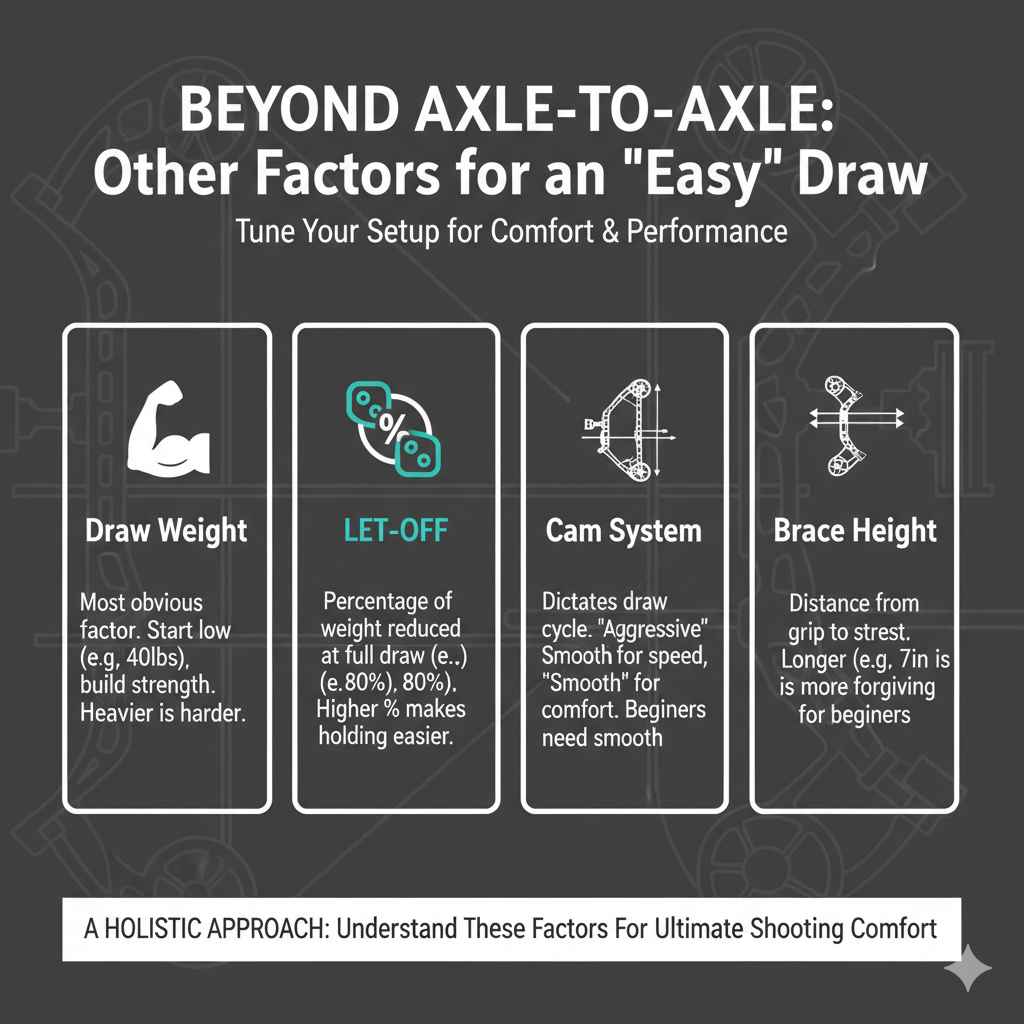
Beyond Axle-to-Axle: Other Factors for an “Easy” Draw
While ATA length is a huge part of a smooth draw, it’s not the only factor. Here are a few other things that contribute to how “easy” a bow is to shoot.
Draw Weight
This is the most obvious factor. A bow set to 70 pounds will always be harder to draw than one set to 40 pounds. Beginners should always start with a lower draw weight they can control without straining. You can increase it later as you build strength.
Let-Off
Let-off is the percentage of draw weight that is reduced when you reach full draw. For example, a 60-pound bow with 80% let-off only requires you to hold 12 pounds at full draw. A higher let-off makes holding your aim much easier.
Cam System
The cams (wheels) dictate the personality of the draw cycle. Some are designed for pure speed and can feel aggressive. Others are designed for smoothness. A good pro shop can explain the differences, but as a beginner, always lean towards a bow with a smooth-drawing cam system. You can learn more about different cam types from great resources like Archery 360’s guide to cams.
Brace Height
This is the distance from the grip to the string at rest. A longer brace height (e.g., 7 inches) is more forgiving than a shorter one (e.g., 6 inches) because the arrow stays on the string for a shorter amount of time, giving you less time to make a mistake. For beginners, a longer brace height is always a plus.
Frequently Asked Questions (FAQ)
1. Does axle-to-axle length affect draw weight?
No, ATA length does not directly affect the bow’s draw weight. Draw weight is determined by the limbs and can be adjusted separately. However, a longer ATA bow can make the existing draw weight feel smoother and more manageable to pull back.
2. Is a 30-inch axle-to-axle bow good for a beginner?
A 30-inch ATA bow is very short and can be unforgiving. While it’s great for hunting in tight spaces, most beginners would be better served with a slightly longer bow (32 inches or more) to help them learn proper form on a more stable and forgiving platform.
3. What does it mean for a bow to be “forgiving”?
A “forgiving” bow is one that is less sensitive to small errors in an archer’s form. Features like a longer ATA, a higher brace height, and a smoother draw cycle all contribute to forgiveness. It helps your arrows fly true even if your release isn’t perfect every time.
4. How does my height affect the bow I should choose?
Your height is a good indicator of your draw length. Taller individuals generally have longer draw lengths and will feel more comfortable with a longer ATA bow to maintain a comfortable string angle. Shorter individuals have more flexibility and can comfortably shoot shorter bows.
5. Can I hunt with a longer axle-to-axle bow?
Absolutely! People have been hunting successfully with longer bows for decades. While a short bow is better in a tight ground blind, a longer bow (32″-34″) is fantastic for hunting in more open terrain where stability for a longer shot is more important than maneuverability.
6. Do women need a different axle-to-axle length?
No, the ideal ATA length is not based on gender but on draw length and intended use. Many bow companies make fantastic bows designed for archers with shorter draw lengths, and these often have a shorter ATA. The key is to find a bow that fits your body and your archery goals, regardless of its marketing.
Conclusion: Your Best Shot Starts with the Right Feel
So, are longer axle-to-axle bows easier to draw? The answer is a definite yes—not in terms of raw power, but in the smooth, stable, and forgiving experience they provide. For a beginner, that feeling is everything. It builds confidence, encourages good habits, and makes archery pure fun.
While a short, zippy bow might seem exciting, the stability of a longer bow is your best friend when you are learning. It gives you room to grow and helps you focus on your form without being overly punishing.
Remember, the best bow in the world is the one that feels right in your hands. Use this guide as a starting point, then head to a pro shop, shoot a few different models, and trust your instincts. The right bow is waiting for you, and it will make every arrow you fire a joy. Happy shooting!