Are Laser Scopes Illegal In Louisiana To Hunt Deer
Laser scopes that project a visible beam or light onto the target are strictly illegal for hunting deer in Louisiana. The Louisiana Department of Wildlife and Fisheries (LDWF) prohibits the use of any sighting device that casts an artificial light, including lasers, onto any game animal or bird. Use standard scopes or illuminated reticles (if they don’t project a beam) to stay legal and safe.
Hey everyone, Salman here! One of the most common questions I get from hunters planning a trip to the Bayou State is about gear legality. Specifically, can you use laser scopes for deer hunting in Louisiana? It’s a crucial question, because equipment rules change from state to state, and nobody wants to risk a fine or lose their license over an honest mistake. Understanding the rules is the first step toward a safe and legal hunt. Let’s dive deep into the Louisiana regulations to clear up the confusion about these high-tech sighting tools.
For those of us dedicated to safe and ethical hunting, knowing the rules is just as important as knowing your zero. When you combine modern technology with hunting, state wildlife agencies often have specific limitations. Let’s make sure you hit the woods prepared, legal, and confident.
As a guide, my top priority is ensuring everyone enjoys the hunt safely and legally. When we talk about laser sights, we are talking about a powerful piece of technology that drastically changes how we aim. Because of this change, regulations are very precise in Louisiana.
The Definitive Answer: Lasers That Project a Beam Are Banned
The Louisiana Department of Wildlife and Fisheries (LDWF) has clear regulations regarding the use of artificial lights when hunting game animals, including white-tailed deer. The general rule is straightforward: any device that projects an artificial light onto the animal or target is illegal for hunting game animals or birds.
A typical laser scope projects a visible red or green dot onto the target. This projected light falls squarely under the prohibited category. It doesn’t matter if the laser is attached to a rifle, a crossbow, or a handgun; if it casts a beam onto the deer, it is illegal for that purpose.
Understanding the Key Regulation: Artificial Lights
Louisiana law aims to maintain the principle of “fair chase” and prevent poaching, especially during nighttime hours. The use of artificial light to locate, blind, or stun game animals is a major regulatory concern. Here is the specific breakdown of the prohibition related to sighting systems:
- Projection is the Problem: The illegality hinges on whether the device projects a light beam outward and onto the target animal.
- Scope vs. Sighting Device: Standard magnified scopes with traditional reticles are perfectly legal. Illuminated reticles (where the crosshair itself glows but does not leave the scope) are also generally permissible because they do not project light onto the deer.
- Enforcement: Wildlife agents (game wardens) in Louisiana take these regulations very seriously. Being caught hunting deer with an illegal sighting device can result in significant fines, confiscation of equipment, and loss of hunting privileges.
To confirm these details and understand the full scope of LDWF rules, it is always best to consult the official source: the Louisiana Department of Wildlife and Fisheries (LDWF) Hunting Regulations handbook or website directly before your season starts.

Laser Scope vs. Illuminated Reticle: A Crucial Distinction
When beginners look at modern optics, the terms “illuminated” and “laser” can be confusing. It is vital to know the difference, as one is legal and the other is not for Louisiana deer hunting.
Legal Sight: The Illuminated Reticle
Many modern rifle scopes and even some high-end crossbow scopes feature an illuminated reticle. This means the crosshair, the aiming point inside the scope, can light up (usually red or green). This feature is incredibly helpful in low-light conditions, like dawn or dusk, allowing you to see your aiming point clearly against a dark animal or backdrop.
Key Feature: The light stays inside the scope tube. It does not exit the objective lens and shine onto the deer. Because no artificial light is cast onto the animal, these sights are permissible for deer hunting in Louisiana.
Illegal Sight: The Projected Laser Sight
A laser scope or laser sight uses a diode to project a focused beam of light (a dot) out of the device and onto the target. While useful for quick acquisition, especially in tactical applications, this is the exact technology that is banned by LDWF for game animals.
Key Feature: The beam exits the device and marks the target. This is considered using an artificial light to aid in taking game and is therefore illegal for deer hunting.
To help you visualize the difference and ensure you pick the right gear, check out this simple breakdown:
| Sighting Device Type | Light Projection? | Legal for LA Deer Hunting? | Use Case |
|---|---|---|---|
| Standard Scope (No Light) | No | Yes | General daylight and low-light hunting. |
| Scope with Illuminated Reticle | No (Light stays internal) | Yes | Improving visibility of the crosshair in dim light. |
| Red Dot or Holographic Sight | No (Dot stays internal) | Yes (Depends on weapon type) | Fast target acquisition at close to moderate ranges. |
| Laser Sight/Scope (Projected Beam) | Yes (Beam hits the target) | No | Illegal for taking deer or other game birds/animals. |
Why Louisiana Restricts Laser Sights for Deer Hunting
As an archer and hunter, I know we all want the best accuracy possible. But regulations are in place for critical reasons that prioritize ethical hunting, safety, and wildlife management. Understanding the “why” often makes the “what” easier to accept.
1. Preventing Poaching and Night Hunting
The primary reason for banning artificial light projection is to prevent illegal activities, primarily poaching. Poachers often use strong lights to locate or momentarily freeze deer at night, making them easy targets. While a laser scope is not a spotlight, it falls under the category of using artificial light to assist in taking game, which could potentially be abused during illegal hours.
2. Fair Chase Principles
The concept of “fair chase” dictates that the hunter should not have an excessive or unsportsmanlike advantage over the animal. Regulations often dictate limits on weapon technology, speed, and sighting systems to ensure the animal has a reasonable chance of escape. Using advanced projection systems is often viewed by state agencies as reducing the skill required, thus moving away from fair chase standards.
3. Safety and Target Identification
While a projected laser dot seems helpful, relying solely on a tiny dot for target identification can be unsafe, especially in crowded hunting areas. Experienced hunters rely on their scopes or binoculars to fully identify the animal and ensure a safe backdrop. Reliance on a quick laser dot might encourage hasty shots or poor identification, which could lead to accidents or mistakes.
Step-by-Step Guide to Staying Legal: Gear Checks Before Hunting in LA
If you are traveling to Louisiana or just starting your hunting career here, you need a checklist to ensure your equipment is compliant. We want to avoid any encounters with a game warden that could ruin your season.
Step 1: Review Your Sighting System
Physically inspect your scope or sight. Does it have a lens on the front (objective lens) that emits a visible light or beam when the device is turned on? If the answer is yes, you cannot use it for deer hunting in Louisiana. If the device only illuminates the crosshairs or reticle inside the tube, it is generally okay.
Step 2: Check Weapon-Specific Rules
Louisiana has different rules for different weapons (rifle, shotgun, muzzleloader, archery). While the laser ban applies across the board for deer, you must also ensure your chosen weapon meets caliber and cartridge length restrictions. For example, some firearms are banned entirely during primitive seasons.
Here’s a quick snapshot of the key differences in sighting rules based on common deer hunting methods:
| Weapon Category | Sight Restrictions (Deer) | Caliber/Weight Restrictions (Example) | Notes on Legality |
|---|---|---|---|
| Modern Firearms (Rifles/Shotguns) | No projected laser light. Standard, magnified, and illuminated reticle scopes are legal. | Rifles must use centerfire ammunition. Shotguns must be 10-gauge or smaller. | Most commonly used methods; focus heavily on the laser prohibition. |
| Archery (Vertical Bows) | Sights must be fixed. Pin sights (with or without magnification) are legal. | Minimum draw weight of 30 lbs. Broadheads must be 7/8 inch wide minimum. | Lasers are specifically prohibited on archery equipment used for deer. |
| Crossbows | Scopes (magnified or non-magnified) are legal, provided they do not project a beam. | Requires a minimum draw weight of 100 lbs and a minimum bolt length of 14 inches. | Often used by hunters with physical disabilities, but the laser ban still applies. |
| Muzzleloaders (Primitive Season) | Scopes, red dots, and metallic sights are legal. | Must be .40 caliber or larger, using black powder or approved substitutes. | The weapon must meet primitive definitions, but sighting options are broad, provided they exclude projected lasers. |
Step 3: Consult the Official Regulations
Do not rely on hearsay or old forum posts. Regulations change every year. Always download or check the most current Louisiana hunting digest before stepping into the field. This resource is free and provides the definitive word on what is allowed.
You can find the most recent copy of the Louisiana Hunting Regulations digest directly on the LDWF Hunting Regulations page.
Step 4: Check for Exceptions (Hogs and Pest Species)
While laser scopes are illegal for deer, it is important to note that many states, including Louisiana, handle nuisance and pest species differently. Feral hogs are non-game animals, and rules for their control are often much more lenient, especially during night operations or culling. While this article focuses specifically on deer, if you plan to hunt hogs, you may find that the restrictions on lights and sighting devices are relaxed. Always confirm the current hog regulations if you plan to use specialized equipment.
Legal and Effective Alternatives to Laser Sights
Since the projected laser sight is off the table, what are the best legal alternatives for achieving accuracy, especially for beginner and hobbyist hunters?
The good news is that modern scopes and sighting systems offer fantastic accuracy without crossing the legal line.
1. High-Quality Magnified Scopes
For rifle hunting, a standard variable power scope (e.g., 3-9x40mm) is the gold standard. They gather light extremely well, helping you see clearly during legal shooting hours, and allow for precise aiming at varying distances. Look for scopes with good glass quality and rugged construction.
2. Red Dot and Holographic Sights (RD/Holo)
These sights are excellent for faster target acquisition at closer ranges, especially when hunting in thick woods or brush where shots are often less than 100 yards. They project a dot or reticle that appears suspended over the target. Because the light source and projection stay within the sight housing and do not shine onto the animal, they are legal.
Benefits of Red Dot/Holographic Sights:
- Fast Acquisition: They allow you to aim with both eyes open, giving you a wider field of view and faster target acquisition than a traditional magnified scope.
- No Eye Relief Issues: You don’t have to worry about finding the perfect eye relief, making them very forgiving for beginners.
- Low Light Performance: The illuminated dot helps tremendously at dawn and dusk.
3. Archery Pin Sights
For bowhunters, the best legal choice remains the multi-pin fiber optic sight. These sights use ambient light to illuminate the pins (dots), allowing you to clearly see your aiming point without projecting light onto the deer. They are simple, reliable, and perfectly legal for Louisiana archery season.
Advanced Training: Zeroing Your Legal Sights
Switching from a laser sight means you must rely on fundamental shooting skills—specifically, zeroing your weapon correctly. This process ensures your point of aim matches your point of impact.
Zeroing Step-by-Step for Beginners
Whether you choose a new rifle scope or a red dot, follow these beginner-friendly steps for achieving peak accuracy:
A. Prepare Your Setup
- Secure your weapon in a stable rest (sandbags or shooting vice).
- Use the same ammunition or bolts you intend to hunt with.
- Set up a target at 25 yards (for an initial zero) or 50 yards.
B. Initial Sight-In (25 Yards)
- Fire three shots aimed at the center of the target. This group is crucial.
- Locate the center of your three-shot group.
- Adjust your sight’s windage (side-to-side) and elevation (up-and-down) knobs based on how far the group is from the center bullseye. Remember the simple rule: Move the point of impact where you want the bullet to go.
C. Refine the Zero (100 Yards)
Once you are hitting dead center at 25 or 50 yards, move your target out to the distance you intend to hunt most commonly (usually 100 yards for deer rifles). Fire three more shots and make minute adjustments. A reliable 100-yard zero is the foundation of ethical shot placement.
Pro Tip: Practice shooting from different positions—standing, kneeling, and prone—not just from a bench rest. True hunting accuracy comes from mastering various field positions.
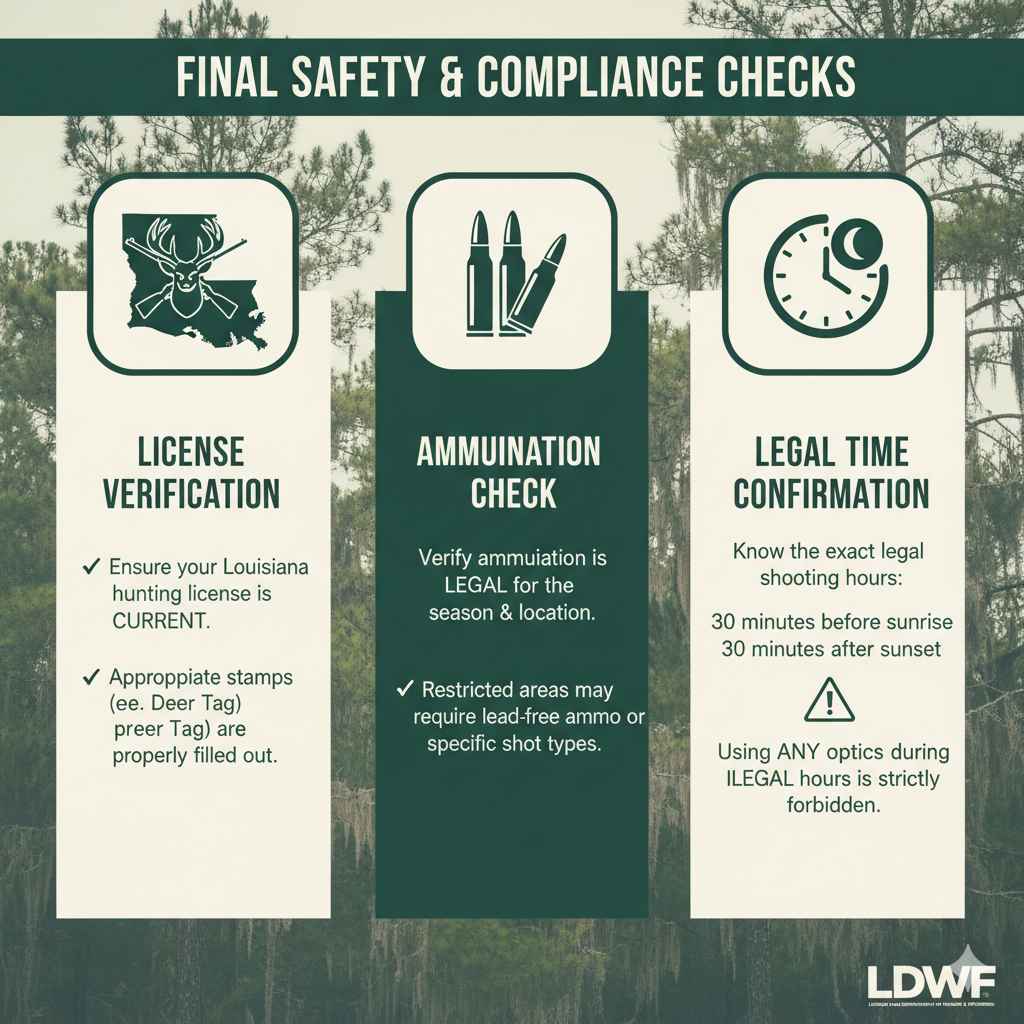
Final Safety and Compliance Checks
Before any hunting trip to Louisiana, always perform these final checks:
- License Verification: Ensure your Louisiana hunting license and appropriate stamps (like the Deer Tag) are current and properly filled out.
- Ammunition Check: Verify that your ammunition is legal for the season and location (e.g., restricted areas sometimes require lead-free ammo or only certain types of shot).
- Legal Time Confirmation: Know the exact legal shooting hours (usually 30 minutes before sunrise to 30 minutes after sunset). Using a scope or red dot during legal hours is fine, but extending your hunting time into illegal hours, especially with advanced optics, is strictly forbidden.
FAQ: Laser Sights and Louisiana Hunting
Let’s address the most common confusion points about sighting systems and Louisiana regulations.
Q1: Are red dot sights legal for deer hunting in Louisiana?
A: Yes, red dot sights and holographic sights are generally legal for deer hunting, provided they are mounted on a legal weapon for the season. They are permitted because the illuminated dot or reticle stays within the sight housing and does not project a visible beam onto the deer.
Q2: Does the laser ban apply to all game animals, or just deer?
A: The ban on using artificial light (including projected lasers) to hunt typically applies to all game animals and birds, as defined by the LDWF. There are often exceptions made for nuisance species like feral hogs or certain designated varmints, but for deer, the restriction is absolute.
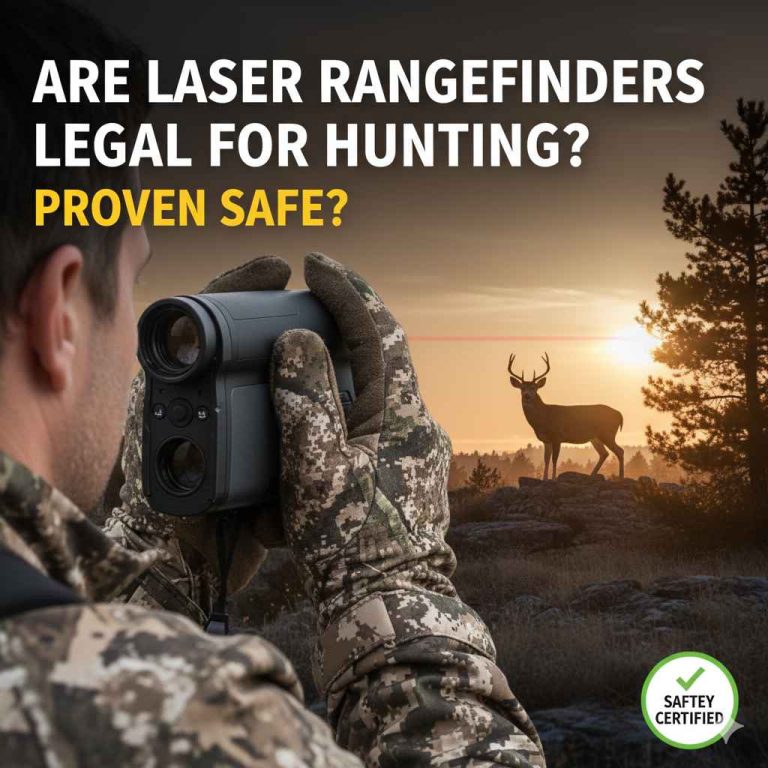
Q3: What if my rifle scope has a small laser rangefinder built into the side?
A: This is a gray area, but you must be extremely cautious. While a rangefinder uses a laser beam, it is generally considered illegal if used to project light onto the deer while aiming. If the device projects any form of light onto the animal, even temporarily for ranging, it violates the spirit and likely the letter of the law regarding artificial light aids.
Q4: Are illuminated crossbow scopes legal in Louisiana?
A: Yes. If a crossbow scope has an internal battery-powered light that illuminates the crosshairs or aiming dots within the scope tube (an illuminated reticle), it is legal. As long as the light does not exit the scope and shine onto the deer, it is permissible.
Q5: Can I use a spotlight to find my deer after shooting it?
A: Yes, once the animal is shot, it is legal to use artificial lights (flashlights, spotlights) to track and recover the deer. The prohibition only applies to the act of hunting, locating, or taking the game animal prior to the shot.
Q6: Are there any specific counties or wildlife areas in Louisiana that allow laser sights?
A: No. The prohibition on projected laser lights for deer hunting is a statewide regulation enforced by the LDWF. There may be specific regulations within Wildlife Management Areas (WMAs), but they will always be stricter than, or equal to, the state regulations—never more lenient regarding projected light.
Conclusion: Hunt Safe, Hunt Legal in the Bayou State
When planning your deer hunt in Louisiana, remember this core principle: if your sighting device projects a beam or light onto the deer, it is illegal. This rule is in place to ensure fair chase, promote safety, and maintain the integrity of hunting regulations across the state. Stick with high-quality, legally compliant standard scopes, red dots, or illuminated reticles that keep the light safely contained within the sight.
Hunting is a fantastic tradition, and using legal, ethical gear is part of respecting that tradition. By understanding the LDWF guidelines and choosing the right equipment, you set yourself up for a successful, penalty-free season. Now get out there, practice that zero, and enjoy the hunt!