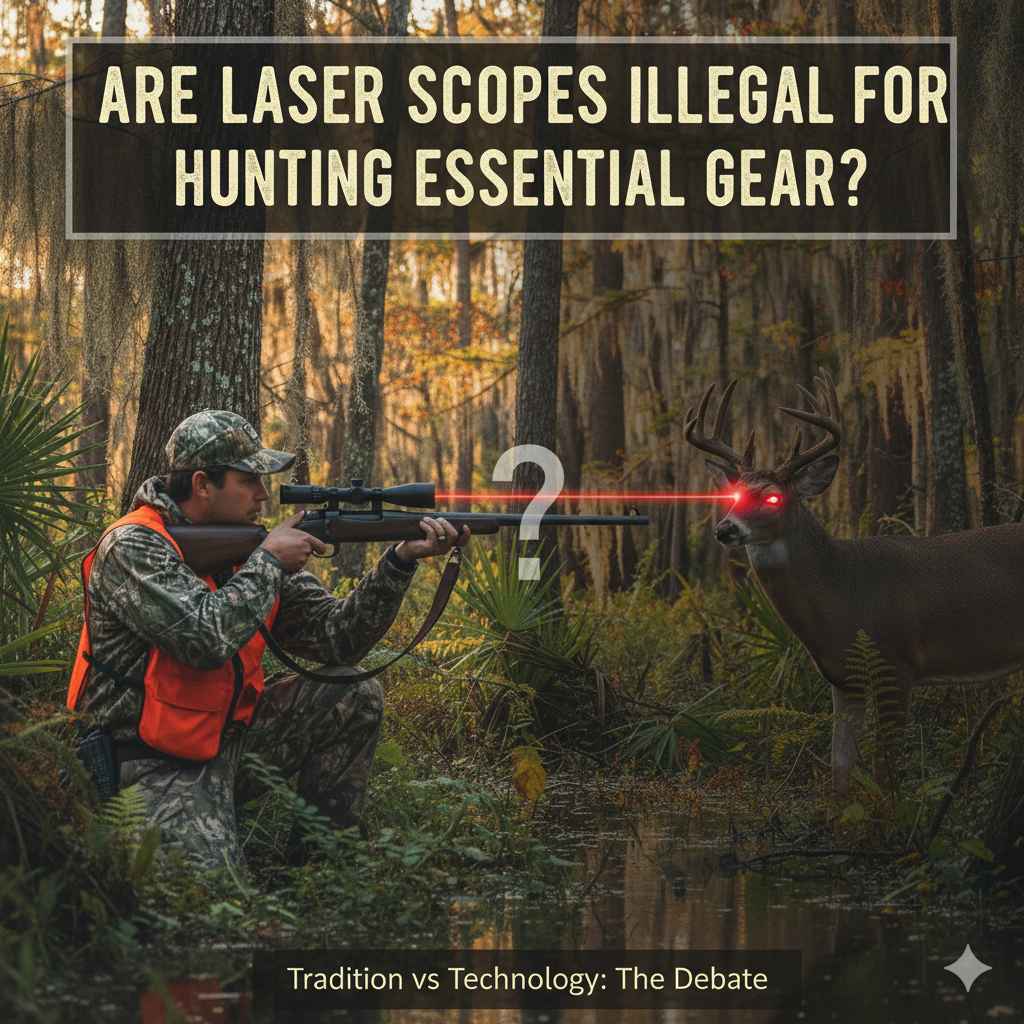
Are laser scopes for hunting Essential Gear?
No, laser scopes are generally not considered essential gear for ethical and successful hunting, especially in archery. While they offer a quick aiming point and can be useful for training or specific equipment like crossbows, they often face significant legal restrictions and can prevent a hunter from developing the crucial fundamental skills needed for reliable shot placement. True essential gear focuses on high-quality traditional sights, proper practice, and mastering your form. For more on this, see our guide on Is Archery an Ivy League Sport? What You Need to Know. For more on this, see our guide on Is a Fixed 3X Scope Good for Coyote Hunting? Expert Guide.

MidTen
MidTen 4-16x50 AO Hunting Rifle Scope Dual…
- Rifle Scope Combo: 4-16x50 scope, comes with a rangefinder scope, a laser sight, and a red/green dot sight everything you will eve…
- Two Color Illuminated Reticles of The Scope: Red and green 5 brightness level illuminated scope, and 4 different sizes of red/gree…
- Laser Sight & Wide Field of View: The laser with an independent switch, Class IIIA laser, less than 2mW, reaching over 300m, makes…
As an Amazon Associate I earn from qualifying purchases.
I see this question come up all the time. As you begin your journey in hunting or archery, the sheer volume of gear available can be overwhelming. Manufacturers constantly push new technology, promising to instantly solve aiming challenges. Laser scopes are one of those shiny tools that catch the eye, promising pinpoint accuracy with just a red or green dot.
But does using a laser scope actually make you a better, more ethical hunter? Or is it a shortcut that undermines the skill you need in the field? My job is to simplify equipment choices and focus on what truly builds confidence. We are going to break down the reality of laser scopes—covering legality, ethics, and, most importantly, how they stack up against pure skill development.
For most beginner archers and hunters, the allure of a laser sight is strong. It seems like the perfect solution for tricky ranges or low-light situations. However, when we talk about what is truly “essential,” we are talking about equipment necessary for safe, legal, and consistently ethical shots. Laser scopes rarely fall into that category.
The core philosophy of hunting, especially with traditional methods like archery, revolves around mastering the fundamentals. Technology can assist, but it should never replace skill. A laser sight can certainly help you point, but it won’t correct poor form, fix target panic, or teach you proper range estimation.
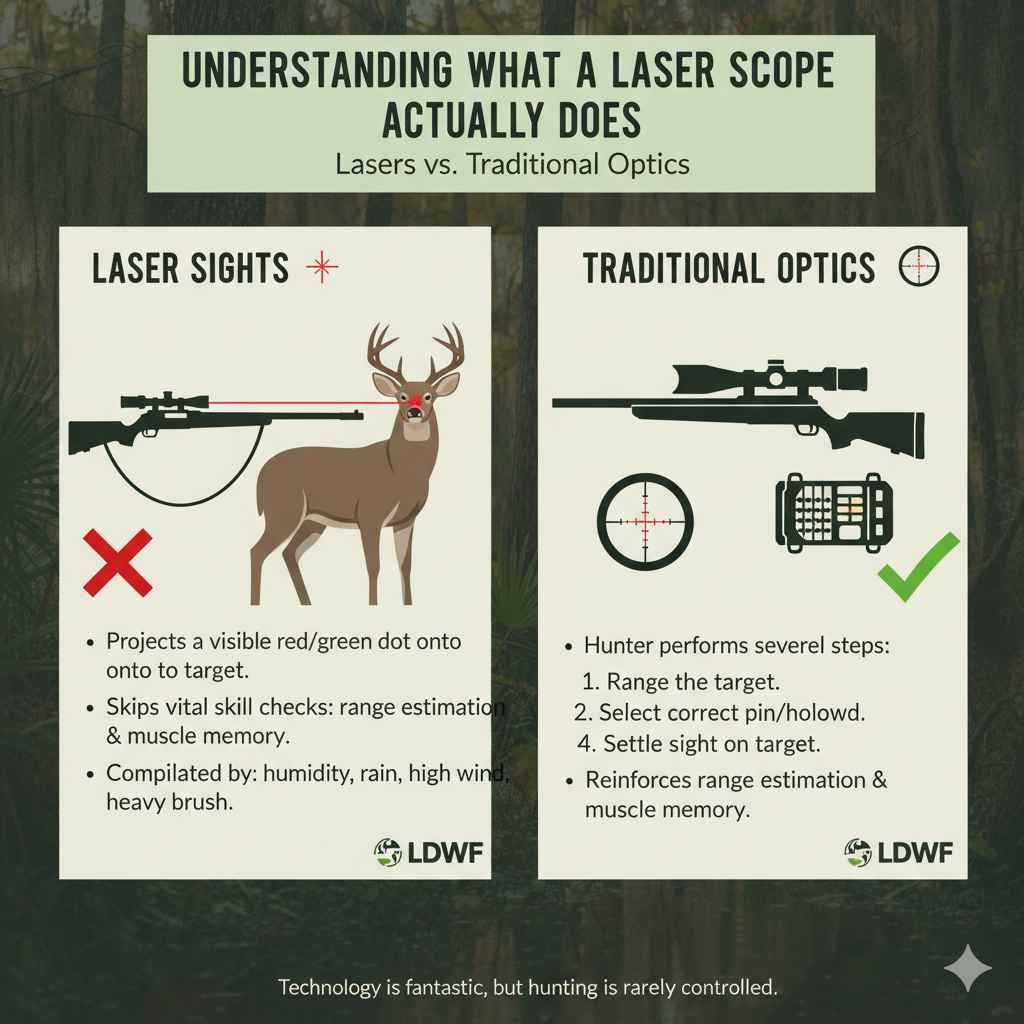
Understanding What a Laser Scope Actually Does
A laser scope, or laser sight, projects a visible beam of light (usually red or green) onto your target. When properly sighted in, the spot where the laser hits is theoretically where your arrow or bullet will go. Unlike traditional scopes or pin sights, which rely on aligning reticles or pins based on distance, the laser offers a single, immediate point of impact.
This technology is fantastic in controlled environments, but hunting is rarely controlled. We deal with humidity, rain, high wind, and heavy brush. All of these factors complicate the use of a simple laser dot.
Lasers vs. Traditional Optics
Let’s compare the laser sight, which projects a dot, with the traditional optics or sights most hunters rely on, such as multi-pin sights on a compound bow or traditional rifle scopes.
Traditional optics require the hunter to perform several steps: range the target, select the correct pin (or holdover), settle the sight on the target, and execute the shot. This process reinforces range estimation and muscle memory.
A laser sight eliminates some of those steps by giving you the immediate aiming point. While this might sound faster, it skips the vital skill checks a hunter needs to perform before taking an ethical shot.
| Feature | Laser Scope/Sight (Red/Green Dot) | Traditional Hunting Sight (Pin Sights/Rifle Scope) |
|---|---|---|
| Ease of Use (Initial) | Very easy. Point and shoot. | Requires practice to align pins/reticles. |
| Range Compensation | Needs re-sighting for every significant range change (or sophisticated, expensive integration). | Multiple pins or turret adjustments compensate for range. |
| Visibility in Daylight | Poor, especially green lasers in bright sunlight. | Excellent, clearly visible pins or reticles. |
| Battery Dependency | 100% dependent on batteries. Failure means no aiming point. | Minimal or no dependency (unless illuminated pins are used). |
| Focus on Skill Development | Can create over-reliance on technology. | Promotes fundamental accuracy and form. |
The Legal and Ethical Landscape of Laser Hunting
Before you even consider purchasing a laser scope, you must understand that they are highly regulated, especially when used for hunting live game. This is the single biggest reason they are not “essential gear”—because, in many places, they are illegal for hunting.
State Regulations and Wildlife Laws
Hunting regulations are set at the state or provincial level, and they vary wildly. Many states prohibit the use of any device that projects a beam or spot onto the target animal, viewing it as taking away the required skill component of the hunt.
Why the strict rules? Regulators want to ensure the hunter has mastered the necessary judgment, patience, and marksmanship required to secure a quick, humane harvest. If a tool makes the act of aiming too simple, it may encourage shots at questionable ranges or by inexperienced individuals who haven’t developed the necessary discipline.
For example, some states may allow them only for specific equipment (like disabled hunting permits or certain types of crossbows), while outright banning them for use on compound bows or rifles. You must check the specific game regulations for every area you plan to hunt. A great place to start your research is by looking up your state’s Fish and Wildlife agency. For authoritative information on ethical bowhunting rules, groups like the Pope and Young Club often publish guidelines about acceptable equipment.
The Ethical Debate: Skill vs. Technology
As a guide, I always encourage hunters to prioritize ethics. Ethical hunting means minimizing the animal’s suffering, which requires impeccable shot placement. If your success relies entirely on a battery-powered device, what happens when that device fails?
The ethical argument against reliance on laser scopes is simple: they can encourage carelessness. When a hunter knows they have to align pins perfectly using their own eyes and muscle memory, they tend to wait for a better, closer, and more static shot opportunity.
Skill is the most important part of ethical hunting. Your ability to judge distance, read the wind, manage buck fever, and maintain steady aim should be independent of excessive technology. The better your foundational skill, the more ethical your hunt will be.
When Laser Sights Might Be Useful (and When They Aren’t)
While they aren’t essential for ethical bowhunting, laser sights aren’t entirely useless. They serve specialized roles where their benefits outweigh the risks of dependency, often outside of the live hunting field.
Scenario 1: Crossbow Use
Crossbows often bridge the gap between traditional archery and firearms. Due to their design and the fact that they are often used by those who cannot pull a traditional bow, some state regulations are looser regarding accessories like laser sights on crossbows. If you are using a crossbow, check your local laws carefully. A laser sight can sometimes act as a useful backup or supplementary aiming tool, though many crossbow hunters prefer a high-quality scope designed for trajectory compensation.
Scenario 2: Practice and Training Aids
This is where laser sights truly shine for the beginner archer. Using a laser sight during practice, especially at home without shooting an arrow, can be a fantastic diagnostic tool.
Here’s how to use it for training:
- Attach the laser to your bow (or practice aid).
- Draw the bow to your anchor point (without an arrow).
- Hold your sight on the target.
- Have a friend watch the laser dot as you execute your shot release.
If the dot jumps, wiggles, or scoots off target before the “shot” breaks, it instantly highlights flaws in your form, like punching the trigger or creeping forward. It provides immediate, undeniable feedback that helps you refine your stability and follow-through. Used this way—as a coach, not a crutch—it’s invaluable.
Scenario 3: Low Light Conditions
In low light (dusk or dawn), traditional fiber optic pins can become dim, and even illuminated pins can sometimes be challenging. A bright green laser might cut through low light effectively, offering a clear reference point. However, remember the legal challenge: most hunting times stop precisely when light conditions begin to deteriorate, and the legal window is often determined by the ability to identify the target clearly—not just aim at it.
The Drawback: Dependency and Battery Life
The major flaw of making a laser scope “essential” is creating dependency. What happens when you climb into your stand 15 minutes before sunrise, settle in, see a perfect buck at 25 yards, and realize the cold drained the laser battery? If you haven’t mastered aiming without the dot, you’ve lost your ability to take a clean shot.
Relying on electronics for accuracy makes you vulnerable to environmental conditions, equipment failure, and simple forgetfulness (like forgetting extra batteries). True essential gear is reliable gear, and nothing is more reliable than your own practiced skill.
Salman’s Essential Gear Checklist: Focusing on Fundamental Accuracy
Instead of chasing the latest laser technology, I advise beginners to invest in quality gear that supports the development of core skills. These items are truly essential because they are rugged, reliable, and help you repeat the same perfect shot cycle every time.
- The Right Release Aid: For compound shooters, a crisp, clean release aid is paramount. It ensures that you launch the arrow exactly when your mind commands, eliminating finger torque and surprise shots.
- High-Quality Traditional Pin Sight: Invest in a sturdy, reliable sight with bright fiber optic pins. This forces you to learn range estimation and proper pin selection.
- Adjustable Stabilizer: Stabilization reduces wobble and noise during the shot, making it easier to hold steady on target—a far better investment than a laser dot.
- Rangefinder: Knowing the exact distance is essential, regardless of your sight system. A good rangefinder is non-negotiable for ethical hunting.
- Consistent Arrows/Broadheads: Your arrows must be matched to your bow, and your broadheads must fly exactly like your field points. Consistency equals accuracy.
The Power of Pin Sights
Traditional pin sights are calibrated to specific distances (e.g., 20, 30, 40 yards). To shoot accurately, you must learn which pin to use and hold that pin precisely on your aiming spot. This process builds mechanical and mental discipline.
The time you spend practicing with pins translates into confidence. If you can group arrows tightly using a traditional sight, you have proven your form is solid—something a laser scope cannot guarantee.
| Requirement | Laser Scope/Sight | Traditional Pin Sight |
|---|---|---|
| Legality in Hunting | Often prohibited, check local laws strictly. | Almost universally legal. |
| Reliability (Field Use) | Susceptible to cold, moisture, and battery failure. | Extremely reliable; minimal failure points. |
| Requirement for Skill | Minimal requirement; risk of over-reliance. | High requirement for form, anchor, and release. |
| Best Use Scenario | Training, diagnostic feedback, specific crossbow applications. | Consistent hunting accuracy and skill development. |
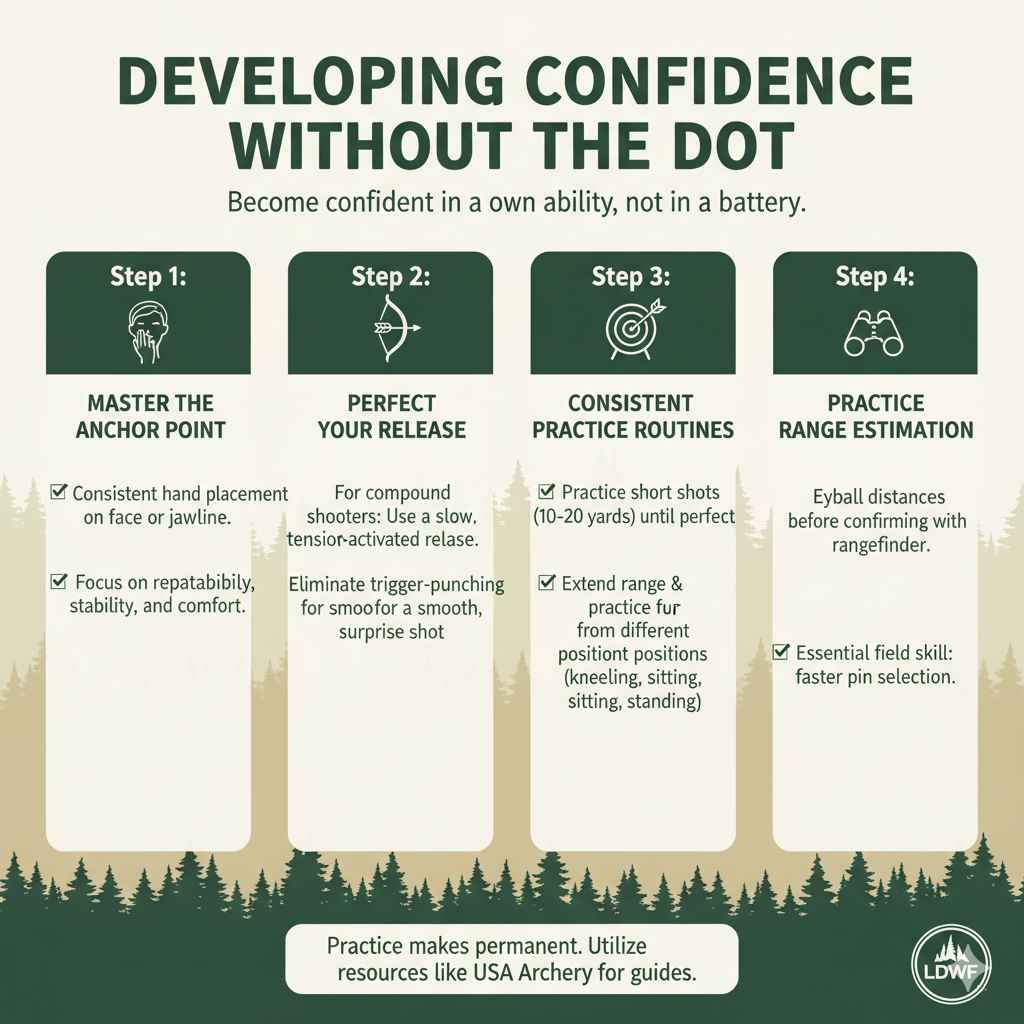
Developing Confidence Without the Dot
My biggest piece of advice is this: become confident in your own ability, not in a battery. If you practice good form and anchor points, your body becomes the most reliable piece of equipment you own. You build muscle memory that is far faster and more reliable than any laser dot when the moment of truth arrives.
Here are the fundamental steps to building that essential accuracy:
Step 1: Master the Anchor Point
Your anchor point is where your release hand consistently touches your face or jawline. If the anchor point moves, your point of impact moves. Focus on finding a spot that is repeatable, stable, and comfortable. Once found, use it every single time, whether you are shooting a field point or a broadhead.
Step 2: Perfect Your Release
For compound shooters, learn to use a slow, tension-activated or hinge release to surprise the shot. This eliminates the jerking motion (target panic) that happens when you try to punch a trigger exactly when your sight pin crosses the target. The goal is a relaxed, smooth back tension that allows the shot to fire naturally, keeping your sight stable.
Step 3: Consistent Practice Routines
Practice short shots (10–20 yards) until they are boringly perfect. Then, slowly extend the range. Practice from different positions (kneeling, sitting, standing). Practice makes permanent, so ensure you are cementing good habits.
You can find fantastic instructional videos and detailed guides on proper shooting form from reputable organizations like USA Archery. Utilizing these resources will develop your confidence far more than buying a high-tech gimmick.
Step 4: Practice Range Estimation
Hunting often happens too quickly to pull out a rangefinder. Practice guessing distances before you confirm them with the rangefinder. This is an essential field skill that technology cannot replace. The better you are at eyeballing 30 yards, the faster you can select the correct pin sight.
Frequently Asked Questions (FAQ)
Q1: Is a laser sight more accurate than a traditional scope?
Not necessarily. While a laser provides an immediate point of aim, its accuracy depends entirely on how well it’s sighted in and its ability to compensate for gravity (or arrow drop). Traditional scopes and pin sights use precise reticles or calibrated pins designed to account for range and trajectory, offering a more reliable solution for varied distances.
Q2: Are red lasers or green lasers better for hunting?
Green lasers are generally more visible to the human eye, especially in daylight, making them a popular choice. However, both red and green lasers can struggle greatly in very bright sunlight. Neither color overcomes the common legal restrictions associated with projected aiming devices.
Q3: Can I use a laser sight for practice, even if they are illegal for hunting?
Absolutely, and I encourage it! Using a laser sight as a diagnostic tool during target practice (without shooting an arrow, or shooting at a target with the laser projecting onto it) is a great way to identify bad habits like flinching or creeping forward. Just make sure the laser is removed or disabled when you transition to live hunting situations, in line with regulations.
Q4: Do laser rangefinders count as laser scopes?
No, this is an important distinction. A laser rangefinder is a tool used before the shot to measure the distance to the target. It does not project a beam onto the target animal during the aiming or firing sequence. Laser rangefinders are essential gear and are legal almost everywhere.
Q5: If I hunt with a rifle, are laser scopes essential?
Even for rifle hunting, lasers are not essential. High-quality traditional rifle scopes with proper magnification, ballistic reticles, and clear glass are the gold standard. While tactical rifle shooters might use lasers for fast acquisition in close quarters, the long-range precision required for ethical big game hunting demands traditional optics and disciplined shooting fundamentals.
Q6: How do I know if my state allows laser sights for bowhunting?
You must consult the current hunting regulation handbook provided by your state’s Department of Natural Resources (DNR) or Fish and Wildlife Service. Look specifically under the section detailing legal methods of take or legal archery equipment. Do not rely on forum advice; the printed (or online official) regulations are the law.
Q7: Are sights with illuminated pins considered laser scopes?
No. Illuminated sights use a battery to light up the physical pins (reticles) inside the sight housing, making them easier for the shooter to see in low light. They do not project a visible beam or dot onto the target animal, which is the feature that typically triggers the hunting ban.
Conclusion: Focus on Confidence, Not Components
As you build your hunting kit, remember that essential gear is the gear that reliably supports ethical and successful results. Laser scopes, while technologically advanced, are often illegal for hunting, battery-dependent, and can foster poor shooting habits by promoting over-reliance on a projected dot.
My advice remains the same: spend your time and money investing in high-quality traditional sights, a great stabilizer, and, most importantly, practice. Master the mechanics of your draw, your anchor, and your release. When you step into the field, your confidence should come from knowing that your skill is locked in, regardless of what high-tech gear you choose to carry. That practiced skill is truly the most essential gear you will ever own.
Related pick: Check today's price on Amazon