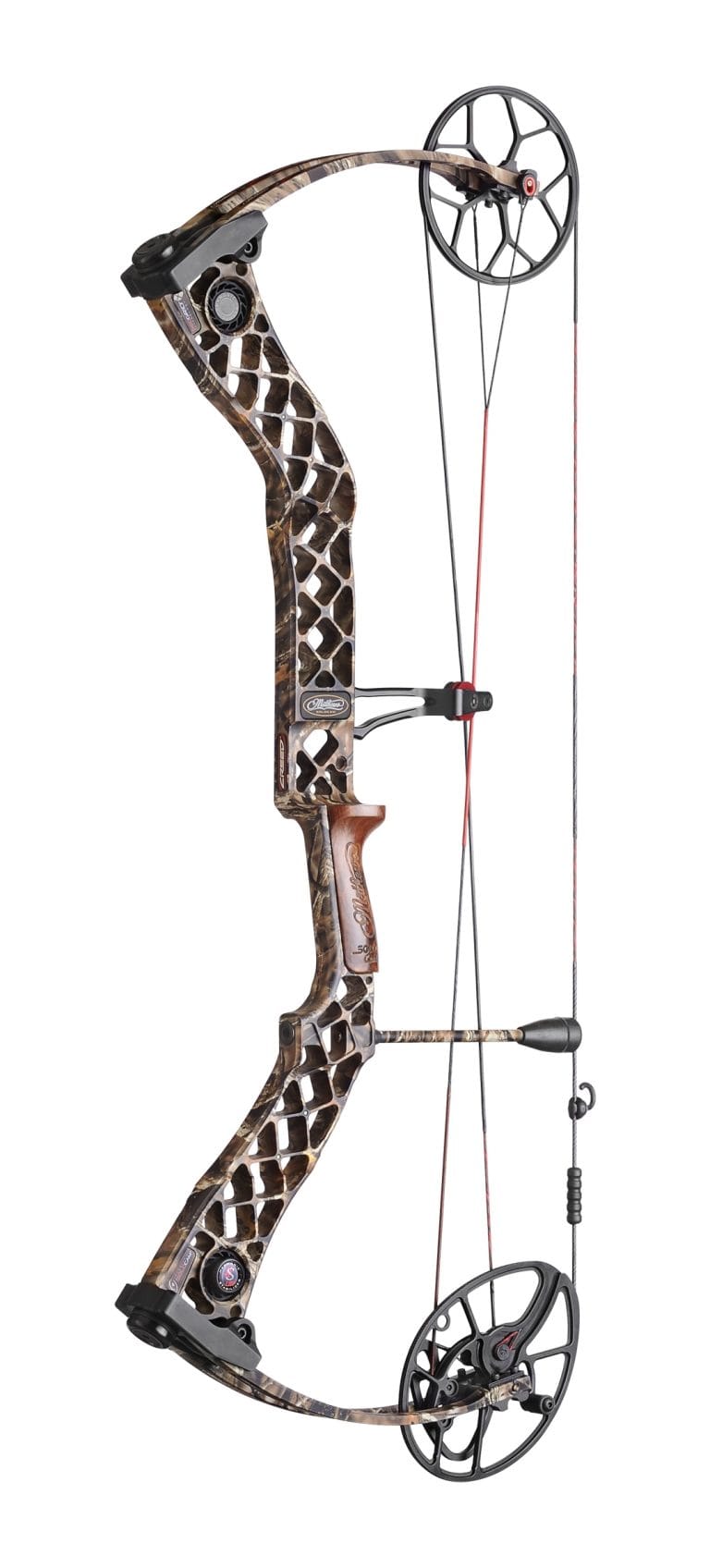
Are Laser Rangefinders Legal To Hunt In Idaho?
Yes, standard laser rangefinders are completely legal to use for hunting in Idaho. They are considered essential tools for quickly and accurately measuring distance, which is crucial for ethical shot placement, especially for bowhunters. Idaho Fish and Game regulations allow devices used solely for calculating distance. The important distinction is that you cannot use electronic devices that aid in aiming or firing the weapon, but determining the range beforehand is perfectly fine. For more on this, see our guide on Is an Extra Point a Field Goal? Football Rules Explained. For more on this, see our guide on Are Pointy Elbows Normal? What You Need to Know.

REVASRI
REVASRI Hunting Laser Rangefinder with Rechargeable Battery…
- [Hunting Range Finder with Mode Memory]-This laser hunting rangefinder has 7 functions: ranging mode,all-in-one mode, scanning mod…
- [Measure Multiple Targets Continuously]- In continuous scan mode, you can measure multiple targets with one press. Angle, height,…
- [High Accuracy and Clear View]-High accuracy 1000 Yards laser range finder with 6.5X magnification. Multilayer coated glass lens a…
As an Amazon Associate I earn from qualifying purchases.
Welcome, friends! I’m Salman Arfeen , and if you’re anything like the hunters I coach, you want two things: confidence in your gear and total certainty that you are following the rules. We all know that distance estimation is the hardest part of archery and bowhunting. When you’re standing in the Idaho backcountry, heart pounding, facing that perfect shot opportunity, the last thing you want is doubt about your yardage. This is why the question, “Are laser rangefinders legal to hunt in Idaho?” comes up all the time.
The good news? Idaho is very friendly toward technology that improves safety and accuracy. Using a rangefinder is not only legal but highly recommended for ethical hunting. But there are important distinctions you must understand about which types are allowed. Let’s walk through the Idaho regulations together, simplify the jargon, and make sure your gear choices are safe, legal, and perfect for your next hunt.
Let’s cut right to the chase: For 99% of hunters and nearly all situations, standard laser rangefinders are 100% legal for hunting deer, elk, and other big game in Idaho.
Idaho Fish and Game (IDFG) understands that knowing the exact distance to your target is the foundation of an ethical kill. If you are bowhunting, your effective range is short—often 20 to 50 yards. Being off by just five yards at 40 yards can mean the difference between a clean pass-through and a painful miss or, worse, a crippling wound. A simple, handheld laser rangefinder eliminates that dangerous guesswork.
However, Idaho regulations, like most states, prohibit certain types of electronic devices that fundamentally change the act of aiming or firing the weapon. This is where hunters sometimes get confused.
Deciphering the Idaho Fish and Game Regulations
When we talk about hunting laws, we always have to look at the letter of the law. Idaho’s rules are generally straightforward when it comes to rangefinders. The primary goal of the law is to maintain fair chase principles and ensure the hunt remains a skill-based activity.
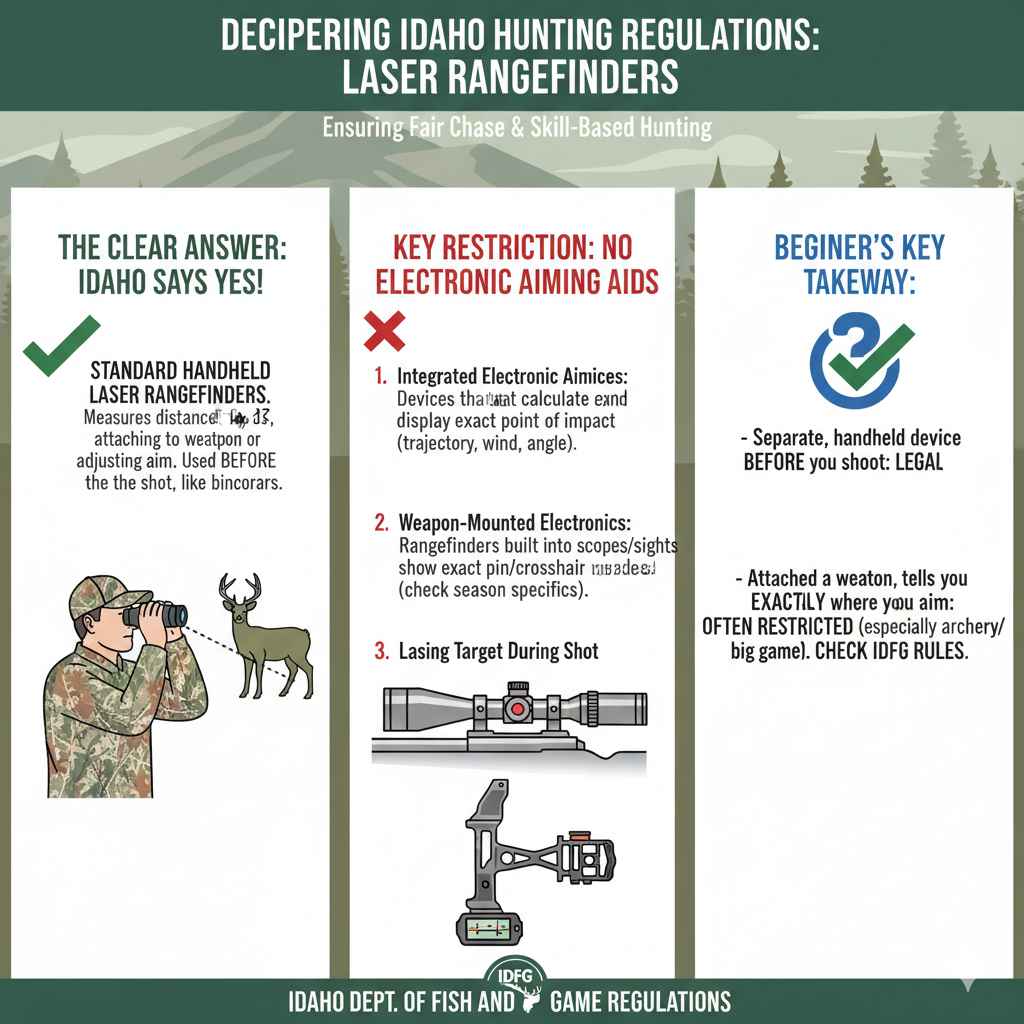
The Clear Answer: Idaho Says Yes to Standard Ranging
A basic laser rangefinder simply measures the time it takes for a laser beam to hit a target and return, giving you a distance reading (e.g., 37 yards). This device does not attach to your bow or rifle scope and does not adjust your aim point.
Think of the rangefinder as an advanced pair of binoculars. It helps you scout and prepare for the shot, but it doesn’t execute the shot itself. This distinction keeps it legal.
Understanding the Key Restriction: No Electronic Aiming Aids
The real regulation you need to pay attention to in Idaho revolves around the use of electronic devices as an aiming aid. While standard rangefinders are fine, you must avoid devices that offer integrated electronic aiming assistance.
- Electronic Aiming Devices: This refers to equipment that mechanically or electronically determines and displays the correct point of impact based on distance, trajectory, wind, and angle. These are typically illegal for use while hunting big game in Idaho, especially during archery-only seasons.
- Weapon-Mounted Electronics: A rangefinder built directly into your rifle scope or bow sight that displays the exact pin or crosshair needed for the shot might cross the legal line, depending on the season and specific capability.
- Lasing the Target During the Shot: While rangefinders are legal, using a device that projects a beam or spot onto the target (like a laser sight) is generally prohibited for hunting big game.
The key takeaway for beginners is this: If the rangefinder is a separate, handheld device used before you draw your bow or shoulder your rifle, you are safe. If it is attached to your weapon and tells you exactly where to hold your pin, you need to check the exact IDFG rules for that specific season and weapon type, as these are often restricted.
Why Rangefinders Are Essential for Ethical Hunting
As an archery coach, I stress that skill and preparation are your best friends in the woods. For bowhunters, rangefinders are not just a convenience; they are a moral obligation.
The Archery Challenge: Distance Estimation vs. Ranging
Bowhunting relies heavily on knowing the exact distance. Why? Because the arrow trajectory is a steep arc. Unlike a high-powered rifle round that travels relatively flat for hundreds of yards, an arrow drops dramatically after 20 yards.
| Yardage Estimate Error | Resulting Shot Error at 40 Yards (Approximate) | Impact on Ethical Kill |
|---|---|---|
| Overestimating by 5 yards (Shooting 45 when it’s 40) | Shot hits 6-8 inches low | Likely a gut shot or complete miss under the animal. |
| Underestimating by 5 yards (Shooting 35 when it’s 40) | Shot hits 3-5 inches high | Can result in a hit over the spine or a miss high. |
| Exact Ranging (The Goal) | Pin matches distance | Clean, quick, ethical harvest. |
As you can see, even a tiny miscalculation can be devastating. Trying to guess the range in heavy timber or across an open meadow is a recipe for failure. A laser rangefinder removes this huge variable, allowing you to focus purely on executing a clean, smooth shot.
Safety and Ethical Shot Placement
Our responsibility as hunters goes beyond just following the law; we must commit to respecting the game. That means taking only high-percentage shots.
Idaho is known for its rugged, mountainous terrain. When an animal is uphill or downhill from you, the true horizontal distance—the distance your arrow actually flies—is shorter than the straight-line distance. This is called the Angle Compensation Problem.
Many modern rangefinders offer an Angle Range Compensation (ARC) feature. This feature does the complex math instantly and tells you the shoot-at distance, not the straight-line distance. This feature, when used in a handheld device, is generally accepted and is vital for safety and accuracy in Idaho’s steep environments. It ensures your arrow hits exactly where you intend, maximizing the chances of a humane kill.
What Kinds of Rangefinders Are Allowed (And Which Are Not)
Let’s simplify the marketplace. Rangefinders generally fall into three categories. In Idaho, the legality often depends on the season (Archery Only vs. General Season) and the function of the device itself.
Type 1: Simple Laser Rangefinders (The Green Light)
These are standard, handheld devices. They display distance, and often have basic Angle Range Compensation (ARC). They do not communicate with your sight, scope, or display an aiming solution.
- Legality: Absolutely legal for all weapons and all seasons in Idaho.
- Function: Gives you yardage (and potentially adjusted yardage for angle). You must manually set your pin or adjust your hold based on this reading.
- Best for: All bowhunters and rifle hunters seeking simplicity and certainty.
Type 2: Advanced Ballistic Rangefinders (The Caution Zone)
These rangefinders go beyond simple distance. They incorporate advanced technology, including sophisticated processors, weather sensors, and ballistic calculators. They are designed to tell you exactly where to aim.
- Potential Issue: If the device electronically calculates the trajectory (based on pre-programmed bullet or arrow data) and displays a complex aiming solution (like a holdover dot or specific pin setting), it often falls into the category of an illegal electronic aiming device, especially during archery-only hunts or specific primitive weapons seasons.
- Check the Rules: If the rangefinder is capable of sharing data with an electronic scope or sight, you must ensure both devices are used only in ways that meet the IDFG criteria. When in doubt, leave the advanced features off or use a simpler model.
Type 3: Integrated Smart Sights (Usually Prohibited)
These are sights or scopes that have a rangefinder built into the unit and automatically illuminate or move a pin to the exact point of impact for a given distance.
- Legality: Generally prohibited in Idaho for big game hunting, especially during archery seasons, as they electronically calculate the point of aim.
- Example: A bow sight that senses the range and automatically lights up the correct pin. This is an electronic aiming aid and is usually illegal.
To help visualize the difference and keep you compliant in the Idaho backcountry, here is a quick comparison table:
| Device Type | Primary Function | Idaho Legality (General) | Why It Matters |
|---|---|---|---|
| Handheld Laser Rangefinder | Measures distance (Yards/Meters) | Legal | Used for preparation; does not aid in the shot execution. |
| Rangefinder with Angle Compensation (ARC) | Measures distance and adjusts for incline/decline. | Legal | Provides the “shoot-at” distance needed for steep Idaho terrain. |
| Integrated Ballistic Rangefinder Scope/Sight | Measures distance, calculates trajectory, and moves/illuminates aiming point. | Generally Prohibited | Classified as an electronic aiming device or sight alteration. |
| Laser Sight (Projects visible dot on target) | Pinpoints exact impact location on the animal. | Prohibited | Illegal electronic aiming device for big game. |
Choosing the Right Rangefinder for Idaho Bowhunting (A Beginner’s Guide)
Since we know basic rangefinders are legal and essential, let’s talk about what makes a great one for the beginner bowhunter tackling Idaho’s landscape.
Don’t worry about buying the most expensive model with a thousand features you won’t use. Focus on clarity, speed, and accuracy within archery distances.
Key Features for Archery Accuracy
- ARC (Angle Range Compensation): As mentioned, this is a must-have in Idaho. The function automatically adjusts the line-of-sight distance based on the angle of the shot, giving you the correct yardage to use for your sight pins. If you hunt in flat areas, you can turn this feature off, but it’s invaluable in mountains or treestands.
- Speed and Target Acquisition: In hunting situations, targets don’t wait. You need a rangefinder that gives you a reading in under one second. Look for models with “Scan” modes, which allow you to sweep the area and get continuous readings, making it easier to lock onto a target standing near bushes or trees.
- Clarity and Magnification: A 6x or 7x magnification is perfect. You want clear glass so you can spot the animal clearly, especially in low light conditions (dawn/dusk). A rangefinder with poor glass can cause eye strain and slow down your reaction time.
- Waterproof Design: Idaho weather can change fast. Make sure your rangefinder is rugged and waterproof. A dropped, wet unit is useless.
Angle Compensation: A Necessary Feature?
I get asked this often: Is ARC cheating? Absolutely not. It is simply math. If you were sitting down with a pencil and paper, you could calculate the true horizontal distance yourself. ARC does it instantly, safely, and ethically.
For beginners, learning the rules of physics (the cosine law) is complex. Using a rangefinder with ARC ensures that when you shoot uphill or downhill in the Idaho mountains, you are shooting the correct yardage for a clean, lung-heart hit. It significantly reduces the chance of wounding an animal due to simple physics error.
Mastering Your Rangefinder: Practice Makes Perfect
Owning a rangefinder is only half the battle. You have to be quick and confident with it. In a hunting scenario, you won’t have minutes to fumble with the buttons or try to find the animal in the scope.
Here are Salman’s simple steps for integrating the rangefinder into your bowhunting routine:
- Practice Draws (No Firing): Practice locating an object, ranging it, clipping the rangefinder to your pack or lanyard, and simultaneously drawing your bow—all in one smooth motion. You need to transition from ranging to aiming in less than 10 seconds.
- Mental Yardage Mapping: When you settle into your hunting spot (treestand or ground blind), range five or six key landmarks right away: the big pine tree, the rock pile, the gap in the brush, etc. Memorize those numbers. When an animal appears, you can quickly reference a nearby landmark if you can’t get a clear range on the animal itself. This is critical for quick target acquisition.
- Range Targets, Then Verify: At the practice range, try to guess the distance to the target first (e.g., “That looks like 33 yards.”), then verify it with your rangefinder. This dual training sharpens your range estimation skills while building trust in your equipment. You should strive to be within 5 yards of the actual distance using only your eyes.
- Manage Your Gear: Always use a lanyard or a quick-release harness. You must be able to deploy the rangefinder quickly with one hand and then stow it safely so it doesn’t swing and clatter against your bow when you draw.
By treating your rangefinder as an essential extension of your bowhunting system, you increase your accuracy, boost your confidence, and guarantee you are operating within the ethical and legal bounds set by Idaho.
Always Double-Check Idaho’s Official Resources
The final and most important piece of advice: Hunting regulations are not static. While the core law concerning handheld rangefinders is unlikely to change, definitions of “electronic device” and “aiming aid” are constantly reviewed as technology advances.
Before every season, you must consult the official rules provided by the Idaho Fish and Game (IDFG). You can find the most current and specific regulations regarding equipment and definitions on the official Idaho Fish and Game website. This will ensure you are compliant for the specific weapon and unit you are hunting in.

Frequently Asked Questions (FAQ)
Here are the quick answers to the most common questions beginners have about rangefinders and Idaho hunting.
1. Can I use a rangefinder in an archery-only season in Idaho?
Yes. Handheld laser rangefinders are completely legal and recommended for archery-only hunts. However, any device that automatically adjusts or illuminates your sight pin based on the measured distance (an integrated electronic sight) is generally prohibited during archery season.
2. Is the Angle Range Compensation (ARC) feature legal in Idaho?
Yes, the ARC feature, which gives you the true “shoot-at” distance when hunting uphill or downhill, is legal in Idaho. Since Idaho has steep terrain, using ARC is considered a safe and ethical way to ensure accuracy.
3. Can I use a rangefinder that saves ballistic data?
This is where caution is needed. If the rangefinder simply stores data but requires you to manually dial or adjust your scope/sight, it is often permissible. If it links wirelessly to an electronic sight or scope and automatically displays the holdover, it likely crosses the line into an illegal electronic aiming aid. Stick to basic distance measurement to be safe.
4. Are rangefinding binoculars legal for hunting in Idaho?
Yes, rangefinding binoculars are legal. These are just binoculars that happen to have a rangefinder function built into them. They are handheld devices used for scouting and preparation, not for actively aiming or firing the weapon.
5. What is the difference between a rangefinder and a laser sight?
A laser rangefinder measures distance by bouncing an invisible beam off a target and calculating the time it takes to return. A laser sight projects a visible red or green dot onto the target itself. Laser sights that project a visible beam onto the animal are illegal for big game hunting in Idaho.
6. Do I need a high-power rangefinder for bowhunting?
No, you do not. A rangefinder rated for 800 to 1,000 yards is more than enough. Since your maximum effective archery range is usually under 60 yards, the important factors are speed, clarity, and ARC capability, not maximum long-range performance.
7. If my rangefinder has illegal ballistic features, can I still use it legally?
If the device has the prohibited capabilities, it is technically legal as long as those features are turned off and not used to assist in the shot during the hunt. However, to eliminate all doubt and risk, I recommend using a simple model that doesn’t have the functionality to confuse the issue.
Conclusion: Hunt Smart, Hunt Legal
Learning to bow hunt takes dedication, and I am here to tell you that modern, simple tools like the laser rangefinder are your friends. They help us become better, more precise, and ultimately more ethical hunters. In Idaho, you can step into the woods with total confidence knowing that your handheld laser rangefinder is a legal piece of essential equipment.
Focus on choosing a reliable model with ARC for that tough Idaho topography. Practice using it quickly and smoothly. Once you eliminate distance guesswork, you can concentrate on drawing steady, focusing on your anchor point, and making that perfect, humane shot. Gear up, stay safe, and enjoy the incredible hunting opportunities Idaho has to offer!
Related pick: Check today's price on Amazon