Are House Sparrows Invasive? Genius Essential Facts.
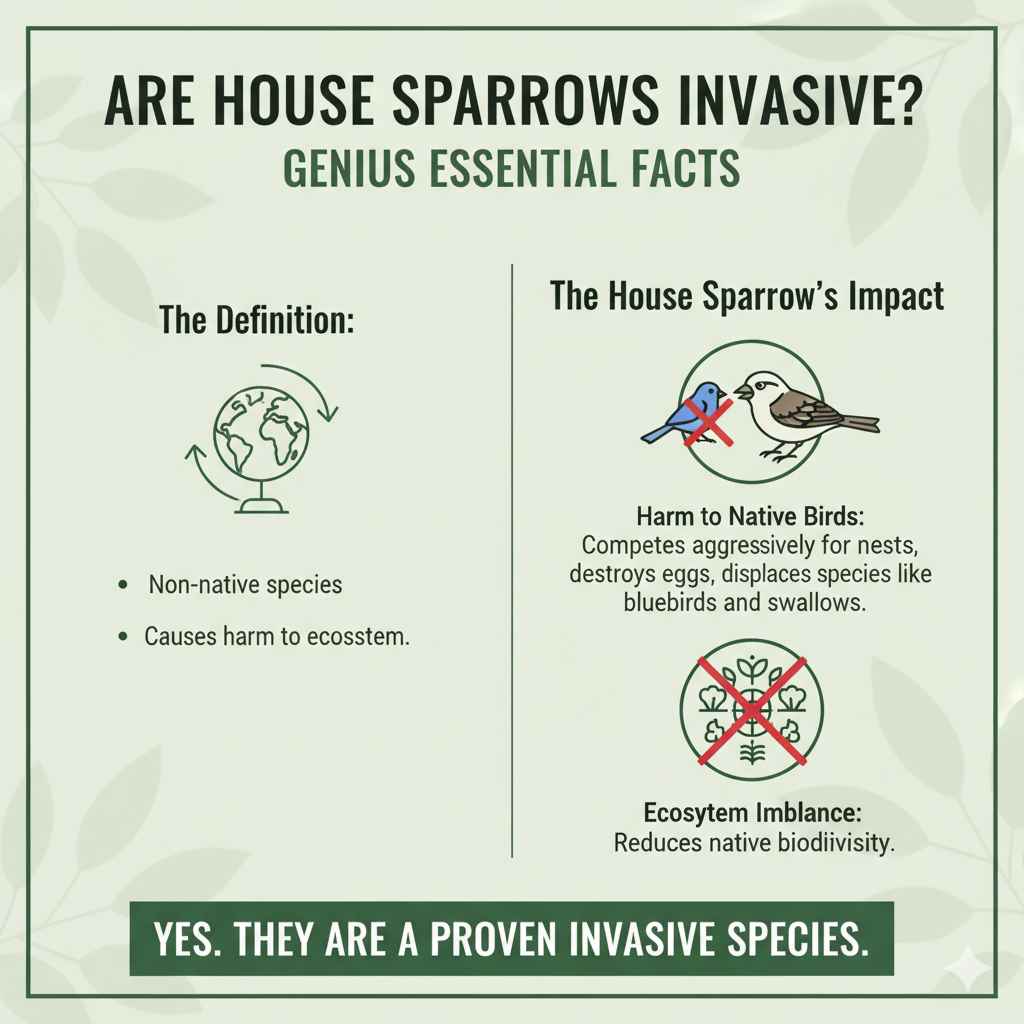
Yes, the House Sparrow (Passer domesticus) is definitively considered an invasive, non-native species in North America, Australia, and many other parts of the world outside of its original range in Europe and Asia. Introduced intentionally in the mid-1800s, these highly adaptable birds compete aggressively with native songbirds for food and prime nesting spots, making them a significant ecological concern for bird lovers and conservationists alike. For more on this, see our guide on Is Ashes And Arrows a Christian Band? Uncover the Truth. For more on this, see our guide on Are Sling Bows Legal in Missouri? Everything You Need to Know.
It’s a beautiful day, and you’re enjoying the backyard birds. Then you spot that familiar little brown bird—the House Sparrow. Maybe you’ve heard rumblings: Is this cute little bird actually a troublemaker? It’s a very common question, and getting the facts straight helps us protect our local wildlife. Just like mastering a new shooting technique, understanding the House Sparrow requires simple, clear knowledge. We’re going to walk through the essential facts about where these birds come from, why they are invasive, and how they impact our cherished native bird species. Don’t worry, we’ll keep the jargon light and the information practical!
When we talk about the great outdoors, knowing who belongs and who doesn’t can be confusing. Many birds look similar. The House Sparrow is one of the most successful and widespread birds on the planet. But its success comes at a cost to our native species. Understanding the classification of the House Sparrow is the first step toward becoming a mindful steward of your local environment.
The Essential Question: Are House Sparrows Invasive?
The short, clear answer is a resounding yes. House Sparrows are not native to the Americas. They did not fly here on their own. They were brought here by people. Understanding this history is crucial to understanding their ecological role today.
A History of Introduction: The American Arrival
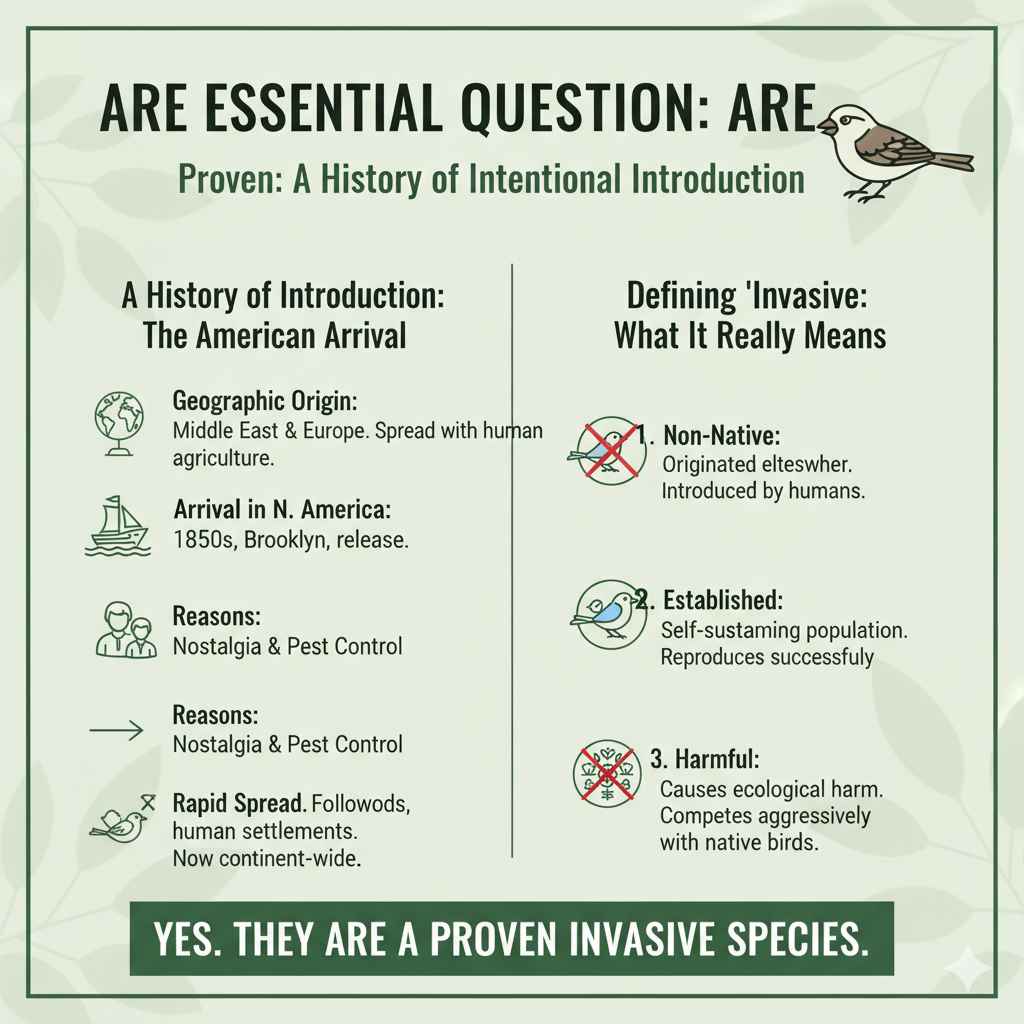
House Sparrows originated in the Middle East and spread naturally across Europe and parts of Asia centuries ago. Their movement was linked closely to human habitation, particularly agriculture. They are comfortable living right alongside us.
The story of their arrival in North America is fascinating and intentional. In the 1850s, people wanted to introduce European fauna to the United States. Many believed that bringing familiar birds would control pest insects and make the New World feel more like the Old World. The first successful releases happened in Brooklyn, New York, starting in 1851 and 1852.
The sparrows loved their new home. They found endless food, shelter, and few natural predators adapted to managing them. Their population exploded. They moved quickly across the continent, mostly following railroad lines and human settlements. They now inhabit almost every state and province in North America, except for the most remote wilderness areas.
Defining “Invasive”: What It Really Means
When scientists call a species invasive, it means more than just being “non-native.” An invasive species meets three key criteria:
- Non-Native: It originates elsewhere and was introduced to the new area.
- Established: It has created a self-sustaining population that reproduces successfully.
- Harmful: It causes ecological or economic harm to the environment it occupies.
The House Sparrow checks all three boxes with flying colors. Because they compete so fiercely for resources—often winning through aggression—they cause direct harm to our native birds.
Why House Sparrows Are Classified as Invasive Troublemakers
If you see a small bird, it might seem harmless. But House Sparrows are masters of aggressive survival. Their invasive status is earned through consistent, damaging behavior that harms delicate native ecosystems. They are the definition of an ecological bully.
Aggressive Nesting Tactics: The Cavity Wars
One of the most destructive habits of the House Sparrow is their method of acquiring nesting sites. They are cavity nesters, meaning they prefer holes in trees, under eaves, or human-made birdhouses (like those meant for bluebirds or swallows).
Unlike many native cavity nesters, House Sparrows do not wait for a box to be empty. They will actively attack, injure, or kill native occupants. This is a common and heartbreaking issue for conservationists trying to bring back species like the Eastern Bluebird, which suffered immense declines due to habitat loss and, later, sparrow competition.
Here is what makes their nesting habits so damaging:
- Year-Round Occupancy: House Sparrows do not migrate. They stake a claim on a nest box or cavity and defend it all year, preventing native migrants from using it when they return in spring.
- Physical Attacks: They will enter a box and peck eggs, kill chicks, or even attack and kill adult native birds inside the nest.
- Overstuffing: They build very messy, bulky nests that often fill the entire cavity, making it unusable for smaller, neater nesting birds.
Competition for Food Resources
House Sparrows are generalists. They will eat almost anything. They are particularly drawn to human food sources: spilled seed, grains, livestock feed, and even dropped french fries in the city. This adaptability means they can thrive wherever people are, and their flocking behavior allows them to rapidly deplete available food, leaving little for native birds.
Imagine you have a single feeder. A cardinal might visit alone. But twenty House Sparrows will descend together and clear the feeder in minutes. This puts significant stress on native species that rely on specific timing or food types, such as migratory warblers or specialized insect-eaters.
Diseases and Parasites
Because they live in high densities and often nest in messy, close quarters, House Sparrows are efficient carriers of diseases and parasites. While they may not be the primary spreader of every bird ailment, their high population density around human structures means they can contribute to the spread of pathogens that might affect domestic poultry or other wild bird species.
Spotting the Invader: House Sparrow Identification
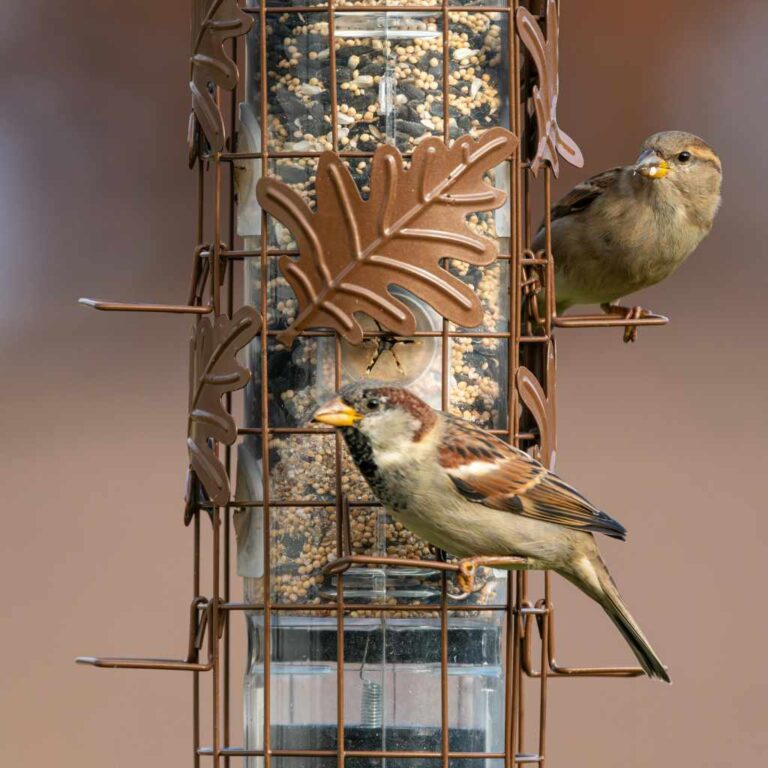
If you are serious about managing your backyard habitat, the first step is knowing who you are dealing with. Don’t confuse the invasive House Sparrow with native sparrows (like the Song Sparrow or Chipping Sparrow), which are important members of the ecosystem.
The House Sparrow is sturdy, robust, and looks like a typical small brown bird, but they have distinct features. Unlike native sparrows, House Sparrows lack streaks on their chest and often appear “smoother.”
| Feature | House Sparrow (Invasive) | Native Sparrows (Example: Song Sparrow) |
|---|---|---|
| Size & Shape | Sturdy, robust body; large, conical beak optimized for seeds. | Slender body; smaller, finer beak (often). |
| Male Markings | Gray crown, white cheek, chestnut stripe behind the eye, and a distinct black “bib” on the throat and chest. | Streaky browns, often a central dark breast spot (Song Sparrow); no prominent black bib. |
| Female Markings | Plain dull brown, unstreaked chest, pale eyebrow line. Very little variation. | Heavily streaked brown and white on the breast and flanks. |
| Tail Movement | Does not typically pump its tail when perched. | Many native sparrows (like the Song Sparrow) pump or flick their tail frequently. |
| Habitat Preference | Always near human buildings, parking lots, fast food restaurants, and farmyards. | Fields, woods, brushy areas, natural habitats. Less reliant on human structures. |
The Ecological Ripple Effect: The Winners and Losers
When an invasive species takes hold, the environment shifts dramatically. In this case, the highly adaptable House Sparrow wins, and many specialized, beautiful native species lose. Protecting these native birds is why conservation efforts against the House Sparrow are so important.
Key Native Birds Most Affected
The birds that suffer the most are those that rely on pre-existing cavities for nesting. These include some of our most beloved garden visitors:
- Eastern and Western Bluebirds: Bluebirds are generally gentler birds. They are easily evicted from nest boxes they have prepared. A single House Sparrow pair can prevent an entire bluebird family from successfully raising young.
- Tree Swallows: These beautiful aerial insectivores also rely on small, specific nesting holes. Sparrows often attack the adults or fill the box with nesting material until the swallows give up.
- Wrens and Chickadees: While sometimes able to defend themselves, smaller species like Carolina Wrens and Black-capped Chickadees can lose prime nesting real estate to aggressive sparrows.
- Purple Martins: In the southern U.S., Martins often nest in communal housing provided by humans. Sparrows frequently invade these compartments, harassing and preventing the Martins from breeding.
The pressure placed on these native species by House Sparrows contributes directly to their population decline in areas where the invaders are numerous. This is why bird monitoring groups, such as the North American Bluebird Society, spend so much time discussing sparrow control.
How to Manage House Sparrows in Your Yard (A Sensitive Topic)
Managing an invasive species is often necessary for protecting native wildlife. Because the House Sparrow is non-native and invasive, it is one of the few bird species in North America that is not protected by the Migratory Bird Treaty Act (MBTA). This means that measures can be taken to control their populations, especially around nesting sites.
However, successful management requires patience and consistency. Just like improving your archery form, small, consistent adjustments lead to big, positive results. We will focus on strategies that minimize harm to native birds while discouraging sparrows.
Passive Management: Making Your Yard Less Inviting
The goal here is to make your feeding stations and nesting sites appealing only to native species, or to shut down the resource altogether.
1. Adjust Your Feeding Stations
House Sparrows love mixed seed and cracked corn. Changing what you offer can drastically reduce their visits.
- Switch to Nyjer or Safflower: Sparrows typically dislike these seeds. Goldfinches and Mourning Doves enjoy Safflower, and Nyjer is a favorite of finches.
- Use Specialized Feeders: Invest in “weight-sensitive” feeders. These feeders close the access ports when a heavier bird (like a squirrel or a dense sparrow flock) lands on the perch.
- Use Caged Feeders: Feeders surrounded by a wire cage allow smaller, agile native birds (chickadees, titmice) to access the food, but the House Sparrow’s bulk often keeps them out.
- Clean Up Spills: House Sparrows prefer feeding on the ground. Use trays or sweep up spilled seed daily to remove their primary food source.
2. Modify Nesting Boxes
If you have birdhouses, ensure they are designed specifically for native species and modify them to exclude the sparrows.
- Adjust Entrance Hole Size: House Sparrows can squeeze into surprisingly small holes, but they struggle with entrance holes exactly 1 1/8 inches to 1 1/4 inches. This size is perfect for Chickadees and Titmice but often too small for sparrows. Bluebirds need 1 1/2 inches, so using specialized baffles or guards is often required.
- Use Slot Boxes: Boxes designed with a horizontal slot opening rather than a round hole can discourage sparrows, who prefer the round entry.
- Dismantle Unused Boxes: If a sparrow takes up residence, you must clean out the nesting material immediately and repeatedly before they complete the nest and lay eggs.
Active Management and Legal Considerations
Because the House Sparrow is non-native, certain active methods are permissible, especially if you are running a bluebird trail or managing a habitat for endangered native birds. Always check with local laws and ordinances before taking active measures.
1. Use Sparrow-Specific Traps
There are traps designed specifically for the aggressive removal of House Sparrows from areas like nesting trails. These devices must be used carefully to avoid trapping native species.
- Nest Box Traps: These devices are inserted into a nest box once a sparrow starts building and capture the bird inside when it enters.
- Ground Traps: These look like small cages and use bait (like millet) to attract and capture sparrows.
2. Exclusion and Habitat Denial
In barns or sheds where sparrows might nest, exclusion methods are effective. This means blocking all entry points with netting or screens that are 1 inch or smaller. House Sparrows are drawn to human infrastructure, so making your shed or eaves inaccessible is vital.
Key Difference: Native vs. Invasive Protection
It is vital to stress that nearly all native songbirds in the United States are protected by the MBTA. Harming them, their eggs, or their nests is a federal offense. The House Sparrow, along with the European Starling and the Rock Pigeon, are the common exceptions.
Before you remove any nest or bird, you must be 100% certain of the identification. If you see a heavily streaked brown bird with a breast spot, it is likely a protected Song Sparrow. If you see a sturdy, gray-crowned bird with a clear black bib, it is an unprotected House Sparrow.
| Management Strategy | Effectiveness | Ease of Implementation | Considerations |
|---|---|---|---|
| Food Switching (Safflower) | Medium to High | Very Easy | Must be consistent; seeds can be more expensive. |
| Weight-Sensitive Feeders | High | Easy (Purchase & Install) | Ensure the weight threshold is set high enough to exclude flocks. |
| Entrance Hole Restriction | High (For specific native species) | Moderate (Requires modification/new purchase) | Only works for very small native birds (Chickadees, Titmice). Bluebirds require larger holes. |
| Nest Box Trapping | Highest | Moderate (Requires monitoring) | Must positively identify the sparrow before trapping. Requires a commitment to ethical removal. |
For more detailed information on ethical trapping and removal techniques, many conservation groups dedicated to native bird restoration offer extensive resources. For instance, the North American Bluebird Society offers detailed guides on dealing with invasive competitors on bluebird trails.
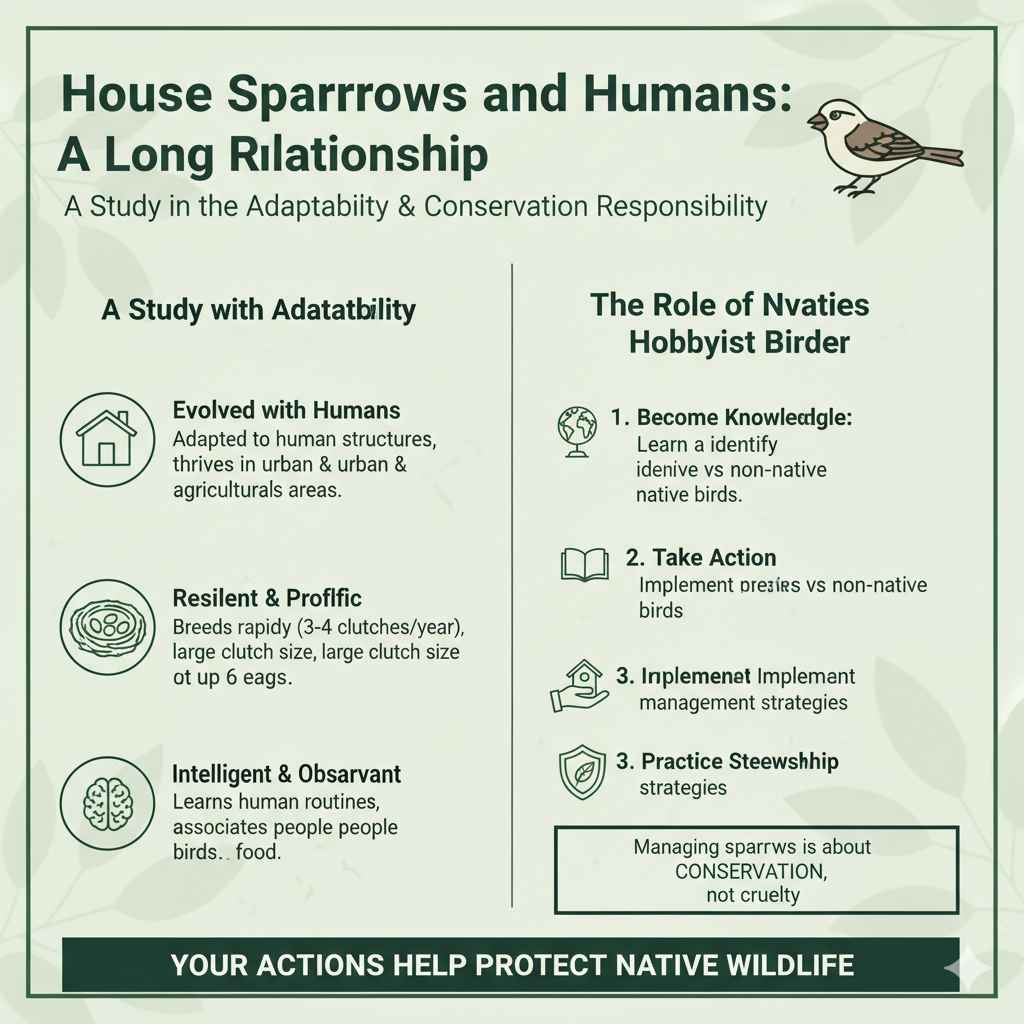
House Sparrows and Humans: A Long Relationship
The House Sparrow is called “House” Sparrow for a reason: it evolved alongside us. In its native range, it has adapted perfectly to human structures. This tight bond with humanity is what allowed it to become such a successful invader worldwide.
A Study in Adaptability
From the streets of London to the vast prairies of North America, the House Sparrow has proven incredibly resilient. They can breed rapidly, sometimes having three to four clutches per year. Their clutch size is typically large (up to 6 eggs). Their short breeding cycle means they can quickly rebuild their numbers even after harsh winters or control efforts.
They are also incredibly smart. They quickly learn to associate people with food. If you watch a House Sparrow, you will notice they often use complex cover and observe routines. This intelligence, combined with their aggressive nature, makes them a formidable invasive force.
The Role of the Hobbyist Birder
As a backyard bird lover, your role is crucial. By becoming knowledgeable about the difference between native and non-native birds, you can take small but meaningful actions. Managing House Sparrows is not about cruelty; it is about conservation. It ensures that the gentler, native species—the ones that truly belong here and contribute uniquely to the local ecology—have a fair chance to thrive.
Think of it like learning to hold your bow properly. A small, incorrect grip (the invasive sparrow) can ruin the shot (the native bird population). Adjusting that grip (management strategies) ensures success (a healthy native bird habitat).
Frequently Asked Questions (FAQ)
Q1: Are all brown sparrows invasive?
A: Absolutely not! Many native sparrows, like the Song Sparrow, Chipping Sparrow, and White-throated Sparrow, are brown and streaky. These native birds are essential to the ecosystem and are protected by law. Only the House Sparrow (Passer domesticus) is non-native and invasive. Learn the identifying marks, especially the male House Sparrow’s black bib and gray crown.
Q2: If I leave up a nest box, will it attract House Sparrows?
A: Yes, House Sparrows view birdhouses as prime real estate. If you put up a nest box, you must commit to monitoring it weekly, especially in early spring. If House Sparrows start building a nest, you must remove the material immediately and consistently to prevent them from establishing a territory.
Q3: Is it legal to remove House Sparrow nests or eggs?
A: Yes, in the United States and Canada, the House Sparrow is not protected under the Migratory Bird Treaty Act (MBTA). This means that removing their nests, eggs, or even the birds themselves is legally permissible for population control and protection of native species. However, be 100% certain of the identification before taking any action.
Q4: Do House Sparrows migrate?
A: No. House Sparrows are non-migratory resident birds. They typically stay within a few miles of where they hatch throughout their entire lives. This non-migratory behavior contributes to their aggressive claim over nesting sites year-round, which is particularly detrimental to native species that rely on seasonal migration.
Q5: Do House Sparrows control insects?
A: While young House Sparrows are fed some insects, adults primarily eat seeds, grains, and human scraps. They are not effective or specialized insect controllers like many native bird species (e.g., Tree Swallows or Warblers). Their damage to native populations far outweighs any minor insect control they provide.
Q6: Can I use a special type of feeder to deter them?
A: Yes, using feeders that utilize specialized seed (like pure Nyjer or Safflower) or caged feeders that restrict access based on size are highly effective deterrents. Avoid cheap seed mixes containing millet or cracked corn, as these are House Sparrow favorites.
Conclusion
The journey to becoming a responsible and knowledgeable backyard birder is rewarding, but it requires facing tricky topics like invasive species. The House Sparrow, while common and often perceived as harmless, is definitively an invasive bird that poses a significant threat to our cherished native songbirds, especially cavity nesters like bluebirds and swallows.
We’ve established that their success is due to their adaptability, aggression, and lack of migration. By understanding these facts, you are empowered to make informed choices. Whether you choose to modify your bird feeders, adjust your nest box openings, or implement active control measures, remember that every small effort helps restore the natural balance in your environment. Approach this task with the same patience and consistency you bring to improving your aim. You are not just feeding birds; you are actively contributing to local conservation.