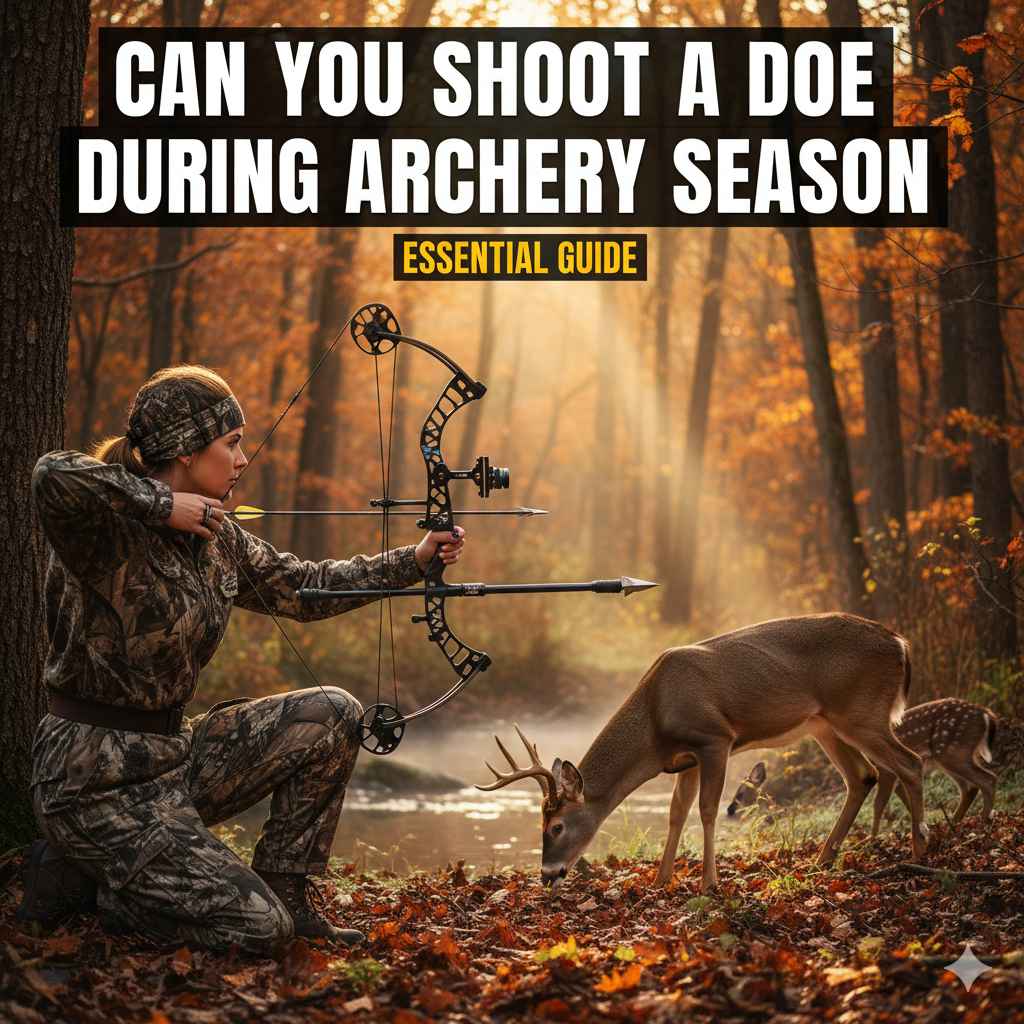
Can You Shoot A Doe During Archery Season: Essential Guide
Yes, hunters can often shoot a doe during archery season, but it depends entirely on specific state and local wildlife regulations. These rules vary widely and are designed to manage deer populations effectively. Always check your local hunting regulations before heading afield. For more on this, see our guide on Do Electric Fields Point To Higher Potential Or Lower Potential.

BIGSHOT
BIGSHOT Pro Hunter 3D Doe Deer Archery…
- SELF-HEALING FOAM CONSTRUCTION - High-density elastofoam withstands thousands of shots from compound bows, crossbows, and traditio…
- BROADHEAD AND FIELD POINT COMPATIBLE - Safely accepts all arrow types including field points, fixed blade broadheads, mechanical e…
- REALISTIC LIFESIZE DOE DESIGN - Anatomically accurate 3D deer target with detailed vital zones and IBO/ASA scoring rings. Perfect…
As an Amazon Associate I earn from qualifying purchases.
As an archery season approaches, many new hunters, and even some seasoned ones, find themselves scratching their heads about a common question: Can you shoot a doe during archery season? It’s a big decision, and knowing the rules is key to a successful and legal hunt. Many factors go into this, from conservation efforts to population management. We’re here to break it all down in a way that’s easy to understand, so you can feel confident and prepared.
This guide will walk you through everything you need to know. We’ll cover why these seasons are structured the way they are, how to find the rules in your area, and what ethical considerations come into play. By the end, you’ll have a clear picture of how doe harvest fits into the archery season picture and how to make responsible choices in the field.
Understanding Deer Seasons: Doe vs. Buck
Deer hunting seasons are designed with specific management goals in mind. These goals often dictate which deer can be harvested and when. Archery season is typically the earliest open season for deer hunting in many regions. It’s a crucial period for wildlife agencies to manage deer populations before the more intense hunting pressure of rifle seasons.
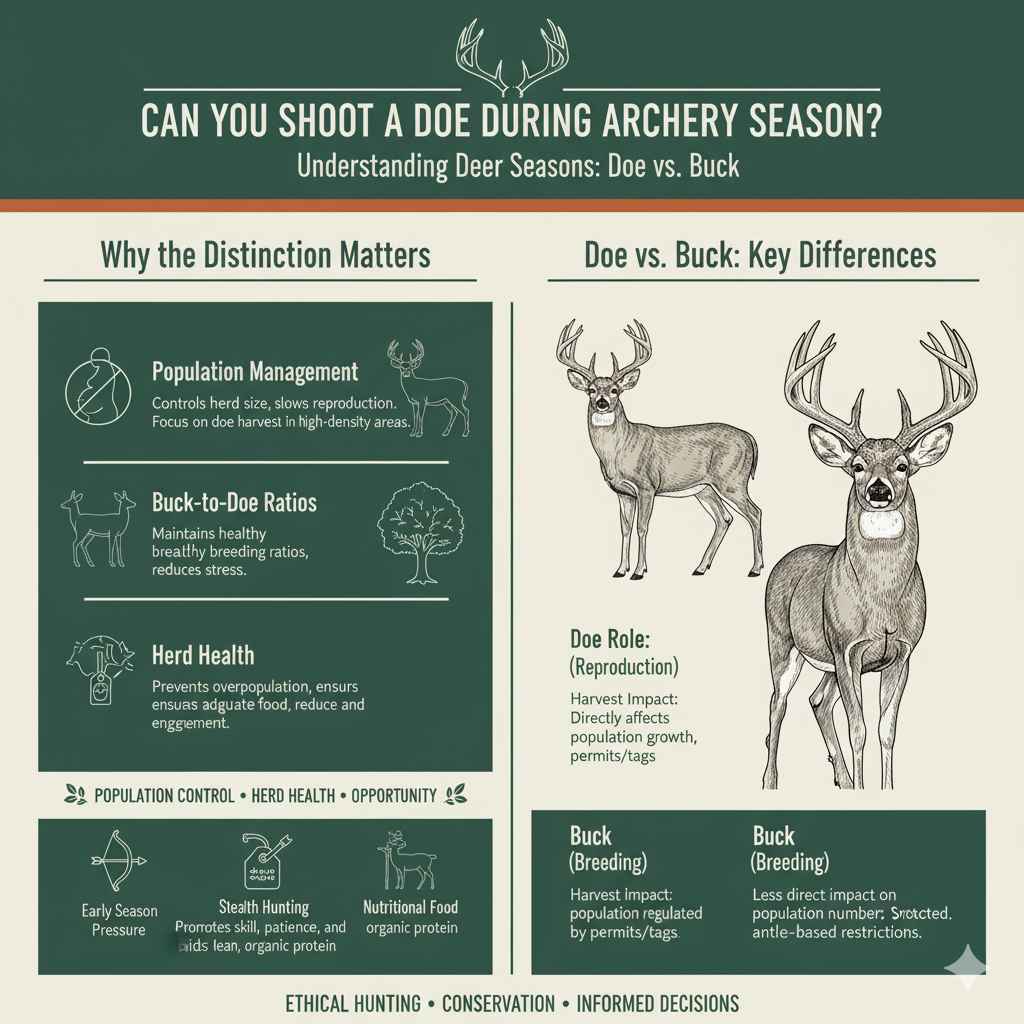
The distinction between hunting does (female deer) and bucks (male deer, also called antlered deer) is a cornerstone of modern deer management. Wildlife departments use this distinction to control herd size, improve the health of the deer population, and maintain ecological balance. Understanding these differences is fundamental for any ethical and legal hunter.
Why the Distinction Matters
The primary reason for differentiating between does and bucks is population control.:
- Population Management: Allowing doe harvest generally has a more immediate and significant impact on the deer population’s growth rate. Taking does, especially in areas with high deer densities, helps slow down reproduction.
- Buck-to-Doe Ratios: Conservationists aim to maintain healthy ratios of bucks to does. If there are too many bucks relative to does, competition for does during the rut can lead to stress and injury among bucks. Conversely, too few bucks can limit breeding success. Archery seasons can be used to manipulate these ratios.
- Herd Health: Overpopulation can lead to deer starving during harsh winters, increased disease transmission, and damage to vegetation and agricultural crops. By harvesting does, managers can help ensure the remaining deer have adequate food and resources, leading to healthier animals.
- Hunter Satisfaction: For many hunters, encountering and harvesting a deer, regardless of sex, can be a rewarding experience. Offering doe permits during archery season can increase opportunities for successful hunts and hunter engagement.
General Archery Season Goals
Archery seasons are often the first opportunity for hunters to take to the woods. They serve several important purposes:
- Early Season Pressure: They allow for a portion of the harvest to occur before other hunting methods begin, distributing hunting pressure more evenly throughout the fall.
- Stealth Hunting: Archery hunting requires hunters to get closer to game, promoting a higher degree of skill, patience, and woodsmanship.
- Reduced Hunter Numbers: Typically, fewer hunters participate in archery seasons compared to rifle seasons, which can lead to a more selective harvest and less disturbance to wildlife.
- Nutritional Food Source: For many, harvesting a deer, doe or buck, provides lean organic protein. Archery season provides an early opportunity to secure this food source.
Navigating Your Local Deer Regulations
This is the most critical step. Regulations are not universal; they change from state to state, and even within different zones or management units of a single state. What is legal in one area might be strictly prohibited in another. Therefore, always consult the official hunting regulations published by your state’s wildlife agency.
These agencies are responsible for managing wildlife populations and ensuring sustainable hunting practices. Their publications are the definitive source for all hunting laws and seasons.
Where to Find Official Regulations
Here’s how you can typically find the information you need:
- State Wildlife Agency Website: Nearly every state has a Department of Natural Resources (DNR), Department of Game and Inland Fisheries (DGIF), or similar agency. Their websites are the primary source for hunting regulations. Look for sections labeled “Hunting,” “Regulations,” or “Game Laws.”
- Printed Regulation Books: These are often available at bait and tackle shops, sporting goods stores, and license vendors. While online resources are usually more up-to-date, printed books are convenient for quick reference in the field.
- Hunting License Purchase Points: When you purchase your hunting license, the vendor will usually have copies of the regulation guides.
- Conservation Officers: If you’re still unsure after reviewing the materials, contacting a local conservation officer or game warden is an excellent way to get clarification directly from an authority.
Key Information to Look For
When you’re reviewing the regulations, pay close attention to these points related to archery season:
- Season Dates: When does archery season start and end in your specific zone?
- Legal Game: What types of deer can be harvested? Some areas might have specific tags or permits for antlerless deer (does) during archery season, while others might allow any deer.
- Tagging Requirements: How must harvested deer be tagged? Some states require specific antlerless tags that must be purchased.
- Bag Limits: How many deer can you harvest in total, and what is the breakdown of bucks versus does?
- Weapon Restrictions: While this is archery season, some areas may have restrictions on the type of bow or arrow (e.g., minimum draw weight, broadhead type).
- License Requirements: Ensure you have the correct hunting license and any necessary permits or stamps for your area and the type of deer you intend to harvest.
Example of Varied Regulations
To illustrate how much regulations can differ, consider these hypothetical scenarios:
| State/Zone | Archery Season Doe Harvest Rules | Notes |
|---|---|---|
| State A, Zone 1 | Any deer (buck or doe) may be harvested with a valid general hunting license and archery tag. | Focus on population reduction. |
| State A, Zone 2 | Only antlerless deer (doe or fawn) may be harvested with a valid antlerless deer permit. Buck harvest is prohibited. | Focus on increasing buck-to-doe ratio. |
| State B, Entire State | Doe harvest is permitted with a valid archery license. Buck harvest requires a separate buck tag, which is limited. | General management strategy. |
| State C, Specific Units | Doe harvest is allowed, but only after a buck has been harvested, or via a specific drawn antlerless tag. | More restrictive management for trophy bucks. |
This table highlights the need to be highly specific about your location. Always refer to the official documents for the most accurate and up-to-date information.
Factors Influencing Doe Harvest Regulations
Why do regulations vary so much? Wildlife agencies base their rules on scientific data and management objectives for specific deer populations. Here are some common factors:
- Deer Population Densities: In areas where deer populations are very high and causing ecological damage (e.g., to forests, agriculture, or even public health through disease spread), agencies often allow for more liberal doe harvest during archery season to help reduce numbers.
- Buck-to-Doe Ratios: If a population has an unbalanced ratio, with too few bucks, agencies might restrict doe harvest to allow populations to grow or to ensure adequate breeding. Conversely, if there are too many does for the available resources or for balanced breeding, doe harvest will be encouraged.
- Habitat Health: The condition of the local habitat plays a role. If vegetation is over-browsed, indicating too many deer for the environment to support, agencies will typically allow more antlerless deer to be harvested.
- Disease Prevalence: In areas experiencing outbreaks of diseases like Chronic Wasting Disease (CWD), agencies may implement specific regulations to encourage harvest, including of does, to help slow the spread. You can find more information on CWD management from sources like the Council for Wildlife Conservation and Management.
- Hunter Access and Pressure: Sometimes, regulations might consider hunter access. Areas with high hunter pressure might have different rules than more remote areas.
- Conservation Goals: Ultimately, all regulations are tied to the state’s conservation and management goals for the wildlife within its borders.
Ethical Considerations for Harvesting Does
Beyond the legal aspects, there are important ethical considerations when you decide to harvest a doe. Being a responsible hunter means respecting the animal and the environment.
Why Harvest a Doe?
Harvesting a doe can be as rewarding and important as harvesting a buck. Here are some reasons:
- Population Control: As discussed, harvesting does is crucial for managing deer populations. You are actively participating in conservation by helping to maintain a healthy ecosystem.
- Food Source: Venison from does is delicious and nutritious. Harvesting a doe provides a significant amount of lean protein for your family and friends.
- Hunter Opportunity: Doe tags often provide more hunting opportunities, especially in areas where buck tags are limited or harder to draw.
- Improved Habitat: By reducing the number of deer, you are helping to reduce grazing pressure on vegetation, allowing plants to grow and supporting other wildlife species.
Making the Shot: Ethical Practices
When you have the opportunity to take a shot at any deer, including a doe, ethical hunting practices are paramount:
- Know Your Target: Be absolutely sure of the animal’s sex and age. Ensure it’s a legal animal to harvest according to your tags and regulations.
- Shot Placement: Aim for a quick, clean kill. Understand deer anatomy and practice accurate shooting. The ideal shots are through the vital organs (lungs and heart).
- Respect the Animal: Treat every harvested animal with respect. Make every effort to recover any wounded game.
- Follow-Up: If you believe you have wounded a deer but have not recovered it, follow best practices for tracking. Contacting experienced trackers or utilizing tracking dogs (where legal) can significantly increase your chances of recovery. The Quality Deer Management Association (QDMA) often provides excellent resources on tracking.
- Field Dressing and Meat Care: Learn how to properly field dress and care for your venison to ensure it’s safe to eat. Prompt cooling of the meat is essential.
Is it More Humane to Shoot a Buck?
This is a common misconception. A quick, well-placed shot from a modern archery setup to the vital organs of either a buck or a doe is humane. The sex of the deer does not inherently make the kill more or less humane; the hunter’s skill, equipment, and shot selection are what matter most. Many hunters find more satisfaction in harvesting a doe for its meat and its role in population management.
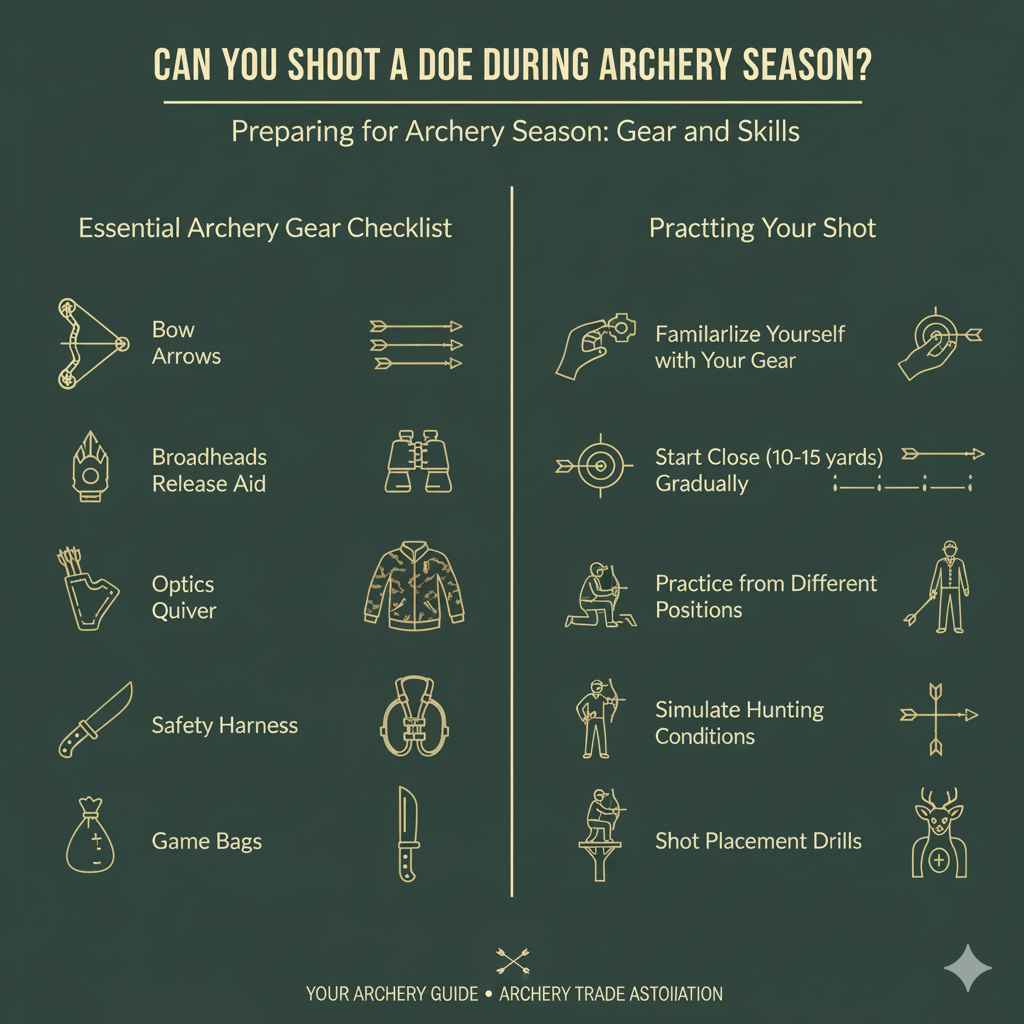
Preparing for Archery Season: Gear and Skills
Knowing the regulations is just one piece of the puzzle. To succeed during archery season, you need the right gear and proficient skills. As your archery guide, I always emphasize preparation.
Essential Archery Gear Checklist
Here’s a basic list to get you started:
- Bow: Whether it’s a compound, recurve, or longbow, ensure it’s properly tuned and set up for you.
- Arrows: Matched to your bow’s specifications.
- Broadheads: Sharp and properly installed. Field points are for practice; broadheads are for hunting. There are mechanical and fixed-blade options.
- Release Aid: For compound bows, this helps with a consistent trigger pull.
- Quiver: To hold your hunting arrows.
- Optics: Binoculars for spotting game and a rangefinder for accurate distance assessment.
- Clothing: Camouflage or natural-colored, scent-controlling layers suitable for the weather.
- Safety Harness: If hunting from an elevated stand.
- Hunting Knife: For field dressing.
- Game Bags: To help keep meat clean after dressing.
Practicing Your Shot
Skill is what truly fills the freezer. Archery is a perishable skill, meaning you need consistent practice.
- Familiarize Yourself with Your Gear: Understand how your bow, release, and sights work.
- Start Close: Begin shooting at short distances (10-15 yards) to build confidence and confirm your zero.
- Increase Distance Gradually: As you become more accurate, increase your shooting distance. Only hunt at distances you can reliably hit your target under practice conditions.
- Practice from Different Positions: Shoot from kneeling, sitting, and standing positions, just as you might need to in the field.
- Simulate Hunting Conditions: Practice shooting broadheads (on a target specifically designed for them) to see how they fly compared to field points. If you hunt from a treestand, practice shooting from that height and angle.
- Shot Placement Drills: Use targets that allow you to visualize or mark where your arrows are hitting on an animal’s vital zone.
For reliable archery information and resources, the Archery Trade Association (ATA) is an excellent source for understanding equipment and shooting techniques.
Frequently Asked Questions (FAQ)
Q1: Can I shoot a doe if I don’t have a specific doe tag?
A: This depends entirely on your state’s regulations. Some states allow doe harvest with a general hunting license and archery tag, while others require a specific, often limited, antlerless tag or permit. Always check the official regulations for your hunting unit.
Q2: Are there any restrictions on arrow types for does during archery season?
A: Yes, most states have regulations regarding arrow and broadhead types for hunting. Typically, arrows must be constructed of materials intended for penetration, and broadheads must be sharp, of a certain minimum cutting diameter, and have at least two sharp cutting edges (though some states allow mechanical broadheads with specific conditions). Check your local regulations for exact specifications.
Q3: My state offers different archery season lengths. Why?
A: The length of archery season is often adjusted by wildlife agencies to help manage specific deer populations, balance hunter opportunity, and achieve harvest goals for certain areas. Longer seasons may be implemented in areas needing increased harvest or to provide more opportunity.
Q4: Is it bad to shoot a doe for meat versus a buck for antlers?
A: No, it is not bad at all. In fact, harvesting does is essential for healthy deer population management and often provides better table fare. While many hunters enjoy pursuing trophy bucks, does are a vital renewable resource for sustenance and conservation efforts. Ethical hunting prioritizes a clean kill and proper use of the meat, regardless of the deer’s sex.
Q5: What if I wound a doe and can’t find it?
A: This is a challenging situation that every ethical hunter fears. If you believe you have wounded game, you have an ethical obligation to make every reasonable effort to recover it. This includes tracking it thoroughly. If you are unsuccessful after a diligent search, it is often a legal requirement and always an ethical imperative to report the incident to a conservation officer. Some areas have specific protocols or resources for tracking wounded game; familiarize yourself with these beforehand.
Q6: Can I use a crossbow during archery season?
A: This varies significantly by state. Some states allow crossbows during the entire archery season, while others restrict their use to specific portions of the archery season (e.g., late archery) or only for hunters with special permits (e.g., medical exemptions). Always confirm your state’s specific crossbow regulations.
Putting It All Together: Your Archery Season Plan
As we’ve explored, the question “Can you shoot a doe during archery season?” doesn’t have a simple yes or no answer that applies everywhere. It’s a question deeply tied to local wildlife management, conservation goals, and sound hunting ethics. Your ability to harvest a doe during archery season is determined by the specific regulations set forth by your state’s wildlife agency.
The journey from understanding the rules to a successful hunt involves several key steps. First and foremost is diligent research into your local regulations. Never make assumptions; always consult official state hunting guides.
Related pick: Check today's price on Amazon